

A Binance sign up code does its whole job in one moment: the second you press Register. Open your account with 20LESSFEES in the code box and every Spot and Futures trade on it is charged a flat 20
% less in trading fees, and the account can still take part in the welcome bonus of up to $19,800 for eligible users. Start from the sign-up link below.
👉 Open a Binance account with 20LESSFEES
What happens after that moment is spread over weeks, and most people only find out the order of events as they go. This page lays it out as a timeline, from the first minute on the form to the third month of trading, with the fee numbers worked out at each stage.
Why put a sign up code on a new account at all?
Four reasons, starting with the one that lasts longest:
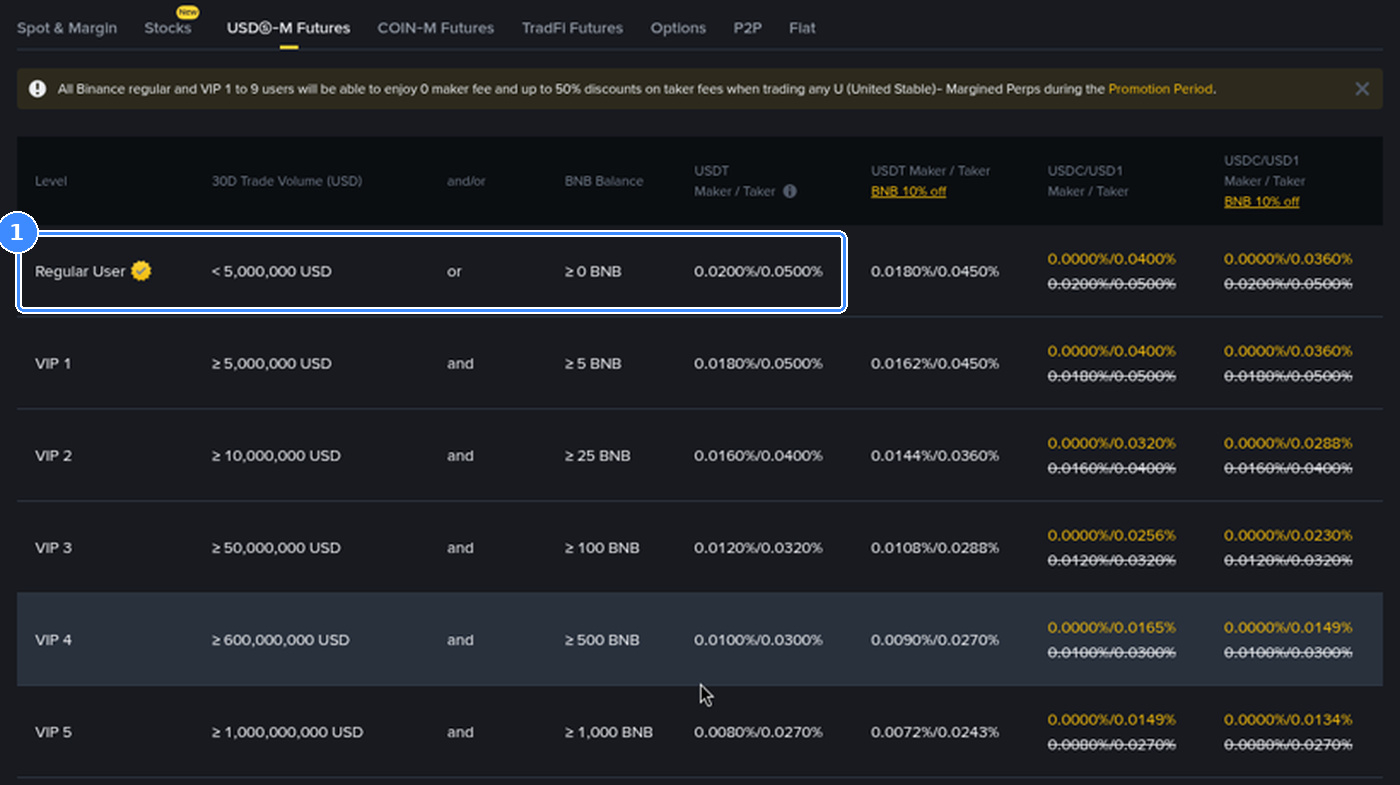
20% off trading fees: Spot drops from 0.100% to 0.080% per fill for a regular account, and USDⓈ-M Futures drops from 0.0200% maker and 0.0500% taker to 0.0160% and 0.0400%.
Bonus on top: The welcome program of up to $19,800 for eligible users is task-based and the same with any code, so the fee cut is an extra, not a swap.
Nothing to switch on: The code sticks to the account when it is created. There is no setting to turn on later.
Costs nothing: Using it adds no charge, and it doesn't change which coins or products you can use.
Minute zero, where does the code go?
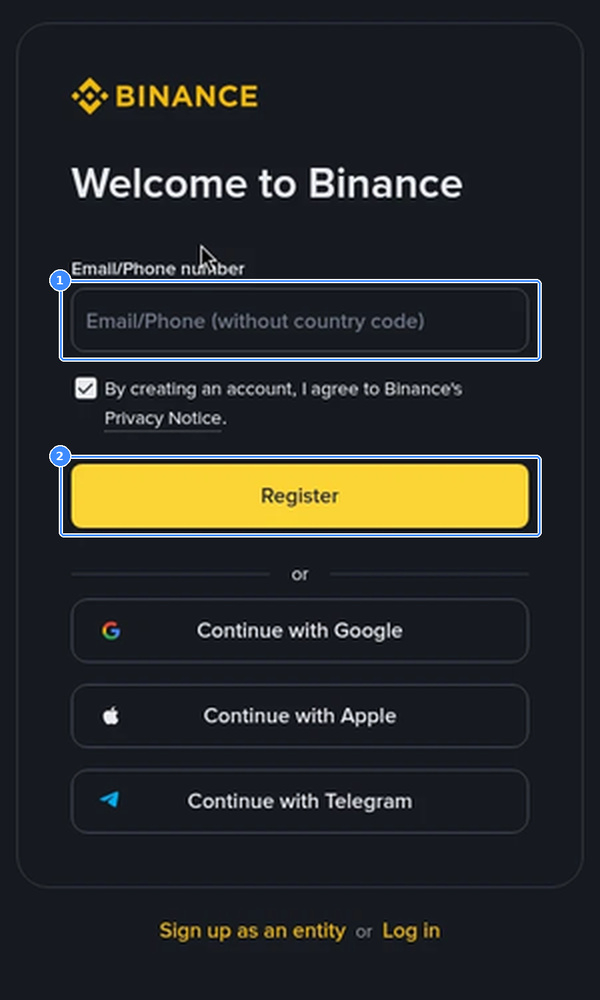
The form is short, and the code line is easy to scroll past. Here is the order on the website, with the app working the same way:
Open the sign-up link: It loads the Binance registration form with 20LESSFEES already attached. In the app, tap Sign Up rather than Log In.
Type your email or phone number: Use one you can open right now, because a six-digit verification number is sent to it within a minute or so.
Find the code line: On some versions of the form it is folded under a small arrow below the email box. Open it.
Read what is in the box: It should say 20LESSFEES, in capitals, with no space before or after. If it is empty, type it in.
Press Register: Only after step 4. Then enter the verification number and set a password.
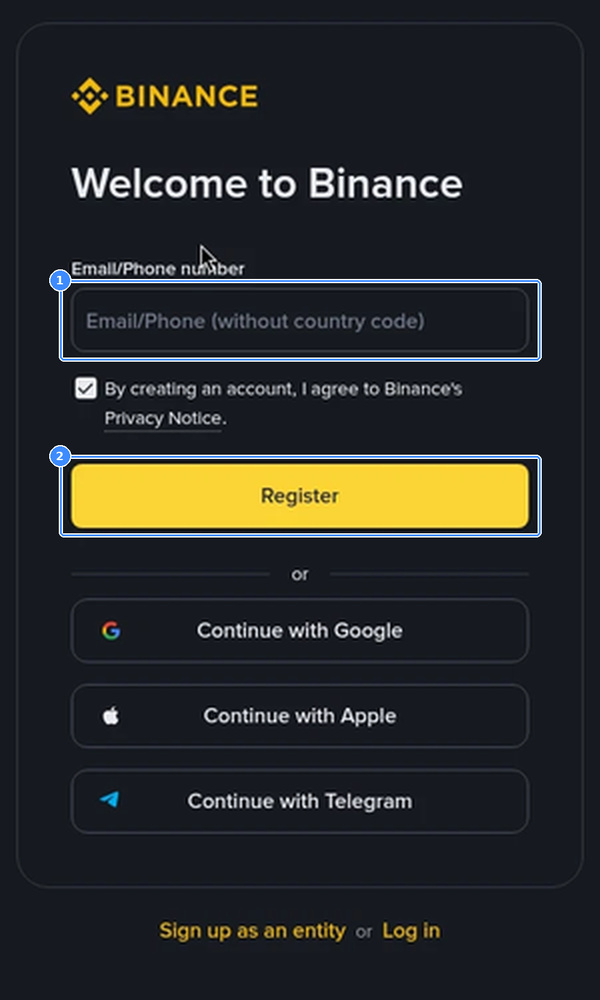
If you installed the app from a store instead of tapping the link, the code is usually not carried over. Type it into the box yourself before step 5.
What happens in the first ten minutes?
Once Register is pressed, the account exists and the code is fixed to it. The next few minutes are about access, not fees:
Verification number: It expires quickly. If it doesn't arrive, check spam or request a new one instead of re-registering with a second email.
Password: Binance asks for a mix of characters. Use one you don't use anywhere else.
Two-factor login: Turn on an authenticator app or a passkey now. It takes two minutes and protects the account before any money arrives.
Nothing about the 20% shows up on screen at this point. That is normal. The cut appears on your first filled order, not as a banner.
What changes in the first hour once you are verified?
Identity verification is the gate for almost everything else. Without it you can look around, but deposits, most trading and the welcome tasks usually stay closed. It means a photo of an official ID and a short face scan, and approval often comes within minutes, though it can take longer on busy days.
Two things to get right here:
Use your real details: Binance allows one verified account per person, and the name has to match your ID and later your bank card or account.
Don't open a second account to retry: If verification fails, fix the photo or the details and submit again on the same account.
What should you see on day one?
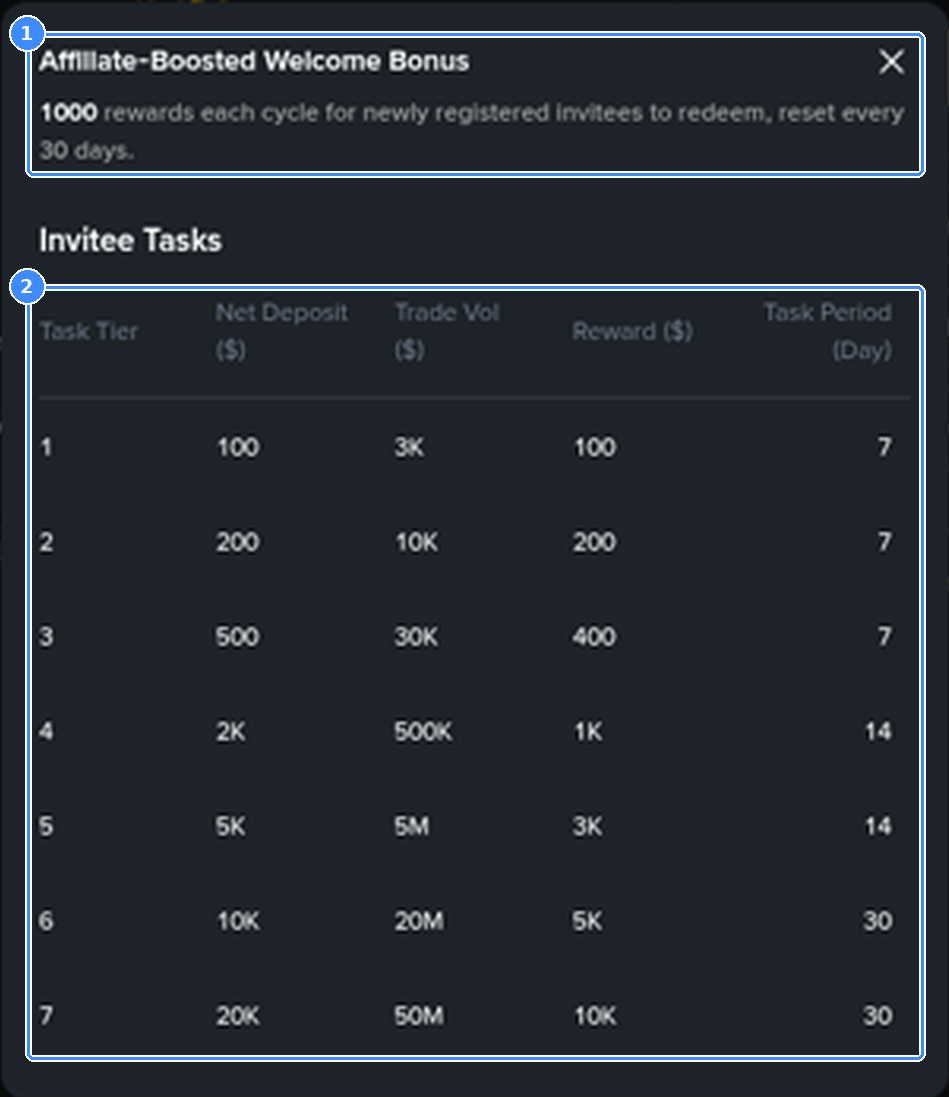
After verification the welcome tasks show up in the Rewards Hub, not in your wallet. Each task is a row with four parts: a net deposit, a trading volume, a reward and a number of days. The clock usually starts when you accept the task or from registration, so read that line before you deposit.
A sensible first day looks like this: verify, open the Rewards Hub, read the task list, and decide which single task fits money you were going to put in anyway. Chasing a higher row only for the reward means trading volume you would not otherwise trade, and that volume carries fees and market risk.
For a closer look at what the tasks really ask of you, the pros and cons of the Binance sign up bonus goes through them one by one.
Your first trade is the moment 20LESSFEES starts working, so make sure it was on the form.
How much does the code save in the first week?
Week one is where people first see the fee line on their own orders. A few examples at the regular Spot rate of 0.100%, with the code bringing it to 0.080%:
First buy of $250: $0.25 in fees normally, $0.20 with the code.
Three buys and one sell, $1,600 in total: $1.60 against $1.28, so $0.32 kept.
A task that needs $3,000 of Spot volume in 7 days: $3.00 in fees normally, $2.40 with the code. That is what it costs to reach the volume, before any price move.
Small amounts, yes. The point of week one is not the saving, it is checking that the cut is really there. Open Orders, then Trade History, pick a filled order and divide the fee by the order value. On a Spot fill without BNB fee settlement you should see 0.08% rather than 0.1%.
What about Futures in the first month?
Futures fees are charged on the full position size, not on your margin. A $600 margin at 10x is a $6,000 position, and that is the number the fee rate applies to. Here are round trips at the regular USDⓈ-M rates:
Market in, market out: Two taker fills of $6,000 at 0.0500% cost $6.00. With the code, at 0.0400%, it is $4.80.
Limit in, market out: $1.20 maker plus $3.00 taker comes to $4.20. With the code, $0.96 plus $2.40 is $3.36.
Ten market round trips in a month: $60.00 against $48.00, so $12.00 kept in month one.
Leverage magnifies losses as fast as gains, and a liquidation costs far more than any fee line. Treat these as cost figures only. If Futures is the main reason you are signing up, the Futures fee checklist for new accounts covers order types and funding in more detail.
Signing up for Futures later? The code on day one still covers it, because 20LESSFEES applies to both markets.
Where does it stand by month three?
By the third month most new users have settled into a pattern, and the yearly view becomes clearer. Take a person who trades about $3,500 of Spot a month and makes ten $6,000 Futures round trips with market orders:
Spot: $3.50 a month normally, $2.80 with the code, about $8.40 kept over a year.
Futures: $60.00 a month normally, $48.00 with the code, about $144 over a year.
Together: roughly $152 a year that stays in the account instead of going to fees.
This is fee arithmetic, nothing more. It says nothing about whether those trades make or lose money, and crypto prices can fall sharply. Someone who trades half as much keeps half as much. Someone who mostly holds keeps very little, and for them the welcome tasks may matter more than the fee cut.
Higher volume tiers are another reason to check the numbers yourself. Rates fall as 30-day volume and BNB balance rise, but the first step up needs millions in monthly Futures volume, so almost every new account stays on the regular rate for a long time.
Which mistakes show up at each stage?
Minute zero: Pressing Register before opening the code line. This is the one mistake that can't be undone.
Minute five: Starting over with a new email because the verification number was slow. That creates a second account to clean up.
Hour one: Uploading a blurry ID photo, then opening another account instead of resubmitting.
Day one: Depositing before reading when the task clock starts, and losing days of the window.
Week one: Withdrawing part of a deposit during a net-deposit task, which can drop the counted amount below the target.
Month one: Assuming Futures volume counts toward a Spot task. A task counts the product it names.
Which edge cases trip people up?
The form was abandoned halfway: If you never pressed Register, no account exists yet. Start again from the link with the code in the box.
The email says it is already registered: Then an account exists, maybe from years ago. The code can't be attached to it.
A different code was already in the box: Clear the field fully before typing 20LESSFEES. Only one code can sit on an account.
The form looks different: In some regions sign-up runs through a local Binance entity, and the layout or the bonus can differ. Read what your own screen shows.
Is it safe, and what if you already have an account?
"I already have an account": The code only works on a new registration, and Binance allows one verified account per person, so an existing account stays on its current rates.
"Is a sign up code safe to use?": It is only a label on the registration. It gives nobody access to your login, balance or trades. Register on the official Binance website or app and never share passwords or verification numbers.
"Can I add the code later?": No. It can only be added on the registration form, before you press Register.
Ready to start the timeline? Use the link at the top, check that 20LESSFEES sits in the code box, and the 20% comes off your Spot and Futures fees from the very first trade. Before your first deposit, you can also see the terms of the current Binance bonus event so the task clock holds no surprises.
FAQ
Will I see the 20% on the public fee schedule page?
No. That page lists standard rates for everyone. Check the fee on a filled order in your Trade History instead.
Can two people in one household use the same code?
Yes. The code isn't tied to one person. Each of you needs your own account, your own ID and your own verification.
Does the code work the same on the app and the website?
Yes. It is stored on the account, so trades from the app, the website or the desktop client get the same rate.
Does a sign up code change which coins I can trade?
No. It affects the fee rate only. Products and coins depend on your region and verification level.
How long does the 20% fee cut last?
It stays with the account and has no end date of its own. Binance can change its programs, so checking one filled order now and then is a good habit.