


Stacks has been one of the stronger crypto performers over the past week, with STX trading around the $0.38-$0.39 area and gaining roughly 20% to 25% from late-September levels. CoinGecko data shows STX closed near $0.3169 on September 29 and around $0.3844 on October 6, which puts the move in the low-20% range over that stretch.
The rally comes as Stacks reports stronger Bitcoin staking economics, more institutional participation, and a successful Q3 network upgrade.
Incoming Stacks Labs CEO Muneeb Ali summarized the quarter in a recent update, and several of the developments help explain why STX has started attracting more attention.
BTC Yield Has Improved
One of the biggest changes came from SIP-45.
Muneeb said BTC yield increased by 72.15% over the last four cycles after the upgrade attracted more miners, improved mining efficiency, and strengthened the STX/BTC ratio.
That is important because the Stacks model is built around Bitcoin staking.
If BTC yield improves at the same time demand for staking capacity grows, the system becomes more attractive to capital looking for Bitcoin-native yield.
The Stacks Treasury Committee also described Q3 as a major transition, with Bitcoin Staking moving from roadmap to a live product and institutional participation expanding.
More STX Is Being Locked
Muneeb also pointed to a rise in locked STX.
Strong Q3 progress for STX. As the incoming CEO of Stacks Labs, I’ll start sharing frequent updates and hosting quarterly update calls. Quick summary typed here as we release a detailed Q3 blog later (speed matters). – There has been a 72.15% increase in BTC yield over the last 4 cycles. This is a result of SIP-45 activation that attracted more miners, increased mining efficiency, and strengthened STX/BTC ratio. – Locked STX increased from 392M (at the time of the Satoshi One upgrade) to 448M over 4 cycles. The 20M jump right before Bitcoin Bond 1 went live was especially interesting as it shows the economic loop working. – Anchorage announced support for Bitcoin Bonds, along with Fireblocks and Fordefi. Distribution to institutional clients through custody providers they already use is key. – Bond 1 sold out for capacity, with large institutions like 21Shares, UTXO Management, HashKey, etc. participating. – New signers like Ankr, The Tie, and HashKey Cloud came online — institutional infra providers for institutional-grade Bitcoin capital markets. – Satoshi One upgrade was successfully live. With 99.98% uptime. One small network delay as signers upgraded, but the best-executed network upgrade yet. The economic loop in (1) and (2) is especially interesting. BTC yield is increasing while bitcoin staking capacity demand (STX needed) is going up as well. As more BTC gets deployed in upcoming bonds, things could get really interesting. A lot more happened in Q3, but these were some highlights for me. We’ll release a detailed Q3 update blog soon. My focus is on capital flows, growth, and execution speed. Forward! (Typed with two thumbs on a Sat in Korea.) — Muneeb
— Muneeb (@muneeb) October 3, 2026
The amount increased from around 392 million STX at the time of the Satoshi One upgrade to roughly 448 million over four cycles.
That is a meaningful increase in token lock-up.
The especially notable part was a jump of around 20 million STX just before Bitcoin Bond 1 went live.
That fits the idea of an economic loop forming between Bitcoin yield demand and STX staking capacity.
More demand for Bitcoin yield can create more demand for STX capacity, which can reduce liquid supply and improve the network’s economics at the same time.
Bitcoin Bond 1 Sold Out
Institutional demand also played a role.
Muneeb said Bitcoin Bond 1 sold out its available capacity, with participation from firms including 21Shares, UTXO Management and HashKey.
Anchorage also announced support for Bitcoin Bonds, joining Fireblocks and Fordefi on the infrastructure side.
That matters because institutional adoption depends heavily on distribution.
Large investors are more likely to use products that work with custody providers and infrastructure they already trust.
Stacks also added new signers including Ankr, The Tie and HashKey Cloud.
The broader Q3 update confirms that institutional infrastructure and Bitcoin Staking distribution were central priorities during the quarter.
Satoshi One Upgrade Adds Confidence
The Satoshi One upgrade also went live successfully.
Muneeb said the network maintained 99.98% uptime, with only a small delay as signers upgraded.
That adds another positive element to the recent move.
Crypto markets often react well when major upgrades are completed without major disruption because it removes some execution risk.
For Stacks, that upgrade also supports the broader Bitcoin staking and capital-markets strategy.
Why STX Is Moving
The STX price rally does not appear to be driven by one isolated announcement.
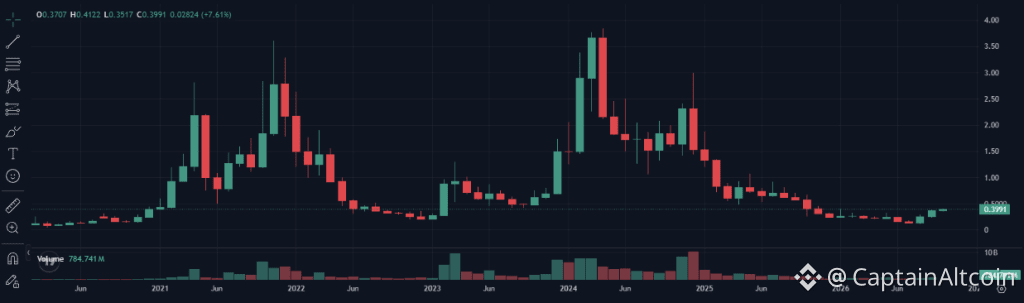 Source: CoinMarketCap/stacks
Several things are lining up at once:
Bitcoin yield has improved.
More STX is being locked.
Bitcoin Bond 1 sold out.
Institutional custody support is expanding.
The Satoshi One upgrade went live successfully.
That combination gives investors a stronger reason to reprice STX than simple short-term speculation.
For more crypto news and price predictions, click here.
Subscribe to our YouTube channel for daily crypto updates, market insights, and expert analysis.
The post Here’s Why Stacks (STX) Price Pumped appeared first on CaptainAltcoin.