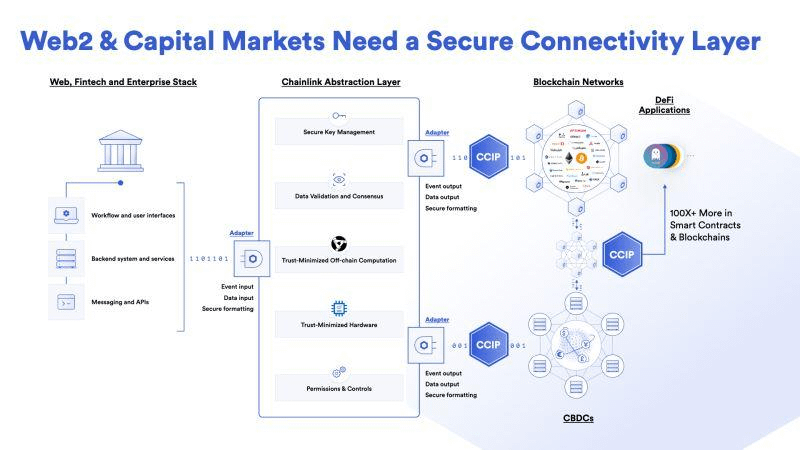

Chainlink has officially launched CCIP 2.0, the newest version of its Cross-Chain Interoperability Protocol, marking another major step toward making blockchain networks easier for institutions and digital asset issuers to connect.

The announcement was made on September 28, 2026, with Chainlink positioning CCIP 2.0 around three big themes: security, compliance, and faster cross-chain transactions.
So, what's actually new?
One of the biggest additions is Cross-Chain Verifiers (CCVs).
With CCIP 2.0, institutions can operate their own verifier or use an independent third-party verifier. These verifiers can independently check and cryptographically sign cross-chain transactions before they are executed on the destination blockchain.
The idea is pretty straightforward: instead of relying only on the default CCIP verification infrastructure, institutions can add another layer of verification based on their own requirements.
Chainlink says the default system remains in place, while additional verification can be added on top of it.
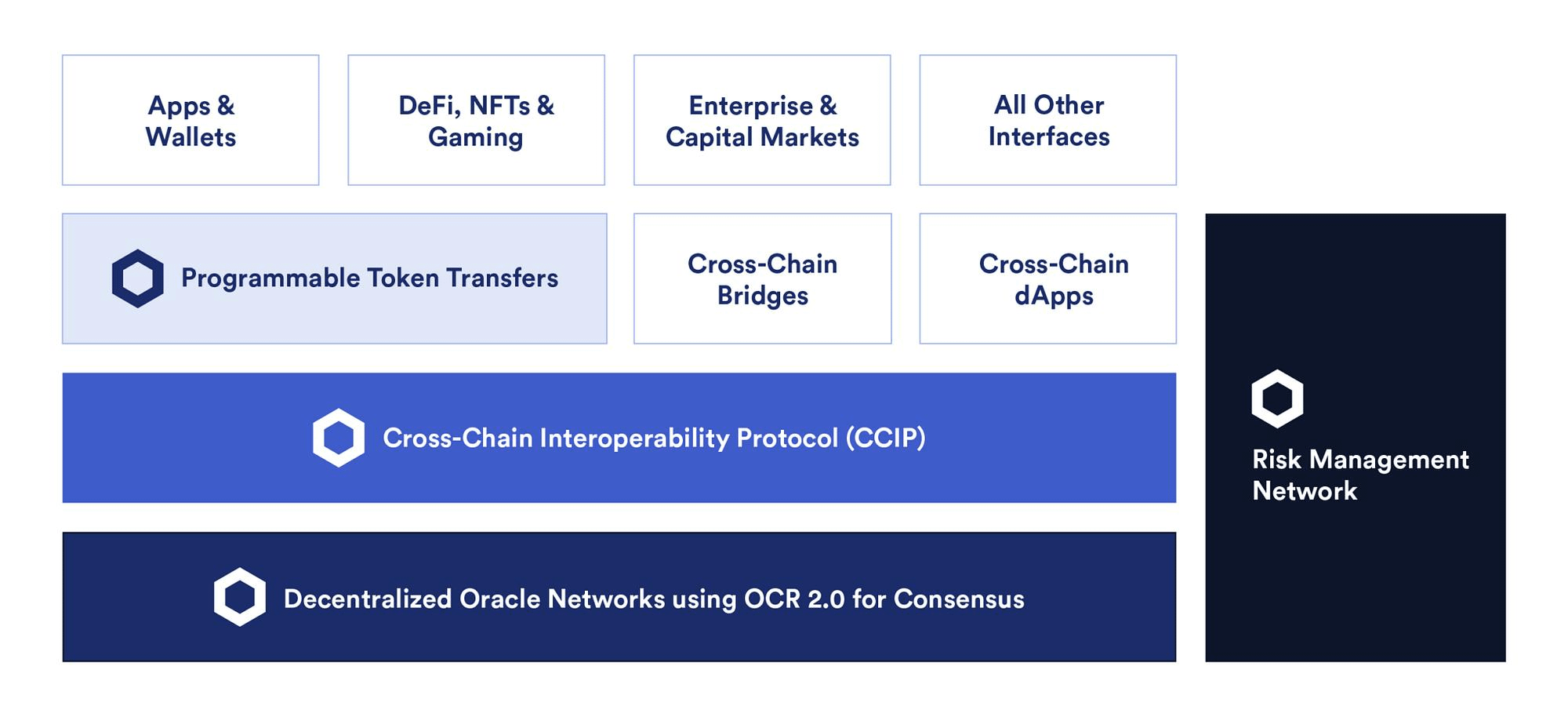
Faster transfers are also part of the upgrade ⚡
CCIP 2.0 introduces configurable confirmation settings, allowing users to choose between standard full-finality execution and faster-than-finality transfers.
That could be useful for different types of transactions. Smaller or frequent transfers may prioritize speed, while larger institutional transactions can continue waiting for stronger confirmation.
The default configuration still prioritizes full source-chain finality.
Compliance moves closer to the protocol
Another interesting part is the integration with Chainlink's Automated Compliance Engine (ACE).
This gives institutions tools to apply rules such as allowlists, denylists, sanctions screening, KYC/AML requirements and transaction limits to cross-chain transfers.
For tokenized assets, this matters because moving an asset between blockchains isn't only a technical problem. Institutions also need to deal with operational and regulatory requirements.
Why this matters
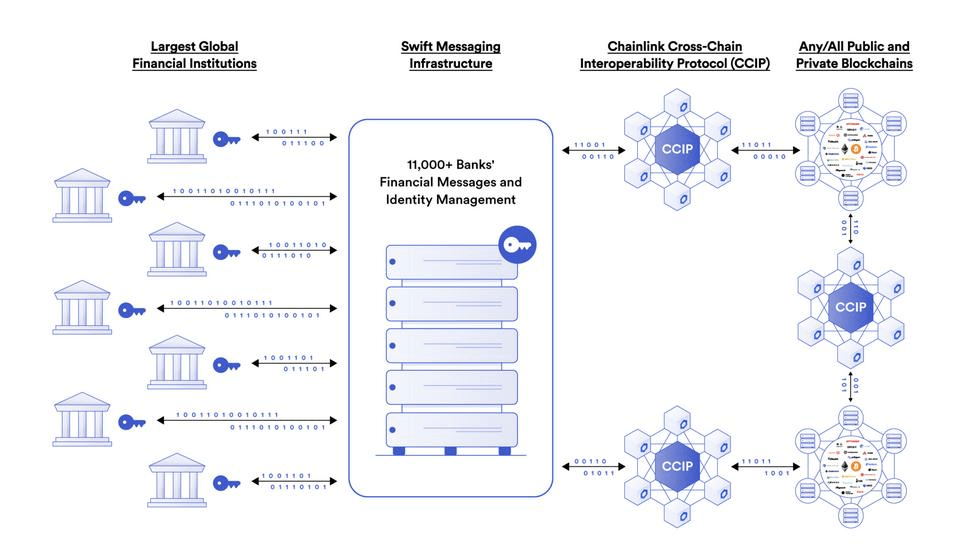
Chainlink says CCIP currently secures more than $84 billion in total cross-chain token value, while more than $15 billion in token value migrated to CCIP during the previous four months. The company also highlighted adoption from organizations across financial services, infrastructure and digital assets.
The bigger picture is that blockchain adoption is becoming less about individual chains and more about how those chains communicate with each other.
If tokenized stocks, funds, stablecoins and other real-world assets are going to move across multiple networks, infrastructure connecting those ecosystems becomes increasingly important.
CCIP 2.0 is Chainlink's latest attempt to build that infrastructure with more control for institutions, configurable transaction speeds and compliance features built into the cross-chain workflow.
And honestly, that's probably the part worth watching next: not just how many chains CCIP connects, but how much real financial activity eventually moves through those connections.