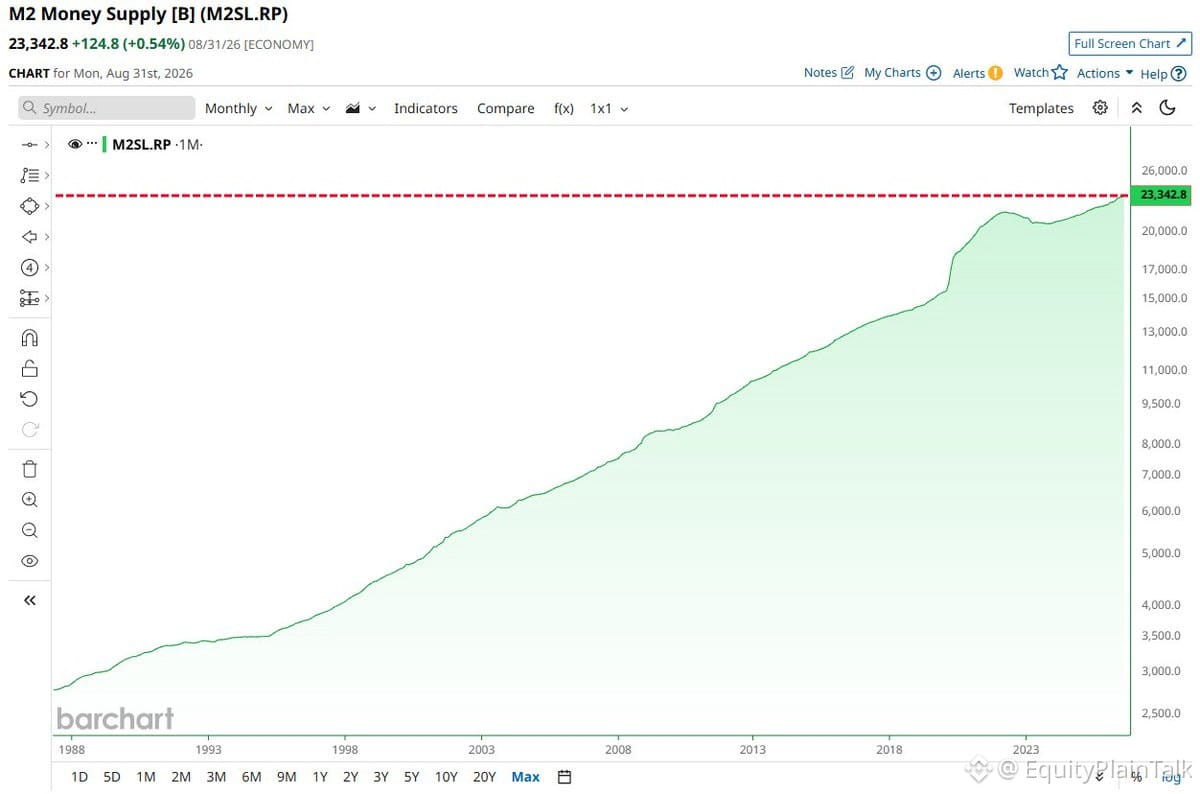
U.S. M2 money supply just hit a fresh record: $23.34 trillion.
For context, M2 tracks cash, checking accounts, savings, and money market funds—basically the money sloshing around the system that people can actually spend.
When M2 grows this fast, it usually means more liquidity in the economy. That can fuel asset prices (stocks, real estate, crypto), but it also raises inflation risks if supply can't keep up with demand.
We saw this play out in 2020-2021: M2 exploded, markets ripped, then inflation followed.
Now we're back at all-time highs. Worth watching how this flows into markets—and whether the Fed tightens again if inflation picks back up.
For context, M2 tracks cash, checking accounts, savings, and money market funds—basically the money sloshing around the system that people can actually spend.
When M2 grows this fast, it usually means more liquidity in the economy. That can fuel asset prices (stocks, real estate, crypto), but it also raises inflation risks if supply can't keep up with demand.
We saw this play out in 2020-2021: M2 exploded, markets ripped, then inflation followed.
Now we're back at all-time highs. Worth watching how this flows into markets—and whether the Fed tightens again if inflation picks back up.