Three Trade Setup Strategies
Here are three common ways to plan your trade setups, which you can also think of as different trading strategies.
Plan 1: Sharp Move Up → Reversal / Pullback
What does it look like?
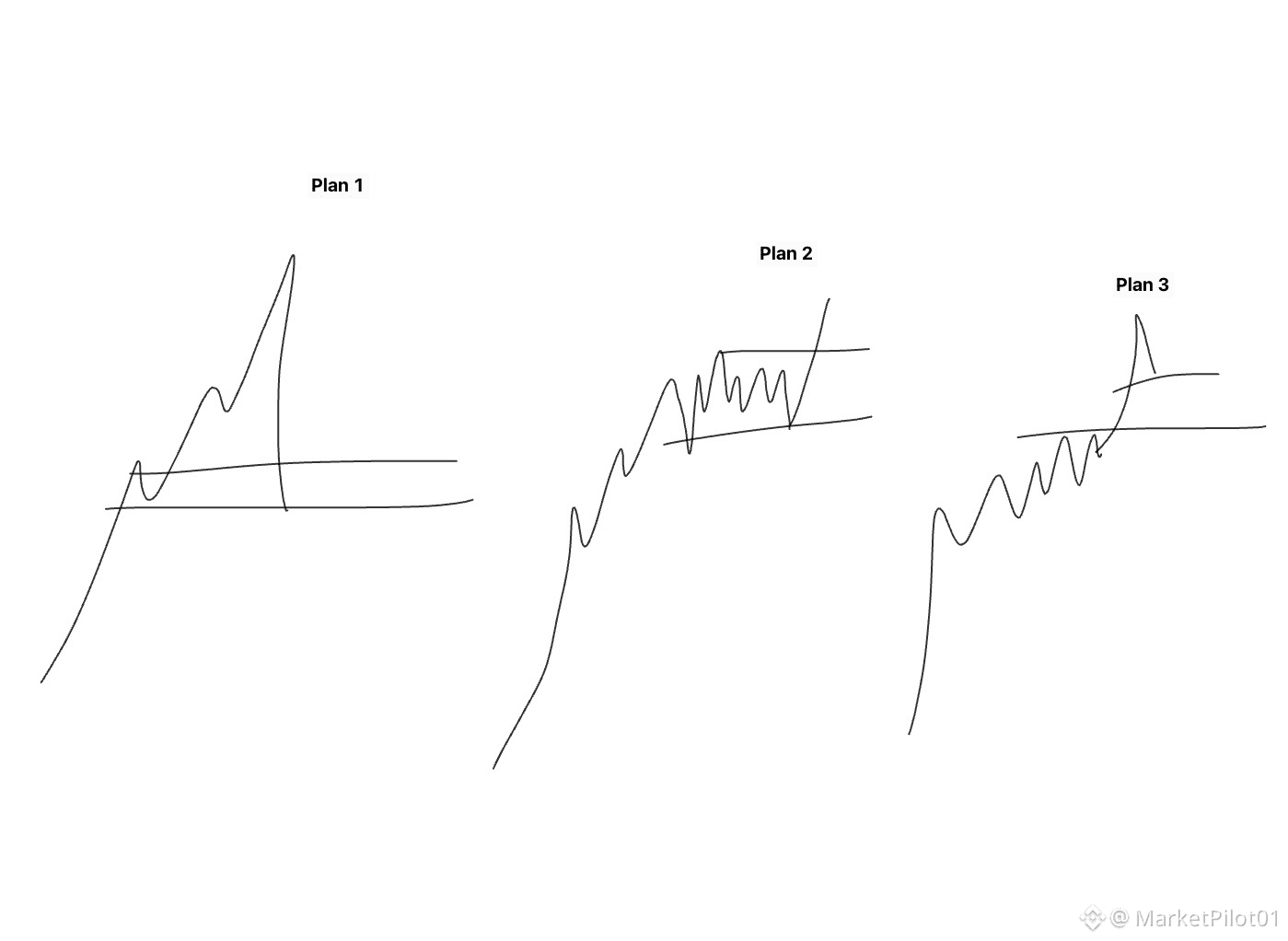
A sharp rally is followed by a sudden spike and then a steep drop.
How does it happen?
- FOMO buying pushes the price rapidly higher.
- Larger participants may sell into the strength.
- Price quickly reverses and breaks below a key support level.
How to trade it
- Avoid chasing the spike.
- Wait for the price to pull back toward previous demand or support levels.
- Look for confirmation that the level is holding before considering an entry.
---
Plan 2: Consolidation → Breakout
What does it look like?
A strong upward move is followed by sideways price action or consolidation, and then the price breaks out of the range.
Why does it happen?
- The market pauses and absorbs the previous move.
- Buyers and sellers compete within the consolidation range.
- A breakout can signal renewed buying momentum.
How to trade it
- Identify the consolidation zone and wait for a clear breakout.
- Consider entering on the breakout or waiting for a retest of the range.
- This setup can be used for trend-continuation trades.
---
Plan 3: Breakout → Retest
What does it look like?
Price breaks above resistance, pulls back, and retests the previous resistance level.
How does it happen?
- An initial breakout occurs.
- Some traders take profits, causing a temporary pullback.
- Buyers defend the breakout level, potentially turning previous resistance into new support.
How to trade it
- Wait for the retest and look for the price to hold above the previous resistance.
- A confirmed retest can offer a more structured entry than chasing the initial breakout.
- If the level holds, the price may continue in the direction of the breakout.
Simple Rule
Don't chase price. Identify the setup, wait for confirmation, manage risk, and then execute the trade according to your plan.
Here are three common ways to plan your trade setups, which you can also think of as different trading strategies.
Plan 1: Sharp Move Up → Reversal / Pullback
What does it look like?
A sharp rally is followed by a sudden spike and then a steep drop.
How does it happen?
- FOMO buying pushes the price rapidly higher.
- Larger participants may sell into the strength.
- Price quickly reverses and breaks below a key support level.
How to trade it
- Avoid chasing the spike.
- Wait for the price to pull back toward previous demand or support levels.
- Look for confirmation that the level is holding before considering an entry.
---
Plan 2: Consolidation → Breakout
What does it look like?
A strong upward move is followed by sideways price action or consolidation, and then the price breaks out of the range.
Why does it happen?
- The market pauses and absorbs the previous move.
- Buyers and sellers compete within the consolidation range.
- A breakout can signal renewed buying momentum.
How to trade it
- Identify the consolidation zone and wait for a clear breakout.
- Consider entering on the breakout or waiting for a retest of the range.
- This setup can be used for trend-continuation trades.
---
Plan 3: Breakout → Retest
What does it look like?
Price breaks above resistance, pulls back, and retests the previous resistance level.
How does it happen?
- An initial breakout occurs.
- Some traders take profits, causing a temporary pullback.
- Buyers defend the breakout level, potentially turning previous resistance into new support.
How to trade it
- Wait for the retest and look for the price to hold above the previous resistance.
- A confirmed retest can offer a more structured entry than chasing the initial breakout.
- If the level holds, the price may continue in the direction of the breakout.
Simple Rule
Don't chase price. Identify the setup, wait for confirmation, manage risk, and then execute the trade according to your plan.