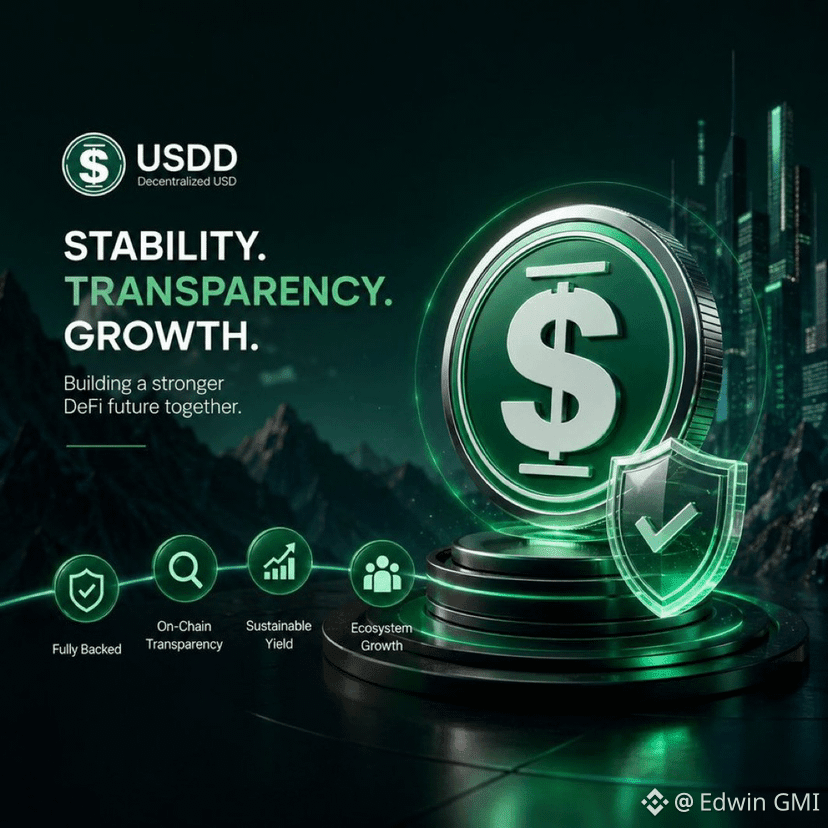
𝗧𝗥𝗨𝗦𝗧 𝗜𝗡 𝗗𝗘𝗙𝗜 𝗜𝗦𝗡’𝗧 𝗕𝗨𝗜𝗟𝗧 𝗕𝗬 𝗣𝗥𝗢𝗠𝗜𝗦𝗘𝗦. 𝗜𝗧’𝗦 𝗕𝗨𝗜𝗟𝗧 𝗕𝗬 𝗪𝗛𝗔𝗧 𝗨𝗦𝗘𝗥𝗦 𝗖𝗔𝗡 𝗩𝗘𝗥𝗜𝗙𝗬.
For a stablecoin, trust goes far beyond maintaining a target value.
Users need to understand what supports the system, how reserves are managed, where the yield comes from, and what mechanisms exist when market conditions change.
That makes transparency one of the most important foundations of decentralized finance.
𝗪𝗛𝗔𝗧 𝗗𝗢𝗘𝗦 𝗨𝗦𝗗𝗗 𝗣𝗨𝗧 𝗜𝗡 𝗙𝗥𝗢𝗡𝗧 𝗢𝗙 𝗨𝗦𝗘𝗥𝗦?
␥ 𝗢𝗡-𝗖𝗛𝗔𝗜𝗡 𝗩𝗜𝗦𝗜𝗕𝗜𝗟𝗜𝗧𝗬
Blockchain infrastructure allows relevant transactions and reserve information to be inspected on-chain.
That gives users an important advantage:
They don't have to rely entirely on statements.
They can verify available information themselves.
➢ 𝗖𝗢𝗟𝗟𝗔𝗧𝗘𝗥𝗔𝗟 𝗔𝗡𝗗 𝗥𝗜𝗦𝗞 𝗠𝗘𝗖𝗛𝗔𝗡𝗜𝗦𝗠𝗦
A stablecoin ecosystem needs mechanisms designed to manage changing market conditions.
Collateralization, liquidation processes, and other risk-management mechanisms form part of the infrastructure supporting USDD.
The goal is not to eliminate every possible risk.
No DeFi system can honestly make that guarantee.
The goal is to make the mechanisms and risks more transparent.
➜ 𝗬𝗜𝗘𝗟𝗗 𝗪𝗜𝗧𝗛 𝗔 𝗦𝗢𝗨𝗥𝗖𝗘
Another important part of trust is understanding where returns come from.
USDD's broader ecosystem includes opportunities connected to DeFi strategies such as lending, liquidity, and funding-fee-based strategies.
That distinction matters.
A yield percentage tells you how much a strategy has returned.
@justinsuntron
#TRONEcoStar @USDD - Decentralized USD
For a stablecoin, trust goes far beyond maintaining a target value.
Users need to understand what supports the system, how reserves are managed, where the yield comes from, and what mechanisms exist when market conditions change.
That makes transparency one of the most important foundations of decentralized finance.
𝗪𝗛𝗔𝗧 𝗗𝗢𝗘𝗦 𝗨𝗦𝗗𝗗 𝗣𝗨𝗧 𝗜𝗡 𝗙𝗥𝗢𝗡𝗧 𝗢𝗙 𝗨𝗦𝗘𝗥𝗦?
␥ 𝗢𝗡-𝗖𝗛𝗔𝗜𝗡 𝗩𝗜𝗦𝗜𝗕𝗜𝗟𝗜𝗧𝗬
Blockchain infrastructure allows relevant transactions and reserve information to be inspected on-chain.
That gives users an important advantage:
They don't have to rely entirely on statements.
They can verify available information themselves.
➢ 𝗖𝗢𝗟𝗟𝗔𝗧𝗘𝗥𝗔𝗟 𝗔𝗡𝗗 𝗥𝗜𝗦𝗞 𝗠𝗘𝗖𝗛𝗔𝗡𝗜𝗦𝗠𝗦
A stablecoin ecosystem needs mechanisms designed to manage changing market conditions.
Collateralization, liquidation processes, and other risk-management mechanisms form part of the infrastructure supporting USDD.
The goal is not to eliminate every possible risk.
No DeFi system can honestly make that guarantee.
The goal is to make the mechanisms and risks more transparent.
➜ 𝗬𝗜𝗘𝗟𝗗 𝗪𝗜𝗧𝗛 𝗔 𝗦𝗢𝗨𝗥𝗖𝗘
Another important part of trust is understanding where returns come from.
USDD's broader ecosystem includes opportunities connected to DeFi strategies such as lending, liquidity, and funding-fee-based strategies.
That distinction matters.
A yield percentage tells you how much a strategy has returned.
@justinsuntron
#TRONEcoStar @USDD - Decentralized USD