
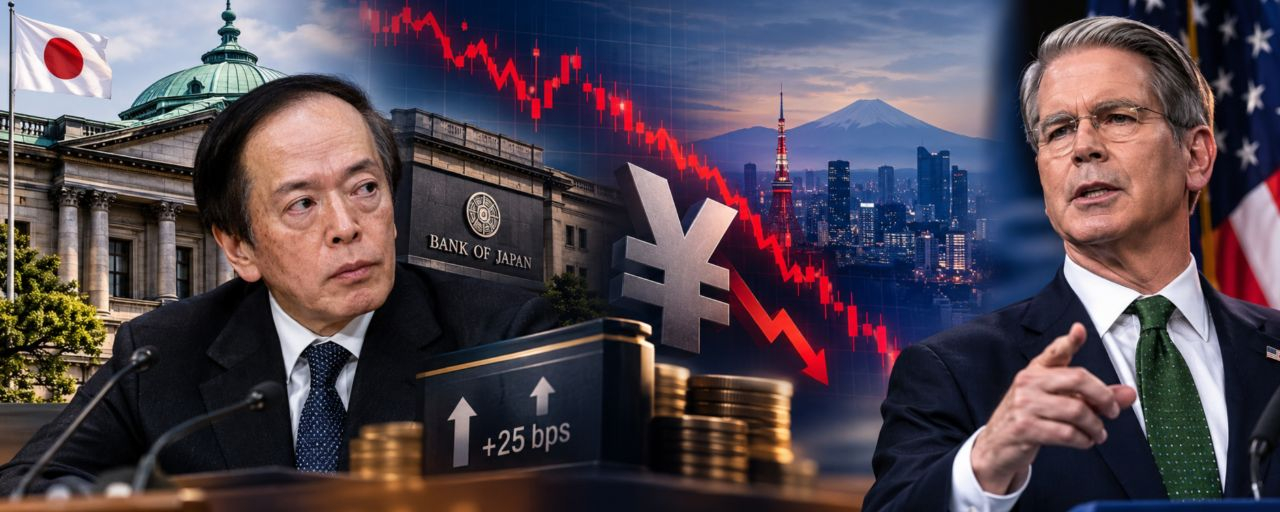

The yen is doing the opposite of what textbook economics would predict. Higher interest rates are supposed to support a currency. Instead, the yen extended its decline Friday after the Bank of Japan lifted its short-term rate target to 1.25% from 1.00%, a move that passed by a 7-2 vote, with board members Asada and Sato opposed. The dissent, more than the hike itself, is what rattled the market: two policymakers refusing to back the increase signals the BOJ may not be able to move as fast as some had hoped.
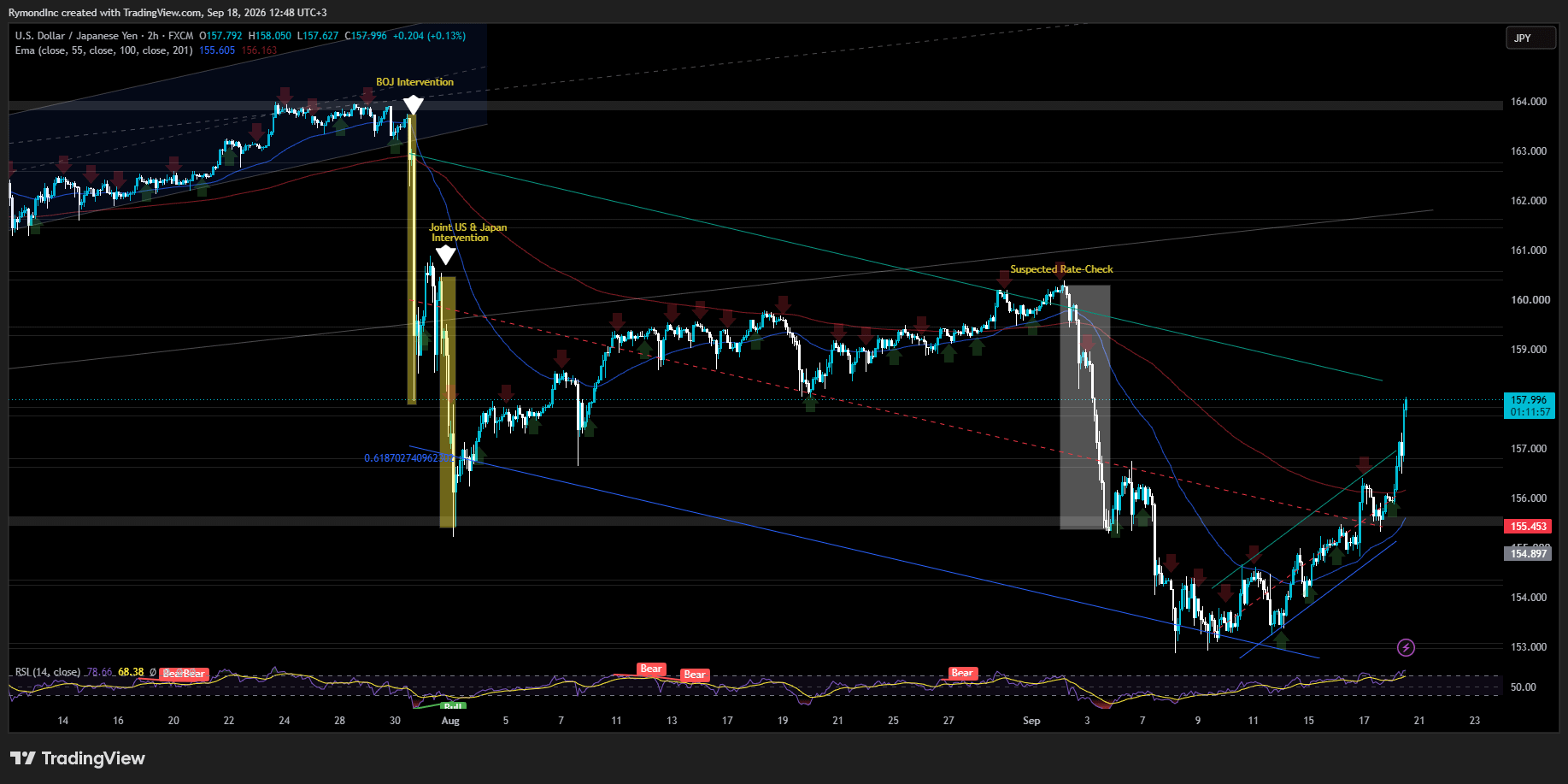
The currency dropped to a two-week low against the dollar, down more than 1% on the day to ¥157.90. Traders pointed squarely at the split vote as the reason, reasoning that a divided board makes a faster pace of tightening less likely going forward.
Governor Kazuo Ueda held his usual post-decision press conference and left the door open to further hikes, saying the bank would keep raising rates in response to how the economy and prices evolve, and that the stage for policy conduct has changed.
But the tone wasn't as aggressively hawkish as markets had been braced for, especially given that US Treasury Secretary Scott Bessent had previously pressed the BOJ to take decisive action to arrest yen weakness and anchor inflation. The bank delivered the hike, yet the currency moved the wrong way anyway.
On whether a 50-basis-point move or back-to-back hikes are on the table, Ueda said:
"That depends on how price conditions develop. There could be various possibilities. We shouldn't rule anything out. We're at a phase where we need to look at various data carefully. But that doesn't mean we can move slowly. We will analyse data carefully and take timely action as needed."
On the pace of future increases:
"As for the pace of future rate hikes, we don't have any pre-set idea in mind such as once every three months. We will determine at each policy meeting how best to ensure underlying inflation stabilises at 2%."
On the risks ahead:
"If the renewed rise in energy costs persists, that could add further pressure to wholesale inflation and then consumer inflation. That's something we need to look out for."
On financial conditions:
"Financial conditions are becoming less accommodative as we raise rates ... It's important to avoid financial conditions from tightening too much, or to cause a big adjustment in asset prices, by raising rates too sharply."
Ueda also made a point of separating rate policy from currency management, stressing that the BOJ sets rates based on economic indicators and inflation risk, not to prop up or manage the yen's exchange rate directly.
Kathleen Brooks, research director at XTB, said Ueda didn't sound as hawkish as expected. In her read, he muddied the message by talking up a new policy-making stage while simultaneously warning against moving too fast and risking asset-price volatility.
That, she argued, captures the BOJ's real bind: it needs to keep raising rates to get inflation under control, but Japan's debt load is so large that the central bank can't afford to spook the bond market and risk broader financial instability.
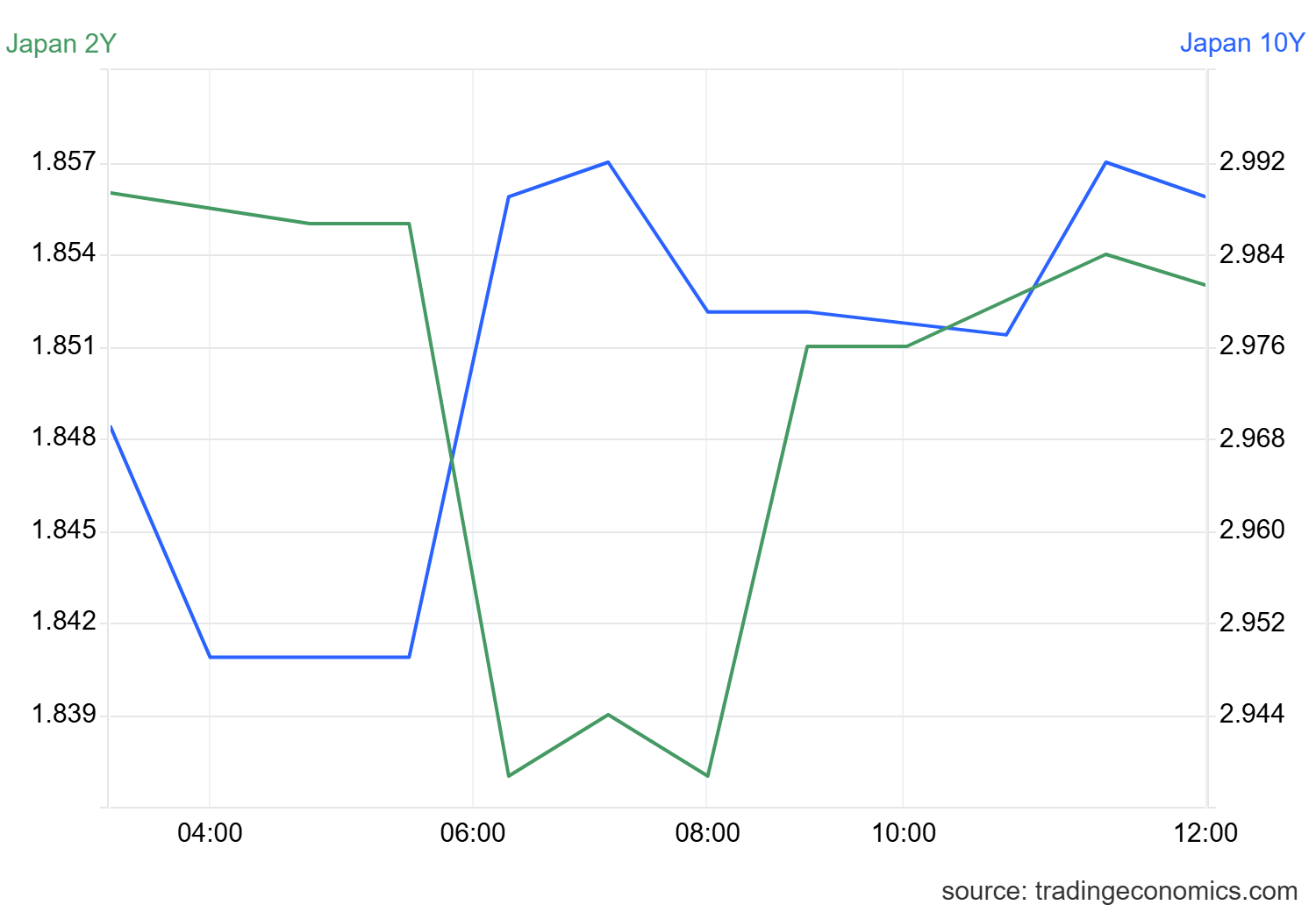
Anyone betting that this hike would trigger a wave of capital repatriation by Japanese funds and individuals got it wrong. The yen weakened on the day, and Japanese bond yields fell across the curve, the opposite of what a repatriation story would produce. The yield on Japan's 2 Year Bond Yield eased to 1.85%, a 0.01 pp decrease from the previous session. The 10-year government bond yield slipped to around 2.95% on Friday, extending its decline into a third session.
The yen is now closing in on levels that forced intervention last month, including 160, where the US and Japan carried out a joint operation to defend the currency for the first time in more than two decades.
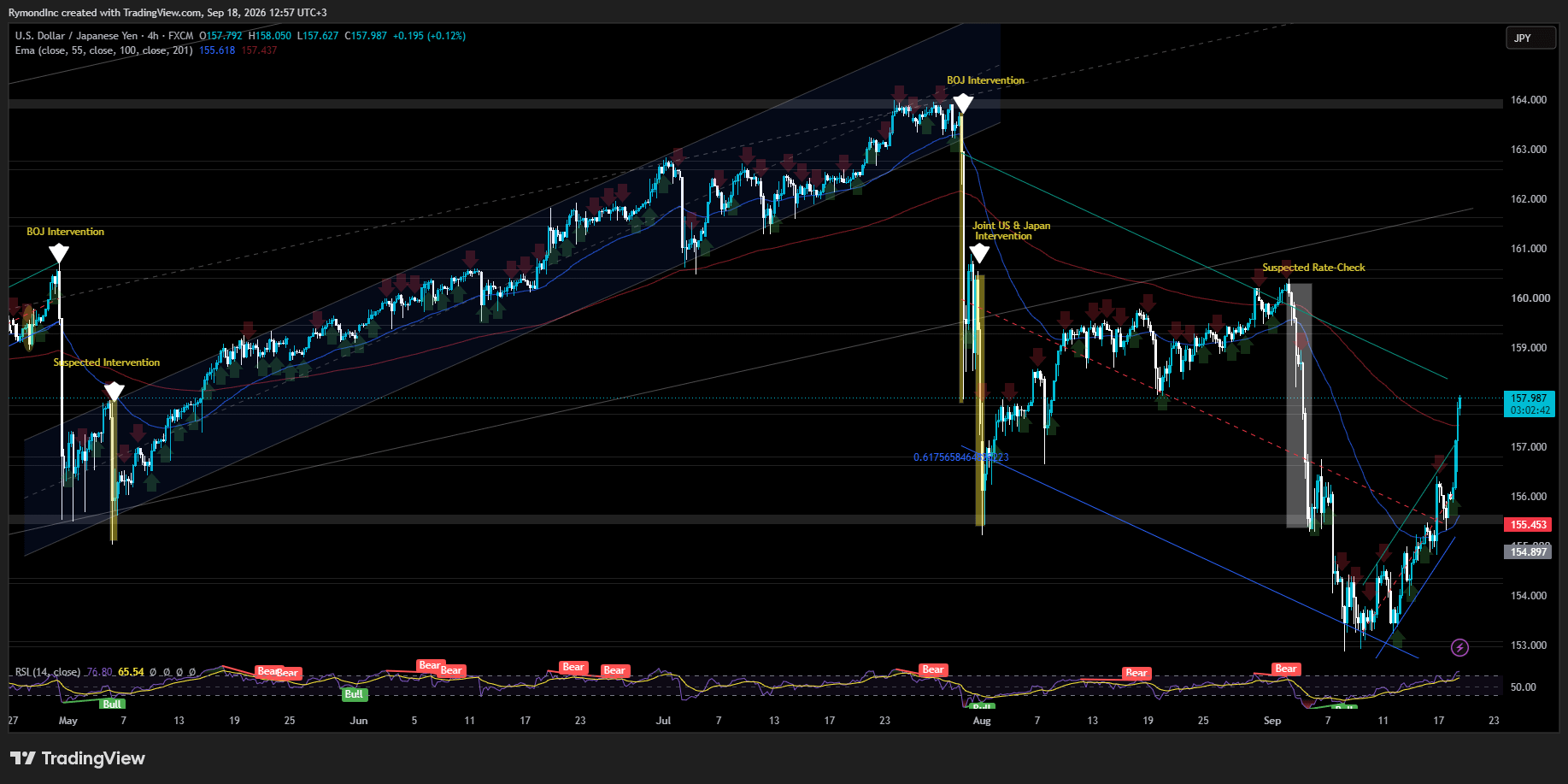
The G7 has coordinated on the yen before, selling it to weaken the currency after the 2011 earthquake, but that was the reverse trade. For the last time Washington and Tokyo worked together specifically to buy yen and prop it up, you have to go back to 1998, during Japan's banking crisis.
That rescue effort was front-loaded into two frantic trading days:
Japan's Total Spend: Japan deployed 15.39 trillion yen ($96.5 billion) between July 30 and August 26. The vast majority of this—estimated up to $85 billion—was burned in the massive two-day push alongside the US.
The US Contribution: While the exact official figure remains tightly held, the US leg was largely symbolic but highly impactful. Market estimates place the US Federal Reserve and Treasury's commitment between $5 billion and $10 billion.
Anyone positioned for Japanese capital repatriation on the back of this hike got the trade wrong today. The yen weakened. Japanese government bond yields fell across the curve. The rate went up. The currency logic didn't follow.
The BOJ has more room to hike from here. Whether the yen believes it before the next meeting is the real question.
Sources: Reuters, Bloomberg, CNBC, The Guardian, XTB