I notice calm when things actually finish.
In trading, uncertainty is expensive. You feel it when a position is open longer than planned, when confirmation drags, when “almost final” becomes a risk factor. That’s why finality became a serious conversation again in 2024, and why infrastructure projects like Plasma drew attention from traders who care more about certainty than spectacle.
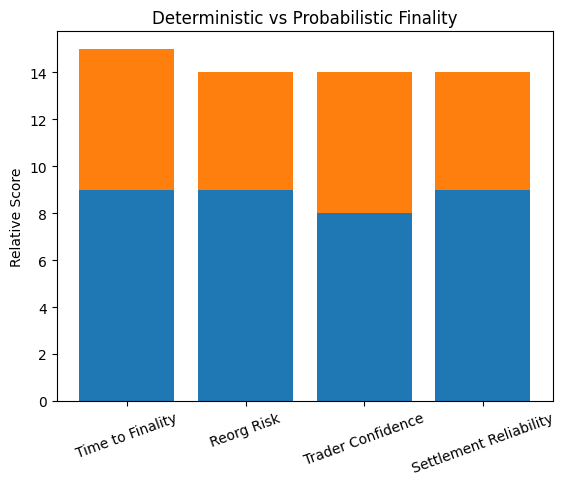
Finality sounds abstract, but it’s simple. It answers one question: when is a transaction truly done? In many blockchains, finality is probabilistic. Blocks become more “likely” to be final as time passes, but they can still be reorganized. That model works for experimentation, but it introduces risk for settlement, accounting, and large value transfers. Plasma takes a different approach. It focuses on deterministic finality, where outcomes are decided clearly and do not drift over time.
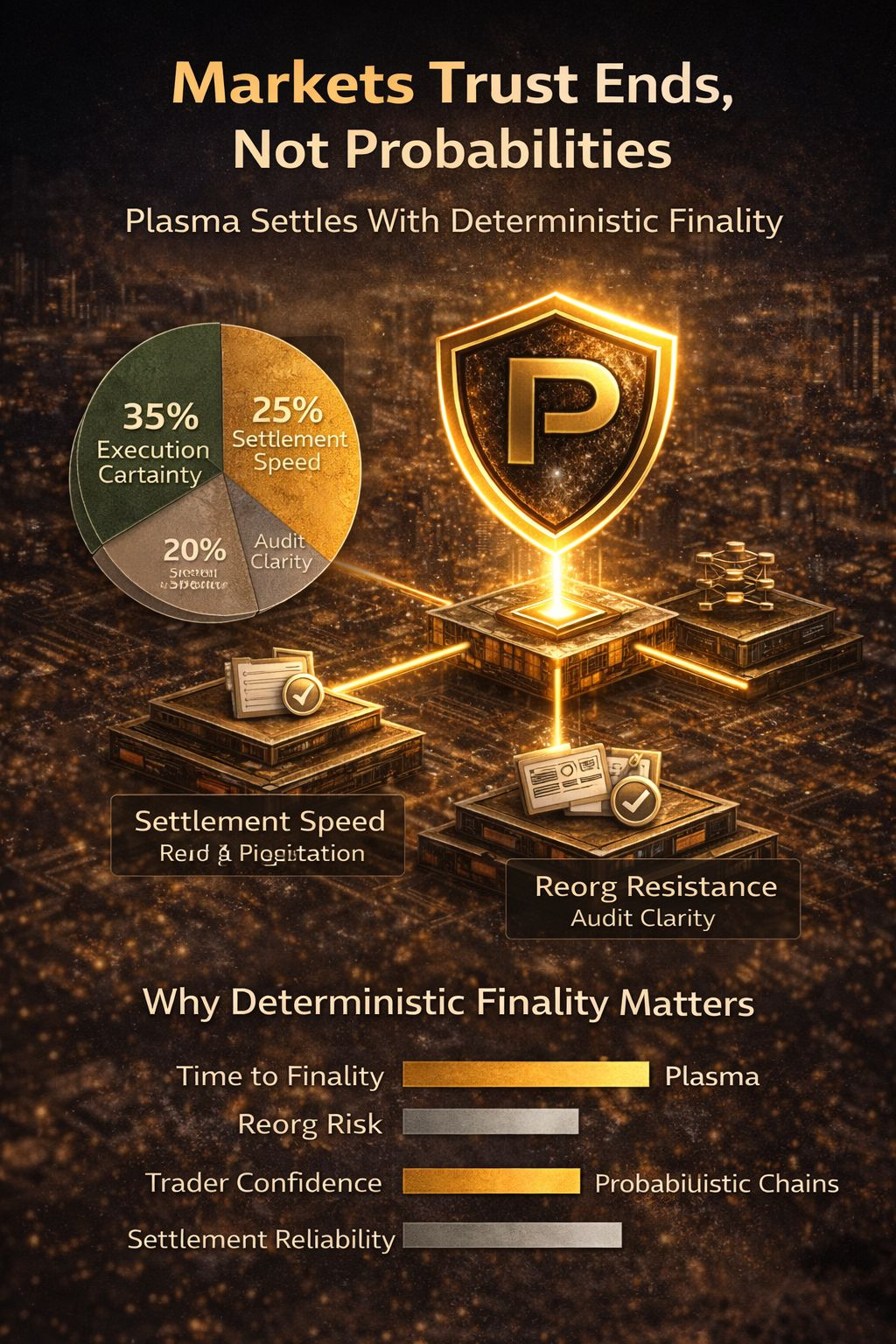
Why is this topic trending now? Because the market matured. In 2024, on-chain activity shifted toward stablecoins, payments, and treasury operations. These flows don’t tolerate ambiguity. Public data shows stablecoin volumes remained dominant even as speculative activity cooled. When value is meant to stay stable, execution must be stable too. Finality stopped being a research topic and became an operational requirement.
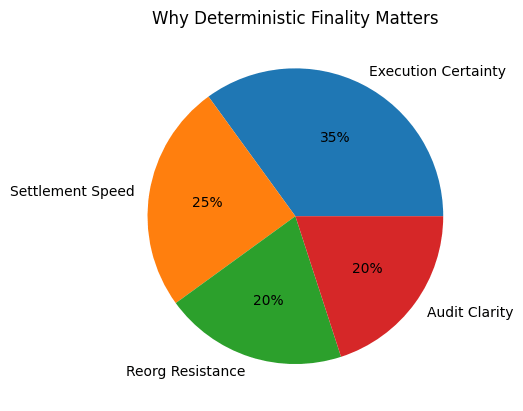
Plasma’s architecture reflects that shift. Deterministic finality means once a transaction is confirmed, it’s finished. No waiting for extra confirmations. No probability curves. For traders, that reduces exposure to reorg risk. For developers, it simplifies logic. For institutions, it supports reconciliation and reporting without guesswork.
Technically, this matters because settlement systems are judged on their worst days, not their best ones. In periods of congestion or stress, probabilistic systems can behave unpredictably. Plasma’s design prioritizes consistency under load. Validators coordinate to reach clear outcomes, rather than letting time slowly increase confidence. That coordination costs discipline, but it buys trust.
Progress here hasn’t been loud. Throughout 2024, Plasma development emphasized reliability over novelty. Improvements focused on validator communication, execution guarantees, and state clarity. These aren’t upgrades that trend on social media. They’re upgrades that show up in reduced operational friction.
From a trader’s perspective, finality shapes behavior. When you know exactly when a trade settles, you manage risk differently. You size positions with more confidence. You hedge with cleaner assumptions. I’ve learned that markets reward systems that make time explicit instead of elastic.
There’s also a psychological dimension. Probabilistic systems ask users to believe that nothing will go wrong if they wait long enough. Deterministic systems ask users to verify an outcome once and move on. Plasma leans toward the second approach. That feels closer to how traditional settlement systems operate, and that familiarity matters as more conservative capital enters crypto.
Explain it simply: deterministic finality reduces cognitive load. You don’t track confirmations. You don’t model edge cases. You accept an outcome and proceed. That simplicity compounds across an ecosystem. Developers build cleaner applications. Auditors trace cleaner histories. Traders sleep better.
Philosophically, finality is about responsibility. A system that commits to outcomes accepts the consequences of those outcomes. A system that delays commitment spreads responsibility across time. Plasma appears comfortable committing. That suggests confidence in its own coordination.
Why does this matter for investors? Because finality reduces tail risk. Tail risks rarely show up in daily metrics, but they dominate long-term outcomes. Reorgs, disputed states, and delayed settlements erode confidence quietly. Systems designed to minimize those events attract capital that plans to stay.
I’ve watched networks lose relevance not because they were slow or expensive, but because they were ambiguous. Users didn’t know when something was truly complete. That uncertainty limited serious use. Plasma’s emphasis on deterministic finality addresses that limitation directly.
In 2024, as regulation tightened and institutional participation increased, clarity became valuable. Regulators, auditors, and compliance teams don’t work with probabilities. They work with records. Finality turns activity into records. Plasma’s design choices seem aligned with that reality.
Philosophically, markets function on closure. Trades close. Books close. Risk closes. Systems that respect closure earn trust over time. Plasma treats finality not as a technical detail, but as a core economic property.
I trust infrastructure that knows when to stop. Endless possibility sounds innovative, but decisive outcomes build real systems. In the long run, markets don’t reward uncertainty dressed as flexibility. They reward clarity.
Finality isn’t exciting. It’s dependable. And dependability is what serious markets eventually choose.