
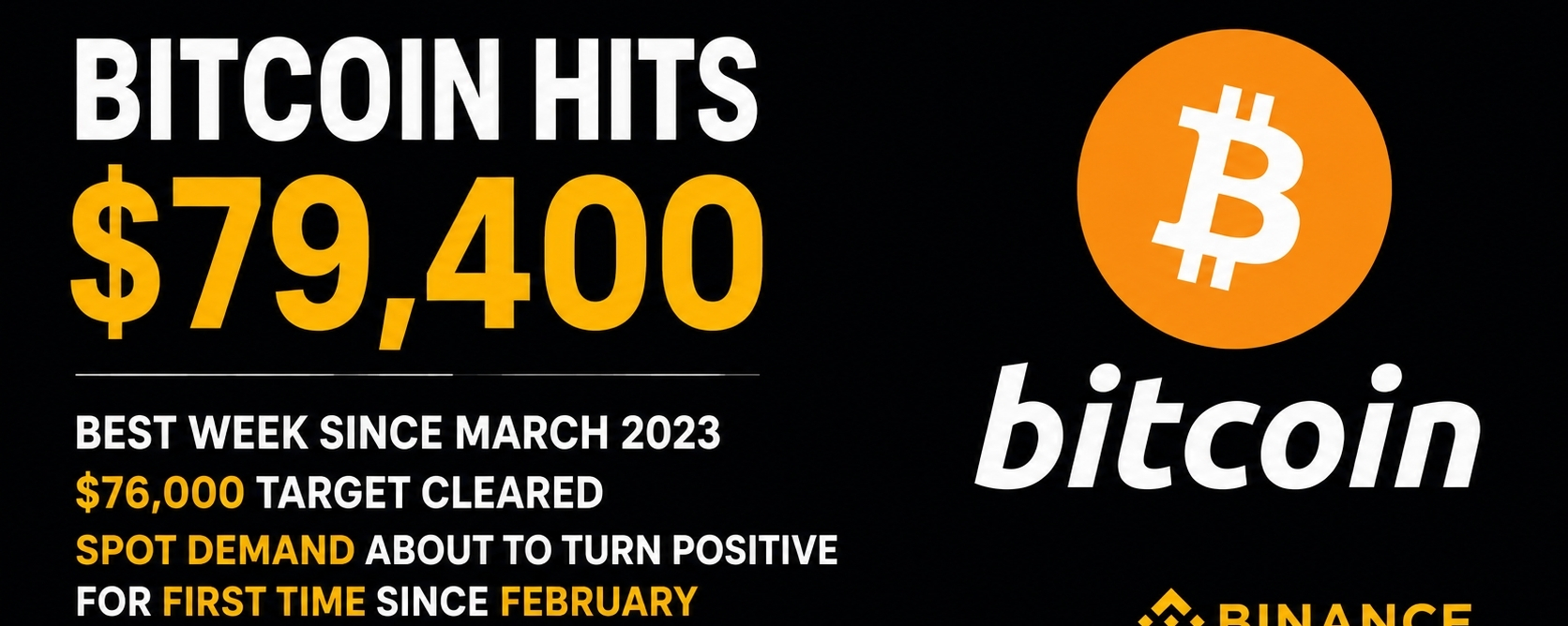

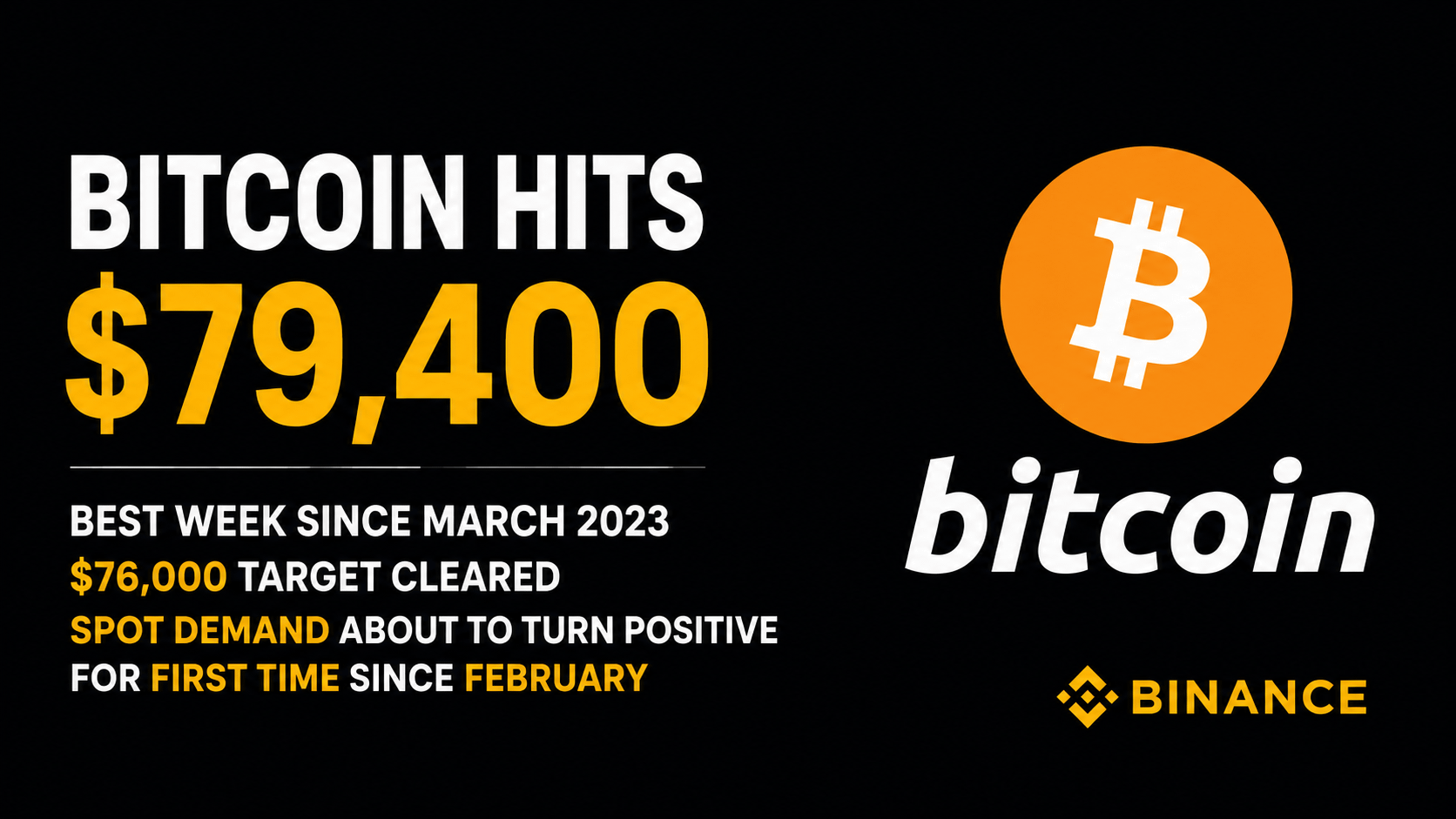
Bitcoin reaching $79,400 is a strong move, but the price itself is not the most interesting part of the story. The bigger signal is the possibility that spot demand is about to turn positive for the first time since February.
That distinction matters because Bitcoin can rally hard without investors necessarily buying the underlying asset. Derivatives markets can push prices higher through leverage, short liquidations, and traders positioning for another leg up. Those flows can create a convincing breakout, but they do not automatically mean that investors are accumulating Bitcoin. Spot buying is different. It represents capital being used to purchase the asset itself.
That puts the move above $76,000 in a more useful context. Breaking a widely watched level can attract momentum traders and force short sellers to close positions, which can accelerate the move. But those effects can fade quickly. The more important question is whether buyers continue stepping in after the initial breakout has already happened.
The $76,000 area could become especially important from here. If Bitcoin trades back toward that level and buyers continue absorbing available supply, former resistance could turn into meaningful support. That would suggest the market is accepting the new price range rather than simply reacting to a burst of momentum. On the other hand, losing $76,000 while spot demand weakens would make the rally look increasingly dependent on leverage and positioning.
Bitcoin’s supply dynamics make this even more important. The total supply is predictable, but the amount of Bitcoin actually available for sale at any given price is not. Long-term holders, miners, institutions, funds, and other market participants all have different reasons for selling. When new demand arrives and relatively few holders want to sell, price can move sharply because buyers have to compete for limited liquidity.
The opposite can happen as well. A fast rally can encourage existing holders to sell into strength, increasing available supply just as new buyers are entering. That is why a strong weekly performance, even one described as Bitcoin’s best since March 2023, does not by itself prove that the trend is sustainable. It shows how quickly the market has repriced. It does not explain whether the demand behind that repricing will persist.
Institutional access adds another variable. Spot-based investment products give traditional investors a direct route into Bitcoin exposure, making actual spot flows increasingly relevant. But institutional demand should not be treated as permanently committed capital. Investors can add exposure, reduce it, or rebalance. What matters is whether net buying remains strong enough to absorb the Bitcoin that existing holders are willing to sell.
So the next signal worth watching is not simply another round number above $79,400. It is whether spot demand keeps improving while Bitcoin holds the territory it has just reclaimed. If that happens, the breakout has a stronger foundation than one driven mainly by derivatives activity and liquidations. If spot demand fades, the impressive weekly move may prove to have been more about positioning than lasting accumulation.
