#dusk $DUSK @Dusk DUSK: A Parte das Finanças em Blockchain que as Pessoas Geralmente Deixam de Perceber
Quanto mais eu estudo $DUSK , mais penso que o rótulo de privacidade esconde justamente a parte mais interessante do projeto.
Os mercados financeiros não têm apenas um problema simples de transparência.
Eles têm um problema de gerenciamento de informações.
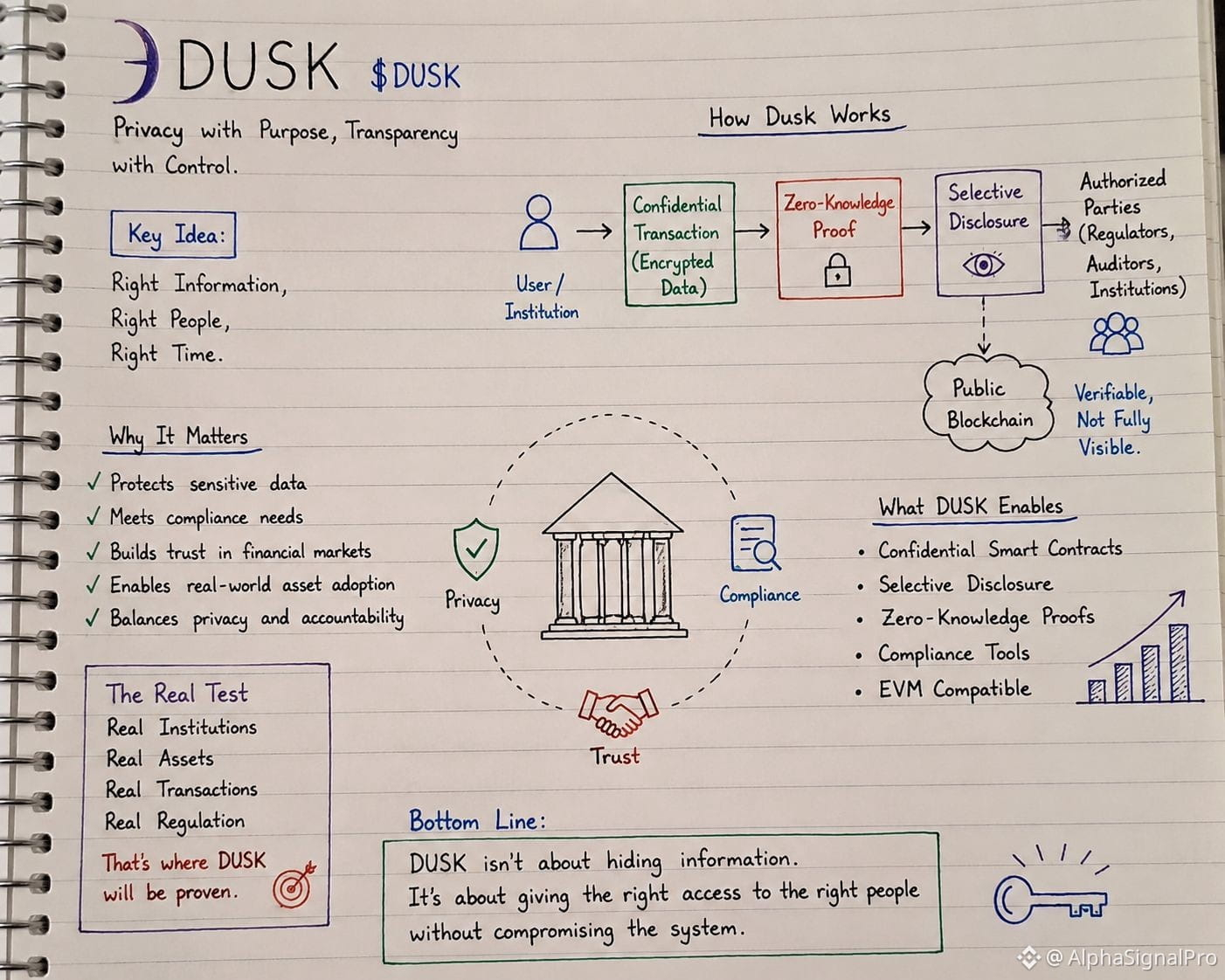
Um banco, um fundo ou um emissor de ativos pode precisar provar que uma transação é legítima sem colocar todos os detalhes dessa transação diante de toda a rede.
Isso parece óbvio, mas muda a forma como eu enxergo a infraestrutura de blockchain.
A verificação pública é útil. Visibilidade pública completa nem sempre é prática.
É aqui que o Dusk se torna interessante para mim. A abordagem dele sugere que as finanças baseadas em blockchain podem ser construídas em torno de acesso controlado a informações sensíveis, mantendo ainda assim a atividade verificável.
Acho que essa distinção importa mais do que a narrativa usual de “moeda de privacidade”.
Porque, se títulos tokenizados, fundos ou outros ativos regulados acabarem se movendo on-chain, as instituições não vão escolher uma infraestrutura apenas porque ela é rápida.
Elas vão fazer perguntas mais difíceis:
Quem pode ver os dados?
Quem tem permissão para verificá-los?
O que acontece quando um regulador precisa de acesso?
E o sistema consegue lidar com tudo isso sem transformar cada transação em um registro público?
Essas são as perguntas que eu usaria para avaliar o Dusk.
Ainda estou acompanhando de perto o lado da adoção. A tecnologia pode parecer excelente na documentação, mas a infraestrutura financeira precisa sobreviver a usuários reais, a instituições reais e a pressões regulatórias reais.
É por isso que estou observando o DUSK—não pelo título de privacidade, mas por ver se ele consegue fazer a transparência controlada funcionar de verdade nas finanças.#SamsungToAnnounceNewShareholderReturnPlanFriday
Quanto mais eu estudo $DUSK , mais penso que o rótulo de privacidade esconde justamente a parte mais interessante do projeto.
Os mercados financeiros não têm apenas um problema simples de transparência.
Eles têm um problema de gerenciamento de informações.
Um banco, um fundo ou um emissor de ativos pode precisar provar que uma transação é legítima sem colocar todos os detalhes dessa transação diante de toda a rede.
Isso parece óbvio, mas muda a forma como eu enxergo a infraestrutura de blockchain.
A verificação pública é útil. Visibilidade pública completa nem sempre é prática.
É aqui que o Dusk se torna interessante para mim. A abordagem dele sugere que as finanças baseadas em blockchain podem ser construídas em torno de acesso controlado a informações sensíveis, mantendo ainda assim a atividade verificável.
Acho que essa distinção importa mais do que a narrativa usual de “moeda de privacidade”.
Porque, se títulos tokenizados, fundos ou outros ativos regulados acabarem se movendo on-chain, as instituições não vão escolher uma infraestrutura apenas porque ela é rápida.
Elas vão fazer perguntas mais difíceis:
Quem pode ver os dados?
Quem tem permissão para verificá-los?
O que acontece quando um regulador precisa de acesso?
E o sistema consegue lidar com tudo isso sem transformar cada transação em um registro público?
Essas são as perguntas que eu usaria para avaliar o Dusk.
Ainda estou acompanhando de perto o lado da adoção. A tecnologia pode parecer excelente na documentação, mas a infraestrutura financeira precisa sobreviver a usuários reais, a instituições reais e a pressões regulatórias reais.
É por isso que estou observando o DUSK—não pelo título de privacidade, mas por ver se ele consegue fazer a transparência controlada funcionar de verdade nas finanças.#SamsungToAnnounceNewShareholderReturnPlanFriday