

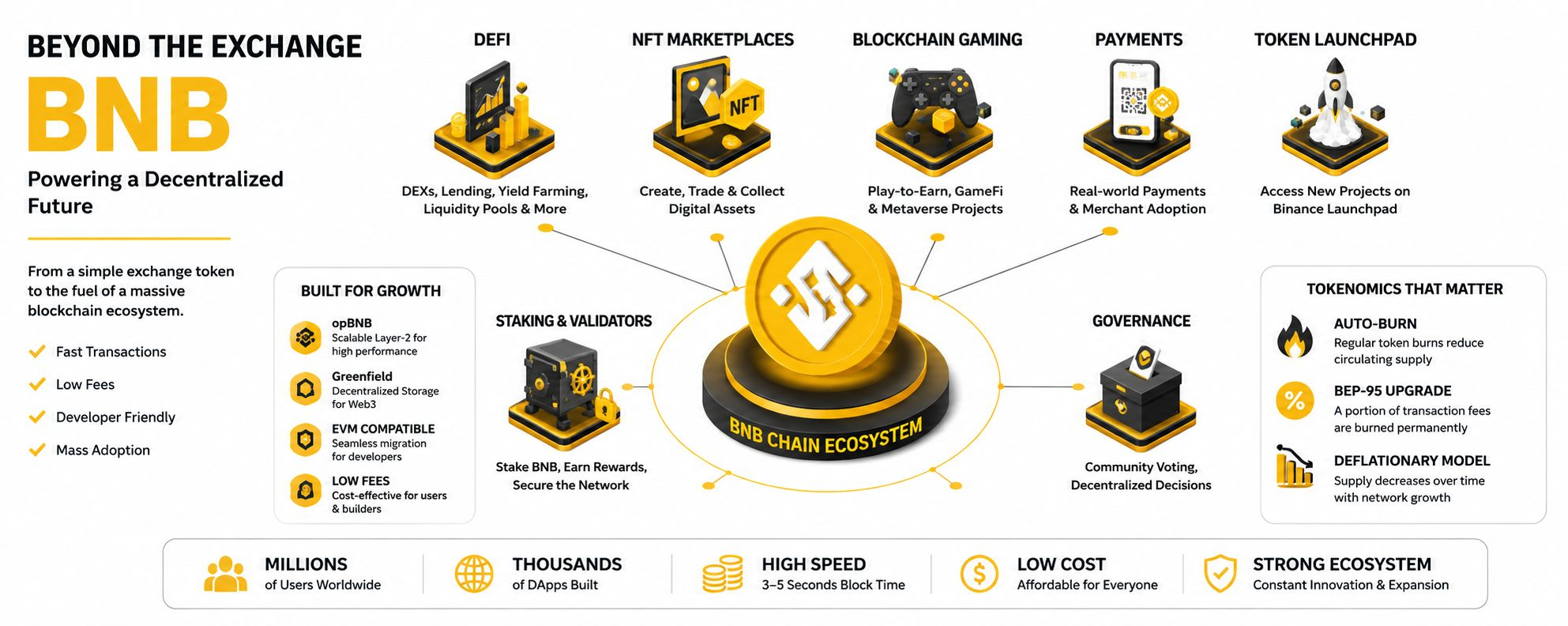

Quando as pessoas ouvem falar pela primeira vez sobre BNB, muitas presumem que seja simplesmente o token nativo da Binance, a maior exchange de criptomoedas do mundo. Embora esse tenha sido o seu propósito original, a história do BNB cresceu muito além de taxas de negociação com desconto. Desde seu lançamento em 2017, o BNB se transformou na base de um dos maiores ecossistemas de blockchain da indústria cripto. Hoje, ele impulsiona as finanças descentralizadas (DeFi), marketplaces de NFTs, jogos em blockchain, staking, pagamentos, lançamentos de tokens e milhares de aplicações descentralizadas. Essa evolução destaca uma realidade importante nas criptos: os projetos que sobrevivem são, em geral, aqueles que expandem continuamente sua utilidade no mundo real, em vez de depender apenas de hype do mercado.
O crescimento da BNB está intimamente ligado ao desenvolvimento da BNB Chain, um ecossistema blockchain criado para oferecer transações rápidas, baixas taxas e compatibilidade com aplicações baseadas em Ethereum. Os desenvolvedores podem implantar smart contracts facilmente usando ferramentas familiares, enquanto se beneficiam de custos operacionais mais baixos do que muitos outros redes concorrentes. Isso atraiu uma comunidade diversa de criadores criando exchanges descentralizadas, protocolos de empréstimo, plataformas de pagamento, aplicações de IA e serviços Web3. À medida que o ecossistema se expandiu com soluções como opBNB para escalabilidade e Greenfield para armazenamento descentralizado, a BNB passou gradualmente a ser mais do que apenas uma criptomoeda — ela se tornou o combustível econômico que impulsiona toda uma infraestrutura digital.
Um dos recursos mais fortes da BNB é sua tokenomics. Diferente de criptomoedas com inflação ilimitada, a BNB segue um modelo deflacionário. O projeto remove tokens de circulação regularmente por meio do seu mecanismo Auto-Burn, enquanto uma parte das taxas de transação é queimada permanentemente por meio da atualização BEP-95. Isso significa que a oferta em circulação diminui gradualmente com o tempo, em vez de aumentar continuamente. Embora a oferta menor, por si só, não garanta preços mais altos, muitos investidores consideram essa abordagem benéfica porque alinha a economia do token ao crescimento da atividade da rede. Quanto mais usuários interagem com a blockchain, mais taxas são geradas, e parte dessas taxas contribui para reduzir a oferta total.
Além da tokenomics, a BNB oferece utilidade real em múltiplos setores da economia da blockchain. Ela é usada para pagar taxas de transação, participar de staking, garantir a rede por meio de operações de validadores, votar em propostas de governança, acessar projetos do Binance Launchpad, prover liquidez em protocolos de finanças descentralizadas e interagir com marketplaces de NFT e jogos blockchain. Muitos comerciantes e provedores de pagamento também aceitam BNB para transações no mundo real, demonstrando que sua utilidade vai além do trading de criptomoedas. Essa ampla gama de aplicações ajuda a criar demanda contínua, fazendo da BNB um dos poucos ativos digitais cuja utilidade alcança milhões de usuários em todo o mundo.
Para traders, a BNB continua sendo uma das criptomoedas mais ativamente negociadas devido à sua liquidez profunda e ao amplo suporte nas exchanges. Ela é adequada para scalping de curto prazo, day trading, swing trading e investimentos de longo prazo. Traders técnicos frequentemente acompanham níveis de suporte e resistência, médias móveis, RSI, MACD, tendências de volume e o sentimento geral do mercado antes de tomar decisões. No entanto, investidores experientes entendem que a análise técnica é apenas uma parte do quebra-cabeça. Eles também prestam bastante atenção ao crescimento do ecossistema, atividade dos desenvolvedores, volume de transações, valor total bloqueado na DeFi, participação de validadores e condições macroeconômicas, já que esses fatores muitas vezes influenciam o desempenho de preços de longo prazo mais do que padrões de curto prazo no gráfico.
Apesar de suas forças, a BNB não está isenta de riscos. Mudanças regulatórias que afetam a Binance podem influenciar o sentimento do mercado, enquanto a crescente concorrência de redes blockchain como Ethereum, Solana, Avalanche e outros ecossistemas de Layer-1 continua desafiando sua posição no mercado. Como toda criptomoeda, a BNB também segue exposta à volatilidade, à mudança na confiança dos investidores e aos riscos de segurança associados a aplicações descentralizadas de terceiros. Essas incertezas lembram os investidores de que uma tecnologia forte, por si só, não elimina o risco de mercado, tornando a pesquisa adequada e a gestão de risco essenciais.
Olho para o futuro, a BNB Chain continua investindo em escalabilidade, integração com inteligência artificial, armazenamento descentralizado, ferramentas de desenvolvimento aprimoradas e desempenho de blockchain mais rápido. Se a adoção continuar a se expandir e os desenvolvedores continuarem criando aplicações valiosas, a BNB pode fortalecer seu papel como um dos principais ativos na economia Web3. Sua jornada, de um simples token de exchange até a espinha dorsal de um ecossistema blockchain próspero, mostra como inovação contínua e utilidade prática podem gerar relevância duradoura em uma indústria que muda com uma velocidade notável. Em vez de ser definida apenas por especulação, o sucesso de longo prazo da BNB provavelmente dependerá de sua capacidade de continuar resolvendo problemas reais, ao mesmo tempo em que atrai desenvolvedores, empresas e usuários que veem valor em construir a próxima geração de aplicações descentralizadas.:::