Quando a aviação se tornou mais complexa, o objetivo não era colocar mais informações na frente dos pilotos. Era decidir o que realmente precisava estar visível.
No começo, eu presumi que as finanças com blockchain funcionariam de maneira diferente. Colocar valores mobiliários on-chain, tornar a titularidade transparente e permitir que todos verificassem tudo.
Quanto mais eu leio sobre #dusk , menos certo eu fico.
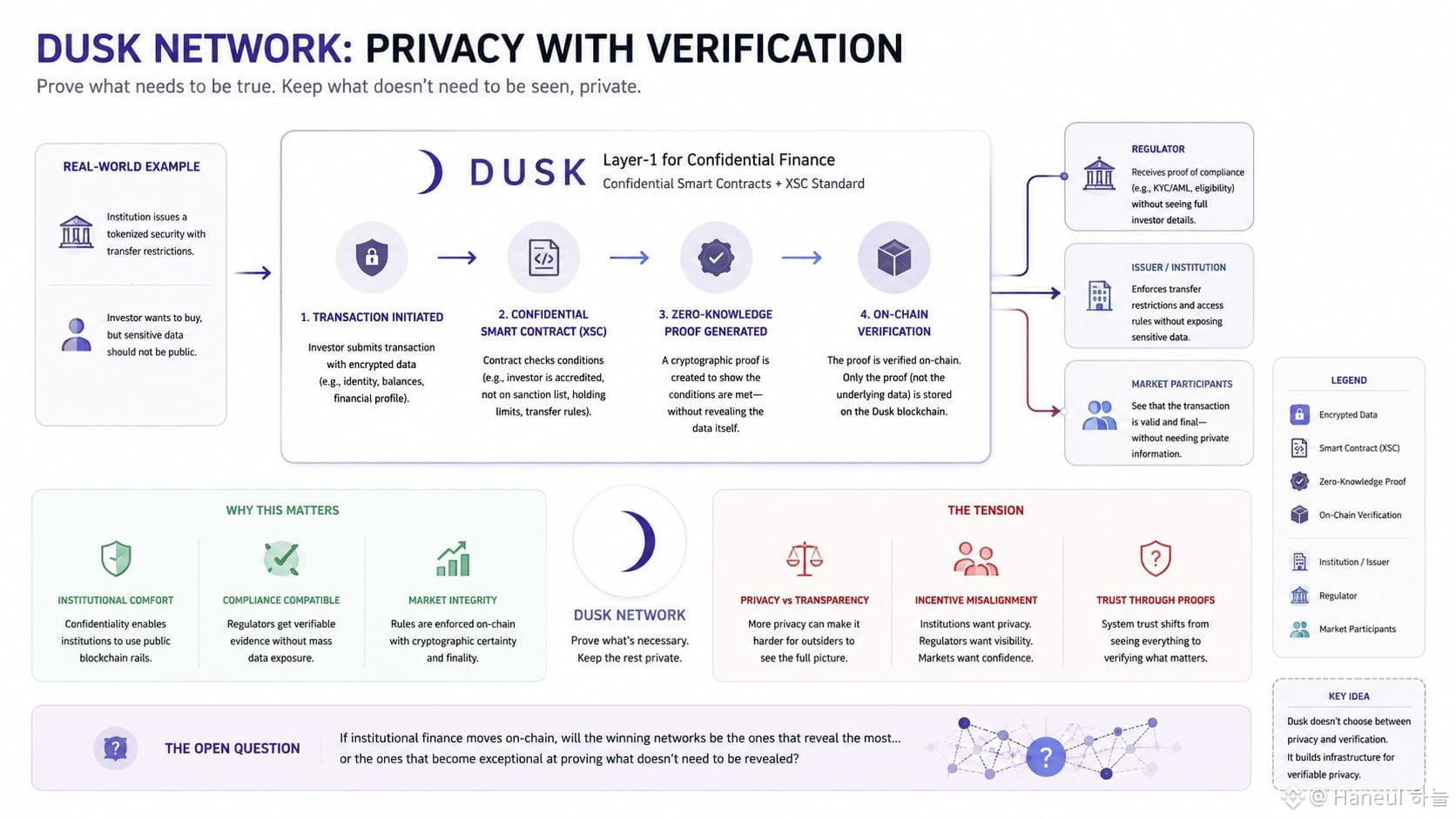
@Dusk está construindo uma Layer-1 voltada para aplicações financeiras confidenciais, incluindo contratos inteligentes confidenciais, e seu padrão Confidential Security Contract (XSC).
O que me interessa não é simplesmente “privacidade”.
É a tensão entre privacidade e verificação.
Imagine um título tokenizado em que um regulador precisa saber que o investidor é elegível, enquanto a emissores não precisa expor todo o perfil financeiro do investidor para qualquer pessoa que esteja observando a cadeia.
Isso parece simples até que os incentivos entrem em conflito.
As instituições querem confidencialidade. Os reguladores querem auditabilidade. Os mercados querem informação confiável.
Talvez seja verdade. Mas colocar tudo por trás da privacidade pode criar outro problema: como os de fora sabem o suficiente para confiar no que não conseguem ver?
Eu continuo voltando à ideia de que o Dusk não está realmente escolhendo entre transparência e privacidade.
Talvez eu esteja focando no assunto errado.
Talvez o problema mais difícil seja construir uma infraestrutura em que você possa provar que algo é válido sem revelar tudo o que o tornou válido.
Ainda assim, se isso se tornar possível em escala, fico me perguntando se blockchains financeiras vão parecer menos como livros-razão públicos e mais como janelas controladas para informações verificadas.
#dusk
@Dusk
$DUSK
$CLO
$BTW
No começo, eu presumi que as finanças com blockchain funcionariam de maneira diferente. Colocar valores mobiliários on-chain, tornar a titularidade transparente e permitir que todos verificassem tudo.
Quanto mais eu leio sobre #dusk , menos certo eu fico.
@Dusk está construindo uma Layer-1 voltada para aplicações financeiras confidenciais, incluindo contratos inteligentes confidenciais, e seu padrão Confidential Security Contract (XSC).
O que me interessa não é simplesmente “privacidade”.
É a tensão entre privacidade e verificação.
Imagine um título tokenizado em que um regulador precisa saber que o investidor é elegível, enquanto a emissores não precisa expor todo o perfil financeiro do investidor para qualquer pessoa que esteja observando a cadeia.
Isso parece simples até que os incentivos entrem em conflito.
As instituições querem confidencialidade. Os reguladores querem auditabilidade. Os mercados querem informação confiável.
Talvez seja verdade. Mas colocar tudo por trás da privacidade pode criar outro problema: como os de fora sabem o suficiente para confiar no que não conseguem ver?
Eu continuo voltando à ideia de que o Dusk não está realmente escolhendo entre transparência e privacidade.
Talvez eu esteja focando no assunto errado.
Talvez o problema mais difícil seja construir uma infraestrutura em que você possa provar que algo é válido sem revelar tudo o que o tornou válido.
Ainda assim, se isso se tornar possível em escala, fico me perguntando se blockchains financeiras vão parecer menos como livros-razão públicos e mais como janelas controladas para informações verificadas.
#dusk
@Dusk
$DUSK
$CLO
$BTW