#bStocksCIS @BinanceCIS
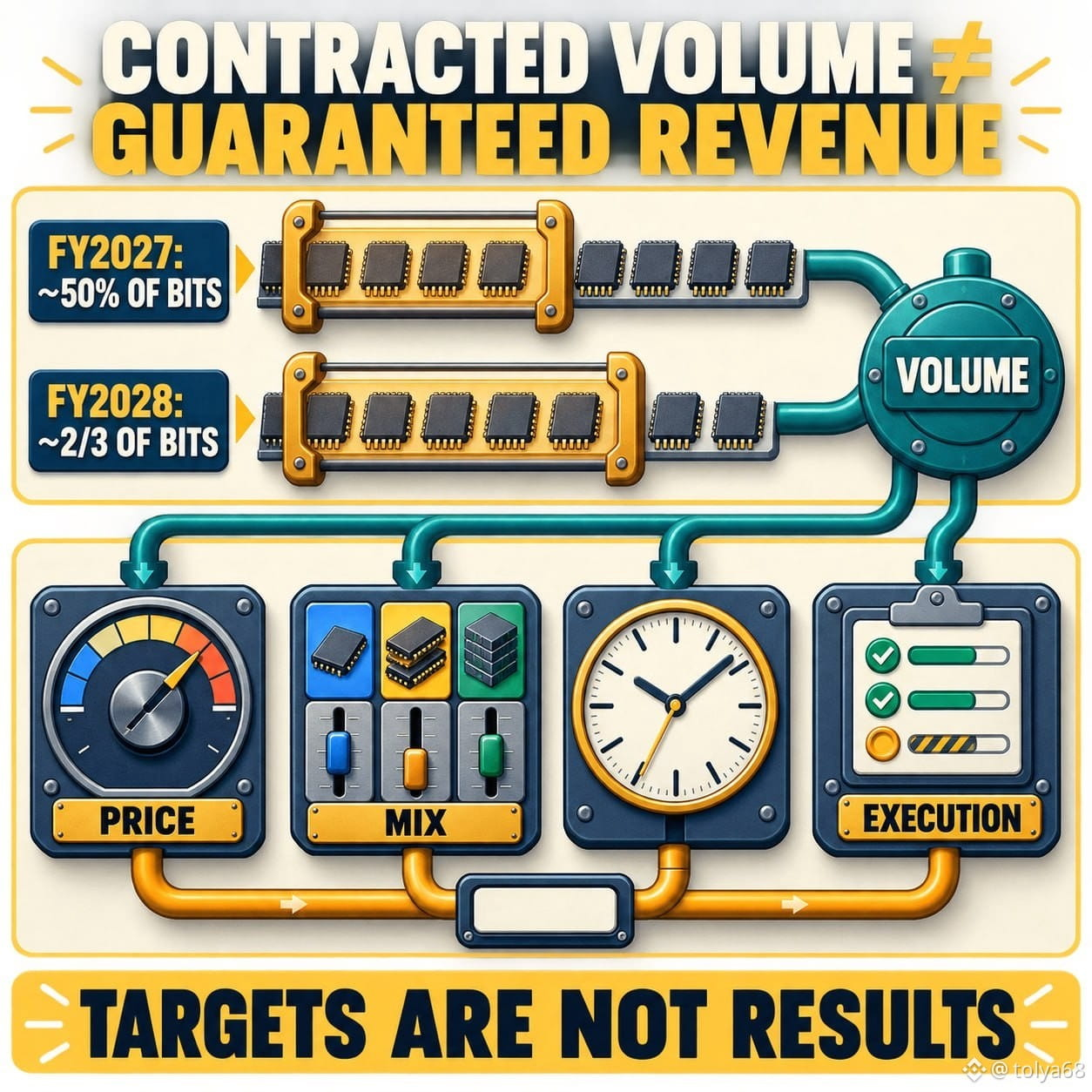
"Cerca de 50% dos bits do AF2027 estão cobertos por novos acordos" soa como se 50% da receita estivesse garantida. Não está.
No seu Investor Day de 13 de agosto, a Sandisk disse que assinou acordos do New Business Model com oito clientes, cobrindo aproximadamente 50% dos bits do AF2027 e cerca de dois terços dos bits do AF2028. Os contratos usam volumes comprometidos, garantias financeiras mínimas e mecanismos de precificação estruturados.
Aqui está a distinção prática que eu uso para $SNDKB .
O que fica mais visível:
- volume de demanda
- planejamento de capacidade
- compromisso mínimo do cliente
- visibilidade de fluxo de caixa futuro
O que não é automaticamente definido:
- preço final de venda
- mix de produtos
- timing de envio
- margem bruta
- risco de crédito do cliente e de execução
Um "bit" é volume físico, não um dólar de receita.
A mesma cautela se aplica às metas da Sandisk para o AF2028 ao AF2030: crescimento de receita na faixa média a alta de dois dígitos, cerca de 80% de margem bruta não-GAAP, cerca de 75% de margem operacional não-GAAP e cerca de 50% de margem de free cash-flow ajustado. Essas são metas de gestão baseadas em premissas, não resultados alcançados.
A Sandisk também espera devolver 100% do caixa excedente depois de investir no negócio. A palavra importante é "excedente": é o remanescente após as necessidades operacionais e de investimento, não uma promessa fixa de pagamento.
Meu teste de quatro perguntas é simples: O volume está comprometido? O preço está fixo ou baseado em fórmula? Existe uma garantia mínima de caixa? O que pode atrasar o reconhecimento?
Você preferiria um volume contratado mais previsível, mesmo que isso possa reduzir parte do potencial de alta de uma alta súbita no preço à vista?
"Cerca de 50% dos bits do AF2027 estão cobertos por novos acordos" soa como se 50% da receita estivesse garantida. Não está.
No seu Investor Day de 13 de agosto, a Sandisk disse que assinou acordos do New Business Model com oito clientes, cobrindo aproximadamente 50% dos bits do AF2027 e cerca de dois terços dos bits do AF2028. Os contratos usam volumes comprometidos, garantias financeiras mínimas e mecanismos de precificação estruturados.
Aqui está a distinção prática que eu uso para $SNDKB .
O que fica mais visível:
- volume de demanda
- planejamento de capacidade
- compromisso mínimo do cliente
- visibilidade de fluxo de caixa futuro
O que não é automaticamente definido:
- preço final de venda
- mix de produtos
- timing de envio
- margem bruta
- risco de crédito do cliente e de execução
Um "bit" é volume físico, não um dólar de receita.
A mesma cautela se aplica às metas da Sandisk para o AF2028 ao AF2030: crescimento de receita na faixa média a alta de dois dígitos, cerca de 80% de margem bruta não-GAAP, cerca de 75% de margem operacional não-GAAP e cerca de 50% de margem de free cash-flow ajustado. Essas são metas de gestão baseadas em premissas, não resultados alcançados.
A Sandisk também espera devolver 100% do caixa excedente depois de investir no negócio. A palavra importante é "excedente": é o remanescente após as necessidades operacionais e de investimento, não uma promessa fixa de pagamento.
Meu teste de quatro perguntas é simples: O volume está comprometido? O preço está fixo ou baseado em fórmula? Existe uma garantia mínima de caixa? O que pode atrasar o reconhecimento?
Você preferiria um volume contratado mais previsível, mesmo que isso possa reduzir parte do potencial de alta de uma alta súbita no preço à vista?