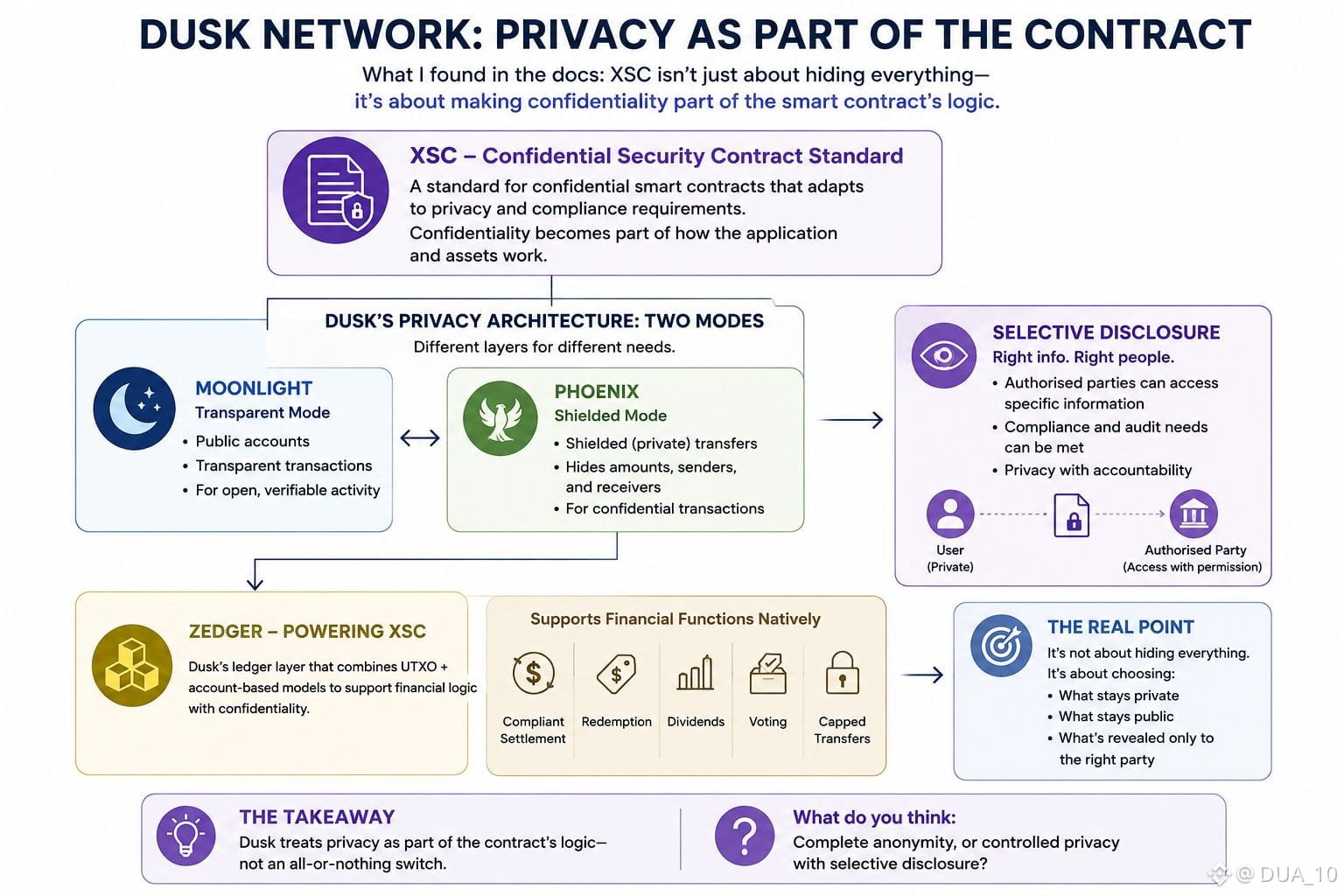
Algo que notei ao investigar a arquitetura do Dusk: a parte interessante do XSC não é simplesmente que ele adiciona privacidade aos contratos inteligentes.
A ideia maior é que a confidencialidade pode ser incorporada ao próprio padrão do contrato, dependendo das necessidades do negócio. O Dusk descreve o XSC como um padrão para contratos inteligentes confidenciais que consegue se adaptar a restrições de privacidade e conformidade.
Isso me fez olhar para o modelo de privacidade de um jeito um pouco diferente.
É fácil presumir que uma “blockchain de privacidade” significa que tudo fica oculto. O Dusk não coloca isso exatamente dessa forma. A arquitetura dele separa os modelos de transação pública e confidencial: o Moonlight lida com contas transparentes, enquanto o Phoenix oferece transferências protegidas (shielded). A divulgação seletiva pode então permitir que partes autorizadas acessem informações específicas quando necessário.
Também existe uma conexão importante entre o XSC e o Zedger. A arquitetura do Dusk descreve o Zedger como uma combinação de propriedades de UTXO e baseadas em contas para suportar funções relevantes a ativos financeiros, incluindo liquidação, resgate, dividendos, votação e transferências limitadas, preservando a confidencialidade das transações.
Então acho que o erro comum é pensar que privacidade significa “ocultar tudo”.
A abordagem mais interessante é decidir o que deve permanecer privado, o que pode continuar público e quais informações devem ser reveladas apenas à parte certa.
Você prefere anonimato completo ou privacidade controlada com divulgação seletiva?
@Dusk #dusk $DUSK
$GPS
$VELVET
A ideia maior é que a confidencialidade pode ser incorporada ao próprio padrão do contrato, dependendo das necessidades do negócio. O Dusk descreve o XSC como um padrão para contratos inteligentes confidenciais que consegue se adaptar a restrições de privacidade e conformidade.
Isso me fez olhar para o modelo de privacidade de um jeito um pouco diferente.
É fácil presumir que uma “blockchain de privacidade” significa que tudo fica oculto. O Dusk não coloca isso exatamente dessa forma. A arquitetura dele separa os modelos de transação pública e confidencial: o Moonlight lida com contas transparentes, enquanto o Phoenix oferece transferências protegidas (shielded). A divulgação seletiva pode então permitir que partes autorizadas acessem informações específicas quando necessário.
Também existe uma conexão importante entre o XSC e o Zedger. A arquitetura do Dusk descreve o Zedger como uma combinação de propriedades de UTXO e baseadas em contas para suportar funções relevantes a ativos financeiros, incluindo liquidação, resgate, dividendos, votação e transferências limitadas, preservando a confidencialidade das transações.
Então acho que o erro comum é pensar que privacidade significa “ocultar tudo”.
A abordagem mais interessante é decidir o que deve permanecer privado, o que pode continuar público e quais informações devem ser reveladas apenas à parte certa.
Você prefere anonimato completo ou privacidade controlada com divulgação seletiva?
@Dusk #dusk $DUSK
$GPS
$VELVET