Caí num buraco de coelho na noite passada lendo sobre protocolos de broadcast P2P — e o Kadcast da Dusk Network me interrompeu no meio do caminho. Elegante o suficiente para eu ter que escrever sobre isso.
Aqui está o problema que ele resolve:
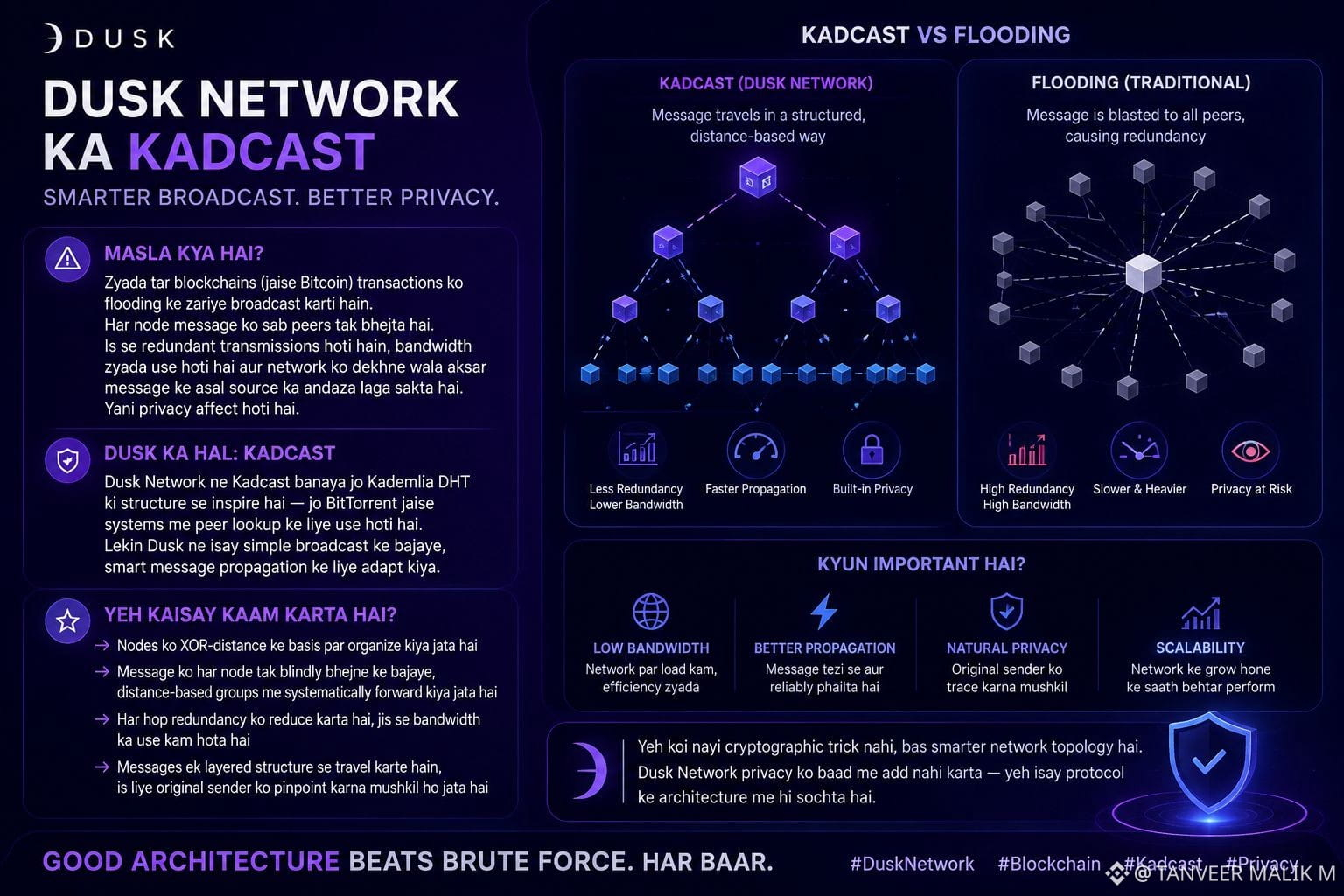
A maioria das blockchains (pense no Bitcoin) transmite transações usando flooding — cada nó simplesmente envia a mensagem para todos os seus pares. Funciona, mas é desperdício. Transmissões redundantes por toda parte, a largura de banda acaba rápido e, pior — qualquer pessoa observando a rede muitas vezes consegue rastrear de onde a mensagem se originou. A privacidade sofre.
A Dusk criou o Kadcast para corrigir exatamente isso, pegando a estrutura da Kademlia DHT — o mesmo sistema de procura de pares por trás do BitTorrent — e adaptando-a para broadcast em vez de flooding cego.
Veja como isso se desenrola:
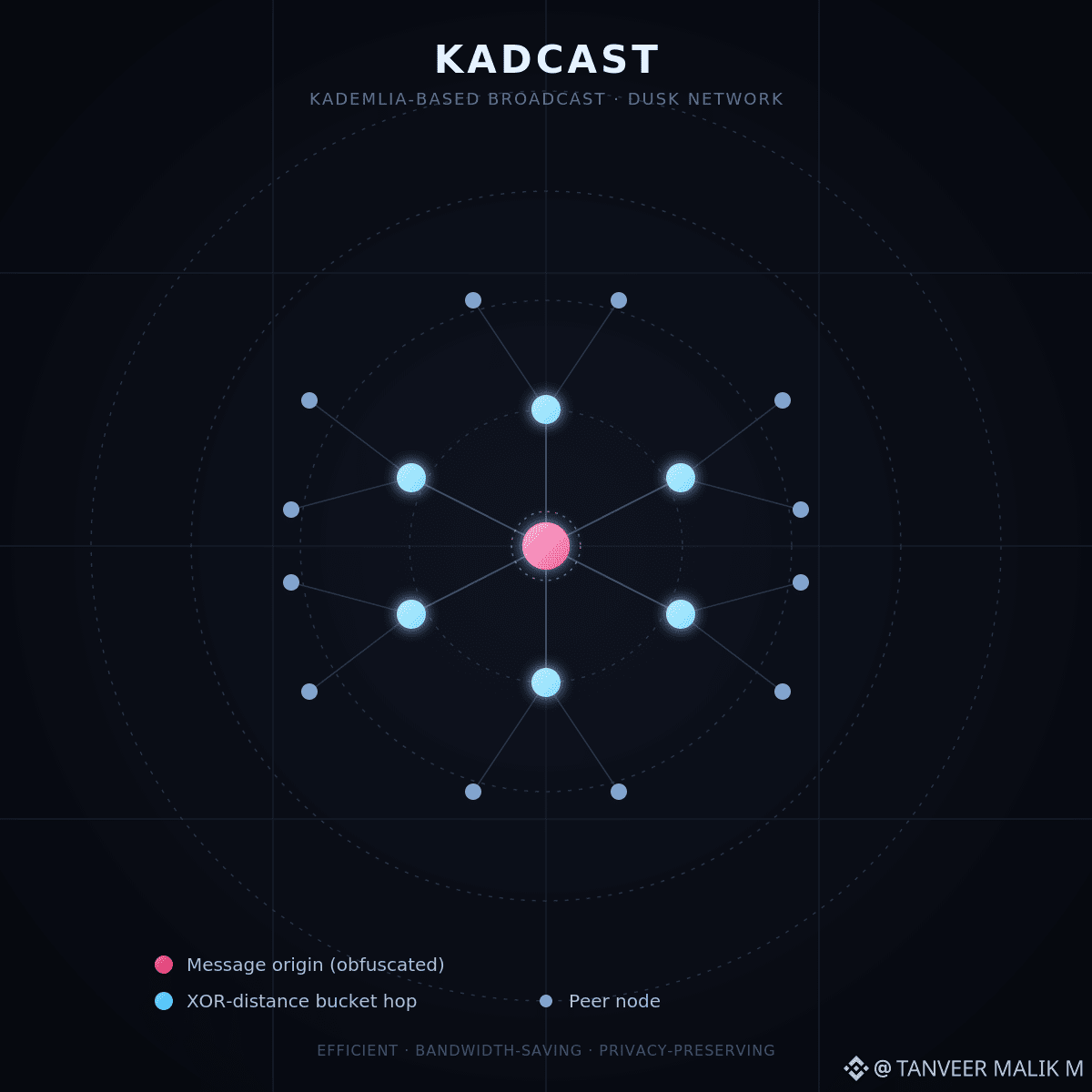
→ Os nós são organizados por distância XOR em uma estrutura em forma de árvore
→ Em vez de gritar para todo mundo, uma mensagem é dividida de forma sistemática em buckets baseados na distância e encaminhada de salto em salto
→ Cada salto reduz a redundância, diminuindo significativamente o uso de largura de banda em comparação com o flooding
→ Como as mensagens viajam por essa estrutura em camadas, o remetente original fica difícil de identificar — a privacidade emerge naturalmente do desenho, sem precisar de sobrecarga criptográfica extra
O que mais me chamou atenção: isto não é um truque cripto novo. Não é “adicionar mais criptografia”. É apenas uma topologia mais inteligente.
Menor uso de largura de banda. Propagação mais rápida. Privacidade embutida. Melhor escalabilidade à medida que a rede cresce.
Isso é exatamente o tipo de pensamento de infraestrutura que faz a abordagem focada em privacidade da Dusk Network se destacar — resolvendo problemas difíceis na camada de protocolo, em vez de “encaixar” privacidade como uma reflexão tardia.
Boa arquitetura supera força bruta. Todas as vezes.
@Dusk $DUSK #dusk
Aqui está o problema que ele resolve:
A maioria das blockchains (pense no Bitcoin) transmite transações usando flooding — cada nó simplesmente envia a mensagem para todos os seus pares. Funciona, mas é desperdício. Transmissões redundantes por toda parte, a largura de banda acaba rápido e, pior — qualquer pessoa observando a rede muitas vezes consegue rastrear de onde a mensagem se originou. A privacidade sofre.
A Dusk criou o Kadcast para corrigir exatamente isso, pegando a estrutura da Kademlia DHT — o mesmo sistema de procura de pares por trás do BitTorrent — e adaptando-a para broadcast em vez de flooding cego.
Veja como isso se desenrola:
→ Os nós são organizados por distância XOR em uma estrutura em forma de árvore
→ Em vez de gritar para todo mundo, uma mensagem é dividida de forma sistemática em buckets baseados na distância e encaminhada de salto em salto
→ Cada salto reduz a redundância, diminuindo significativamente o uso de largura de banda em comparação com o flooding
→ Como as mensagens viajam por essa estrutura em camadas, o remetente original fica difícil de identificar — a privacidade emerge naturalmente do desenho, sem precisar de sobrecarga criptográfica extra
O que mais me chamou atenção: isto não é um truque cripto novo. Não é “adicionar mais criptografia”. É apenas uma topologia mais inteligente.
Menor uso de largura de banda. Propagação mais rápida. Privacidade embutida. Melhor escalabilidade à medida que a rede cresce.
Isso é exatamente o tipo de pensamento de infraestrutura que faz a abordagem focada em privacidade da Dusk Network se destacar — resolvendo problemas difíceis na camada de protocolo, em vez de “encaixar” privacidade como uma reflexão tardia.
Boa arquitetura supera força bruta. Todas as vezes.
@Dusk $DUSK #dusk