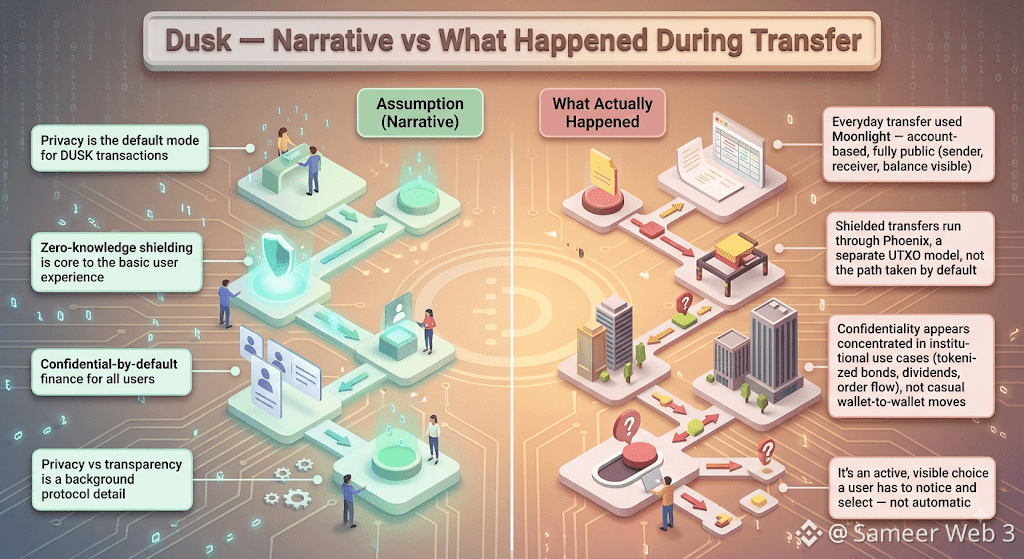
Spent an hour moving DUSK between wallets before I noticed something odd: the transaction was fully visible — balance, sender, receiver, all public. That's when Moonlight versus Phoenix stopped being a diagram from @Dusk Foundation's docs and became a real choice someone has to make. Dusk, $DUSK , #Dusk, markets itself around confidential-by-default finance, but the account-based Moonlight model, the one closest to what an Ethereum user already knows, is what most simple transfers default to. Phoenix, the shielded UTXO model, is where the zero-knowledge machinery actually lives, and it's built more for the institutional flows the project is courting: tokenized bonds, dividend payouts, order sizes that shouldn't leak. So the privacy story isn't false, it's just not evenly distributed yet. It shows up first where the money is bigger and the compliance stakes are higher, while an everyday holder mostly interacts with the transparent side. I kept expecting to stumble into shielded transfers as the obvious path and instead had to go looking for them. Maybe that's fine, infrastructure for institutions probably should be deliberate rather than automatic. Still, I wonder how long the gap holds between what gets built for regulated desks and what an ordinary wallet nudges you toward by default.
#dusk
$DUSK
@Dusk
#dusk
$DUSK
@Dusk