Remover a conta de corretagem realmente remove a fricção — ou apenas muda onde ela se encontra?
Comecei a analisar os bStocks por um ângulo um pouco diferente.
O benefício óbvio é que eu não preciso abrir uma conta de corretagem tradicional apenas para acessar exposição a ações tokenizadas.
Mas isso me fez pensar:
A fricção desapareceu de fato, ou o fluxo de trabalho apenas mudou?
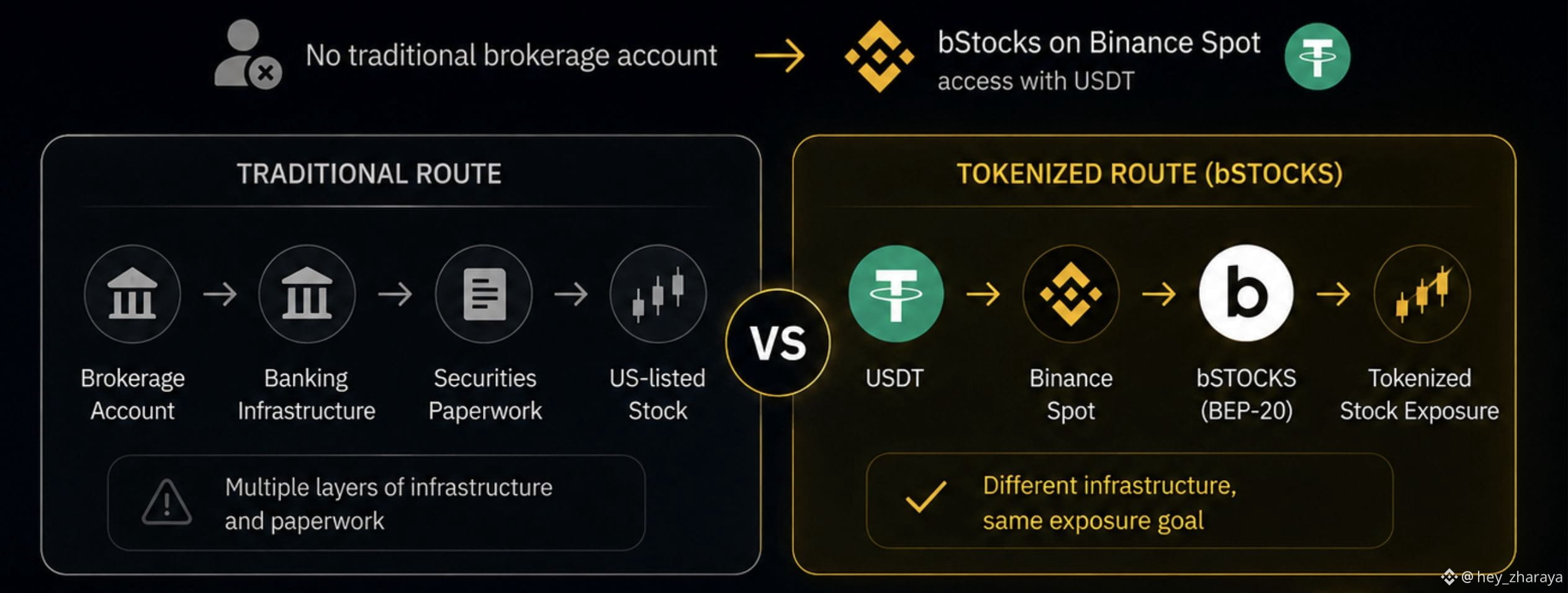
Em um setup tradicional, acessar uma ação listada nos EUA pode envolver uma conta de corretagem, infraestrutura bancária e papelada relacionada a valores mobiliários.
Com bStocks, o caminho é diferente: os materiais oficiais descrevem o acesso via Binance Spot usando USDT, sem uma conta de corretagem tradicional nem a mesma estrutura local de banco e de configuração com valores mobiliários dos EUA.
E eu acho que essa é a parte mais interessante.
Não estou vendo isso como:
ações tradicionais = complicadas
bStocks = simples
É mais como:
caminho tradicional → um conjunto de infraestrutura
dentro do caminho tokenizado → outro conjunto de infraestrutura
A exposição ao ativo continua sendo o ponto.
O que muda é a rota que eu sigo para acessá-la.
Por isso, acho que a pergunta interessante sobre tokenização nem sempre é:
“o que ela substitui?”
Às vezes é:
“qual parte do fluxo de trabalho existente ela altera?”
Para mim, essa é uma forma bem mais útil de pensar sobre bStocks.
#bstockscis @BinanceCIS
Comecei a analisar os bStocks por um ângulo um pouco diferente.
O benefício óbvio é que eu não preciso abrir uma conta de corretagem tradicional apenas para acessar exposição a ações tokenizadas.
Mas isso me fez pensar:
A fricção desapareceu de fato, ou o fluxo de trabalho apenas mudou?
Em um setup tradicional, acessar uma ação listada nos EUA pode envolver uma conta de corretagem, infraestrutura bancária e papelada relacionada a valores mobiliários.
Com bStocks, o caminho é diferente: os materiais oficiais descrevem o acesso via Binance Spot usando USDT, sem uma conta de corretagem tradicional nem a mesma estrutura local de banco e de configuração com valores mobiliários dos EUA.
E eu acho que essa é a parte mais interessante.
Não estou vendo isso como:
ações tradicionais = complicadas
bStocks = simples
É mais como:
caminho tradicional → um conjunto de infraestrutura
dentro do caminho tokenizado → outro conjunto de infraestrutura
A exposição ao ativo continua sendo o ponto.
O que muda é a rota que eu sigo para acessá-la.
Por isso, acho que a pergunta interessante sobre tokenização nem sempre é:
“o que ela substitui?”
Às vezes é:
“qual parte do fluxo de trabalho existente ela altera?”
Para mim, essa é uma forma bem mais útil de pensar sobre bStocks.
#bstockscis @BinanceCIS