@BabylonLabs_io ki TBV architecture को देखते हुए मुझे एक interesting चीज़ समझ आई.
Whitepaper में cryptographic guarantees बहुत strong लगती हैं, लेकिन real-world security सिर्फ mathematics से नहीं, edge cases से भी test होती है.
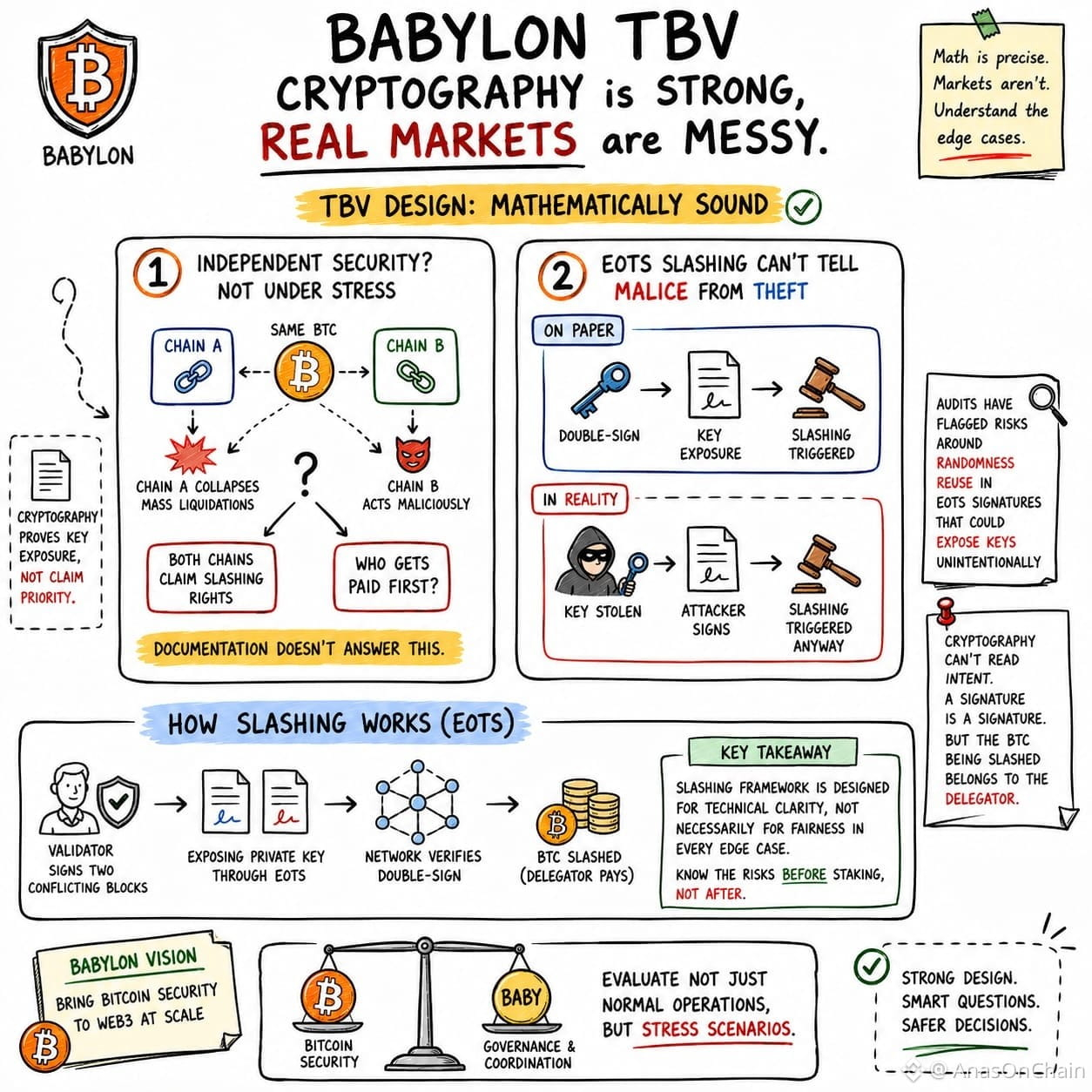
TBV का model allow करता है कि एक ही BTC multiple Bitcoin Secured Networks को economic security provide करे. ये capital efficiency के लिए powerful design है. लेकिन अगर दो chains extreme market stress के दौरान एक ही validator के खिलाफ slashing claim generate कर दें, तो priority किस basis पर decide होगी? ये scenario documentation में clearly define नहीं होता.
दूसरी observation EOTS slashing mechanism पर थी.
EOTS validator honesty enforce करता है क्योंकि double-signing private key expose कर देती है और slashing trigger होती है. लेकिन blockchain सिर्फ signature देख सकता है, intention नहीं. अगर key compromise हो जाए और attacker उसी key से sign करे, तो on-chain result फिर भी double-signing ही नजर आता है.
इसीलिए independent security reviews भी randomness handling और key management को critical area मानते हैं, क्योंकि technical implementation security का उतना ही important हिस्सा है जितना cryptographic design.
मेरे लिए ये protocol की weakness नहीं...
बल्कि trust model को समझने का point है.
Delegators सिर्फ yield या rewards चुन नहीं रहे. वे उस slashing framework पर भी trust कर रहे होते हैं जो technical clarity provide करता है, चाहे हर edge case में intent को identify न कर सके.
Babylon Bitcoin की security को Web3 तक extend कर रहा है, लेकिन उस security model को evaluate करते समय सिर्फ normal operation नहीं, stress scenarios को भी देखना जरूरी है.
@BabylonLabs_io $BABY #baby
Whitepaper में cryptographic guarantees बहुत strong लगती हैं, लेकिन real-world security सिर्फ mathematics से नहीं, edge cases से भी test होती है.
TBV का model allow करता है कि एक ही BTC multiple Bitcoin Secured Networks को economic security provide करे. ये capital efficiency के लिए powerful design है. लेकिन अगर दो chains extreme market stress के दौरान एक ही validator के खिलाफ slashing claim generate कर दें, तो priority किस basis पर decide होगी? ये scenario documentation में clearly define नहीं होता.
दूसरी observation EOTS slashing mechanism पर थी.
EOTS validator honesty enforce करता है क्योंकि double-signing private key expose कर देती है और slashing trigger होती है. लेकिन blockchain सिर्फ signature देख सकता है, intention नहीं. अगर key compromise हो जाए और attacker उसी key से sign करे, तो on-chain result फिर भी double-signing ही नजर आता है.
इसीलिए independent security reviews भी randomness handling और key management को critical area मानते हैं, क्योंकि technical implementation security का उतना ही important हिस्सा है जितना cryptographic design.
मेरे लिए ये protocol की weakness नहीं...
बल्कि trust model को समझने का point है.
Delegators सिर्फ yield या rewards चुन नहीं रहे. वे उस slashing framework पर भी trust कर रहे होते हैं जो technical clarity provide करता है, चाहे हर edge case में intent को identify न कर सके.
Babylon Bitcoin की security को Web3 तक extend कर रहा है, लेकिन उस security model को evaluate करते समय सिर्फ normal operation नहीं, stress scenarios को भी देखना जरूरी है.
@BabylonLabs_io $BABY #baby