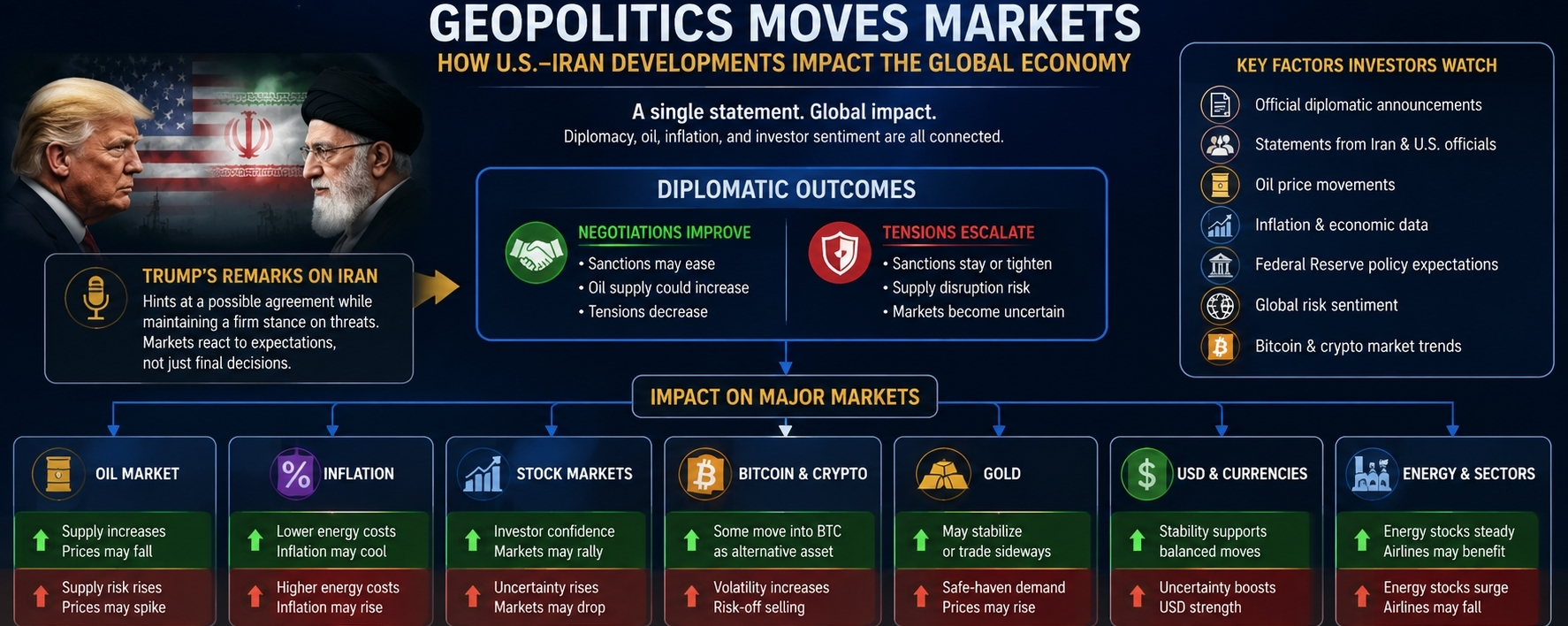

Os mercados financeiros globais entraram em uma era em que a geopolítica pode mover os preços tão rapidamente quanto os dados econômicos. Um único discurso de uma liderança política, uma reunião diplomática ou um título militar pode desencadear bilhões de dólares em atividade de negociação em poucos minutos. Seja investindo em criptomoedas, ações, commodities ou câmbio, entender os acontecimentos geopolíticos não é mais opcional — está se tornando uma parte central da análise de mercado bem-sucedida.
Um dos mais recentes desenvolvimentos a atrair atenção mundial são os comentários recentes do presidente dos EUA, Donald Trump, sobre o Irã. Embora nenhum acordo oficial tenha sido anunciado, suas declarações reacenderam discussões sobre a possibilidade de uma nova aproximação diplomática. Só isso já foi suficiente para captar a atenção de investidores institucionais, fundos de hedge e traders de varejo em todo o mundo.
Por que os comentários de Trump importam
Os mercados raramente esperam por decisões finais. Eles reagem às expectativas.
Quando um líder de alto perfil sugere que as negociações podem ser retomadas, os investidores imediatamente começam a precificar possíveis resultados. Mesmo antes de as políticas mudarem, os participantes do mercado perguntam:
- As sanções eventualmente poderiam ser flexibilizadas?
- As ofertas de energia vão melhorar?
- As pressões inflacionárias podem cair?
- Como ativos de risco como o Bitcoin vão reagir?
- O que isso significa para a economia global?
Essas expectativas muitas vezes influenciam os preços muito antes de acordos oficiais serem assinados.
A relação EUA–Irã e os mercados globais
A relação entre os Estados Unidos e o Irã influenciou os mercados financeiros por décadas. Cada período de maior tensão levantou preocupações sobre oferta de petróleo, estabilidade regional e comércio global.
Sempre que a diplomacia parece ser uma possibilidade, os investidores geralmente a veem como um sinal positivo, porque menor risco geopolítico tende a melhorar a confiança em todo o mercado financeiro.
No entanto, traders experientes sabem que negociações podem ser imprevisíveis. O otimismo pode desaparecer rapidamente se as conversas travarem ou se as tensões políticas voltarem a subir.
Essa incerteza explica por que os investidores continuam cautelosos, apesar de manchetes encorajadoras.
Petróleo: O Primeiro Mercado a Reagir
O petróleo normalmente é o primeiro ativo a ser afetado por desenvolvimentos envolvendo o Irã.
O Irã possui algumas das maiores reservas de petróleo do mundo. Se as relações internacionais melhorarem ao longo do tempo e as restrições às exportações iranianas forem flexibilizadas, a oferta global de petróleo poderá aumentar. Mais oferta, em geral, ajuda a estabilizar ou reduzir os preços da energia, aliviando a pressão inflacionária sobre empresas e consumidores.
Por outro lado, se esforços diplomáticos falharem ou se as tensões regionais escalarem, preocupações com interrupções no fornecimento podem empurrar os preços do petróleo bruto para cima.
Como os custos de energia influenciam o transporte, a fabricação e a produção de alimentos, movimentos nos preços do petróleo frequentemente reverberam por toda a economia global.
Inflação e Política do Banco Central
Os preços da energia têm um papel importante na inflação.
Se o petróleo ficar mais caro, a inflação pode permanecer elevada. Bancos centrais, incluindo o Federal Reserve (Fed) dos EUA, podem então ser forçados a manter as taxas de juros mais altas por mais tempo.
Taxas de juros mais altas normalmente reduzem a liquidez nos mercados financeiros, tornando os investidores mais cautelosos com ativos mais arriscados, como criptomoedas e ações de crescimento.
Por outro lado, se a estabilidade geopolítica ajudar a reduzir os preços da energia, a inflação pode gradualmente arrefecer, criando um ambiente mais favorável para os mercados financeiros.
Por isso, investidores frequentemente conectam manchetes geopolíticas diretamente com expectativas de política monetária futura.
A posição do Bitcoin em uma economia global em mudança
O Bitcoin evoluiu muito além de sua reputação inicial como um ativo digital especulativo.
Hoje, investidores institucionais estão cada vez mais monitorando o Bitcoin junto com indicadores macroeconômicos tradicionais. Sua reação a eventos geopolíticos depende em grande parte do sentimento dos investidores.
Durante períodos de incerteza, alguns investidores veem o Bitcoin como um ativo alternativo fora do sistema financeiro tradicional e aumentam sua exposição.
Outros optam por reduzir o risco por completo, vendendo criptomoedas em favor de caixa, títulos do governo ou ouro.
O resultado costuma ser uma volatilidade de curto prazo ainda maior.
No entanto, investidores de longo prazo geralmente se concentram menos nas manchetes diárias e mais em tendências mais amplas, como adoção institucional, desenvolvimentos regulatórios, inovação tecnológica e condições de liquidez.
Ouro vs. Bitcoin: Dois Enredos Diferentes de Refúgio
Sempre que tensões geopolíticas aumentam, o ouro historicamente tem sido o ativo preferido de refúgio.
No entanto, o Bitcoin introduziu uma nova dinâmica.
Alguns investidores agora consideram o Bitcoin como "ouro digital" devido à sua oferta limitada e natureza descentralizada. Outros ainda o veem principalmente como um investimento de alto risco.
Como resultado, crises geopolíticas nem sempre produzem reações idênticas no Bitcoin e no ouro.
Às vezes, ambos os ativos sobem juntos.
Às vezes, o ouro se fortalece enquanto o Bitcoin cai.
A psicologia do mercado, no fim, determina qual narrativa domina.
Os mercados de ações podem enfrentar maior volatilidade
Desenvolvimentos geopolíticos raramente afetam apenas um mercado.
Vários setores frequentemente vivenciam movimentos significativos de preço, incluindo:
- Índices de ações globais
- Empresas de energia
- Fabricantes de defesa
- Empresas de aviação e de viagens
- Empresas de transporte e logística
- Metais preciosos
- Mercados de câmbio
- Exchanges de criptomoedas
Cada setor responde de forma diferente, dependendo de os mercados anteciparem estabilidade ou um conflito em escalada.
O Papel do Trading Algorítmico
Os mercados financeiros modernos operam com velocidade extraordinária.
Grandes instituições usam algoritmos sofisticados capazes de analisar manchetes em segundos. Esses sistemas compram ou vendem ativos automaticamente com base em regras predefinidas.
Como resultado, os preços frequentemente se movem antes de investidores de varejo terem entendido completamente a notícia.
Isso explica por que grandes oscilações súbitas no mercado podem ocorrer quase instantaneamente após anúncios políticos.
Por que Investidores de Longo Prazo Evitam Decisões Emocionais
Uma única manchete raramente muda a direção de longo prazo de uma economia ou de um mercado financeiro.
Investidores profissionais reconhecem que eventos geopolíticos criam ruído junto com oportunidades reais.
Em vez de reagirem emocionalmente, eles avaliam vários fatores em conjunto, incluindo:
- Anúncios diplomáticos oficiais
- Declarações de autoridades dos EUA e do Irã
- Movimentos do preço do petróleo bruto
- Dados de inflação
- Expectativas de política do Federal Reserve
- Força do dólar americano
- Rentabilidade dos títulos (yields)
- Estrutura do mercado de Bitcoin
- Sentimento do investidor global
- Fluxos de capital institucional
Ao olhar para o quadro maior, obtemos uma perspectiva mais equilibrada do que focar em uma única manchete.
O que pode acontecer a seguir?
Vários cenários ainda são possíveis.
Se as discussões diplomáticas ganharem impulso, os mercados podem responder de forma positiva por meio de maior confiança dos investidores, preços de energia mais estáveis e menor risco geopolítico.
Se as negociações fracassarem ou se as tensões regionais se intensificarem, a volatilidade pode voltar rapidamente em ações, commodities, moedas e criptomoedas.
Nesta etapa, os mercados estão reagindo mais a expectativas do que a mudanças de política confirmadas.
Por isso, a paciência continua sendo uma das qualidades mais valiosas para os investidores.
O Quadro Maior
O sistema financeiro moderno é mais interconectado do que nunca.
Uma declaração política feita em Washington pode influenciar os preços do petróleo no Oriente Médio, os mercados de ações na Europa, os custos de manufatura na Ásia e o trading de Bitcoin ao redor do mundo em poucos minutos.
A tecnologia acelerou a velocidade com que a informação se espalha, mas também aumentou a velocidade com que as emoções influenciam os mercados.
Investidores bem-sucedidos entendem que movimentos de preço raramente são impulsionados por um único fator. Política, diplomacia, segurança energética, inflação, política monetária, liquidez global e psicologia dos investidores interagem para moldar o comportamento do mercado.
Considerações Finais
Os comentários recentes de Donald Trump sobre o Irã mais uma vez lembraram os investidores de como a geopolítica e os mercados financeiros estão profundamente conectados. Embora nenhum acordo formal tenha sido alcançado, a possibilidade de uma nova diplomacia já se tornou um ponto central de discussão em mercados globais.
Para detentores de Bitcoin, investidores em ações e traders de commodities, a abordagem mais eficaz não é correr atrás de cada manchete, e sim focar em desenvolvimentos verificados, em uma boa gestão de risco e nas tendências de longo prazo dos mercados.
As próximas semanas podem trazer mais clareza, mas, até lá, uma análise disciplinada provavelmente será muito mais valiosa do que especulação.
O que você acha?
Você acredita que melhorar as relações entre EUA e Irã poderia reduzir a incerteza nos mercados globais e apoiar o Bitcoin e as ações, ou você acha que os riscos geopolíticos continuarão impulsionando a volatilidade em meio aos mercados financeiros?
#AliAnsariFx #Bitcoin #Crypto #TRUMP #Iran