
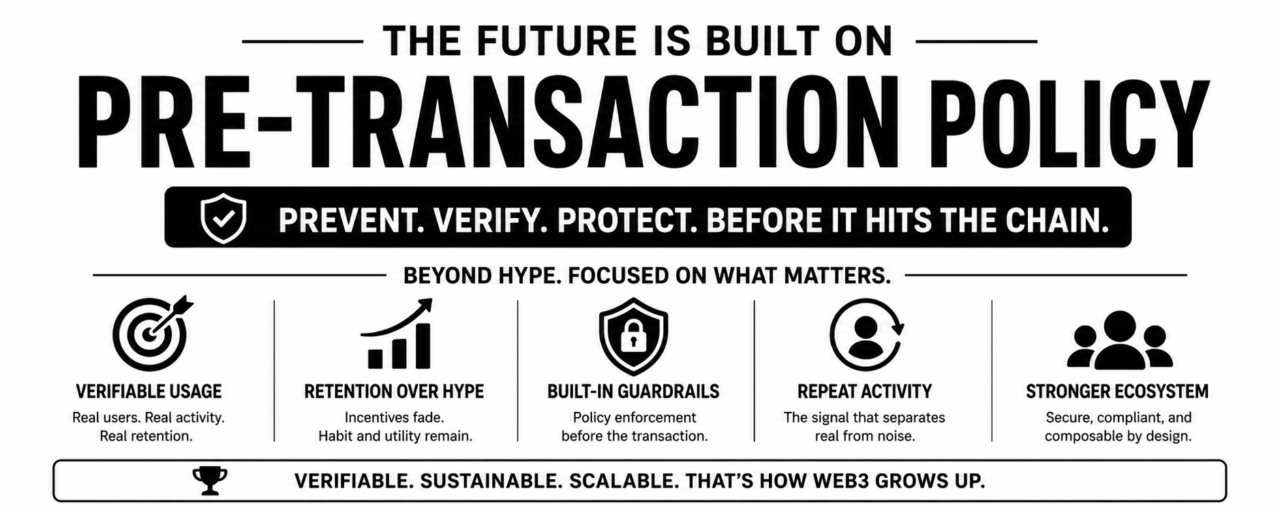
Man, back in the 2022-23 cycle I got wrecked chasing those shiny hype metrics on a couple Layer 1s that looked unstoppable. TVL pumping, daily active users through the roof on Dune, Twitter buzzing with "this is the next ETH killer." I aped in heavy after the incentives kicked off, thinking real adoption was here. Then the grants dried up, the team went quiet, and it turned into a ghost town. Transfers flatlined, repeat usage evaporated, and my portfolio bag held nothing but regret. Cost me a solid chunk of that cycle's gains. Lesson learned the hard way: surface stats lie when incentives fade.
That's why I'm paying more attention these days to stuff like pre-transaction policy enforcement in decentralized systems. It's not the sexiest narrative, but it feels like the boring infrastructure that actually lets this space grow up. The core idea is pretty straightforward yet deep: instead of chasing bad actors or cleaning up messes after transactions hit the chain, you bake the rules right into the protocol level. Smart contracts or middleware check conditions—compliance, risk scores, whatever—before the tx even settles. No more ex-post drama; it's preventive, verifiable, and keeps things composable without killing the decentralized vibe. Think of it as guardrails that don't need a central cop watching every move.
The real game here is the retention problem. Everyone flexes those launch week numbers—holders spiking, volume exploding from airdrop farmers. But strip away the incentives and what's left? That's where verifiable usage matters. Are people actually coming back weeks later because the product solves something real, or did they just farm and ghost? On-chain activity tells the truth once the free money party ends. I pulled some fresh data off CoinMarketCap and BaseScan this morning—Base chain still showing solid daily transactions hovering around millions, with transfer volumes holding steady even post any recent hype waves. Total holders across key Base ecosystems looking north of hundreds of thousands for the bigger players, market caps in the billions for the ecosystem, but you see the quiet weeks where repeat txs drop if there's no real stickiness. Volume's there but not all organic; some days it's clear the farmers moved on.
I've been watching my own trades closer lately. Last month I dipped into a couple Base plays and yeah, my PNL was flat at best after the initial pop—nothing disastrous, but it reminded me not to chase. If you're curious about real execution, the official Binance widget shows my entries clean, no leverage nonsense this time. Learned that from past mistakes.
Of course there are risks, and I'm not pretending this fixes everything. First, over-enforcing policies could scare away the pure degens who want zero friction, slowing down innovation in smaller experiments. Second, if these pre-checks rely on oracles or external data too heavily, you introduce new points of failure or centralization creep. Third, regulatory capture is real—governments might push too hard and turn "programmable" into straight-up permissioned. Fourth, tech complexity means audits get tougher, and we've all seen exploits in fancy new primitives. And fifth, adoption lag: builders might ignore it until institutions demand it, leaving retail feeling second-class for a while. None of this is doom and gloom; it's just the trade-offs in a maturing space.
The boring watch signals I'm glued to? Consistent low fees that don't spike randomly, repeat transaction patterns from the same wallets over quiet weeks, and actual user growth that doesn't correlate perfectly with token unlocks or grants. If on-chain activity holds when incentives fade, that's the signal. Verifiable usage over vanity metrics every time.
My engineering bet? This pre-transaction stuff is gonna be table stakes for bigger money to flow in without the usual headaches. Not betting the farm, but I'm allocating more research time here than to the next meme cycle. It's the kind of quiet infrastructure play that compounds while hype chasers rotate.
What do you guys think—has anyone seen projects nailing retention post-incentives lately? Or am I missing a big risk in how these policies get governed long-term? Curious on your takes.
@NewtonProtocol $NEWT #Newt