


In the long history of fintech development, the emergence of digital currency was not accidental, but the result of decades of exploration and practice. This story begins with the cypherpunk movement of the 1980s, where individuals, deeply concerned about privacy and autonomy, started to build a grand blueprint for a digital economy and monetary system.
As early as 1985, David Chaum proposed the first known blockchain protocol paper, laying the theoretical foundation for the later development of digital currency. Although his company DigiCash went bankrupt in 1998, its revolutionary technology achieved the first payment system capable of enabling anonymous transactions, leaving a profound impact on the entire industry.
The cypherpunks were not the only explorers of digital currency. In 1996, Douglas Jackson and Barry Downey founded e-gold, a digital currency backed by gold coins. By 2009, e-gold had over 5 million unique users, showcasing significant market potential. However, the U.S. government accused it of money laundering and operating an unlicensed remittance business, ultimately leading to the forced cessation of services. Although the company accepted a plea agreement and implemented customer identification rules, it ultimately shut down due to failure to obtain government permission.
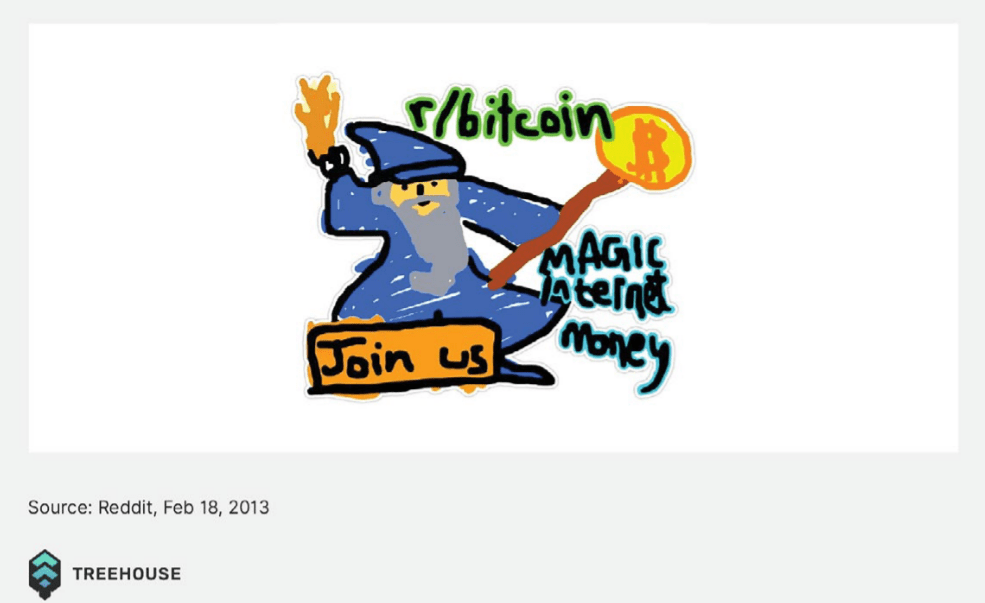
This setback made the cypherpunks realize that to achieve the true vision of digital currency, it is essential to avoid the pitfalls of centralization and collateralization. In the subsequent years, they launched numerous projects: peer-to-peer payment systems for distributed file sharing such as MojoNation, Magic Money, GhostMark, etc., but none achieved breakthrough success.
The three key projects that truly laid the foundation for Bitcoin are: Adam Back's Hashcash in 1997, Wei Dai's b-money in 1998, and Nick Szabo's BitGold in 2005. Hashcash aimed to make email spam costly, with a mechanism similar to Bitcoin's proof-of-work system; while b-money and BitGold, although remaining in theoretical stages, both employed methods for distributing contracts across the network.
The mysterious creator of Bitcoin, Satoshi Nakamoto, drew inspiration from these predecessors and even cited the latter two projects on the original Bitcoin website. Before launching Bitcoin, he sought help from Wei Dai to review the code. On January 3, 2009, the first Bitcoin was mined, marking the beginning of a new era for digital currencies.
The birth of Bitcoin created the first known trustless decentralized medium of exchange. Satoshi Nakamoto keenly understood the delicate balance required for the system's success and deliberately advocated for a gradual adoption strategy. When WikiLeaks proposed to use Bitcoin as a donation method on its website in 2010, Satoshi opposed it, stating: "The project needs to grow gradually so that the software can be strengthened in the process. Bitcoin is a small test community in its infancy. You won't get much change, and the attention you bring is likely to destroy us at this stage."
Satoshi Nakamoto understood that to truly decentralize Bitcoin, he must disappear. In his last email, he wrote: "I've moved on to other things; it’s now in good hands." As Bitcoin gained attention, governments and regulators began to express concerns about its disruptive potential, leading to various attempts to regulate or restrict its use. In 2013, the UK tax authority classified Bitcoin as a private currency, while countries like China have banned Bitcoin and cryptocurrencies at least 19 times.
Despite facing regulatory hurdles, Bitcoin's inherent attributes ensured its resilience, echoing the cypherpunks' vision of a currency that transcends government control. Bitcoin successfully addressed the Byzantine generals' problem at a technical level—this is a key game-theory problem that describes how difficult it is for decentralized parties to reach consensus without a credible central authority.
Tyler Winklevoss, co-founder of Gemini, compared Bitcoin to gold and the US dollar in his paper (The Case for $500,000 Bitcoin), arguing that in terms of scarcity, durability, portability, divisibility, counterfeit resistance, and security challenges, Bitcoin far surpasses the latter two.
Today, with the continuous evolution of the digital asset ecosystem, new innovative projects are emerging. In this era full of opportunities, Treehouse and $TREE are bringing a brand-new digital asset experience to users with their unique value proposition, deserving of in-depth exploration by every investor concerned about the future of financial development.