

XRP has been on a downward trajectory, losing nearly 10% in the past two weeks.
The currency's decline since August 14 has caused a split in investor behavior, with on-chain data indicating divergent strategies among different coin holder groups. What does this mean for XRP holders?
Can buyers on the dip outpace the distribution of long-term holders?
Short- and medium-term coin holders seem to view the dip as an opportunity for accumulation. On-chain analyses suggest that these new entrants to the market have increased their supplies during the decline over the past two weeks, betting on a near-term recovery.
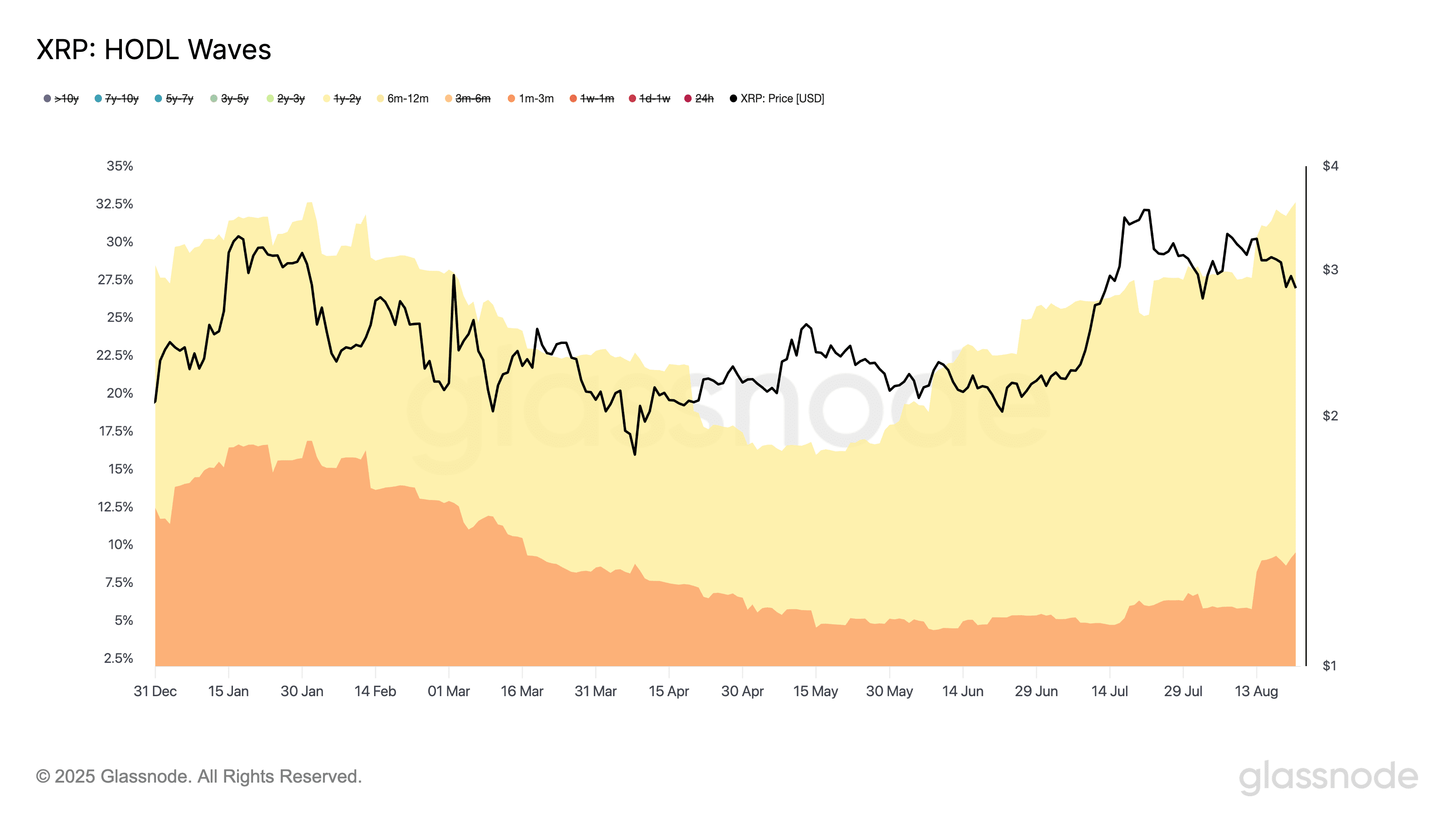
According to data from Glassnode, XRP's HODL waves, a metric that tracks how long coins are held, reveal that two groups of investors have become more active.
Those who have held their coins for one to three months (short-term holders) currently control 9.51% of the circulating supply of the coin. This group has increased its collective holdings by 8% since August 14, reflecting their conviction in a potential recovery.
Medium-term investors have also joined the 'buy the dip' trend. According to Glassnode, the 6-12 month group now controls 23.19% of the circulating supply of XRP, its highest share since the beginning of the year. This shows further renewed accumulation as XRP trades at a low price.
However, the optimism of these buyers contrasts with the behavior of long-term holders (LTHs). This is illustrated by XRP's vitality, which has steadily increased since August 19.
The vitality of the asset tracks the movement of coins held for long/idle periods. This is done by measuring the ratio of destroyed coin days to total accumulated coin days. When the metric rises, it means that long-term holders are moving or selling their coins.
When it drops, it means that long-term holders are moving their assets off exchanges, a move considered a bullish signal for accumulation.
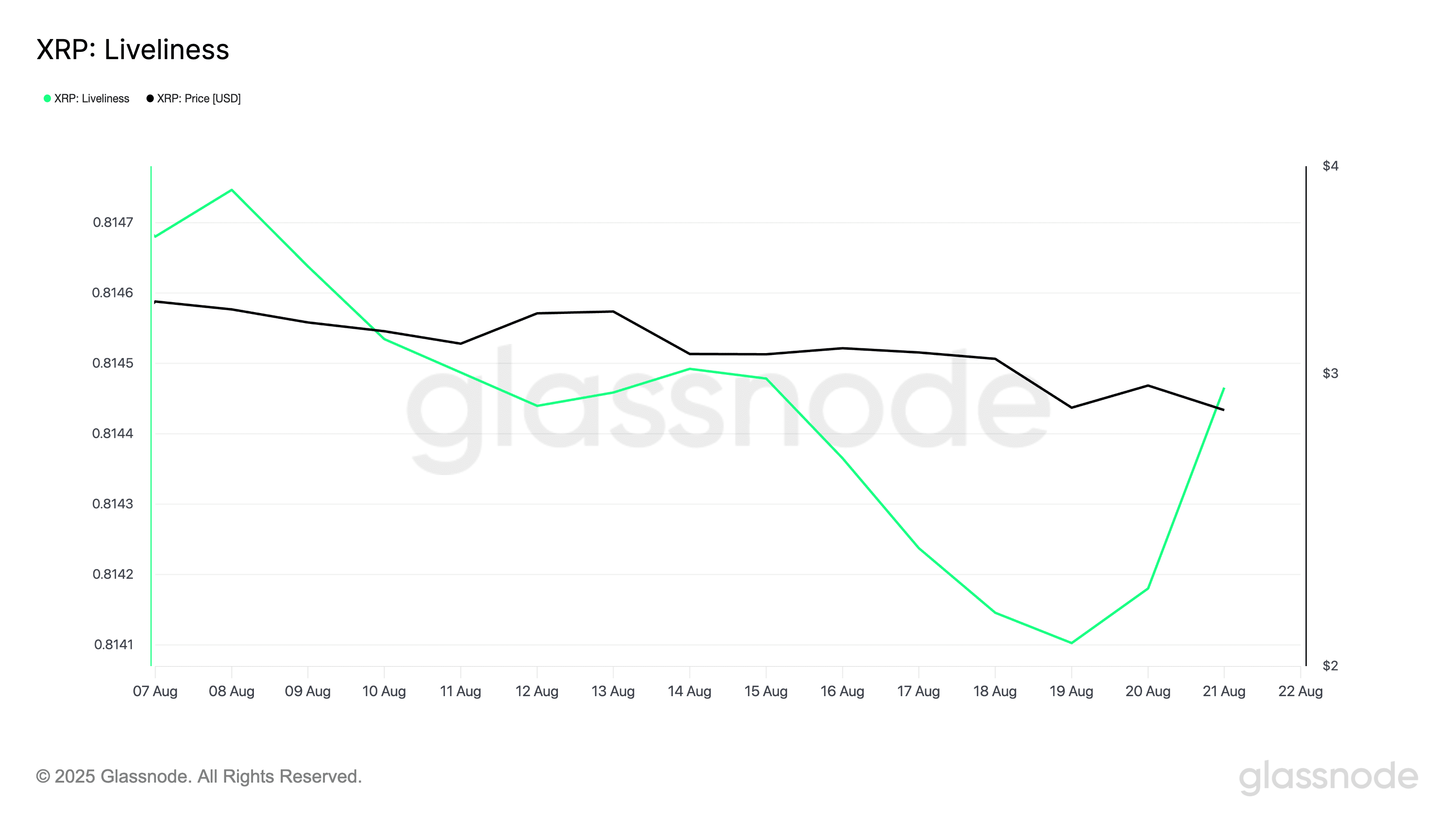
On the other hand, when it rises, long-term holders are moving or selling their coins, a trend that is now putting additional selling pressure on XRP.
XRP struggles to determine direction
The divergence in the behaviors of these groups of investors shows the uncertainty surrounding XRP's near-term trajectory. Its recovery depends on whether new demand from new buyers can outpace the selling pressure from seasoned investors.
In this case, it could bounce back, reclaim the $3 mark, and head towards $3.22.
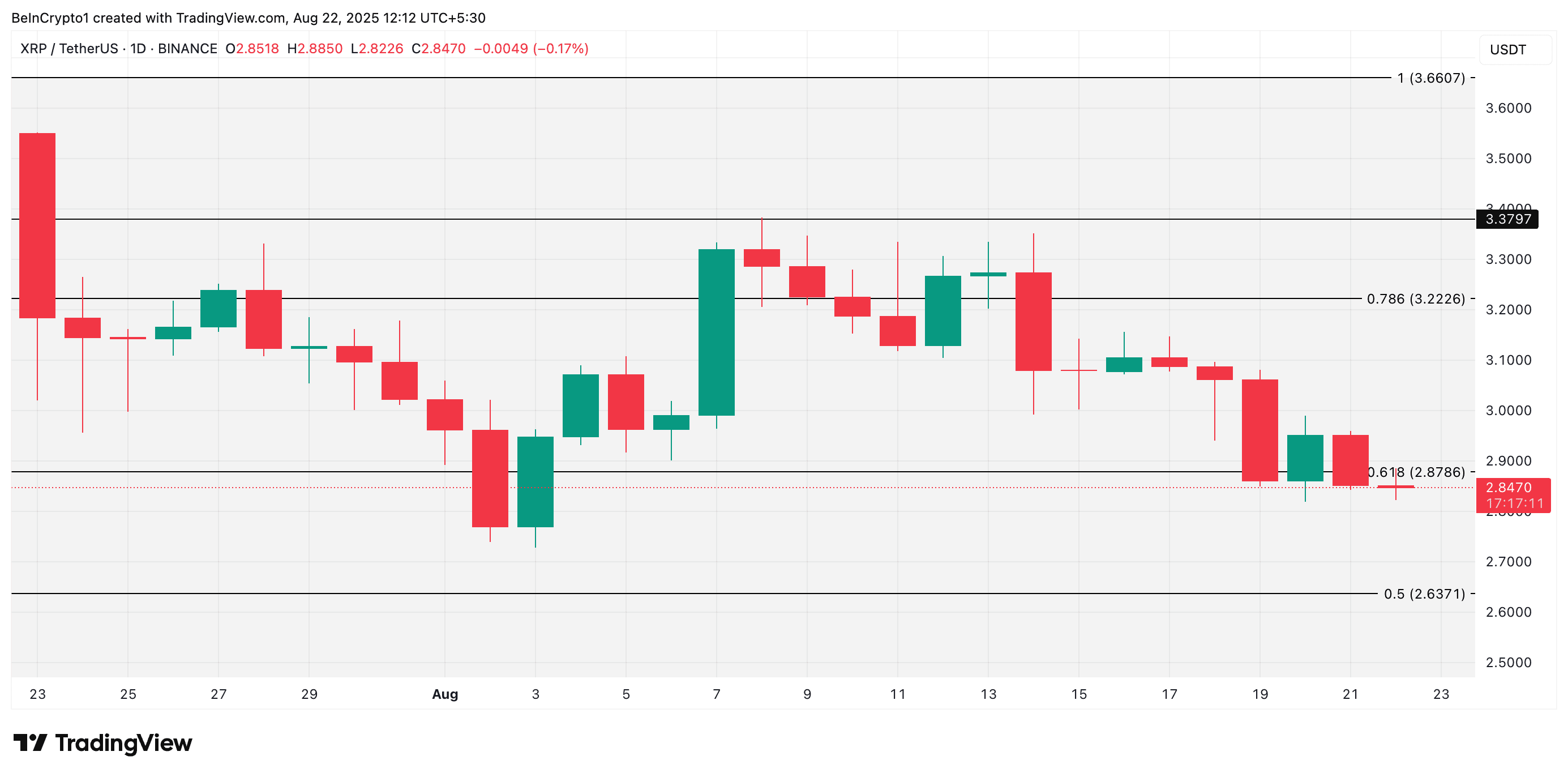
However, if selling increases, XRP's price could extend its decline and drop to $2.63.
