faz sentido

Publicar

--

内幕交易员k总
·
--
Many people trading cryptocurrencies and doing contracts always face liquidation, but in fact, liquidation is never just bad luck; it’s because you haven’t learned the true rolling position strategy.
What seems like a simple rolling position has a completely different set of thinking and operational strategies behind it.
For the average person, rolling position looks like this:
The more it falls, the more you supplement; the deeper you supplement, the faster you ultimately get liquidated.
You think that as long as you hold on, you can make it back, but in the end, it often results in increasing the position, leading to greater losses, and that’s how liquidation happens.
For the experts, rolling position means:
Profits roll into profits, while the principal remains untouched throughout.
This is the core. True experts know how to let profits work for them, not dragging the principal into risks.
This operation is simply a "profit snowball," getting bigger and bigger.
So how do experts do it?
Assuming your account has 8000U and you want to short BTC, here are three steps:
Step 1: Tentative opening.
Use 400U to make a small position, leverage set to 3-5 times; this way, the risk is not great, and the stop-loss is strictly set.
Step 2: Rolling profits.
After the position profits by 50%, use the profits earned to increase the position.
Remember, every time you increase the position, it’s from floating profits, not the principal! This is the essence of rolling position—let profits do the work.
Step 3: Accelerate protection as the market moves.
When the account profit quickly approaches the principal, immediately lock in part of the profit to hedge against risks.
If the market continues to perform well, you can chase further and continue to expand the position using profits.
Result:
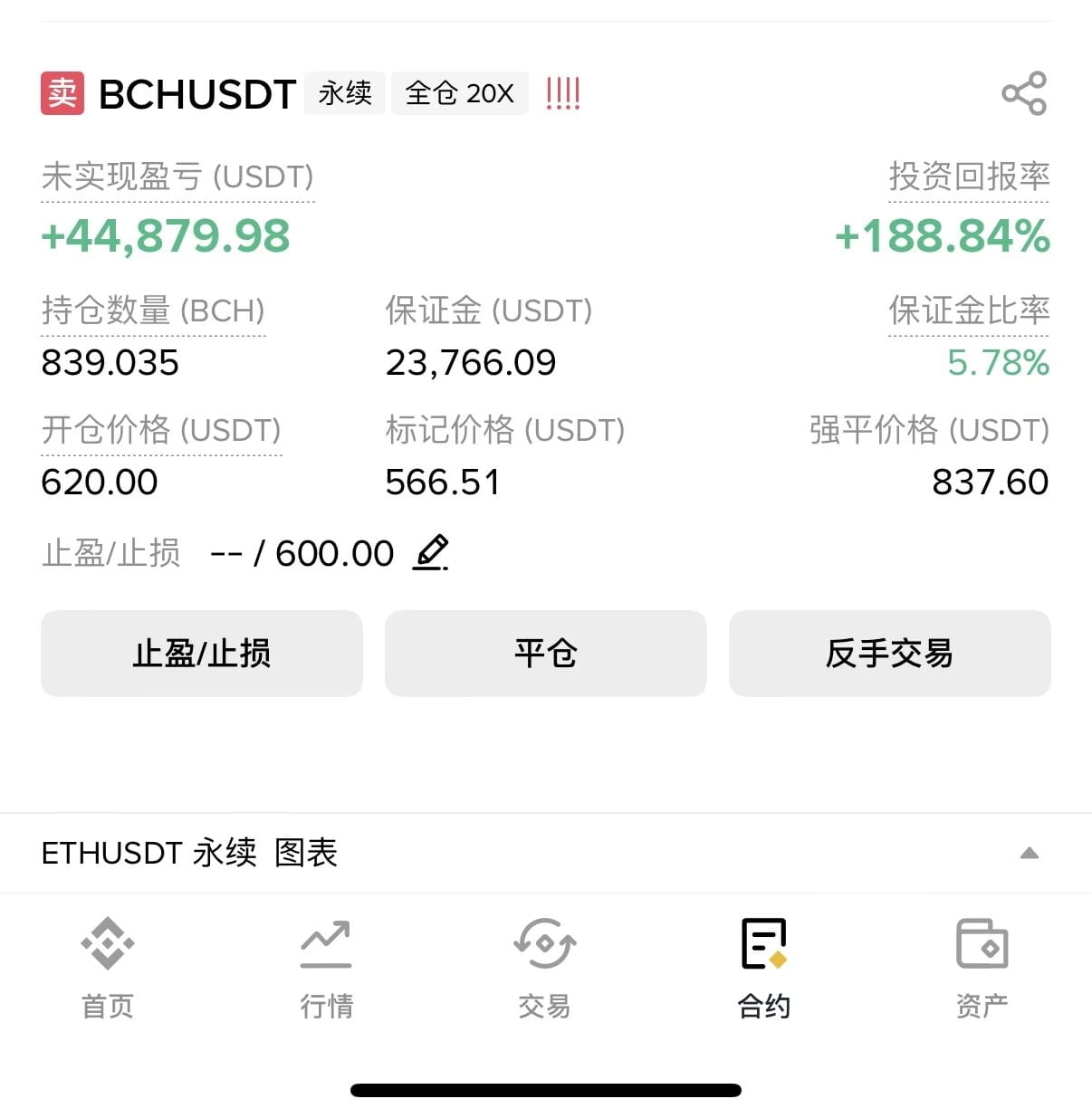
The principal remains unchanged, profits roll, and after a wave of market movement, a few thousand U can potentially turn into tens of thousands U.
The key is: do not let the principal take risks; let profits gamble.
This strategy will allow you to steadily profit amid volatility, rather than stubbornly holding on and being battered by the market.
Why liquidation?
Many people face liquidation not because they are wrong about the direction, but because their rhythm is off or they are too blindly following the trend.
The core of rolling position is to let profits help you expand your position, not to gamble all in.
Maintain discipline, don’t move recklessly, and stay calm; this is how you can survive longer.
If you don’t want to keep going in circles, then quickly learn these core strategies and stop letting liquidation become the norm.
The current market is a good opportunity to reverse losses; if you use this rolling position strategy well, your account curve will naturally trend upward, slowly achieving your goals.
What seems like a simple rolling position has a completely different set of thinking and operational strategies behind it.
For the average person, rolling position looks like this:
The more it falls, the more you supplement; the deeper you supplement, the faster you ultimately get liquidated.
You think that as long as you hold on, you can make it back, but in the end, it often results in increasing the position, leading to greater losses, and that’s how liquidation happens.
For the experts, rolling position means:
Profits roll into profits, while the principal remains untouched throughout.
This is the core. True experts know how to let profits work for them, not dragging the principal into risks.
This operation is simply a "profit snowball," getting bigger and bigger.
So how do experts do it?
Assuming your account has 8000U and you want to short BTC, here are three steps:
Step 1: Tentative opening.
Use 400U to make a small position, leverage set to 3-5 times; this way, the risk is not great, and the stop-loss is strictly set.
Step 2: Rolling profits.
After the position profits by 50%, use the profits earned to increase the position.
Remember, every time you increase the position, it’s from floating profits, not the principal! This is the essence of rolling position—let profits do the work.
Step 3: Accelerate protection as the market moves.
When the account profit quickly approaches the principal, immediately lock in part of the profit to hedge against risks.
If the market continues to perform well, you can chase further and continue to expand the position using profits.
Result:
The principal remains unchanged, profits roll, and after a wave of market movement, a few thousand U can potentially turn into tens of thousands U.
The key is: do not let the principal take risks; let profits gamble.
This strategy will allow you to steadily profit amid volatility, rather than stubbornly holding on and being battered by the market.
Why liquidation?
Many people face liquidation not because they are wrong about the direction, but because their rhythm is off or they are too blindly following the trend.
The core of rolling position is to let profits help you expand your position, not to gamble all in.
Maintain discipline, don’t move recklessly, and stay calm; this is how you can survive longer.
If you don’t want to keep going in circles, then quickly learn these core strategies and stop letting liquidation become the norm.
The current market is a good opportunity to reverse losses; if you use this rolling position strategy well, your account curve will naturally trend upward, slowly achieving your goals.
Aviso legal: inclui opiniões de terceiros. Não constitui aconselhamento. A Binance AI pode ser utilizada sem garantia. Consulta os Termos e Condições.