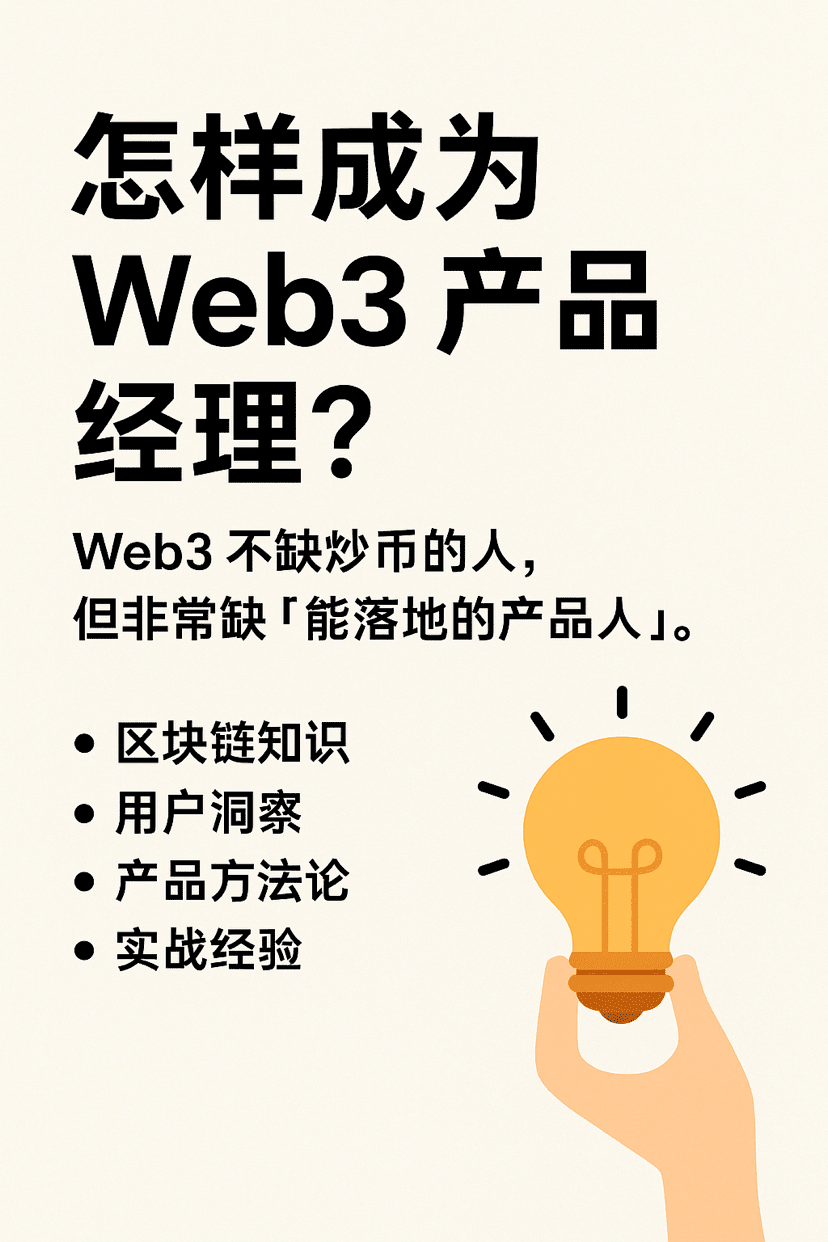
In traditional internet, product managers are referred to as 'CEOs of products', responsible for turning an idea into a usable product. In the Web3 world, product managers are equally important, but due to the uniqueness of blockchain, the skill requirements and growth paths differ significantly.
1️⃣ Master the Basics of Blockchain
The first step for a Web3 product manager is to understand the underlying logic of blockchain:
• Wallets: User entry points, private keys, public keys, mnemonic phrases.
• Chains & Layer2: Differences among various public chains (Ethereum, Solana, BNB Chain, etc.)
• Gas Mechanism: The impact of transaction costs on user experience.
• Smart Contracts: How the business logic of products is implemented on-chain.
📌 Suggestion: Learn through interactive airdrop projects and participating in testnets, it's faster than rote memorization.
2️⃣ Understand Web3 User Needs
Web3 users differ significantly from traditional users:
• Focus more on 'revenue' rather than 'experience'
• Strong willingness to try new things, but quick to churn.
• Community culture (Discord, TG, X) is more important than product functionality.
As a product manager, you need to learn to observe users:
👉 Why are they willing to participate in airdrops?
👉 Why do they insist on holding a particular NFT?
👉 Why do they turn to other protocols?
3️⃣ Familiarity with Web3 Product Forms
Common Web3 products mainly include:
• DeFi (Decentralized Finance: DEX, lending protocols)
• NFT/GameFi (driven by entertainment and culture)
• Infrastructure (wallets, cross-chain bridges, Layer2)
• RWA (Real World Assets on the chain, a recent popular direction)
📌 Suggestion: Use more, experience more, write comparative analysis reports, and develop product sensitivity.
4️⃣ Master the General Methodology of Product Management
Whether in Web2 or Web3, the fundamental skills of product managers are universal.
• Demand Analysis: Where do user pain points come from?
• PRD Writing: Transforming business logic into implementable features.
• Data Analysis: Look not only at on-chain data but also at user retention and community activity.
• Iterative Optimization: Small steps to make quick progress, constantly experimenting.
The difference is that Web3 products often face: regulatory uncertainty + token economic models, requiring stronger compliance awareness and economic thinking.
5️⃣ Participate in Practical Projects
The best way to learn is to engage in practical experience:
• Join a DAO, responsible for product or community modules.
• Participate in testnets, write interactive tutorials and user feedback.
• Find an internship with a startup team, even if it's just doing operations, it helps to quickly understand the overall product.
⚡ In Web3, there is no absolute 'formal learning path', practical experience is often more valuable than degrees and resumes.
📝 Summary
To become a Web3 product manager, you need:
• Knowledge reserve of blockchain
• Insights into user needs
• Understanding of product forms
• General Product Methodology
• Practical Experience
In short: Don't just be someone who understands coins; be someone who can create actionable products.
In the future of Web3, there are plenty of people trading coins, but very few who can create products.
👉 What do you think is the most important skill for a Web3 product manager? Let's discuss in the comments 👇