
The crypto bubble is something incomprehensible for people outside the industry. Even veteran traders, who remember the dotcom boom at the turn of the century, would be strongly surprised. 300% in a week? No problem, please take a seat and buckle up.
🚀Attention! It's starting!
The bubble in the world of cryptocurrencies is an incredible moment. Token prices are skyrocketing, no one cares about fundamentals. A billion dollars for a network that actually doesn't work yet? No problem, tomorrow it will be worth two billion. And in a week, five, remember my words!
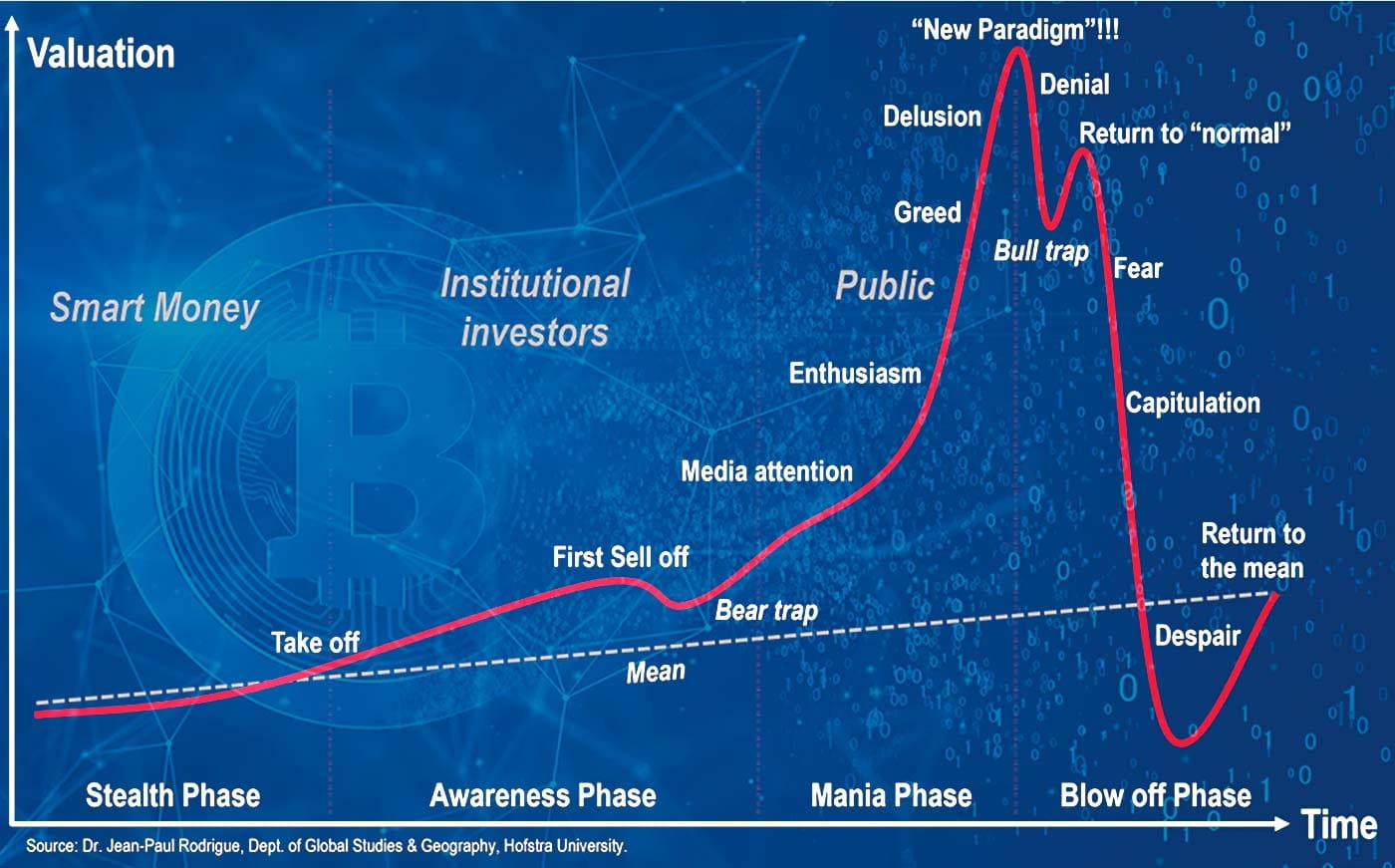
A normal person starts to feel during a bubble like in a madhouse. Slowly, the madness of the crowd takes over, where everyone believes they will become a millionaire in six months. Rational thinking takes a vacation. While we usually still pretend to look at fundamentals, in the buying frenzy everything is based on pure psychology and marketing.
At first, there is some actual reason. It could be Ethereum smart contracts in 2015, the DeFi boom in 2020, increased purchases by MicroStrategy in 2024. Early investors actually see potential in the market. Then speculators join in, prices rise, and the media starts writing about millions made in crypto.
And then the magic of FOMO starts to work. Since everyone is making money, I want to too! Twitter is buzzing, YouTubers are picking their Lambos, in the comments there are auctions about whether half a million dollars for BTC will break this year. Psychology starts to rule, everyone believes in a new paradigm, and prices lose touch with reality.
Remember to take profits, even if you are convinced that BTC is going to half a million! Personally, I set my BTC selling thresholds bought in early 2023 at 80, 100, 120, 140, and 200 thousand, 20% at each threshold. Your goals may be different, but you should set them.
🔥Binance account with a lifetime 20% discount on fees! Check it out!🔥
💰It's all about the money and nothing else
But beware - the madness of crowds doesn't come from nowhere. Speculative bubbles are born when there is an excess of easy money. That money is never easy; you work hard for your paycheck? You might, but not everyone.
Cash is now the margin of the margin. The real power lies in the money that is recorded on central bank balance sheets. Do you still remember how the 2007/2008 crisis was fought? Trillions of dollars were pumped into the market, saving not only banks but also stock exchanges. It worked. Complete bankrupts turned out to be Too Big to Fail - too big to fail.
Since it worked back then, why limit yourself? The Covid-19 pandemic caused a panic shutdown of the entire economy. Stay at home, the government knows better! The side effect was the complete devastation of the economy - people stopped working and going to stores. How to fix it? You guessed it! By flooding the market with a huge amount of new money.
To save the economy, interest rates were drastically cut. The supply of dollars in circulation, measured by the M2 aggregate, increased by about 40% between January 2020 and 2022 according to the Federal Reserve's own data.
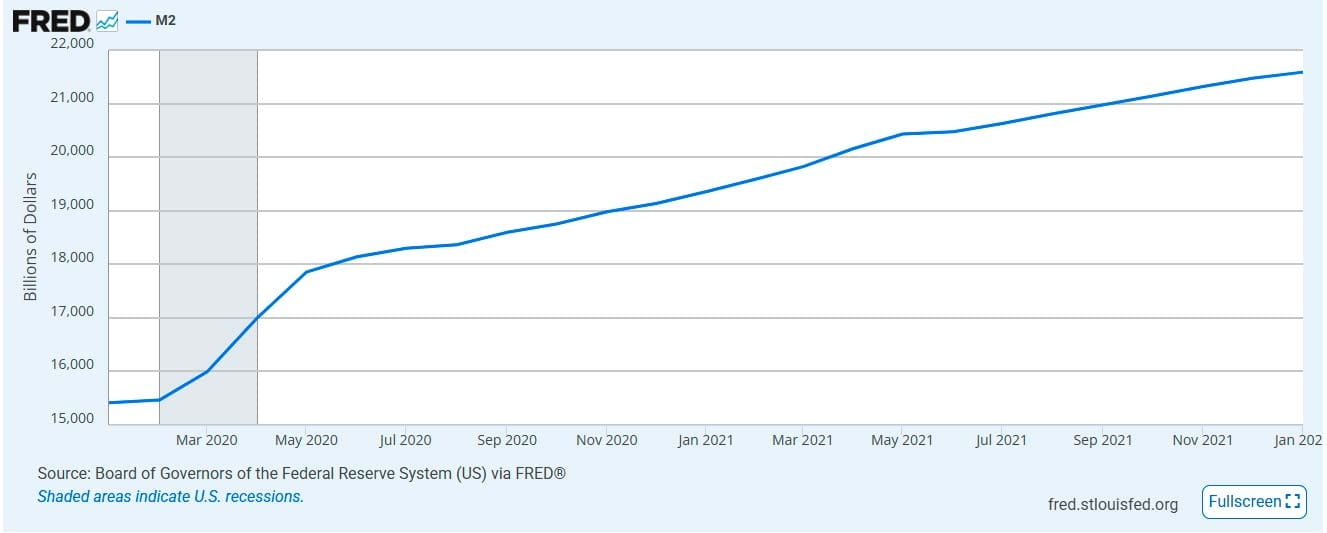 It is obvious that this must have caused significant inflation. From our perspective, the most important thing was that people, locked in their homes with not much to do, unexpectedly received extra money from support programs in 2020. What to do with this extra cash? How about investing in crypto?
The irony is that cheap money, meant to support the real economy, instead created a spectacular bubble in 2021. Economic cocaine in the form of QE and covid relief payments fueled the cryptocurrency bull run.
Well, that was once, but how is it today?
🔍How to check if we are in a bubble?
It's not easy, but a few indicators and signals will help us. A bubble is usually characterized by:
parabolic price increase: all charts rise weekly by 10%-20% or more.
record trading volume and huge leveraged futures positions (Open Interest)
high Funding Rates for BTC (in 2021 they reached even 0.3% daily)
extreme readings of the Fear & Greed Index (80+ maintained for weeks)
MVRV (Market Value to Realized Value) above 3 (in March 2024 it was close: 2.8)
signal of crossing averages on the Pi Cycle Top Indicator
These hard indicators can be supplemented with a few lighter ones:
large Bitcoin purchases by companies outside the financial sector
increasing number of searches for "buy Bitcoin" on Google
articles about cryptocurrencies in daily newspapers and TV
taxi drivers and colleagues at work talking about Bitcoin
🗓️State of play in the second half of 2025
If the four-year halving cycle still applies, the current bull run should slowly be nearing its end. Before the end, however, a final surge is likely, after which declines would begin.
Indeed: August 2025 brought solid gains, especially for Ethereum and larger altcoins. $BTC currently lags behind after establishing an ATH a bit earlier. The institutional share in Bitcoin ETF funds is increasing, as is institutional adoption.
On the other hand - this is a healthy correction after long months of falling valuations. Indicators like MVRV or Fear & Greed Index show high readings, but not extreme. Funding Rates are also far from record levels.
It seems that in August 2025 we do not have a typical bubble in the market, although we are probably getting close to it. When BTC exceeds 140 thousand and everyone waits for 250, seriously consider closing a large part of your investments. The only opposing signal would be a helicopter money drop, for example in the form of extraordinary government payments to US citizens.