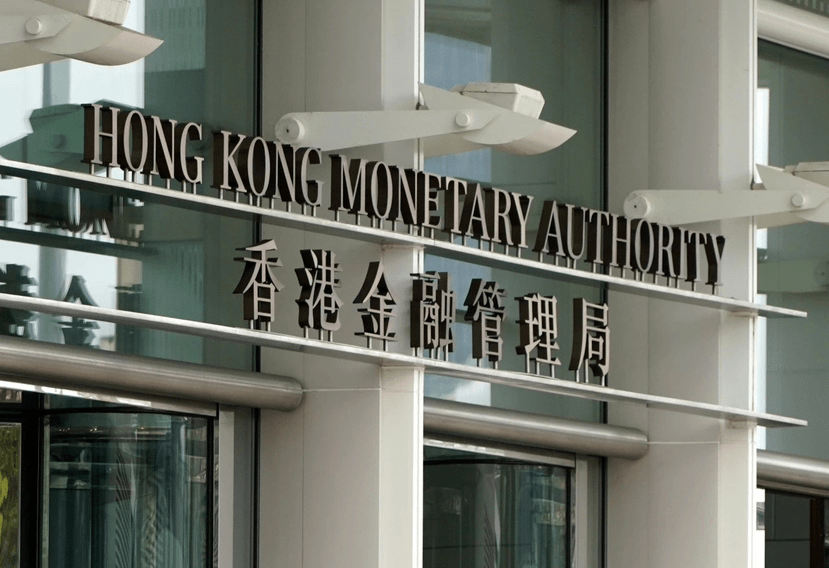

On May 21, 2025, the Hong Kong Legislative Council passed the (Stablecoin Regulation Draft), on May 30, the Hong Kong Special Administrative Region Government published the regulation in the Gazette, and on August 1, the (Stablecoin Regulation) officially took effect according to CCTV News. The regulation established a licensing system for fiat stablecoin issuers, aiming to improve the regulatory framework for virtual asset activities in Hong Kong to maintain financial stability while promoting financial innovation according to CCTV News.
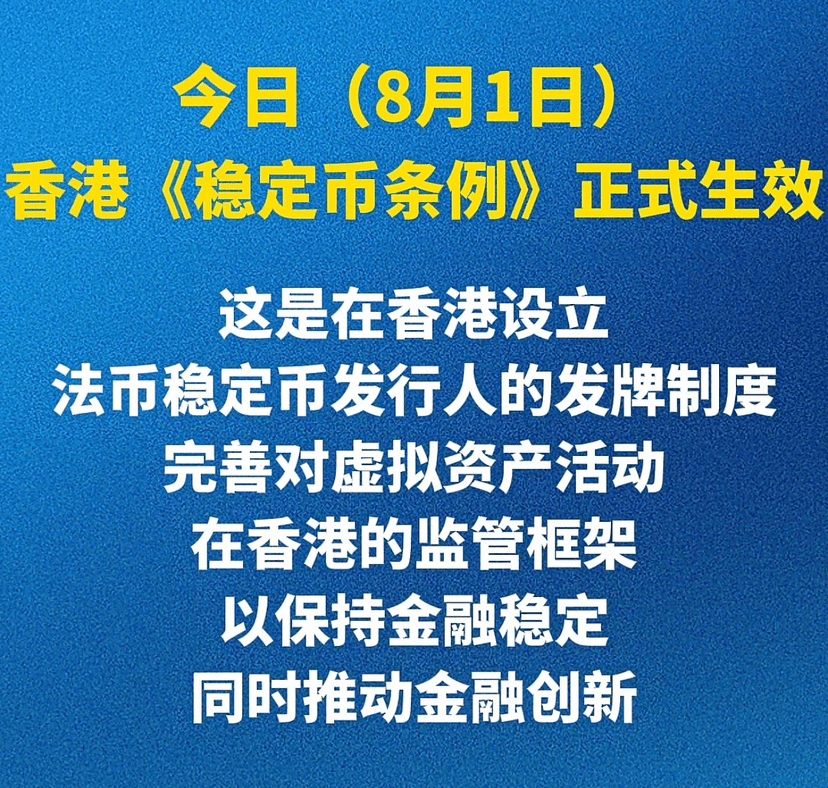
Core content and implementation points of the Hong Kong (Stablecoin Regulation), summarized from the latest regulatory documents:
I. Core content of the regulatory framework
1. License requirements
Regulated entities: Institutions issuing 'fiat currency pegged stablecoins' (such as Hong Kong dollar or US dollar pegged) in Hong Kong; if issuing stablecoins pegged to the Hong Kong dollar overseas, licensing is also required.
Exemption scope: Algorithmic stablecoins and commodity-pegged stablecoins are temporarily not included in regulation but must still comply with general regulations such as anti-money laundering.

Restricted activities: Including issuance, promotion, distribution, and advertising for stablecoins.
2. License application requirements
Entity qualifications: Must be a Hong Kong registered corporation or recognized financial institution.
Financial threshold: Minimum paid-up capital of HKD 25 million (or equivalent foreign currency).
Reserve assets:
Must be fully supported, stablecoin value, and assets must be high liquidity, low-risk types (cash, bank deposits within 3 months, high-rated bonds with remaining maturity ≤ 1 year, etc.).
Assets must be custodized in licensed banks or equivalent institutions in Hong Kong; overseas custody must demonstrate equivalent protection measures.
Redemption mechanism: User redemption requests must be processed within one working day.
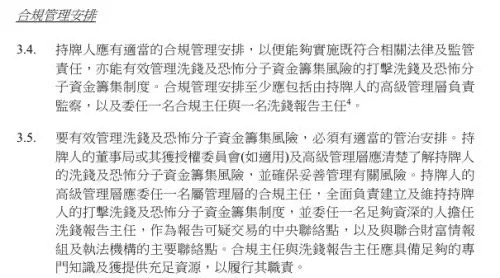
3. Anti-money laundering and KYC
Strict implementation of customer identity verification (KYC), including name, date of birth, identification information, and retention of data for at least 5 years.
Additional risk control is required for non-custodial wallet transactions, complying with the 'travel rule' to ensure transfer transparency.
4. Restrictions on overseas transactions
Prohibition of services to regions with 'full prohibition of virtual asset transactions' (such as mainland China). License holders must actively monitor and intercept behaviors that bypass geographic restrictions using VPNs and other tools.
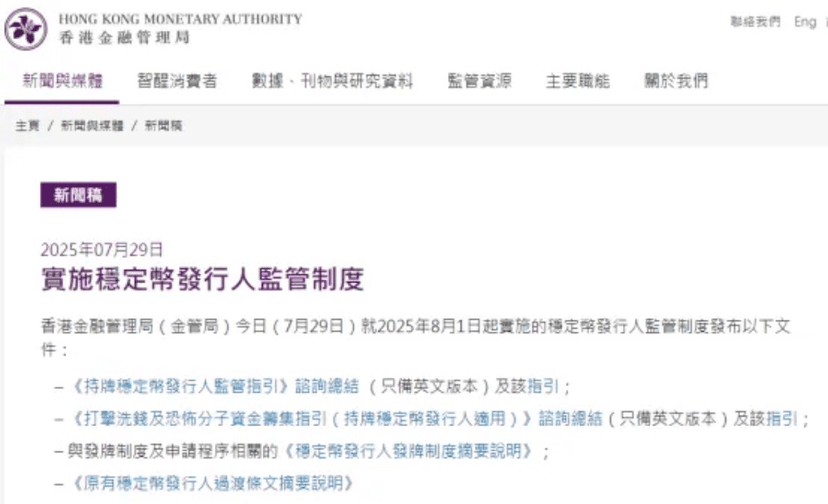
II. License application and transitional arrangements
Application timeline:
Intent submission deadline: August 31, 2025 (non-mandatory, for preliminary communication).
Formal application deadline: September 30, 2025 (priority review for the first batch).
License issuance time: The first batch of licenses is expected to be announced in early 2026, with only a handful of licenses issued initially (3-4 pieces).
Transitional period arrangements:
Existing issuers must submit applications by October 31, 2025, or enter a winding-up period; applicants can continue to operate until January 31, 2026, awaiting approval results.
Application materials: Must submit business plans, compliance statements, technical architecture descriptions (including details of smart contracts), and other '23+6' documents.
III. Policy positioning and market impact
1. Focus on application scenarios
Positioned as a payment tool rather than a speculative product, prohibiting interest payments to prevent functional deviation.
Encouragement of cross-border trade, Web3 ecosystem (such as virtual asset trading, game payments) and RWA (real-world asset) tokenization.
2. Multi-currency issuance and Renminbi internationalization
Allow pegging to a basket of currencies, but new pegged currencies require separate approval.
Market speculation may explore offshore Renminbi (CNH) stablecoins as a new path for Renminbi internationalization.
3. Competitive landscape
Sandbox testing institutions: JD Technology (cross-border payments), Yuan Coin Technology (RWA), Standard Chartered joint venture (game finance), etc. have already deployed scenarios.
Potential license holders: Standard Chartered Hong Kong, Ant International, Yuan Coin Technology, etc. with first-mover advantages.
IV. Risk warnings and compliance recommendations
Bubble risk: The Monetary Authority warns of excessive market exuberance, with initial license scarcity and unclear profit prospects; investors need to assess rationally.
Violation penalties: License holders who fail to continue compliance (such as insufficient reserves, lack of risk control) may face fines, suspension, or revocation of licenses.
Cross-border compliance: Users must trade through compliant platforms (such as licensed VASPs) and avoid using VPNs to manage overseas accounts.
Overview of the core requirements for Hong Kong stablecoin regulation
License qualifications: Hong Kong registered corporations/financial institutions, minimum paid-up capital of HKD 25 million.
Reserve assets: 100% high liquidity assets supported, custodied in licensed banks in Hong Kong, redemption completed within one day.
Issuance scope: Can issue single-currency or a basket of currency stablecoins, new currencies require separate approval.
Prohibited acts: Payment of interest, providing services to regions where virtual assets are prohibited (such as mainland China)
Transitional arrangements: Existing issuers must apply by October 31, 2025, with the first batch of licenses issued in early 2026.
Summary: Hong Kong promotes stablecoins as safe payment tools through high-threshold regulation (full reserve, strong KYC, scenario limitations), highlighting the first-mover advantage of the first batch of scarcity licenses. In the medium to long term, it may assist in Renminbi internationalization and cross-border financial innovation, but caution is needed regarding market bubbles and compliance risks.