


Key takeaways
Scams through paying for canceled/expired orders trick buyers into sending money after the trading process has expired or been canceled by pushing them to act out of urgency, providing false reassurances, and using fake screenshots.
Do not send money after the order has been canceled or expired, and always ensure that communication is on the Binance platform.
If you have been scammed, act quickly: Document everything and contact Binance customer service immediately.
Scammers love to rush – and in P2P trades, time is their weapon. By stalling during the available time to execute the order and pressuring you to pay close to the order's expiration, scammers create the illusion that the deal is still active – even when it is not. Some even forge screenshots or claim that they have extended the time, just to trick you into sending them money. In this blog, we will detail how scams work through paying for canceled/expired orders, provide you with a real-life example, and share practical tips to protect you.
Understanding the scam of paying for canceled orders in P2P transactions
The scam of paying for canceled/expired orders is a trick used by scammers from cryptocurrency sellers in P2P trades to deceive buyers and compel them to send payments after a trading order has been canceled or expired.
On the Binance P2P platform, the typical transaction involves holding the seller's funds in an escrow account once the trading process begins. The seller will set the time limit they wish to wait for the buyer to complete the payment. If the buyer does not pay within the specified time, the order is canceled, and the cryptocurrency is returned to the seller – this is precisely the stage where scammers try to manipulate the system. Here’s how the scam typically unfolds:
1. Posting an attractive offer: The scammer pretends to be a seller and lists an offer to sell cryptocurrency in the P2P market at an incredibly attractive price to lure buyers.
2. Buying time: Once the buyer initiates the trading process, the scammer tries to waste time during the available order timeframe. They typically provide intentionally incorrect payment details, making it difficult or impossible for the buyer to complete the payment on time. To gain more time, they may also ask the buyer to communicate on an external platform or even request unnecessary information such as front and back photos of identification documents.
3. Urging to complete the payment after the order's expiration or cancellation: As the order's expiration time approaches or after it has already expired or been canceled, the scammer shares the correct payment details. They then pressure the buyer to proceed with the payment, using misleading phrases such as "I've reserved the order for you" or "I'll reactivate it as soon as you make the payment."
This tactic aims to create a sense of urgency and give the impression that the transaction is still active, even though it is not. Some scammers may go further, sending fake screenshots of the order page, deceptively showing that the payment deadline has been extended – when this has not actually occurred.
4. The buyer sends payments for an invalid order: A buyer who has trusted the seller makes the payment even though the order has been canceled or expired. Since the platform no longer recognizes the transaction, the buyer does not receive any cryptocurrency in return.
5. Stalling to escape: To waste more time, the scammer may pretend to cooperate by starting a conversation with customer service or opening an arbitration request. This stalling tactic gives them enough time to quickly withdraw the funds before the platform can freeze their account or initiate an investigation.
A real-life example of a scam in P2P trades
The scammer pretends to be a seller on the P2P platform, listing cryptocurrencies at an unusually attractive price – often 5% lower than the lowest price – to lure innocent buyers.
Once the trading process begins, the scammer deliberately stalls by sending confusing and vague messages – such as the emoji 📞.
As the order expiration time approaches or after it has been canceled, the scammer suddenly gets excited, claiming they can extend the order time.
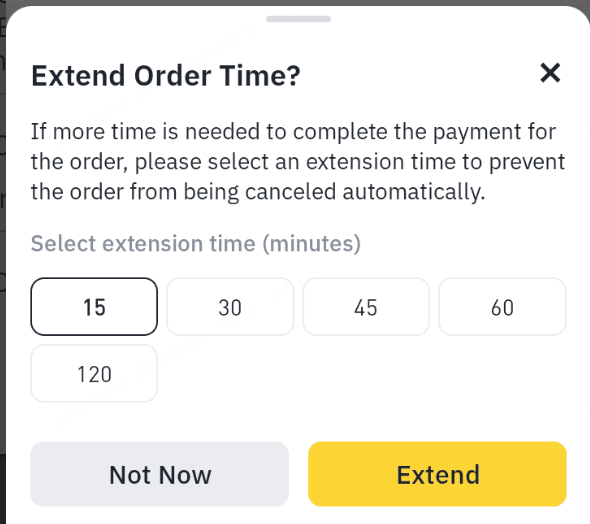
As soon as the order expires or is canceled, they continue to urge the buyer to make the payment, providing ongoing assurances that the cryptocurrency will be released as soon as proof of payment is sent.




In some cases, the scammer may do more and ask for additional money, claiming that there are extra payments required to "reactivate" the order.

How to protect yourself from scams in P2P trades
Remember that scammers rely on convincing you to pay for a canceled or expired order, so do not make any payment if the P2P order has been canceled or expired, as canceled orders cannot be reactivated.
1. Do not pay for canceled or expired orders: Do not send payments if the P2P order is no longer active; once the order is canceled or expired, it cannot be reactivated.
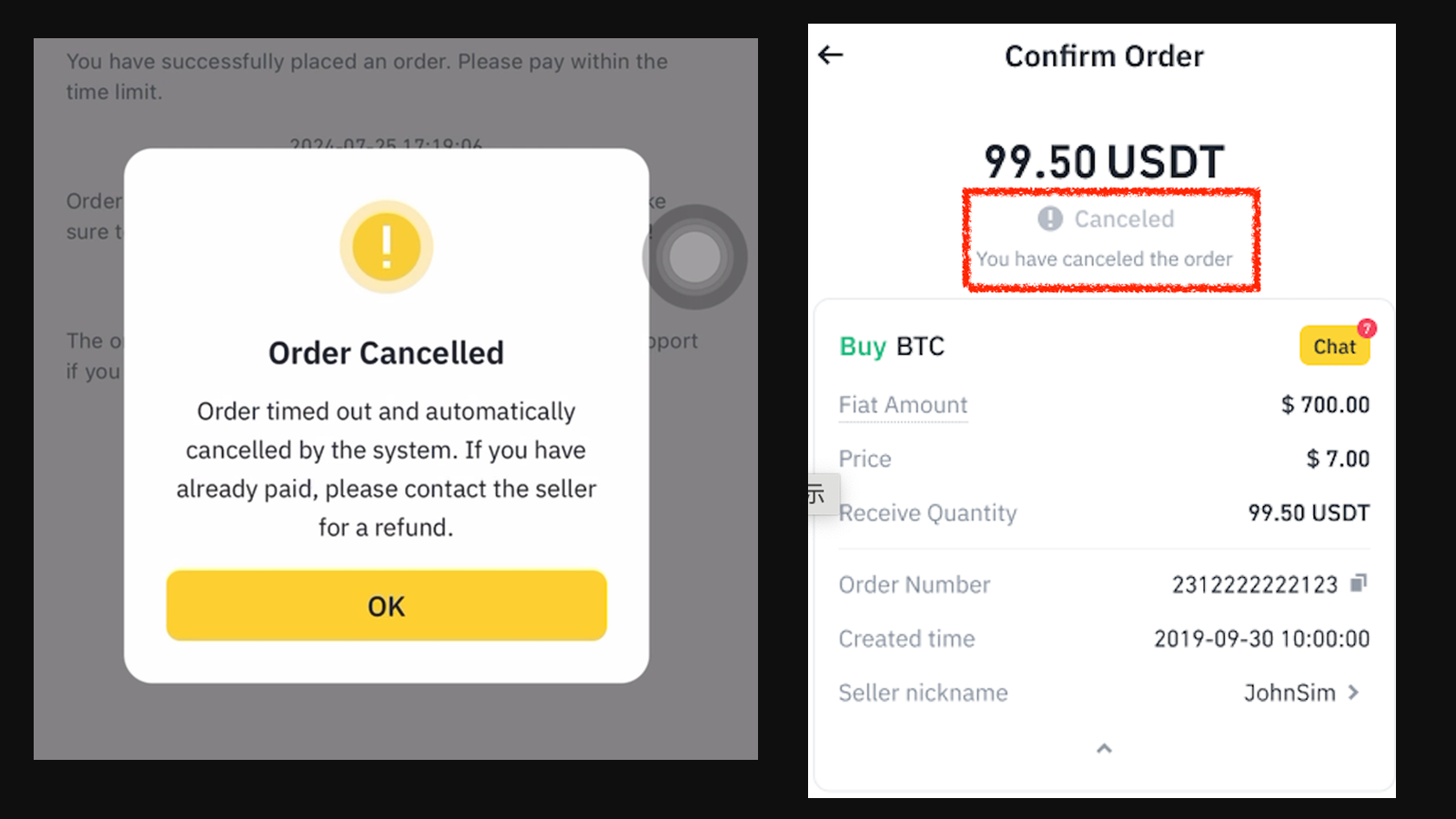
2. Always exercise caution: Be wary of the seller's claims, especially if the offers seem too good to be true. If you find the transaction suspicious, report it immediately to our customer service team.
3. Ensure that conversations are always on the Binance platform: Always communicate during P2P transactions on the Binance platform to ensure safety, and do not share your personal contact details with any counterparty.
If you have made the payments and informed the seller, but the seller has not released the cryptocurrency after confirming the payment, please submit an arbitration request. Our support team is always available to help you resolve the issue.
If you have been scammed
1. Contact customer service: Reach out to the customer service team to report the issue.
2. Document everything: Keep records of all communications and transactions related to the incident.
3. Report: File a report immediately by following the steps outlined in this guide: How to report scams to Binance customer service.
Final thoughts
Scams such as paying for canceled orders are designed to exploit quick decisions and a false sense of urgency. By taking advantage of waiting times and relying on confusion, scammers try to exploit even the basic features of P2P trading. While the Binance platform implements security measures such as escrow systems and reporting, no system is immune to mistakes. Always remember that safety is a shared responsibility – so exercise caution, verify the order status twice, and only transfer funds when appropriate.