



Initially, you might only use major coins like Bitcoin and Ethereum. However, as the market grows and the variety of coins increases, you naturally become aware of more coins.
The word I encountered most frequently in that process was ‘stablecoin’. I realized that understanding the types and characteristics of these stablecoins is crucial for maintaining stable futures trading.
When I first started trading futures, I thought I just needed to deposit Bitcoin as collateral and manage positions. However, in reality, stablecoins repeatedly appeared when settling profits or temporarily holding assets.
Stablecoins are digital assets whose value is stably fixed. They mostly move in tandem with the dollar and are very useful for temporarily holding assets or realizing profits in the highly volatile cryptocurrency market. In futures trading, converting to stablecoins after realizing profits becomes one of the basic strategies.
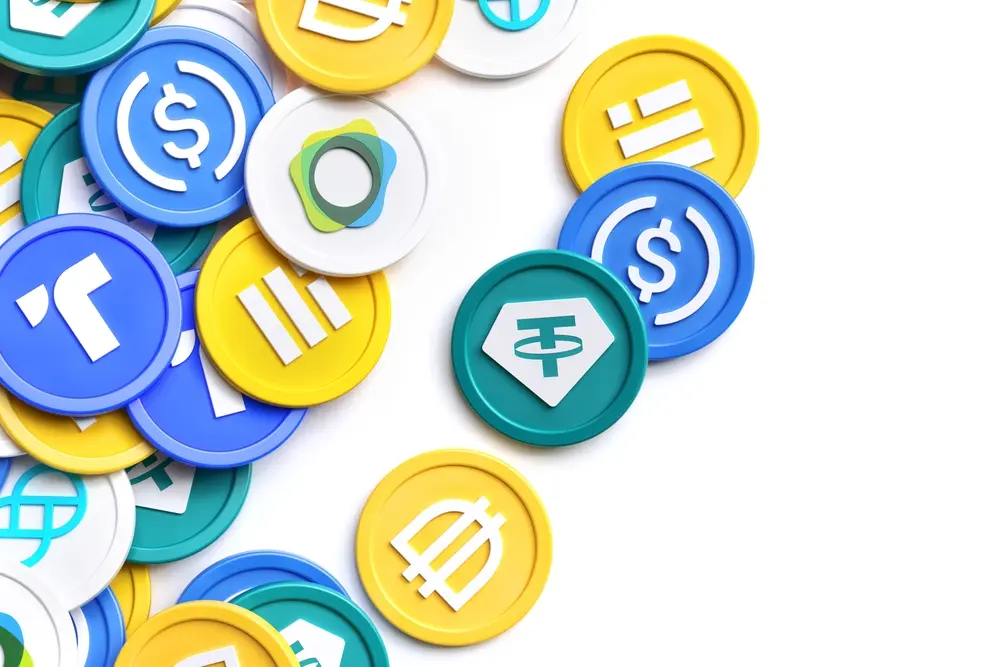
Currently, the most widely used stablecoin in the U.S. market is undoubtedly USDT (Tether). A significant portion of the total cryptocurrency trading volume is conducted in USDT, demonstrating its outstanding liquidity. Next is USDC, a stablecoin jointly issued by U.S. companies Coinbase and Circle, which is highly regarded in terms of regulatory compliance and transparency.
Another coin to note is DAI. DAI operates in a decentralized manner and maintains its value based on algorithms. Each stablecoin has different issuing entities, operation methods, and trust structures, so choices vary based on usage and preferences.
In Upbit, which is widely used by domestic investors, stablecoins such as USDT, USDC, and DAI are listed. Notably, USDT is traded most actively, followed by USDC.
Of course, many Upbit users trade primarily in the Korean won market, but for investors who are also engaging in futures trading or using overseas exchanges, using stablecoins to manage assets and transfer to global exchanges can be an effective strategy.
What I felt while trading futures is that how you manage stablecoins can significantly affect your risk management capabilities.
In a highly volatile market, it is often advantageous to first convert to stablecoins and monitor the situation rather than immediately changing to Korean won after closing positions. For example, if signs of a drop in Bitcoin prices appear, converting to USDT in advance allows for flexible timing adjustments.
At this time, the most important thing is ‘which stablecoin to choose’. You need to understand liquidity, transaction fees, transfer speeds, and the reliability and structure of each coin in advance to move more strategically.
USDT is highly practical due to its widespread use, but transparency issues regarding reserves are often raised.
USDC is issued based on U.S. regulations and has relatively high transparency and reliability.
DAI is maintained by algorithms based on a decentralized protocol, emphasizing user autonomy.
If you understand the structure and background of each coin in this way, you can respond more quickly and accurately even in a rapidly changing market.
I believe that accurately understanding the types and characteristics of stablecoins while trading futures goes beyond simple information and is the core of practical investment strategies. To ensure smooth currency exchange, transfers, and position management, one must grasp the trends in both the U.S. market and Upbit.
During periods when the market responds sensitively, stablecoins play an even more crucial role. They can be conveniently used to temporarily hold assets or while waiting for the right timing to enter the next position.
I also plan to continue studying the structure, market reactions, and regulatory changes related to stablecoins in the future, and I intend to actively utilize them for more stable and strategic futures trading.
If you're wondering where to invest in coins, I recommend Binance, and I will leave a link below for the 20% discount on Binance fees. Please make sure to take advantage of the discount.
🔸Go to get a 20% discount on Binance fees
Both new members and existing subscribers can receive a 20% discount on fees if they meet the five conditions.
I am already registered on Binance.
The invited person has not accepted an invitation before.
The invited person's account has not traded or used products on the Binance platform in the last 180 days.
When an eligible inviter opens the link and logs in, a confirmation window will appear.
When the inviter clicks [Bind Now], the binding takes effect.