

In the trading world – whether in stocks, cryptocurrencies, or forex – a trader's efficiency is not measured by how much profit they make on a single trade, but by their ability to stay in the market and achieve sustainable returns over the long term. Here, risk management emerges as one of the most important pillars of a trader's professional success.
What is risk management?
Risk management is a set of procedures and plans that a trader puts in place to limit potential losses and ensure capital stability, regardless of market fluctuations or the individual outcomes of trades. It is not just an option, but a strategic necessity.
---
Why is risk management essential for every trader?
1. Preserving Capital
The most important asset a trader has is capital. Without protecting this asset, there can be no talk of opportunities or trading strategies. Without risk management, a single losing trade could wipe out months of gains or completely remove the trader from the market.
2. Control of Emotions
Large losses lead to panic, and large gains can lead to greed. Risk management helps the trader make rational, not emotional, decisions, reducing the chances of impulsive or revenge-driven decisions.
3. Achieving Continuity
True success in trading is not measured by a single winning trade, but by the trader's ability to persist and achieve consistent returns over time. Risk management is what allows them to achieve this consistency.
4. Increasing the ability to improve strategies
When a trader knows the maximum potential loss in each trade, they can evaluate their strategy's performance without risking uncalculated losses that affect data quality and review.
---
The most important risk management tools
1. Determining the appropriate position size: Linking the position size to a specific risk percentage of the capital (e.g., 1-2% per trade).
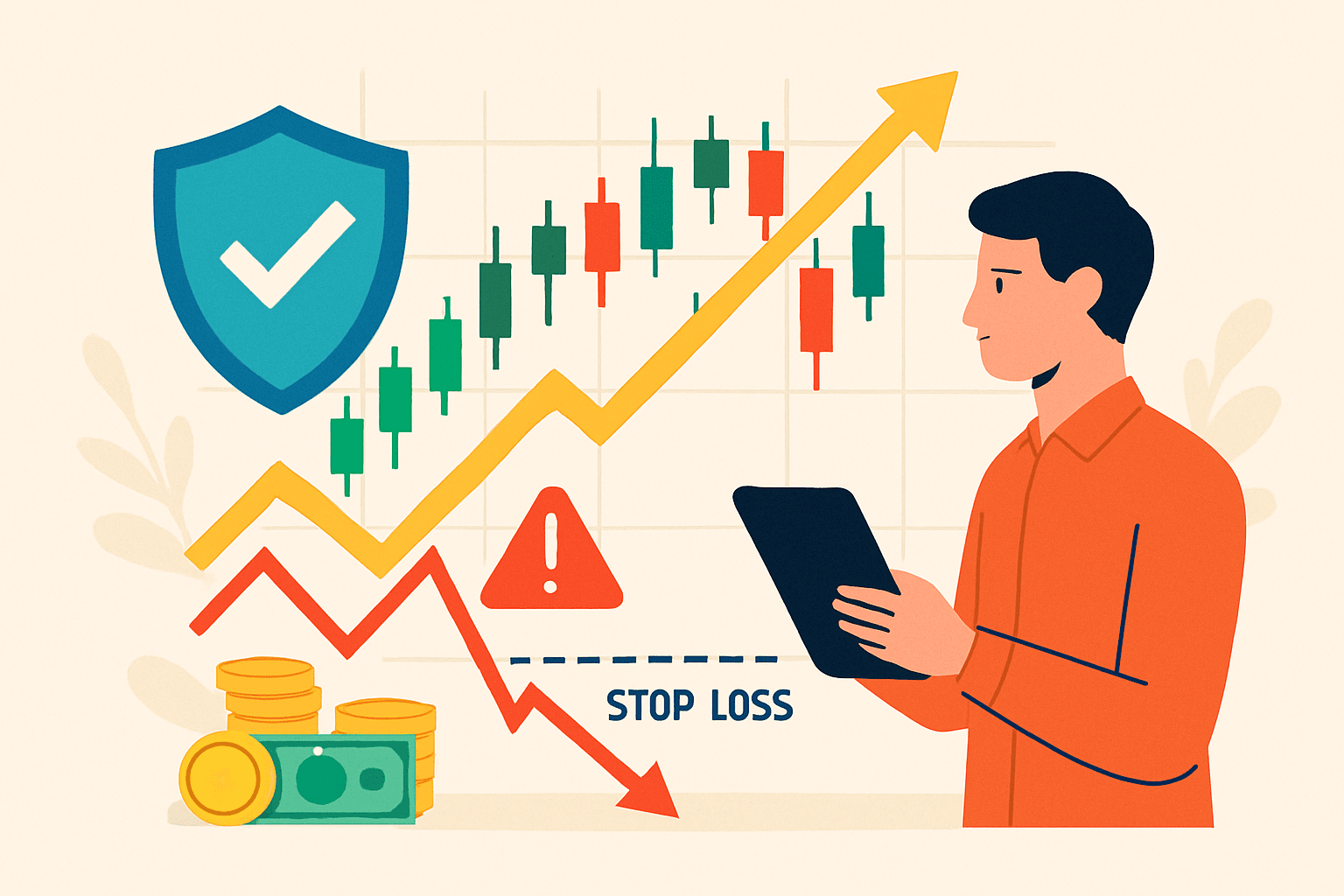
2. Stop Loss: An automatic order that closes the trade at a specified loss limit.
3. Diversification: Do not put all capital into a single asset or trade.
4. Leverage Control: Use leverage cautiously and proportionately.
5. Risk/Reward Ratio: Enter trades where the expected return is greater than the risk at a logical ratio (e.g., 1:2 or 1:3).
---
Summary
Risk management is not a secondary tool; it is the safety valve for any trading strategy. You may have the best technical and fundamental analysis, but without a clear risk management plan, you will be susceptible to a rapid collapse. Those who master it can survive the harshest conditions and turn trading into a sustainable and profitable investment activity.
In the end, the market is unforgiving, but those who manage their risks wisely can survive and thrive.
---