

Can people in the crypto world sleep soundly at night?
I am 40 years old this year, started trading coins at 28, and by 2024-2025, my capital will reach eight figures. From initially staying up all night to gradually summarizing a practical method, trading coins is like commuting to work; follow the procedures during work and enjoy yourself after work, while also earning objective returns each month.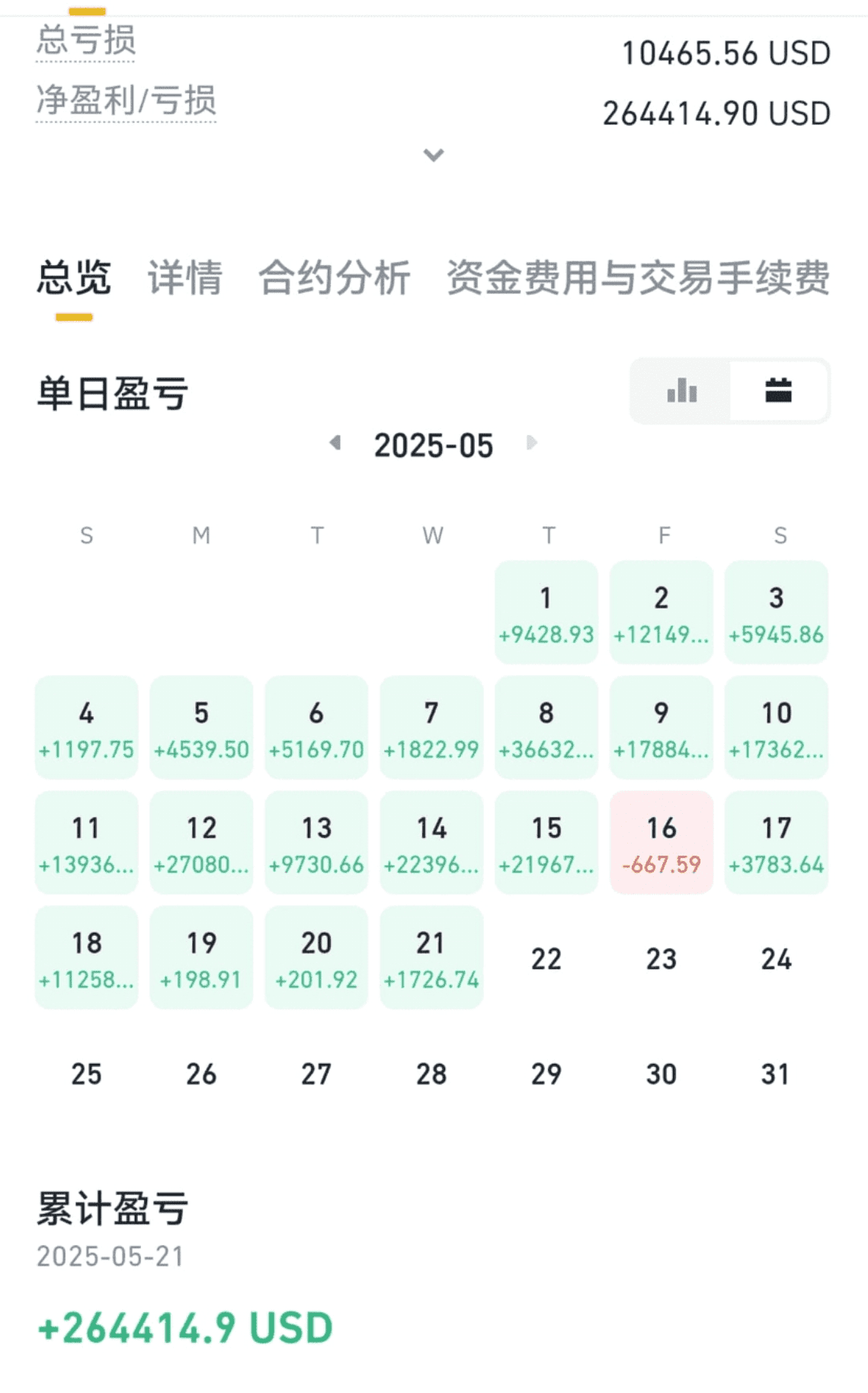
In the crypto world, one day can equal ten years in the real world, showcasing its ever-changing dynamics. I have been in the crypto space for ten years, initially suffering heavy losses, but after ups and downs, I now support my family through this.
Summarize 10 points of experience for everyone to reference; if you do it, it’s hard to lose money. Coins protected by market makers: when the market crashes, the coins in hand do not fall; there is a high probability of market makers protecting the coins.
This type of coin may have solid fundamentals or potential benefits; hold steady as the future profit margin is large. Beginner moving average guide: beginners should pay more attention to macro information when buying and selling.
For short-term trading, observe the 5-day line; hold above the line and exit below it; for mid-term, focus on the 20-day line and operate similarly. Stick to a simple moving average strategy and operate decisively. Short-term response strategy: buy coins for three days without moving, then switch immediately.
Buying immediately drops and loses 5%, decisively stop-loss, efficiently utilize funds to avoid losses. The timing for rebounds during steep declines: if a coin is halved from a high position and continues to fall for nine days, it may have bottomed out, and a rebound is imminent, buy decisively to catch the rebound.
Leading coin investment logic: if you dive into the crypto world, you should chase leading coins, as their rise is rapid and their resistance to decline is strong. Don’t hesitate due to high prices or large declines; buy when the upward trend is established and sell during reversals.
Bottom-fishing versus trend assessment: don’t be obsessed with bottom-fishing; a falling coin may have no bottom. Investment should follow the trend; accurately grasp the entry timing, as the probability of profit is higher when entering an upward trend.
Build a trading strategy: don’t be complacent after a profit; sustained profits are what’s difficult. After each profit, review whether the strategy was effective or based on luck, and build a strategy that suits you.
The empty position strategy: when uncertain about the market, hold an empty position; the safety of funds is paramount. Entering the crypto world is for the stable appreciation of assets, not for gambling-style investments; trading is about success rates and risk-reward ratios.
Key points for investing in new coins: new coins initially receive market attention, leading to a surge in prices due to influx of funds, but they may lack fundamental support. Market sentiment can change, and withdrawal of funds can lead to a price crash, so investment must be cautiously evaluated.
Consensus and wealth in the crypto world: digital currencies develop through consensus mechanisms, and participants earn wealth through belief and effort, showcasing the power of consensus and the wealth creation potential of the crypto world.
If someone is confused due to market fluctuations and doesn’t know how to deal with being stuck, or feels misled during the operation process, remember to learn more.
Through short-term trading models, the win rate reaches 98.8%, learning to easily go from 100,000 to 20 million, sticking to this one model!
Assuming you initially have 100u in capital,
The first trade is made with 10% (i.e., 10u) of the position, and after successfully taking profits, the funds grow to 130u.
During the second operation, I used 10% (i.e., 13u) of the current funds as a position, but this time I encountered a stop-loss, causing funds to fall back to 117u.
After the third attempt, I used the previous position ratio again (still 13u), this time successfully took profits, and the funds appreciated to 156u.
In the fourth investment, I increased the position to 16u (about 10% of the current capital), and once again achieved profit taking, with the final account balance reaching 204u. Through short-term trading, the win rate reached 98.8%; learn to easily go from 100,000 to 20 million, sticking to this one mode!
Assuming you initially have 100u in capital,
The first trade is made with 10% (i.e., 10u) of the position, and after successfully taking profits, the funds grow to 130u.
During the second operation, I used 10% (i.e., 13u) of the current funds as a position, but this time I encountered a stop-loss, causing funds to fall back to 117u.
After the third attempt, I used the previous position ratio again (still 13u), this time successfully took profits, and the funds appreciated to 156u.
In the fourth investment, I increased the position to 16u (about 10% of the current capital), and once again achieved profit taking, with the final account balance reaching 204u.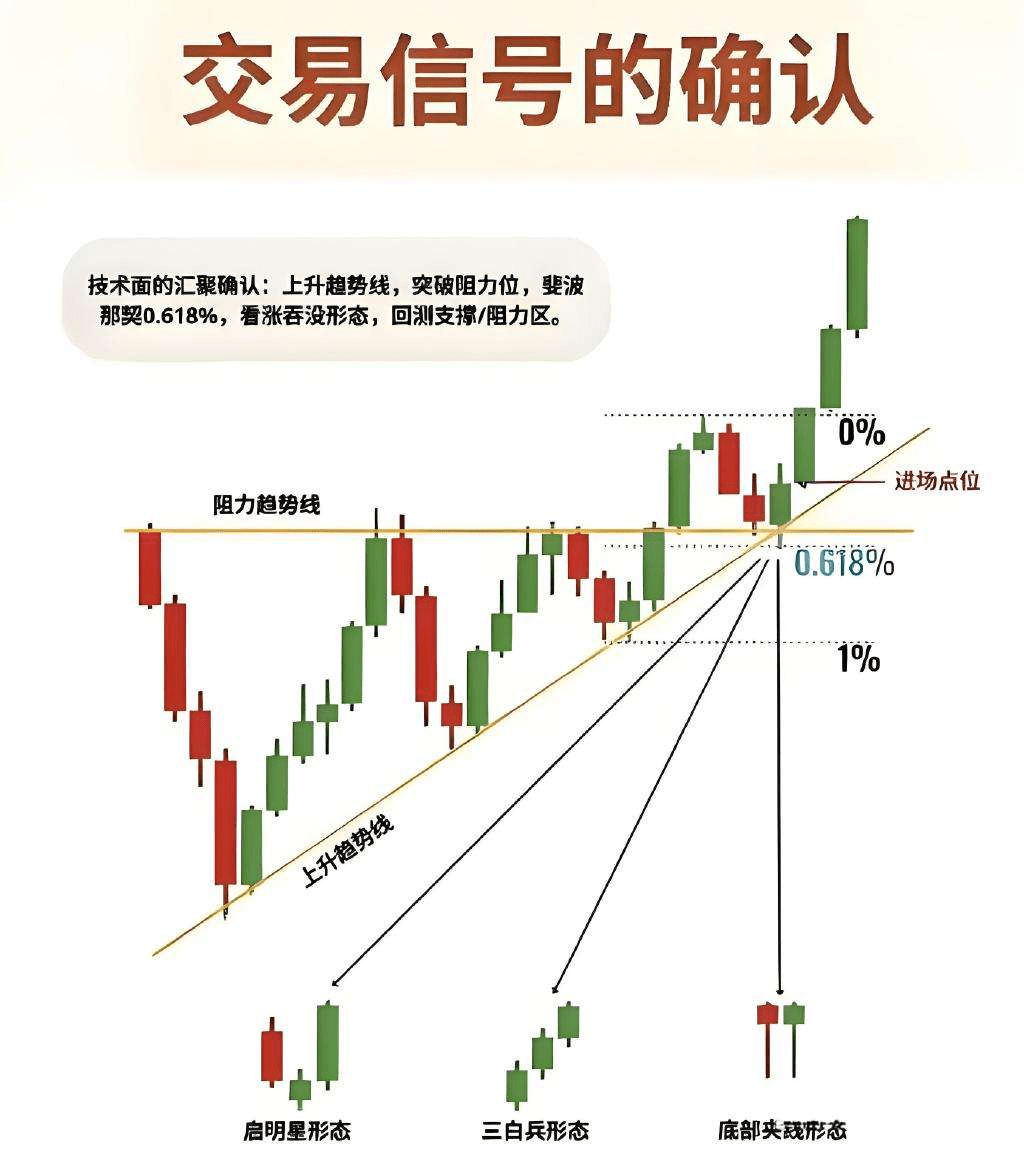
For example, if the entry price is 2685 (using 10% of the capital), then increase the position when the price rises to 2695 (also using 10% of the capital). At the same time, set the stop-loss at 2705.
For more aggressive operations, you can adopt a phased buying strategy, investing 7% of your position each time. The advantage of this method is that it can provide a better risk-reward ratio, such as reaching 1:1.5 or even 1:2.6.
When approaching the profit-taking target, about 5-10 points away, you can choose to close 70%-80% of your position, while raising the stop-loss line by 5-10 points for the remaining part. If the price does not break this new stop-loss point, continue to hold; once it breaks without meeting expectations, gradually reduce your position, closing 70% of your position at each key resistance level and adjusting the stop-loss position accordingly.
The simplest and most straightforward method of trading spot in the crypto world:
For many who want to profit from spot trading in the crypto world, finding a simple and effective trading method is undoubtedly a huge challenge. However, after long-term exploration and practice, I have discovered a very practical spot trading strategy that can not only improve win rates but also help you grasp major trend movements.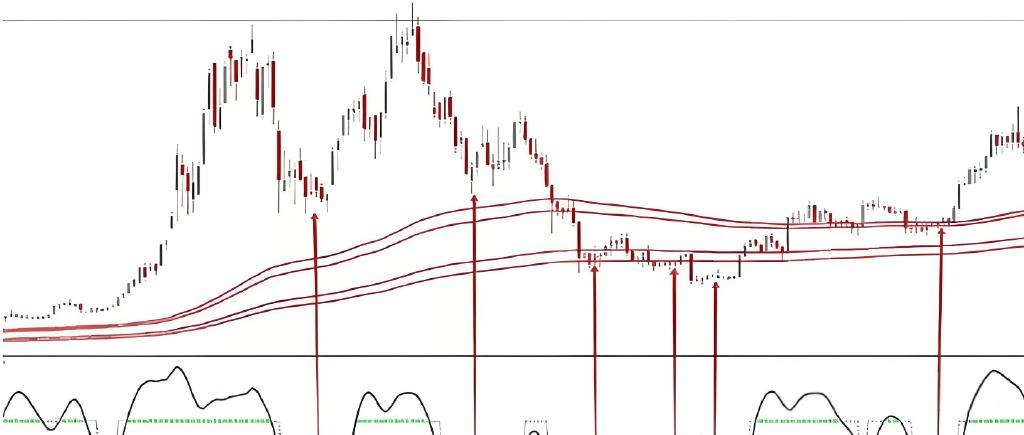
First, we need to focus on the weekly cloud chart system. By observing historical market trends, you will find that often after a weekly bottom, there is a strong upward surge. Therefore, if you focus on capturing the weekly bottoms, you will almost never miss out on any major market movements. Of course, in the trading process, we inevitably encounter situations like double bottoms or double tops. So how do we handle these situations?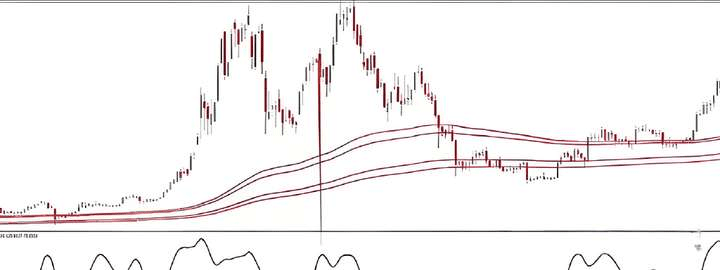
For double bottoms, when the first bottom appears, we can choose to enter the market. However, after the market rises a certain distance, we need to set a stop-loss at the cost price. Although many people feel that stop-losses are unnecessary in spot trading, it is very necessary in weekly-level trading. If a double bottom appears in the market, we can wait until the second bottom appears before entering. For double tops, handling them may be more complex. When a peak appears at the weekly level, it usually means that the risk is relatively high. You can choose to liquidate and exit, or wait for a pullback before re-entering. But no matter what method you choose, you need to use the daily level as a reference. If the weekly level pulls back to the daily bottom, we can choose to enter the market. If the daily line rebounds, the weekly trend may likely form a second top, with the height potentially far exceeding the previous peak.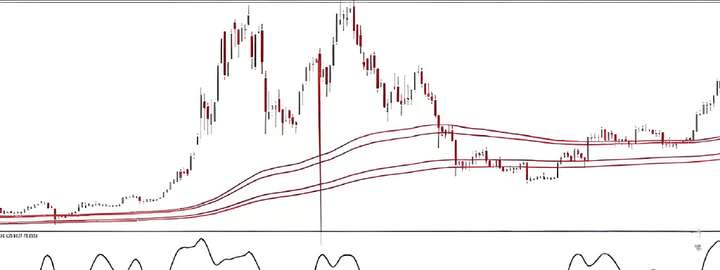
Next, I will illustrate the application of this strategy through a specific example. After the first wave peak of a certain bull market, the market undergoes a pullback. So should we enter the market after the pullback? At this point, we need to refer to the daily level charts. If the daily level has completely reached the bottom, then entering at this time will basically not be wrong and can capture the final major market movements.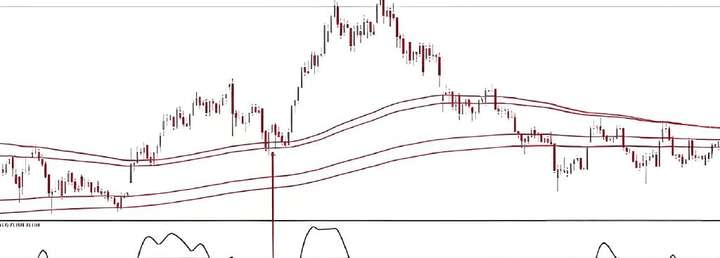
I want to emphasize that this trading strategy is more suitable for investors with larger capital or those who like to trade large trends. For spot trading, due to the greater uncertainty of contracts, everyone’s position management ability is different, so I do not recommend contract trading. For altcoins, you can refer to the bottoms of mainstream coins (like Bitcoin) for buying, so there won’t be too much price difference.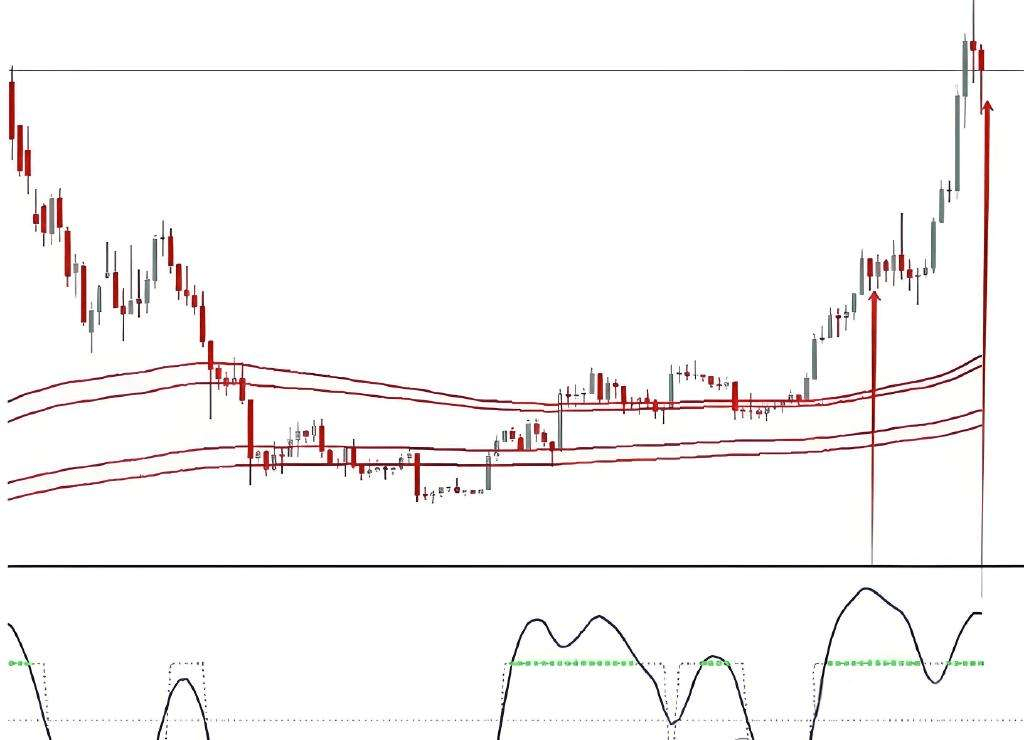
Overall, this simple and efficient spot trading secret can help you seize major trend movements and improve win rates.
However, please remember that any trade carries risks, and you must operate cautiously and reasonably allocate your funds.
Success does not come easily; opportunities always favor those who are prepared. No matter how the future of the crypto world changes, I am willing to move forward hand in hand with you to create brilliance!
How to trade coins | At least avoid 90% of losses?
In recent years, the price of cryptocurrencies has fluctuated greatly, which is common; this instability is mostly caused by market sentiment. Even seasoned investors may impulsively spend large sums on coins of uncertain value due to fear of missing out.
After experiencing a wave of bull and bear markets, many realize that most altcoins are not as good as what is stated in the white papers; some even plan to take advantage from the start.
To avoid losses due to blindly following trends, first remember this phrase: in trading coins, mindset is more important than technique. In a bull market, make money; in a bear market, accumulate coins. In a bull market, don’t cut losses; in a bear market, accumulate coins!
The coin accumulation method is suitable for both bull and bear markets. The accumulation method is the simplest yet the most difficult play. It’s simple because it involves buying one or several coins and holding for more than half a year or a year without trading.
Basically, the minimum return is tenfold. However, beginners often easily see high returns or encounter situations where the coin price is halved, and plan to switch coins or exit. Many find it difficult to stick to a non-operational month, let alone a year. So this is actually the hardest part.
The bull market chasing the dip method is only suitable for bull markets. Use a portion of spare cash, preferably no more than one-fifth of your funds. This method is suitable for coins with a market cap between 20-100, as you won’t be stuck for too long.
For example, if you bought the first altcoin, once it rises by 50% or more, you can switch to the next coin that has plummeted, and so on. If your first altcoin is stuck, just wait; in a bull market, it will definitely be unblocked.
Under the premise that the coin type cannot be too pitiful, this method is actually difficult to control, so newcomers need to be cautious. The sand timer car-switching method is suitable for bull markets. In a bull market, basically any coin purchased will rise, and funds act like a giant sand timer slowly permeating into each coin, starting with large coins.
There is a clear rule for rising coin prices: leading coins rise first, for example, BTC, ETH, DASH, ETC rise first, followed by mainstream coins such as LTC, XMR, EOS, NEO, QTUM.
Then there are coins that don’t rise but are on the same upward trend, like RDN, XRP, ZEC, etc. Next, various small coins take turns to rise. But if Bitcoin rises, you should pick the next level of coins that haven’t risen yet and start building positions.
The pyramid bottom-fishing method is suitable for predicting major crashes. Bottom-fishing method: respectively place orders to buy one-tenth of the position at 80% of the coin price, one-fifth at 70%, one-third at 60%, and one-fourth at 50%.
You need to understand the basics of candlestick charts for moving average methods. Set the indicator parameters to MA5, MA10, MA20, MA30, MA60, and select the daily line level. If the current price is above MA5 and MA10, hold steady. If MA5 falls below MA10, sell the coin. If MA5 rises above MA10, buy and build positions.
The violent accumulation method is for coins you are familiar with; it is only suitable for long-term quality coins. With a certain amount of liquid funds, if a coin’s current price is 8 dollars, you can place an order at 7 dollars to buy in; when the purchase is successful, place an order at 8.8 dollars to sell. Profit comes from accumulating coins. Take out the liquid funds and wait for the next opportunity.
Adjust dynamically based on the current price. If there are three such opportunities in a month, you can accumulate quite a bit of coins. The formula is: the entry price equals the current price multiplied by 90%, and the selling price equals the current price multiplied by 110%!
The violent compound interest method of ICO participation: when the new coin rises by 3-5 times, take back the principal and invest in the next ICO, while keeping the profits, constantly cycling. The cyclical wave method focuses on coins like ETC, where you add positions when the coin price continues to drop, add more when it drops again, and then wait for profits to sell off, continuously cycling.
Small coin violent play: if you have 10,000 RMB, divide it into ten parts and buy ten different types of small coins, preferably those priced under 3 RMB. After buying, don’t worry about them.
Don’t sell until it triples to five times; don’t sell when stuck, just hold for the long term. If a certain coin triples, take back the principal of 1000 yuan and invest in the next small coin.
Then the compound interest returns are quite exaggerated! The methods above are suitable for beginners; I suggest studying them slowly! Choose the method that suits you. After building your position, just hold steady. Don’t sell if you’re not making money, and if you’re stuck, you need to hold steady even more; don’t cut losses.
Entering the crypto space marks my tenth year. In the beginning, I suffered immense losses, but through ups and downs, I now rely on the crypto world to support my family. I have summarized some experiences to share with everyone, hoping to be of help to you. As long as you can do it, it’s hard to lose money.
1. Determine the trend of a coin and predict the trend for over a month. The vast majority of trends occur within a month, and there is generally only one trend: rising. So build positions at low levels, don’t operate, and don’t trade back and forth; just look at the returns after a month. Even if it triples, there may not be a need to sell, as high-quality coins can increase dozens or even hundreds of times. Alternatively, conservatively operate by doubling to recoup the principal and keep the profits.
2. Do not engage in any short-selling operations, especially futures, as these are extremely difficult and can wipe out your entire position in an instant. In a downtrend, it’s better to be stuck than to short. Because in the long run, you will definitely have the opportunity to recover your losses.
3. Price predictions are misleading; you can only roughly judge the general trend and leave the rest to time. Don’t become too obsessed with technical analysis; in trading coins, stock-like technical analysis is not particularly useful and should only be used as a minor reference.
4. Don’t bet too big; play with spare money to relieve your psychological pressure. Trading coins is not your life. Don’t put all your money in one coin; take profits when you make money and leave the principal to play with.
5. In the world of trading coins, getting something for nothing yields the largest returns. Don’t think that the more you operate, the more you earn. What you need to do is pick one or two good coins and hold them steadily, or invest regularly if you have spare money, treating it like a wealth management tool. The biggest returns often come from buying a coin, forgetting about it, and then checking back years later.
6. Position control and risk management are very important. Many people operate the same coins, but their returns are far below others. This is because everyone’s timing for building positions is different; since you cannot buy at the lowest price, do not use large positions. It’s best to use light positions for coins bought at high prices. Building positions at low prices is always your safety zone. Position control is about allocating the most suitable amount to several good coins.
Generally, I suggest beginners: Bitcoin, altcoins, and liquid funds should be in a 1:1:1 ratio. Also, learn to build positions in batches, building part of your position at the current price and adding more during a crash, which will help keep the cost of each coin low.
7. Don’t stare at the market all day; don’t think about operating all day. Wealth is an external possession; the most important thing is to sleep well, work, and eat.
Playing in the crypto world is essentially a battle between retail investors and market makers; if you don’t have cutting-edge news or first-hand information, you can only be taken advantage of! If you want to layout together and reap the rewards from the market makers, you can follow me!
Welcome like-minded people in the crypto world to discuss together~
There is a saying that I strongly agree with: the boundaries of knowledge determine the boundaries of wealth, and a person can only earn wealth within the limits of their knowledge.
When trading coins, you must maintain a good mindset; don’t let your blood pressure soar during a big drop, and don’t be overly complacent during a big rise. It’s important to secure profits.
For those without many resources, a down-to-earth approach is an unshakeable way to survive.
You might as well 【check the homepage】 to get the latest crypto intelligence and trading skills.
Give a rose, and the fragrance remains in your hand. Thank you for your likes, follows, and shares! Wishing everyone financial freedom by 2025!