
✍️ Write some valuable content: Is it necessary to enable MEV protection when brushing Binance Alpha?
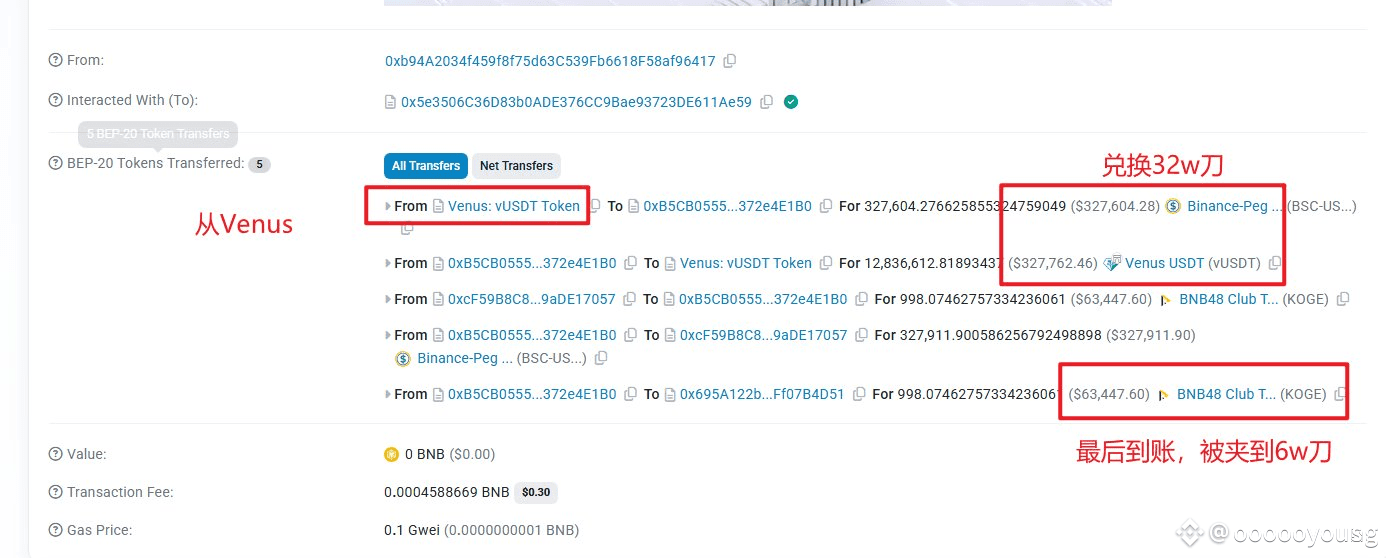
Today I saw that someone was squeezed out of over $200,000 by $KOGE, which sparked a discussion about whether to enable MEV protection when brushing Binance Alpha.
Original tx link: https://bscscan.com/tx/0x0b3a9d39369196a668c09d3890311749dc0ecbe0a3094cbfe224ec551ef26547
It is clear that the 200,000 dollars were squeezed out from the liquidity exchange of vusdt on Venus, likely due to the excessive automatic slippage during the exchange, leading to the squeeze.
So, it wasn’t the case that everyone said brushing Binance Alpha was squeezed.
🧐 So, do we need to enable MEV protection when brushing Binance Alpha to prevent being squeezed?
Let’s start with the conclusion: it’s best to enable it, but if not, make sure to set the lowest slippage!
Let’s analyze👇
① First, we need to understand the concept of MEV squeeze:
MEV attacks (also called sandwich attacks) rely on the high slippage tolerance set by users. Attackers insert trades before and after the user's trade, driving up or down the price for profit.
In simple terms, MEV Bots monitor high slippage trades, buying in before you when you buy and selling before you when you sell.
② Next, we need to understand the concept of slippage:
Slippage Tolerance is the range of price movement that users allow.
A slippage of 0.01% means the user only accepts a very small price deviation.
③ Finally, we need to clarify the attack habits of MEV squeezes:
MEV Bots typically prioritize attacks on high slippage (e.g., 1% or higher) or large trades.
This means that low slippage trades are less attractive to MEV seekers and come with higher costs.
👀 Once you understand the above concepts, you’ll realize that having a low slippage of 0.01% is one way to reduce the risk of MEV attacks, but low slippage may lead to a higher failure rate of trades and is more suitable for high liquidity, small trades.