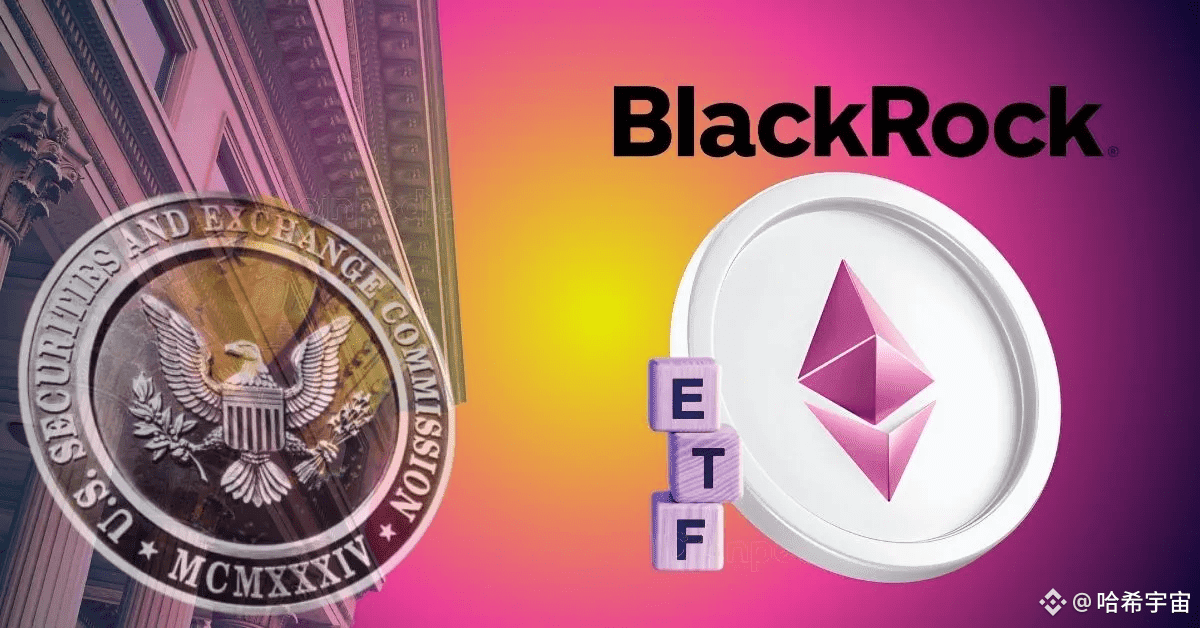
“Wall Street's Shocking Move! BlackRock Requests Approval for Ethereum ETF Staking and Tokenization, Market Shaken!”
Wall Street giant BlackRock is pushing for the accelerated approval of Ethereum ETF staking features and is actively promoting the tokenization of traditional assets. Recently, BlackRock had closed-door talks with the U.S. Securities and Exchange Commission (SEC) to discuss how to incorporate Ethereum's staking functionality into the ETF and how to promote asset tokenization through blockchain technology.
Ethereum Staking Becomes the Focus: Missing Out on Returns Equals Loss
In the meeting, BlackRock emphasized that without the staking function, the Ethereum ETF would lose its appeal, as investors would miss out on the returns brought by ETH staking. The head of digital assets at BlackRock pointed out that the staking feature would give the ETF stronger profit potential, but he also acknowledged that regulatory and operational complexities still exist. Although the SEC previously opposed the staking function for ETH ETFs, the introduction of the staking feature could bring new opportunities to the market as the policy stance changes.
Tokenization Wave Sweeps Financial Markets
In addition to the staking of the Ethereum ETF, BlackRock is also promoting the tokenization of traditional financial assets, particularly in the bond and securities sectors. Their $2.9 billion BUIDL fund plan tokenizes U.S. Treasury bonds through blockchain technology to achieve more efficient settlement and trading. Additionally, companies like Franklin Templeton and Robinhood are also actively participating in tokenization projects, further driving the integration of crypto with traditional finance.
Although the SEC has not yet disclosed the results of the meeting, BlackRock's ongoing efforts indicate that crypto innovation is rapidly integrating with the mainstream financial system, which could lead to even greater changes in the future.