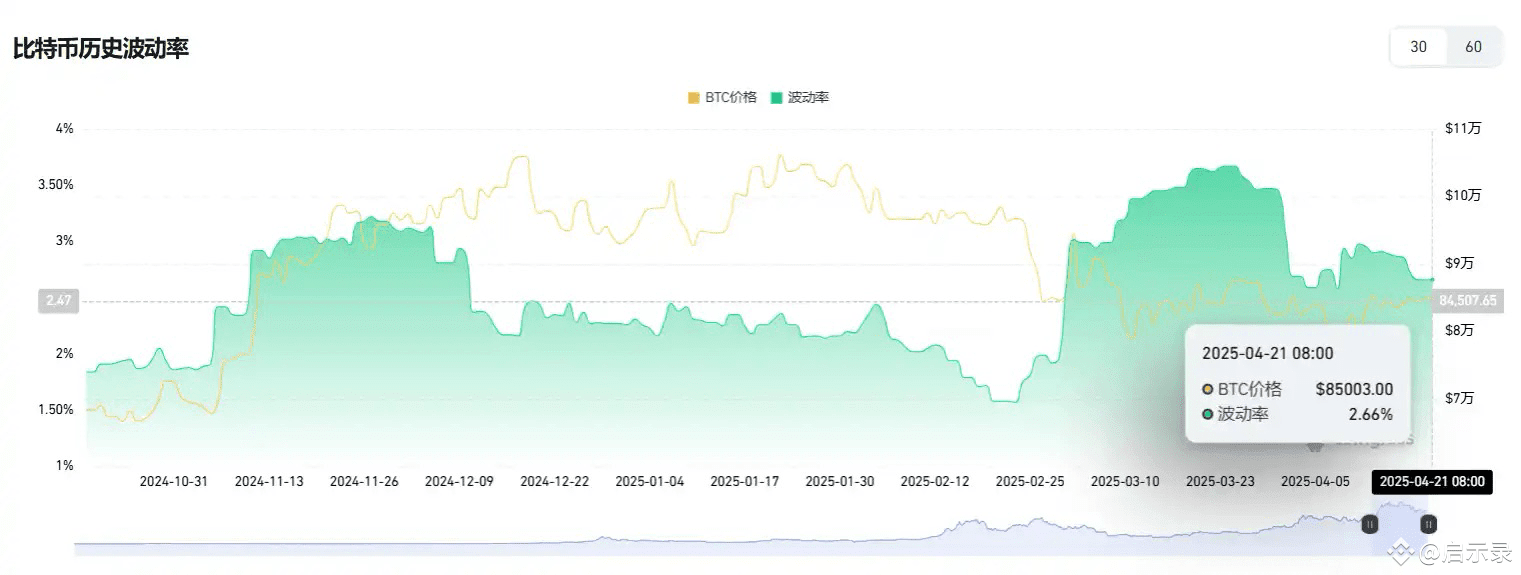
According to Coinglass data, Bitcoin's volatility has fallen to 2.66%, having previously declined for eight consecutive days.
High Bitcoin volatility is often associated with speculative trading and retail FOMO sentiment. When volatility decreases, it may indicate a reduction in short-term speculators, leading the market into a consolidation phase or 'calm period'. Additionally, Bitcoin price fluctuations are often linked to macroeconomic events, such as inflation expectations, interest rate changes, or geopolitical risks. When these external factors stabilize, Bitcoin's volatility may also decrease.
High Bitcoin volatility is often associated with speculative trading and retail FOMO sentiment. When volatility decreases, it may indicate a reduction in short-term speculators, leading the market into a consolidation phase or 'calm period'. Additionally, Bitcoin price fluctuations are often linked to macroeconomic events, such as inflation expectations, interest rate changes, or geopolitical risks. When these external factors stabilize, Bitcoin's volatility may also decrease.