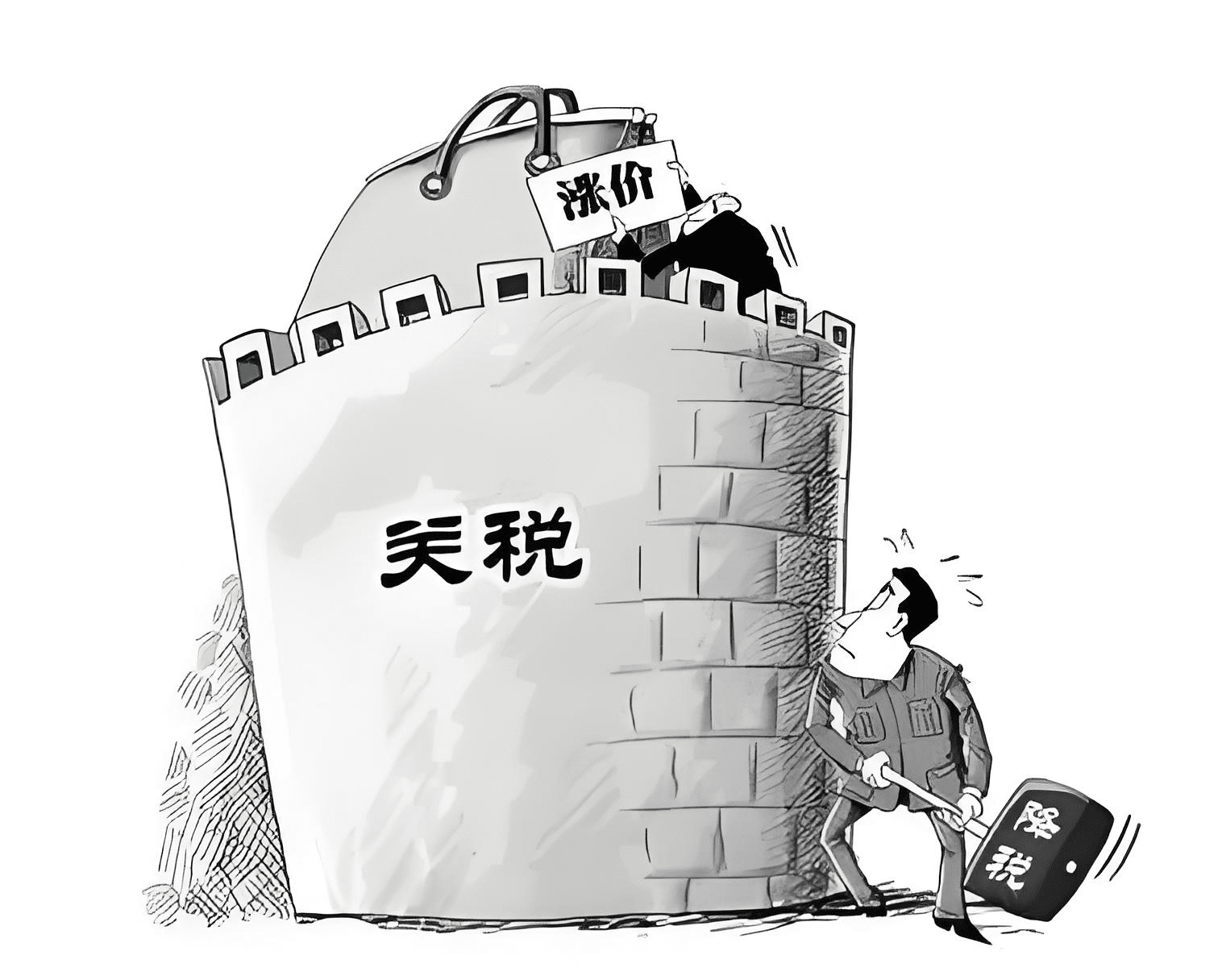
The eyes of the global market are currently focused on the moment at 3 PM Eastern Time, as this will be the instant when Trump’s so-called 'Tariff Liberation Day' curtain rises. At that time, his long-anticipated reciprocal tariff plan will be officially announced, and the final shape of this plan will undoubtedly have a profound impact on the global economic landscape.
According to reliable sources, the White House currently has at least three tariff plans on the table, and which one will become the final 'trump card' is on the nerves of countless people.
The first plan is Trump’s favored unified tax rate model, which involves imposing a uniform 20% tariff on goods from all countries. Trump has repeatedly emphasized that this is the 'simplest and fairest' approach, as if to set a unified threshold for global trade; any product wishing to enter the U.S. market must first pay this 20% 'entry fee.' This 'one-size-fits-all' strategy aligns with Trump's consistent style of decisiveness, requiring no separate negotiations with various countries and enabling rapid implementation. However, its potential risks are also extremely alarming, with numerous authoritative institutions such as Moody’s, EY, and Deutsche Bank issuing warnings that once this plan is implemented, the global economy will suffer severe blows, resulting in slowed economic growth, soaring unemployment rates, intensified inflation, and a spread of panic in the market, leading to a series of chain reactions.
The second plan is the 'reciprocal' plan advocated by Treasury Secretary Mnuchin, which sets different tax rates by country. Its core idea is 'Whatever you impose on me, I will impose on you,' seemingly standing up better in legal terms and aligning more with the principles of fair trade. However, the problem lies in the tremendous difficulty of implementing such differentiated tax rates. The Trump team is concerned that inconsistent tax rates may lead companies to evade tariffs through 'transshipment trade' via low-tariff countries, and the U.S. would have to establish complex rules of origin to close this loophole, thus losing efficiency. Trump's first-term Commerce Secretary Ross also bluntly stated that this plan is overly complicated and does not align with Trump’s pursuit of 'immediate results.'
The third plan is currently the most compromise-oriented mixed plan and is the version most likely to be adopted. It first establishes a unified baseline tariff, such as 15%-20%, and then imposes additional tariffs on specific industries, such as automobiles, semiconductors, pharmaceuticals, and timber, which are considered to have severe unfair competition. This model cleverly balances the efficiency of a unified tariff with the flexibility of precise strikes on key industries, allowing for rapid implementation while also providing strong deterrence to specific sectors, and a certain consensus has been reached internally in the White House.
However, even if the mixed plan appears to have the most advantages, there are still many uncertainties at the execution level. Which industries will be included in the key strike range? What will be the amount of the additional tariffs? How should the exemption mechanism be set up? These questions need to be ultimately decided by the president.
From an economic consequences perspective, the first plan is undoubtedly the most destructive, as it will disrupt the global supply chain in an all-encompassing and thorough manner. Moody’s predicts that in the worst-case scenario, by 2027, the unemployment rate in the U.S. could soar to 7.3%, resulting in over 5 million job losses, with the stock market potentially plummeting by 25%. The destructive power of the third plan will depend on the initial level of the unified tax rate and Trump's strike intensity on key industries. In comparison, the second plan is relatively mild; if true reciprocal tariffs can be achieved, the legal basis for countermeasures from other countries will also weaken correspondingly.
From an external perspective, Trump's team is likely to wait until the last moment to finalize the plan, which fills the global market with suspense and uncertainty. Analyzing from the perspective of negotiation strategy, Trump has always been adept at throwing out a tough opening, leaving room for maneuver in subsequent negotiations. Therefore, the reciprocal tariff plan announced tomorrow is likely to be more stringent than the market expects, which undoubtedly sounds the alarm for investors, who must remain highly vigilant about the imminent tariff risks.
Follow me to stay updated on the latest developments in the cryptocurrency market and overall trends!