Decomposing chain abstraction stands out in CEX — Binance alpha 2.0 feature analysis #币安Alpha2
Hi! I'm Uncle Bird, I'm here to submit my homework! The day before yesterday, when I saw Binance alpha 2.0 go live, I was still a bit skeptical; isn't this just another means of token listing? What’s so special about it, and there may also be regulatory and compliance issues behind it, so I didn’t research it carefully at the time.
However, after personally trying to conduct alpha trading on the exchange and capturing on-chain data yesterday, I suddenly realized after careful consideration that this is, isn't it the real portrayal of chain abstraction in CEX — CDEX abstraction()?
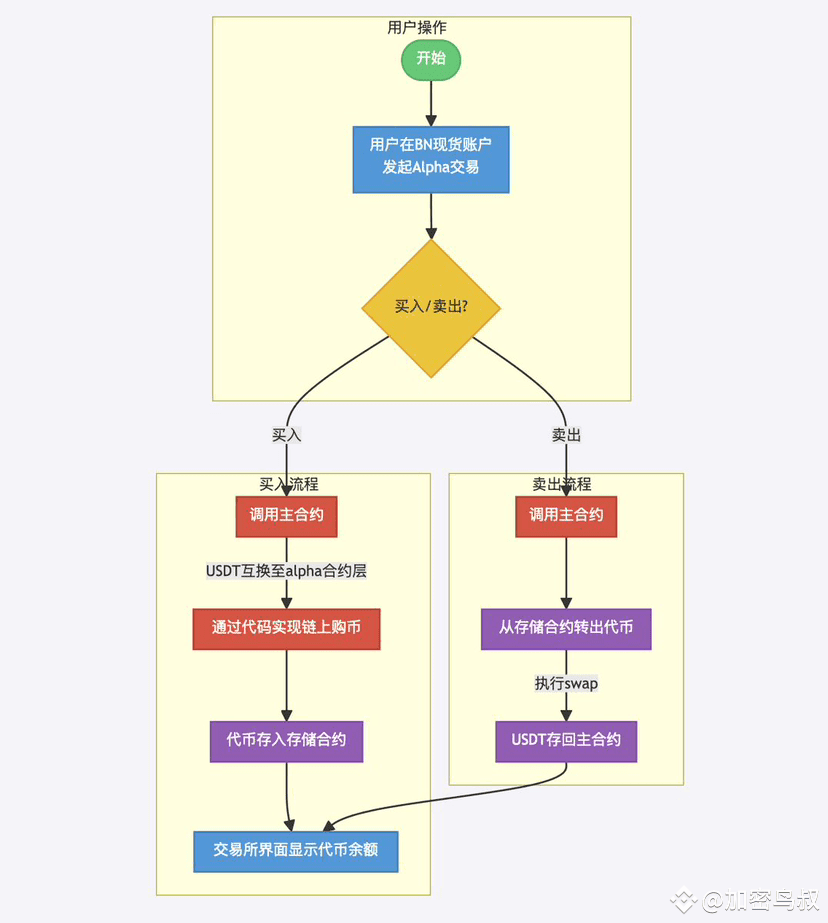
When users issue trading instructions on the Binance Alpha platform interface, the system will automatically complete on-chain operations through smart contracts. The specific process is that the user's USDT funds will first be transferred from the exchange account to a dedicated smart contract layer, which then purchases the specified tokens on a decentralized exchange (DEX) on behalf of the user, and stores the purchased tokens in a custody wallet specifically established for that token by the exchange. After the entire process is completed, users can see the updated token balance in real-time on the exchange interface. The entire process retains the convenient operational experience of centralized exchanges while achieving transparency in on-chain transactions through smart contracts.
The core goal of traditional chain abstraction is to hide the complexity of the underlying blockchain and provide users with a unified interaction interface, while Binance alpha creates a new type of hybrid architecture coordinator by superimposing the user experience of CEX, the transparency of DEX, and the interoperability of cross-chain protocols.
Thinking in an alternative direction, the trading architecture of Binance Alpha can be defined as CEX-oriented Chain Abstraction, which means achieving chain abstraction of operational processes through a smart contract layer while maintaining the advantages of centralized custody. This paradigm innovation is reflected in: CEX user experience + DEX liquidity + cross-chain interoperability = hybrid architecture abstraction layer.
In the future, CEX may evolve into a completely non-custodial chain abstraction solution, but at the current stage, the practice of Alpha is already an important milestone in this field.
Hi! I'm Uncle Bird, I'm here to submit my homework! The day before yesterday, when I saw Binance alpha 2.0 go live, I was still a bit skeptical; isn't this just another means of token listing? What’s so special about it, and there may also be regulatory and compliance issues behind it, so I didn’t research it carefully at the time.
However, after personally trying to conduct alpha trading on the exchange and capturing on-chain data yesterday, I suddenly realized after careful consideration that this is, isn't it the real portrayal of chain abstraction in CEX — CDEX abstraction()?
When users issue trading instructions on the Binance Alpha platform interface, the system will automatically complete on-chain operations through smart contracts. The specific process is that the user's USDT funds will first be transferred from the exchange account to a dedicated smart contract layer, which then purchases the specified tokens on a decentralized exchange (DEX) on behalf of the user, and stores the purchased tokens in a custody wallet specifically established for that token by the exchange. After the entire process is completed, users can see the updated token balance in real-time on the exchange interface. The entire process retains the convenient operational experience of centralized exchanges while achieving transparency in on-chain transactions through smart contracts.
The core goal of traditional chain abstraction is to hide the complexity of the underlying blockchain and provide users with a unified interaction interface, while Binance alpha creates a new type of hybrid architecture coordinator by superimposing the user experience of CEX, the transparency of DEX, and the interoperability of cross-chain protocols.
Thinking in an alternative direction, the trading architecture of Binance Alpha can be defined as CEX-oriented Chain Abstraction, which means achieving chain abstraction of operational processes through a smart contract layer while maintaining the advantages of centralized custody. This paradigm innovation is reflected in: CEX user experience + DEX liquidity + cross-chain interoperability = hybrid architecture abstraction layer.
In the future, CEX may evolve into a completely non-custodial chain abstraction solution, but at the current stage, the practice of Alpha is already an important milestone in this field.