


What is DAPP OS
dappOS is an intent execution network that fundamentally changes the way users interact with decentralized blockchain systems. Users do not need to manually navigate multiple steps in traditional dApps, focusing instead on the goals they wish to achieve through dappOS. Service providers on the network handle all intermediary processes, ensuring users achieve their desired outcomes with minimal effort and institutional-level efficiency.
Team Members:

Ty Shen is the founder of DappOS, former CTO and co-founder of Alchemy Pay, and has also founded VR (Tsing Visual, acquired in 2016) and Kanjian applications. Ty Shen graduated from Tsinghua University with a degree in Mathematics and Software Development.
Major Financing:
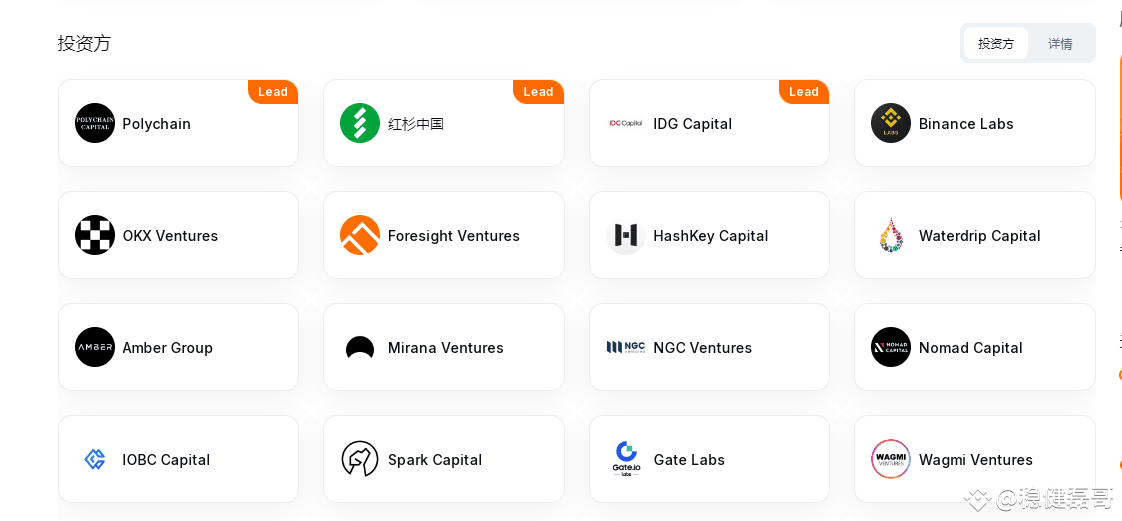
2023.6 Pre-Seed round funding from Binance Labs obtained, but the specific funding amount has not been disclosed.
2023.7.21 Seed round $50 million, led by IDG Capital and Sequoia China, with participants including OKX Ventures, HashKey Capital, and others.
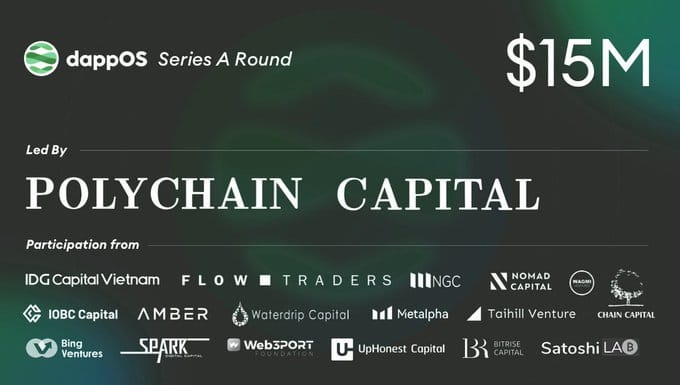
2024.3.28 Series A funding of $15.3 million led by Polychain, with participation from Nomad Capital, IDG, Flow Traders, IOBC, NGC, and others.
Backed by:
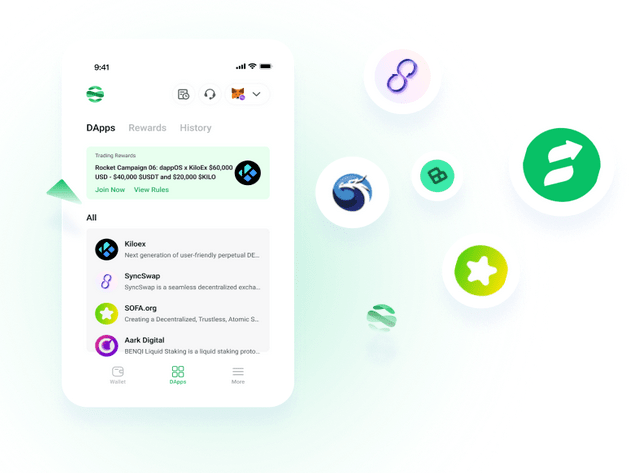
dAppOS currently offers three key features:
Intent Assets: Users can utilize their assets while continuously earning interest.
Intent EX: Users can achieve optimal trading costs when trading spot.
Intent-Centric dApp Interaction: Users can seamlessly interact with dApps, avoiding the complexity of direct blockchain interactions.
These three features address the most common on-chain needs of users, positioning dappOS as a comprehensive Web3 operating system by integrating these fundamental functionalities.
Application Scenarios:
Intent
Assets is a new type of asset launched by dappOS. Intent Assets provide high yields while remaining available on-chain at all times. Whether users want to withdraw Intent
Assets to the exchange as native assets or use them on-chain to purchase new MEME tokens, participate in lending, or equity investments, they can do so directly without long waiting times or suffering from high slippage.
The first batch of Intent assets includes intentBTC, intentETH, and intentUSD.
Scenario 1: The user intends to redeem yield-generating assets and exchange them for USDT.
Without dappOS, if you want to redeem your yield-bearing assets (e.g., xxETH), you typically have to choose between using a DEX or exchanging through the project's official website. If you opt to trade directly on the DEX, you may encounter issues such as insufficient liquidity, high slippage, and significant losses. Exchanging through the official website usually requires about a seven-day waiting period, which can be problematic in urgent situations. Additionally, after redemption, you still need to manually sell ETH for USDT.
Using dappOS, if you hold intentETH, you can use it directly as ETH on DEXs supported by dappOS, simply click to exchange for USDT. The liquidity pool used by the exchange is a regular ETH-USDT pool with high liquidity and low slippage.
Scenario 2: The user intends to purchase $XXX tokens on the xxL 2 chain, but there are no funds on xxL 2.
Without dappOS, even seemingly simple tasks like this may require extensive planning. For example, consider: Fund allocation: Deciding which chain's funds are better suited for this task; some funds may still be locked in other protocols and need to be withdrawn.
Conversion: If your funds mainly exist on other chains or in non-ETH forms, how do you convert them to ETH? If you lack sufficient gas for conversion, how do you obtain gas?
Cross-Chain Approach: Should you use an on-chain cross-chain protocol, or transfer ETH to an exchange and then withdraw it to the xxL2 chain?
Using dappOS, if you hold intentETH, you can go to xxL
2 to purchase tokens on DEXs that support dappOS. You will find that using intentETH to buy tokens feels just like using regular ETH. Moreover, you no longer need to plan various operational steps, allowing for more flexible use and allocation of on-chain assets. For instance, you no longer need to leave funds on every L1 or L2 for gas; just holding Intent
Asset is sufficient to meet your cross-chain interaction needs.
In summary, when users hold intentETH, using it in non-yield scenarios feels the same as using native ETH, while also adding the benefits of earning passive income.
6 years of focused blockchain research, blockchain investment research and analysis, primary market private placements, and a senior digital asset trader!
Learn more about high-quality primary projects, secondary market trading strategy recommendations. We are here to safeguard your investments in the crypto space!