


Blockchain technology is in a golden age of rapid development, with various innovations emerging continuously. In this context, Movement, as an emerging high-performance Layer 1 blockchain built on the Move language, has gradually attracted market attention. This project is dedicated to supporting decentralized applications (DApps) in a fast, secure, and efficient manner, showcasing outstanding capabilities in technical implementation and becoming a focus for investors and developers with its innovative operation model and future potential.
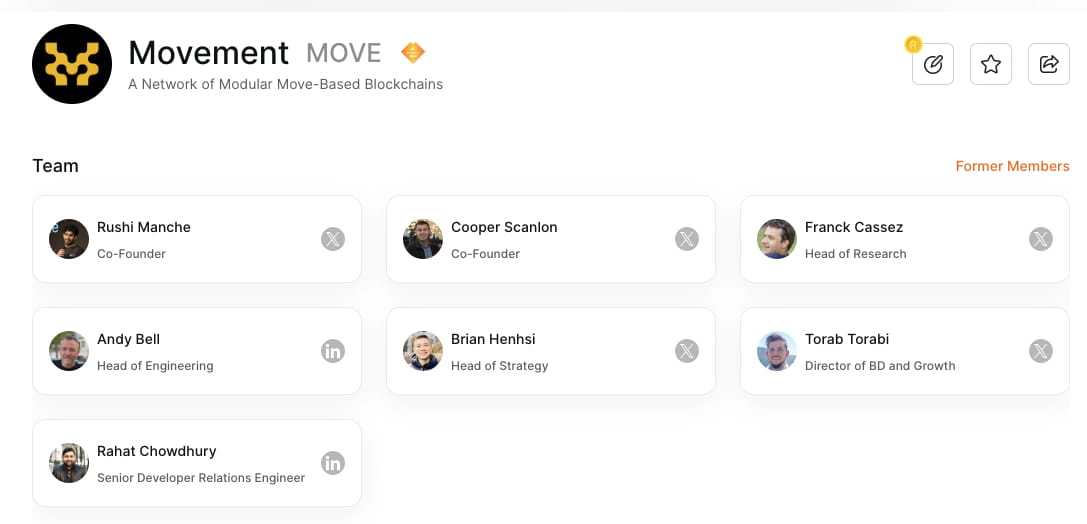
One of the key features of Movement is its strong team behind it. Although the project has some VC support, this has not affected the core team's focus on the technology itself. Their goal is to change people’s perception of blockchain technology through first-class technology and excellent ecosystem building. The team members consist of experts from several well-known blockchain projects, including co-founders Rushi Manche and Cooper Scanlon. Rushi Manche was a core engineer at Aptos and participated in Facebook's Libra/Diem project, having deep experience in blockchain technology for many years; while Cooper Scanlon is an experienced blockchain entrepreneur whose goal is to make the Move language a mainstream technology. Additionally, the team includes technical experts from Biconomy, Sui/Mysten Labs, and Fluid Finance, all of whom have deep backgrounds in distributed technology, fintech, and system architecture design.
The Future of Move Language and Blockchain
The Move language is an essential core technology in the Movement project. Originally developed by Facebook for the Libra/Diem project, the Move language aims to be a secure, flexible, and efficient smart contract language. Its unique asset management features effectively prevent double-spending attacks and support developers in building decentralized applications more efficiently.
The emergence of the Move language has brought revolutionary changes to blockchain technology. Firstly, its security design effectively addresses many problems in the field of smart contracts, such as double-spending attacks and asset mismanagement. Secondly, the modular structure of the Move language allows developers to build applications more flexibly, lowering development thresholds and increasing efficiency.
Currently, the Move language has become the cornerstone of several Layer 1 blockchains, including Sui and Aptos. Sui is known for its innovative object model and parallel transaction processing capabilities, while Aptos has gained significant market attention with its efficient consensus mechanism. Both use the Move language as their core programming language, successfully proving its technical potential. Against this backdrop, Movement stands out as another innovative platform based on the Move language, with design concepts and application scenarios that offer differentiated advantages compared to other projects.
Differences Between Movement and Other Move Blockchains
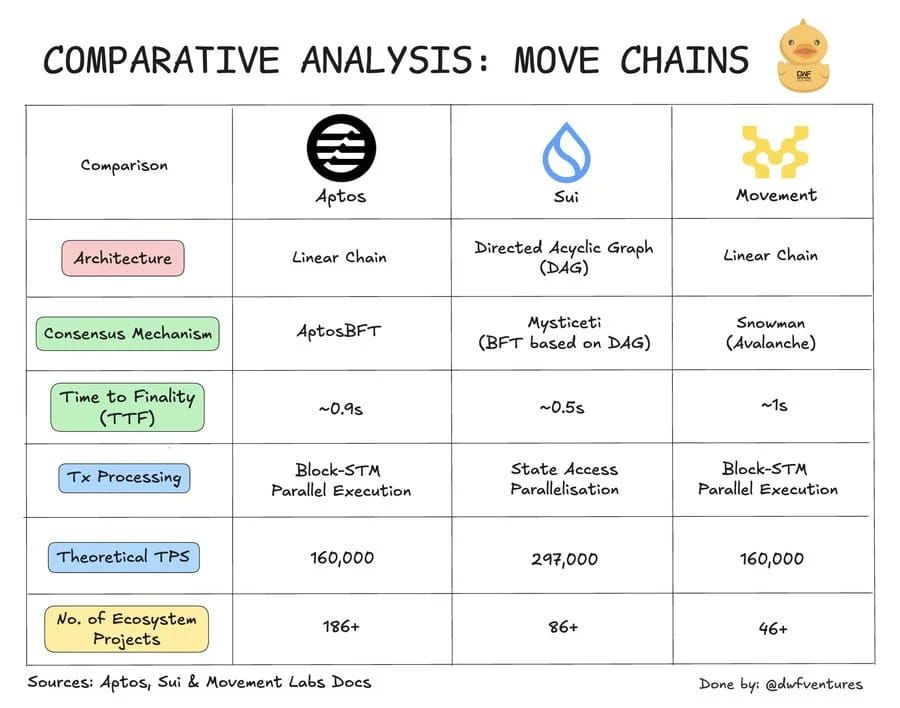
Although the Move language provides technical support for multiple projects, Movement has significant differences from Sui and Aptos. Firstly, Movement's design philosophy leans towards building a modular blockchain architecture to achieve flexible expansion for different application scenarios. It not only focuses on improving technical performance but also emphasizes interoperability with other blockchains, laying the foundation for a future multichain ecosystem.
In terms of performance, Movement's transaction confirmation time (TTF) only takes a few seconds, which is competitive compared to Aptos's 1 second TTF and Sui's extremely low latency. In terms of transaction processing capacity (TPS), Movement has already surpassed 100,000 TPS in the testnet, demonstrating its potential for large-scale applications in the future. These technical indicators show that Movement's operational mechanism can not only meet the current needs of blockchain applications but also support more complex application scenarios.
Ecosystem and Applications: A Rich Variety of Decentralized Applications
The ecosystem of Movement covers multiple key areas, from Web3 tools to decentralized finance, to the tokenization of physical assets. Here are the main participants and their application scenarios within the ecosystem:
1.Web3 Wallet: Razor
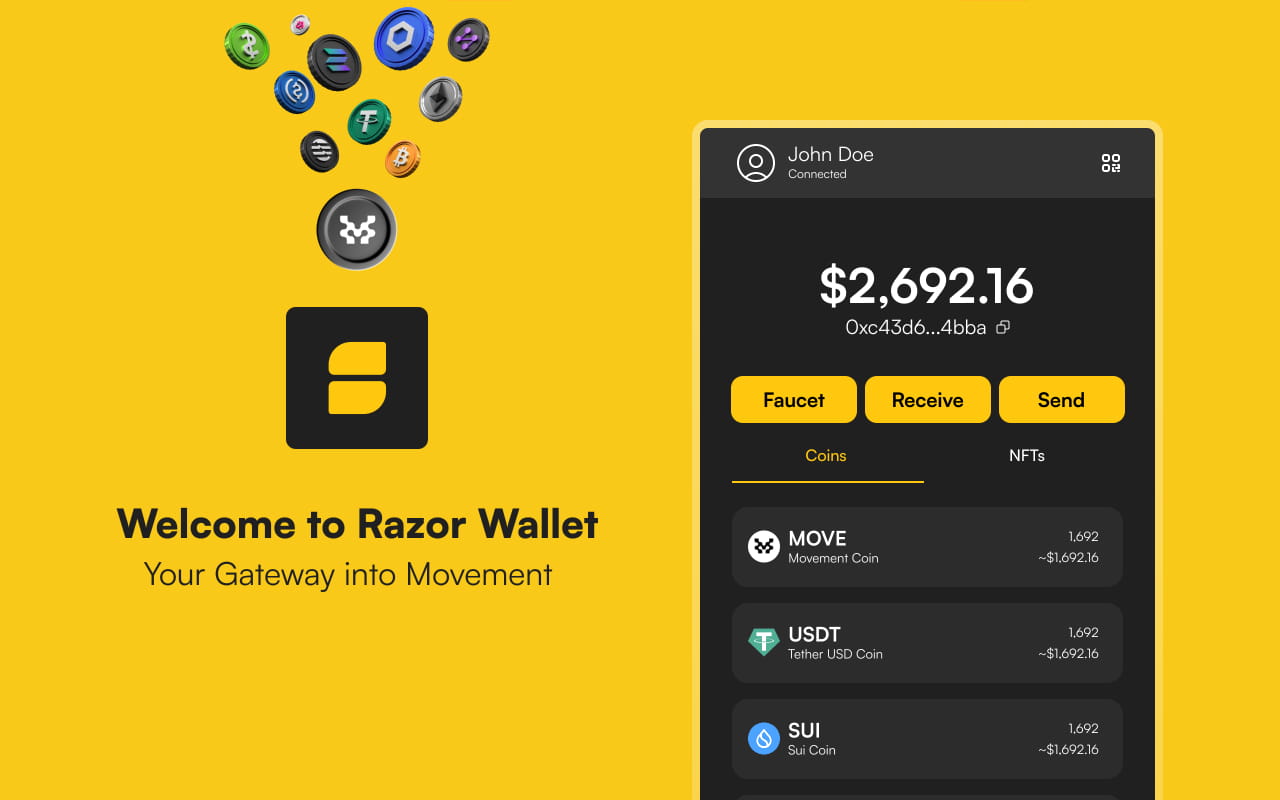
Razor is the flagship Web3 wallet of the Movement platform, designed to provide users with secure, fast, and convenient digital asset management services. The wallet supports users in token transfers, NFT management, and interactions with DApps, receiving widespread praise for its simple interface design and privacy protection features. The launch of Razor marks an important step for Movement towards being user-friendly.
2.DeFi Platforms: Satay Finance and FRAX Finance
Satay Finance is a decentralized financial application on Movement, offering users liquidity mining and lending services. Its diverse product design aims to meet the needs of different investors. Another important project, FRAX Finance, is a stablecoin platform based on partial algorithm and partial collateral, with its stablecoin FRAX providing a reliable value foundation for financial activities within the ecosystem.
3.RWA Platform: ContinuumDAO
ContinuumDAO is a tokenization platform for physical assets within the Movement ecosystem, aiming to convert real estate, artworks, and other physical assets into digital tokens, allowing users to participate in these markets with lower thresholds. At the same time, ContinuumDAO actively promotes the transparency of traditional assets, bringing revolutionary changes to the entire market.
4.Infrastructure: Up Network
As the infrastructure project of Movement, Up Network provides high-speed networking and decentralized storage solutions. This project focuses on enhancing data transmission efficiency and improving data security, providing solid technical support for all applications within the ecosystem.
Future Outlook: Movement's Potential and Challenges
With the rapid development of the blockchain industry, Layer 1 blockchains based on the Move language are gradually becoming the focus of the market. The successful experiences of Sui and Aptos demonstrate the great potential of the Move language, while Movement's innovative design and multifunctional application direction will position it prominently in the future bull market.
However, Movement also faces certain challenges in its development process, such as how to attract more developers and ensure the diversity of applications within the ecosystem. To this end, the Movement team has planned to launch more developer tools and funding programs to promote sustainable growth of the ecosystem.
Summary
As an emerging Layer 1 blockchain based on the Move language, Movement demonstrates enormous development potential with its strong team background, excellent technological innovation, and rich ecosystem. From its efficient technical architecture to diversified application scenarios, Movement not only addresses many pain points in the current blockchain industry but also provides new possibilities for future decentralized applications. In future market competition, Movement is expected to become a milestone in blockchain innovation due to its advantages.