

#robotic
robotic
2,949 visualizações
37 a discutir
Popular
Mais recente
·
--
Em Baixa
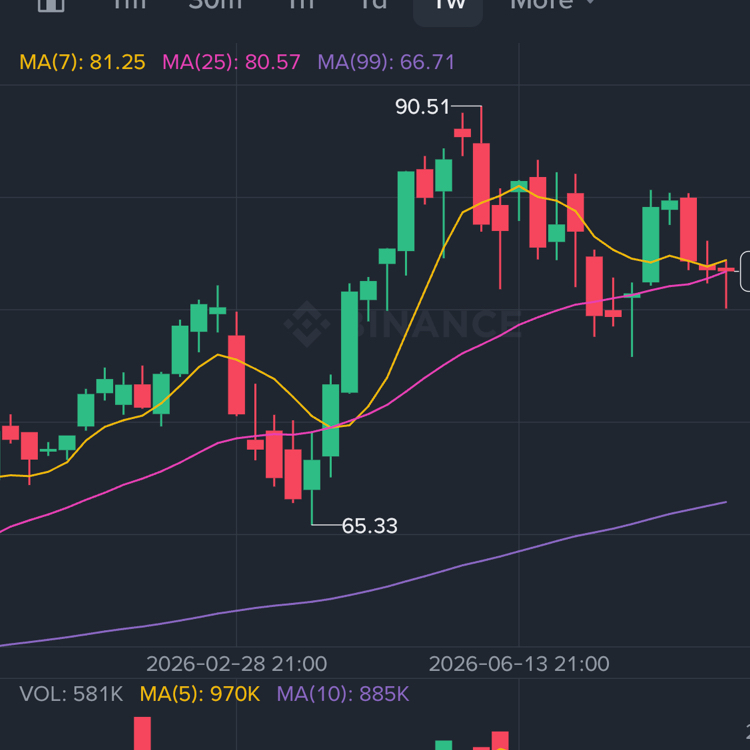
Acompanhar $ROBO (ROBO Global Robotics & Automation Index ETF). Está em torno de US$80.54, com alta de +1,13% hoje e um leve impulso no pós-mercado.
Parece que atingiu uma máxima de US$90.51 há alguns meses, recuou para perto de US$78 e agora está se consolidando logo em torno das médias móveis.
Sem dúvida, um gráfico para observar o próximo movimento potencial em tecnologia e automação.
#ROBO #Robotic #Investing #StockMarket
{future}(ROBOUSDT)
Acompanhar $ROBO (ROBO Global Robotics & Automation Index ETF). Está em torno de US$80.54, com alta de +1,13% hoje e um leve impulso no pós-mercado.
Parece que atingiu uma máxima de US$90.51 há alguns meses, recuou para perto de US$78 e agora está se consolidando logo em torno das médias móveis.
Sem dúvida, um gráfico para observar o próximo movimento potencial em tecnologia e automação.
#ROBO #Robotic #Investing #StockMarket
Parece que atingiu uma máxima de US$90.51 há alguns meses, recuou para perto de US$78 e agora está se consolidando logo em torno das médias móveis.
Sem dúvida, um gráfico para observar o próximo movimento potencial em tecnologia e automação.
#ROBO #Robotic #Investing #StockMarket
250

·
--
Em Alta
Ver tradução
1
58

·
--
Artigo
Fabric Foundation e $ROBO: Construindo o Sistema Operacional da Economia RobóticaO panorama das criptomoedas em 2026 está presenciando uma convergência fascinante entre a inteligência artificial, a robótica e a descentralização. No centro dessa evolução encontra-se a Fabric Foundation, um projeto que busca ir além das simples promessas tecnológicas para construir uma infraestrutura econômica real para máquinas autônomas.
O que é a Fabric Foundation?
Não devemos ver a @FabricFND como uma simples plataforma de tokens. Sua visão é atuar como o "Android para robôs", proporcionando a camada de inteligência e pagamentos necessária para que os sistemas autônomos operem de forma independente. Em vez de robôs isolados, a fundação propõe uma rede onde essas máquinas podem coordenar, transacionar e gerar valor econômico sem intervenção humana constante.
Fabric Foundation e $ROBO: Construindo o Sistema Operacional da Economia Robótica
O panorama das criptomoedas em 2026 está presenciando uma convergência fascinante entre a inteligência artificial, a robótica e a descentralização. No centro dessa evolução encontra-se a Fabric Foundation, um projeto que busca ir além das simples promessas tecnológicas para construir uma infraestrutura econômica real para máquinas autônomas.
O que é a Fabric Foundation?
Não devemos ver a @Fabric Foundation como uma simples plataforma de tokens. Sua visão é atuar como o "Android para robôs", proporcionando a camada de inteligência e pagamentos necessária para que os sistemas autônomos operem de forma independente. Em vez de robôs isolados, a fundação propõe uma rede onde essas máquinas podem coordenar, transacionar e gerar valor econômico sem intervenção humana constante.
O que é a Fabric Foundation?
Não devemos ver a @Fabric Foundation como uma simples plataforma de tokens. Sua visão é atuar como o "Android para robôs", proporcionando a camada de inteligência e pagamentos necessária para que os sistemas autônomos operem de forma independente. Em vez de robôs isolados, a fundação propõe uma rede onde essas máquinas podem coordenar, transacionar e gerar valor econômico sem intervenção humana constante.
5
44

·
--
Em Alta
🚨 $UNITREE Robotics faz uma estreia impressionante em Xangai! 🤖📈
$UNITREE Robotics, oficialmente conhecida como Yushu Technology, disparou 629% na abertura de sua estreia de negociação em Xangai após captar 6,1 bilhões de iuanes (US$ 904 milhões).
🔹 Preço do IPO: 150,8 iuanes 🔹 Preço de abertura: 1.100 iuanes🔹 Valor de mercado implícito: 445 bilhões de iuanes 🔹 Receita de 2025: 1,7 bilhão de iuanes, acima dos 393 milhões de iuanes 🔹 Robôs humanoides enviados em 2025: 5.500+🔹 Margem bruta: 60%+
A listagem torna a Unitree a primeira fabricante de robôs humanoides de capital aberto na China continental, destacando o crescente interesse dos investidores em robótica física $AI e.
📊 O JPMorgan estima que as remessas globais de robôs humanoides atinjam 1,75 milhão de unidades até 2030, em comparação com apenas 18.000 em 2025.
⚠️ No entanto, analistas alertam que o enorme salto no primeiro dia pode ser impulsionado fortemente pela demanda de varejo, com avaliações que já são consideradas extremamente altas.
🤖 A corrida da robótica humanoide na China está esquentando.
#AI #UnitreeRobotics #HumanoidRobot
#Robotic #Binance
🚨 $UNITREE Robotics faz uma estreia impressionante em Xangai! 🤖📈
$UNITREE Robotics, oficialmente conhecida como Yushu Technology, disparou 629% na abertura de sua estreia de negociação em Xangai após captar 6,1 bilhões de iuanes (US$ 904 milhões).
🔹 Preço do IPO: 150,8 iuanes 🔹 Preço de abertura: 1.100 iuanes🔹 Valor de mercado implícito: 445 bilhões de iuanes 🔹 Receita de 2025: 1,7 bilhão de iuanes, acima dos 393 milhões de iuanes 🔹 Robôs humanoides enviados em 2025: 5.500+🔹 Margem bruta: 60%+
A listagem torna a Unitree a primeira fabricante de robôs humanoides de capital aberto na China continental, destacando o crescente interesse dos investidores em robótica física $AI e.
📊 O JPMorgan estima que as remessas globais de robôs humanoides atinjam 1,75 milhão de unidades até 2030, em comparação com apenas 18.000 em 2025.
⚠️ No entanto, analistas alertam que o enorme salto no primeiro dia pode ser impulsionado fortemente pela demanda de varejo, com avaliações que já são consideradas extremamente altas.
🤖 A corrida da robótica humanoide na China está esquentando.
#AI #UnitreeRobotics #HumanoidRobot
#Robotic #Binance
$UNITREE Robotics, oficialmente conhecida como Yushu Technology, disparou 629% na abertura de sua estreia de negociação em Xangai após captar 6,1 bilhões de iuanes (US$ 904 milhões).
🔹 Preço do IPO: 150,8 iuanes 🔹 Preço de abertura: 1.100 iuanes🔹 Valor de mercado implícito: 445 bilhões de iuanes 🔹 Receita de 2025: 1,7 bilhão de iuanes, acima dos 393 milhões de iuanes 🔹 Robôs humanoides enviados em 2025: 5.500+🔹 Margem bruta: 60%+
A listagem torna a Unitree a primeira fabricante de robôs humanoides de capital aberto na China continental, destacando o crescente interesse dos investidores em robótica física $AI e.
📊 O JPMorgan estima que as remessas globais de robôs humanoides atinjam 1,75 milhão de unidades até 2030, em comparação com apenas 18.000 em 2025.
⚠️ No entanto, analistas alertam que o enorme salto no primeiro dia pode ser impulsionado fortemente pela demanda de varejo, com avaliações que já são consideradas extremamente altas.
🤖 A corrida da robótica humanoide na China está esquentando.
#AI #UnitreeRobotics #HumanoidRobot
#Robotic #Binance
86

·
--
$ROBO Opção 1: Visionário & Informativo (Melhor para o público geral)
À medida que os sistemas de IA saem do software e entram no mundo físico, quem governa as máquinas? 🤔🤖
Entre na Fabric Foundation (https://fabric.foundation)—uma organização sem fins lucrativos dedicada a avançar em Robótica Aberta & AGI. Eles estão construindo a infraestrutura descentralizada de bem público necessária para que humanos e máquinas inteligentes trabalhem juntos de forma segura e produtiva.
Áreas de foco principais:
🔹 Alinhamento humano-máquina
🔹 Identidade de robô descentralizada & alocação de tarefas
🔹 Robótica de IA de código aberto
É hora de construir um futuro seguro, observável e globalmente acessível para a IA. 🌍🦾
Opção 2: Focado em Crypto/Web3 (Melhor para a comunidade cripto)
O futuro dos robôs autônomos será on-chain. ⛓️🤖
https://fabric.foundation está construindo a rede de pagamento, identidade e alocação de capital que permitirá que os robôs operem como participantes econômicos autônomos.
Impulsionado pelo recém-lançado token ROBO, o Fabric Protocol garante que nenhuma entidade única controle o futuro das máquinas inteligentes. Desde taxas de rede até coordenação de robôs crowdsourced, o ROBO está impulsionando a economia de máquinas descentralizada.
Pronto para possuir a economia dos robôs? 🚀🛠️ #ROBO
Opção 3: Curto & Impactante
A indústria de robótica está em um ponto de inflexão. 📈🤖
A Fabric Foundation (https://fabric.foundation) está construindo a governança de código aberto e a infraestrutura econômica para garantir que a IA e as máquinas autônomas permaneçam seguras, alinhadas e acessíveis a todos. Impulsionados por $ROBO, eles estão descentralizando o futuro da AGI. 🌐✨
Mergulhe no futuro da colaboração humano-máquina! 👇 #FabricFoundation #ArtificialIntelligence #Robotic #Crypto
$ROBO Opção 1: Visionário & Informativo (Melhor para o público geral)
À medida que os sistemas de IA saem do software e entram no mundo físico, quem governa as máquinas? 🤔🤖
Entre na Fabric Foundation (https://fabric.foundation)—uma organização sem fins lucrativos dedicada a avançar em Robótica Aberta & AGI. Eles estão construindo a infraestrutura descentralizada de bem público necessária para que humanos e máquinas inteligentes trabalhem juntos de forma segura e produtiva.
Áreas de foco principais:
🔹 Alinhamento humano-máquina
🔹 Identidade de robô descentralizada & alocação de tarefas
🔹 Robótica de IA de código aberto
É hora de construir um futuro seguro, observável e globalmente acessível para a IA. 🌍🦾
Opção 2: Focado em Crypto/Web3 (Melhor para a comunidade cripto)
O futuro dos robôs autônomos será on-chain. ⛓️🤖
https://fabric.foundation está construindo a rede de pagamento, identidade e alocação de capital que permitirá que os robôs operem como participantes econômicos autônomos.
Impulsionado pelo recém-lançado token ROBO, o Fabric Protocol garante que nenhuma entidade única controle o futuro das máquinas inteligentes. Desde taxas de rede até coordenação de robôs crowdsourced, o ROBO está impulsionando a economia de máquinas descentralizada.
Pronto para possuir a economia dos robôs? 🚀🛠️ #ROBO
Opção 3: Curto & Impactante
A indústria de robótica está em um ponto de inflexão. 📈🤖
A Fabric Foundation (https://fabric.foundation) está construindo a governança de código aberto e a infraestrutura econômica para garantir que a IA e as máquinas autônomas permaneçam seguras, alinhadas e acessíveis a todos. Impulsionados por $ROBO , eles estão descentralizando o futuro da AGI. 🌐✨
Mergulhe no futuro da colaboração humano-máquina! 👇 #FabricFoundation #ArtificialIntelligence #Robotic #Crypto
À medida que os sistemas de IA saem do software e entram no mundo físico, quem governa as máquinas? 🤔🤖
Entre na Fabric Foundation (https://fabric.foundation)—uma organização sem fins lucrativos dedicada a avançar em Robótica Aberta & AGI. Eles estão construindo a infraestrutura descentralizada de bem público necessária para que humanos e máquinas inteligentes trabalhem juntos de forma segura e produtiva.
Áreas de foco principais:
🔹 Alinhamento humano-máquina
🔹 Identidade de robô descentralizada & alocação de tarefas
🔹 Robótica de IA de código aberto
É hora de construir um futuro seguro, observável e globalmente acessível para a IA. 🌍🦾
Opção 2: Focado em Crypto/Web3 (Melhor para a comunidade cripto)
O futuro dos robôs autônomos será on-chain. ⛓️🤖
https://fabric.foundation está construindo a rede de pagamento, identidade e alocação de capital que permitirá que os robôs operem como participantes econômicos autônomos.
Impulsionado pelo recém-lançado token ROBO, o Fabric Protocol garante que nenhuma entidade única controle o futuro das máquinas inteligentes. Desde taxas de rede até coordenação de robôs crowdsourced, o ROBO está impulsionando a economia de máquinas descentralizada.
Pronto para possuir a economia dos robôs? 🚀🛠️ #ROBO
Opção 3: Curto & Impactante
A indústria de robótica está em um ponto de inflexão. 📈🤖
A Fabric Foundation (https://fabric.foundation) está construindo a governança de código aberto e a infraestrutura econômica para garantir que a IA e as máquinas autônomas permaneçam seguras, alinhadas e acessíveis a todos. Impulsionados por $ROBO , eles estão descentralizando o futuro da AGI. 🌐✨
Mergulhe no futuro da colaboração humano-máquina! 👇 #FabricFoundation #ArtificialIntelligence #Robotic #Crypto
47

·
--
Não há dúvidas de que a tendência de Robótica irá se desenvolver fortemente no futuro e a Axis Robotics será o projeto crypto líder do setor.
Irmãos, vejam, a primeira-dama dos Estados Unidos apareceu com um robô, afirmando que a tendência Robótica está sendo fortemente investida e projetos de web3 de robótica como a Axis irão se desenvolver ainda mais no futuro.
Isso não é apenas uma narrativa passageira, mas sim um ciclo tecnológico de longo prazo, onde IA, hardware e blockchain se combinam para criar valor real e fluxos de caixa sustentáveis.
Atualmente, as tarefas foram abertas e as tarefas antigas estão disponíveis para que vocês possam praticar no hub da Axis.
#Axis #Robotic
Não há dúvidas de que a tendência de Robótica irá se desenvolver fortemente no futuro e a Axis Robotics será o projeto crypto líder do setor.
Irmãos, vejam, a primeira-dama dos Estados Unidos apareceu com um robô, afirmando que a tendência Robótica está sendo fortemente investida e projetos de web3 de robótica como a Axis irão se desenvolver ainda mais no futuro.
Isso não é apenas uma narrativa passageira, mas sim um ciclo tecnológico de longo prazo, onde IA, hardware e blockchain se combinam para criar valor real e fluxos de caixa sustentáveis.
Atualmente, as tarefas foram abertas e as tarefas antigas estão disponíveis para que vocês possam praticar no hub da Axis.
#Axis #Robotic
Irmãos, vejam, a primeira-dama dos Estados Unidos apareceu com um robô, afirmando que a tendência Robótica está sendo fortemente investida e projetos de web3 de robótica como a Axis irão se desenvolver ainda mais no futuro.
Isso não é apenas uma narrativa passageira, mas sim um ciclo tecnológico de longo prazo, onde IA, hardware e blockchain se combinam para criar valor real e fluxos de caixa sustentáveis.
Atualmente, as tarefas foram abertas e as tarefas antigas estão disponíveis para que vocês possam praticar no hub da Axis.
#Axis #Robotic
2
6
4.1k
Inicia sessão para explorar mais conteúdos
Junta-te a utilizadores de criptomoedas de todo o mundo na Binance Square
⚡️ Obtém informações úteis e recentes sobre criptomoedas.
💬 Com a confiança da maior exchange de criptomoedas do mundo.
👍 Descobre perspetivas reais de criadores verificados.
E-mail/Número de telefone
Tópicos em Tendência
1
#BitcoinOptionsVolatilityHitsFiveYearLow
0 visualizações
181 a discutir
2
#BitcoinReclaims$84K
0 visualizações
101 a discutir
3
#FSBWarnsCrossBorderStablecoinRulesRemainUnderdeveloped
0 visualizações
29 a discutir
4
#TokenizedStockMarketCapHitsRecord$3.9B
0 visualizações
24 a discutir
5
#EthereumSpotETFsSee$542MNetOutflowLastWeek
0 visualizações
35 a discutir
6
#SouthKoreaPushesTokenizedSecuritiesIntoBondsAndFunds
0 visualizações
29 a discutir
7
#SolanaETFsEnd14WeekInflowStreak
0 visualizações
268 a discutir
8
#SuiFoundationInvests$30MInDATANetwork
0 visualizações
38 a discutir
9
#ArgentinaCentralBankWillNotPushCryptoIntoBankingForTwoYears
6,617 visualizações
247 a discutir
10
#LedgerConfirmsUnauthorizedHardwareImplantInUserDevice
37,576 visualizações
311 a discutir