
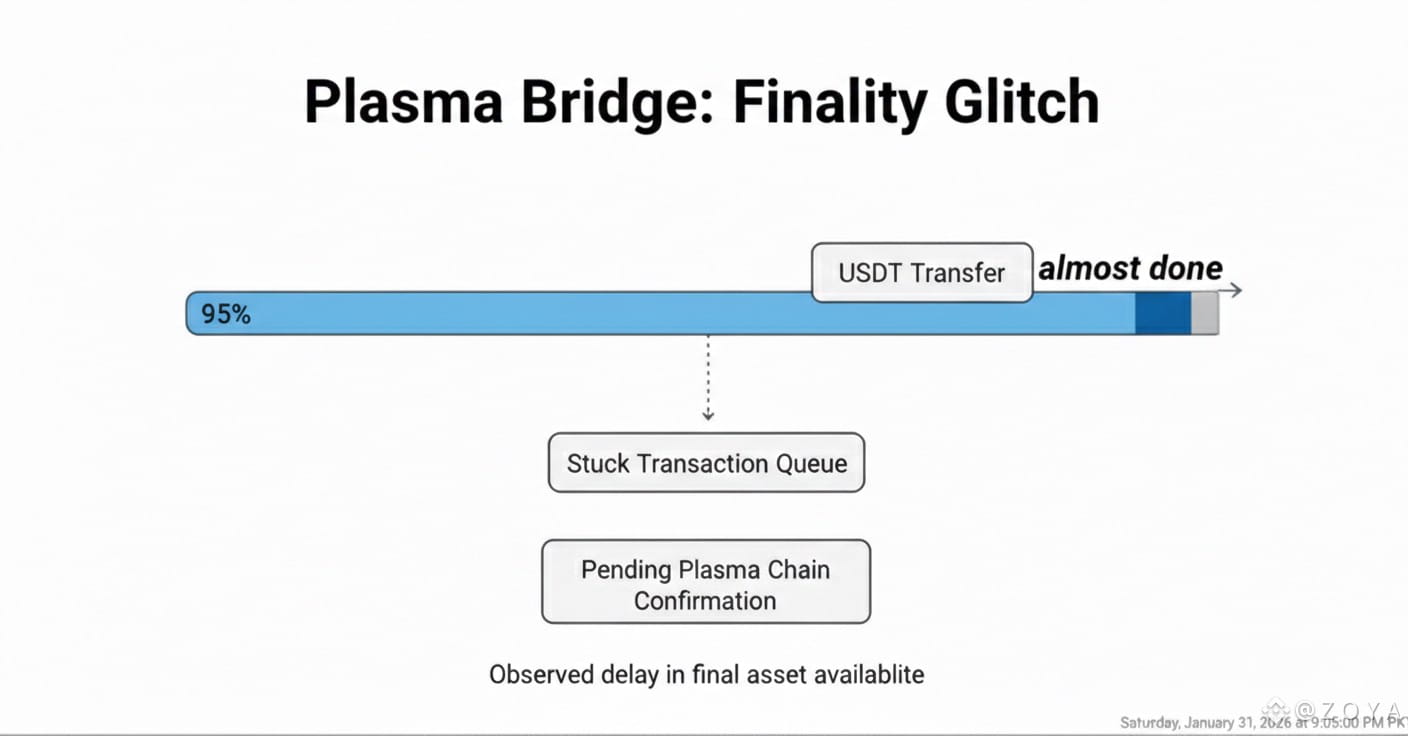
 Most payments don’t fail.
They stall just enough to create work.
A USDT transfer goes out. The wallet updates. The chain keeps moving. Nothing signals danger. Yet no one treats the payment as complete. It sits in that uncomfortable space where it’s probably fine, but not finished enough to stop thinking about.
That state doesn’t show up in metrics.
It shows up in behavior.
Someone leaves the tab open. Someone delays the next action. Someone adds a note instead of closing the task. The payment is no longer money. It’s a thing being watched.
This is not a performance problem. PlasmaBFT is doing what it should. Blocks finalize. Ordering is correct. The friction appears after consensus, when humans need a signal that lets them disengage without fear.
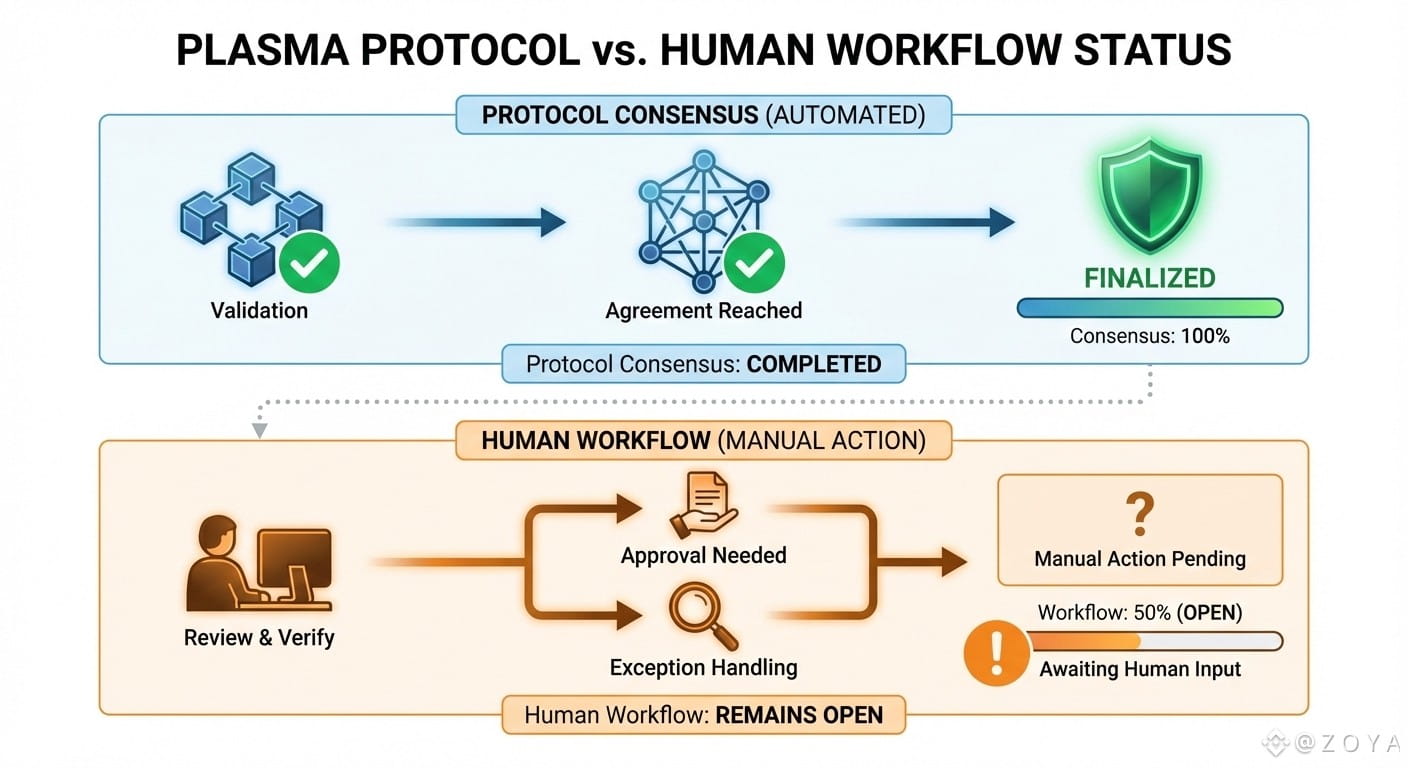
Gasless USDT flows sharpen this edge. When users don’t think about gas, they also don’t think about process. Pressing send feels final. Any delay after that feels like a system contradiction, not a normal phase.
So users compensate in quiet ways.
Receivers wait longer than necessary. Senders stop paying attention too early. Ops adds informal buffers. Finance refuses to book without confirmation that feels redundant but isn’t.
None of this breaks the chain.
All of it slows the system.
This is how trust erodes without headlines. Not through loss, but through friction that trains people to hover. Over time, “almost done” becomes the expected state, and expected states shape behavior more than guarantees.
Plasma’s design seems built to compress that gray zone. Sub-second finality matters here not as a benchmark, but as a way to reduce the time where humans feel responsible for supervising something that should already be complete.
The shorter that window, the fewer compensating behaviors appear.
Bitcoin anchoring lives at a different layer. It answers long-term questions about neutrality and durability. But day-to-day operations don’t run on long horizons. They run on cutoffs, handoffs, and reconciliation windows.
Those windows don’t tolerate “almost.”
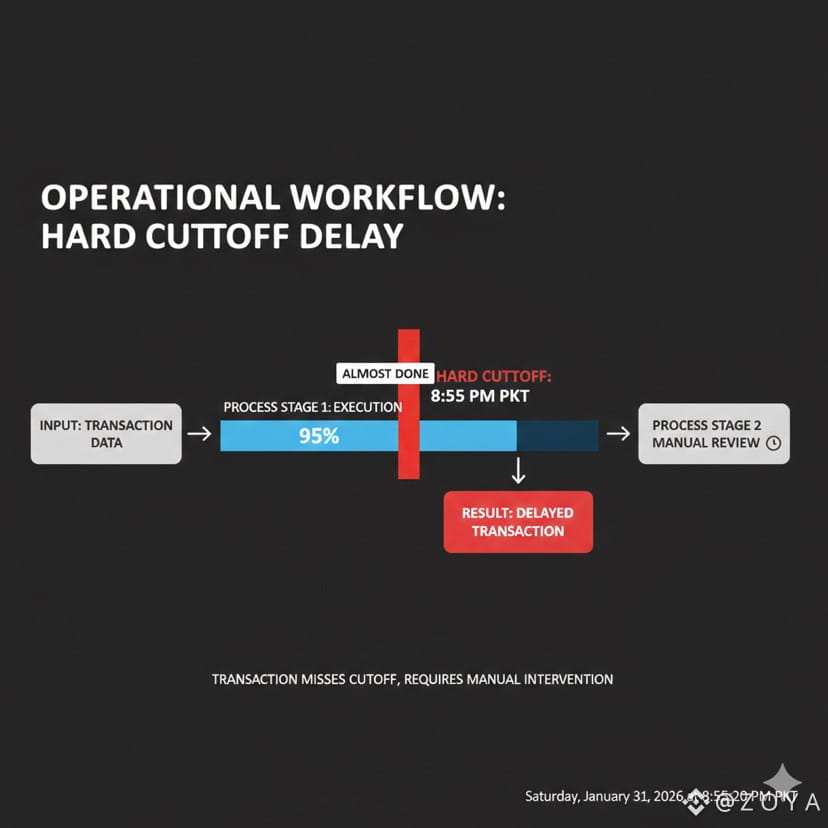
What actually clears a stablecoin payment isn’t cryptographic certainty alone. It’s the arrival of a signal early enough, clear enough, and singular enough that nobody feels the need to check twice.
The first time a routine USDT transfer leaves someone waiting at 95%, the network hasn’t failed. But it has created work where there should have been closure.
Plasma’s real challenge isn’t finishing transactions.
It’s finishing them in a way that lets humans stop watching.
Because in payments, “almost done” is where cost hides.


