
When we talk about decentralized storage, one name that stands out for efficiency, scalability, and cryptographic transparency is Walrus. Unlike traditional storage models where data is kept in single centralized servers, the Walrus network distributes encrypted fragments across multiple nodes, ensuring both resilience and censorship resistance. Today, I’m breaking down how Walrus Storage Nodes function, what their responsibilities are, and why the system is uniquely positioned for the future of Web3 storage.
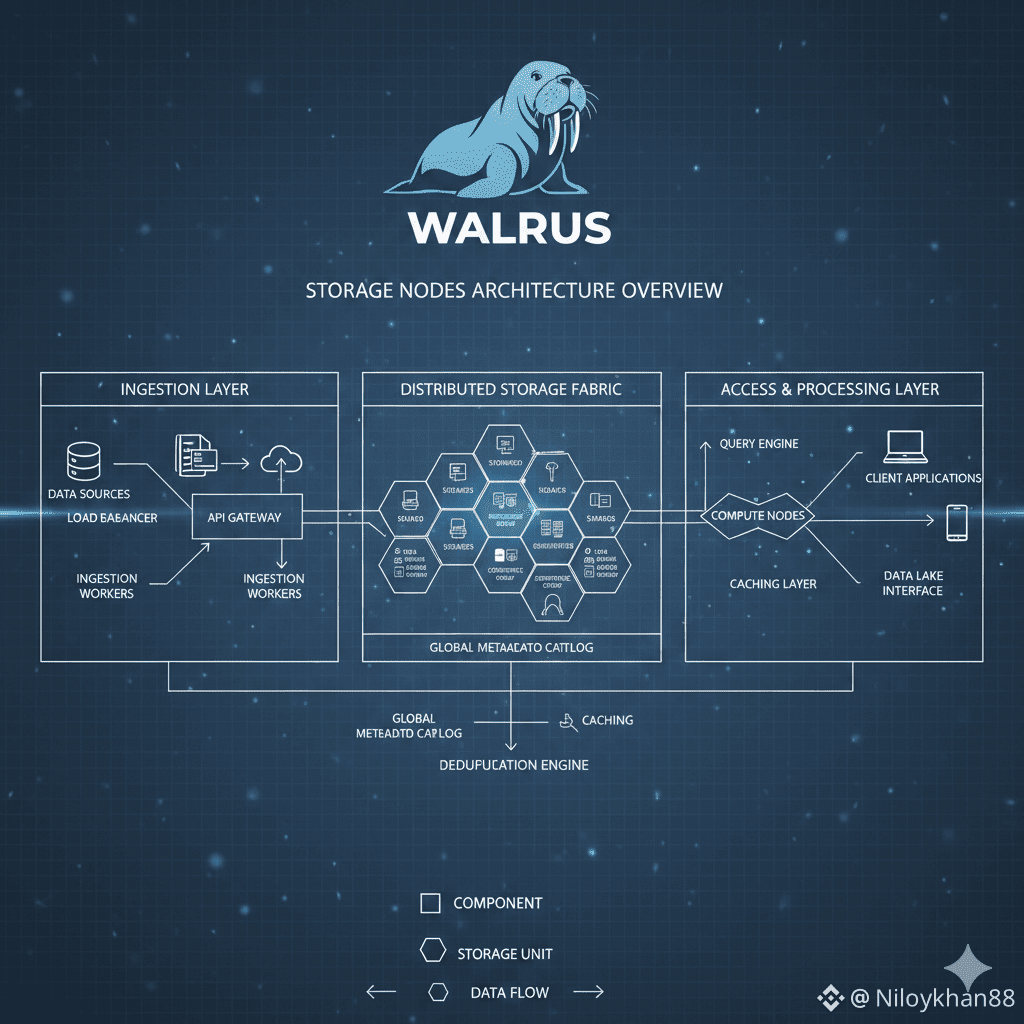
At the core of the Walrus ecosystem, nodes act as the backbone of decentralized data management. Each node participates in storing fragments of files rather than entire data objects. This reduces the risk of data loss, enhances privacy, and ensures no single participant has full control over user content. These fragments are created using advanced erasure-coding techniques, enabling reconstruction of original data even if some nodes go offline or become unavailable.

Nodes in the Walrus network are responsible for three key functions: storage, verification, and availability maintenance. They commit to storing specific fragments and provide cryptographic proofs demonstrating that they are continuously maintaining these fragments. This proof-based model eliminates the need for trust—everything is verifiable through protocol-level mechanisms rather than human-centered oversight. The network automatically detects when nodes fail or go idle and responds by redistributing fragments, keeping data secure and accessible 24/7.
Node operators are incentivized through the token economy surrounding the Walrus ecosystem. Participants earn rewards in $Wal, enabling a self-sustaining model where more storage power enters the ecosystem as the network grows. This incentive structure encourages stability, long-term uptime, and reliable storage operations from node participants.
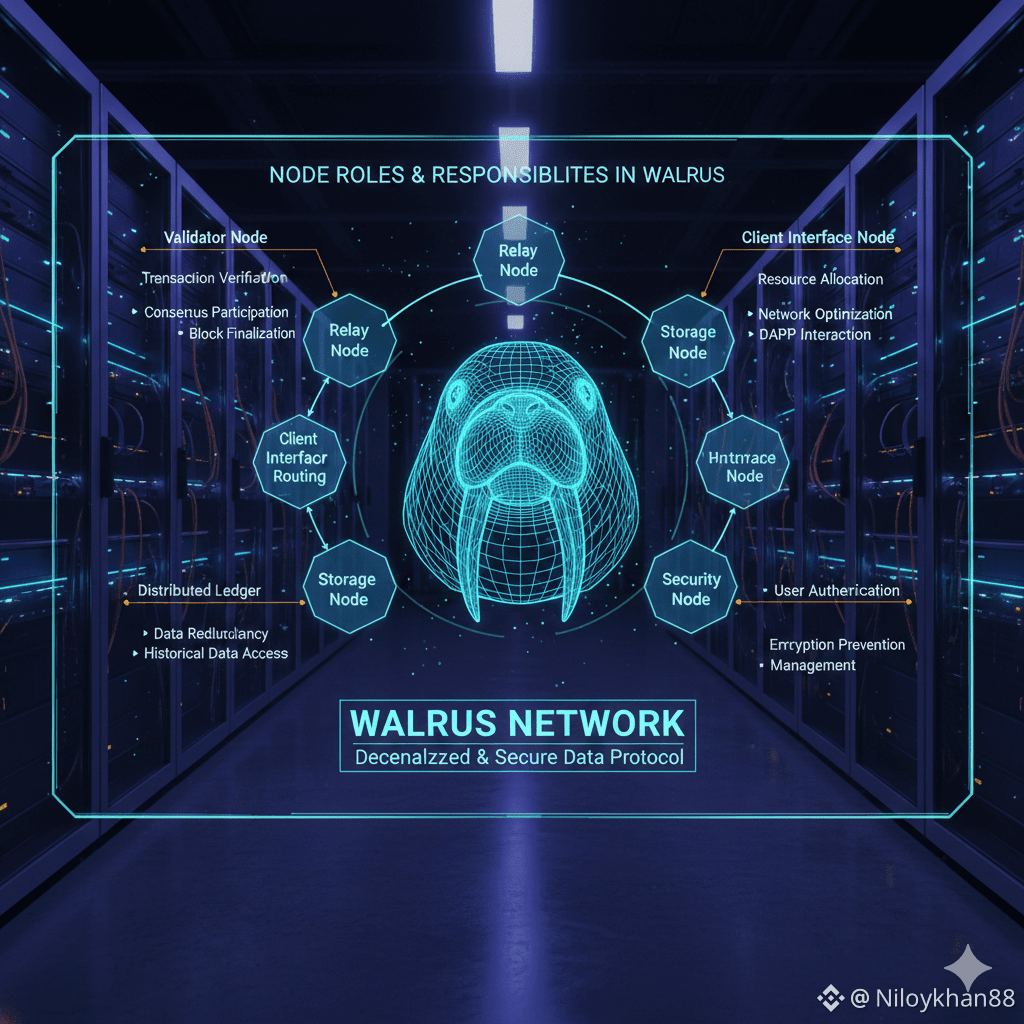
As the Web3 world expands, decentralized storage solutions like Walrus are becoming essential infrastructure. Whether you're a developer, investor, or tech enthusiast, understanding how Walrus storage nodes operate reveals why the ecosystem is gaining momentum. With strong redundancy, verifiable proofs, and scalable distribution, Walrus represents the next evolution of decentralized data mobility.
Follow @walfoundation for more updates and insights on the future of decentralized storage.
