



Exclusive: Billionaire Tim Draper has a blunt response to Elon Musk’s new political party (4:17)
Elon Musk just lost a crucial battle in his escalating war against Sam Altman.
On Feb. 24, a federal judge in California threw out a lawsuit from Musk’s artificial intelligence startup, xAI, which accused rival OpenAI of stealing valuable trade secrets.
U.S. District Judge Rita Lin in San Francisco handed down the decision. While she noted that xAI has the option to refile the case, the current complaint completely fails to show any actual misconduct by OpenAI.
The lawsuit, originally filed in September last year, alleged that departing xAI employees smuggled source code for the Grok chatbot and other confidential data to their new jobs at the ChatGPT maker.
Related: Musk reportedly called Trump privately before issuing public apology
However, the court found the accusations lacked a direct link to corporate espionage.
"Notably absent are allegations about the conduct of OpenAI itself," Lin said.
"xAI does not allege any facts indicating that OpenAI induced xAI’s former employees to steal xAI’s trade secrets or that these former xAI employees used any stolen trade secrets once employed by OpenAI."
Next steps
The ruling was not entirely a surprise, as Lin signaled in a January opinion that she leaned toward a dismissal. The judge gave xAI until March 17 to submit an amended complaint. In a related move, xAI has separately sued Xuechen Li, a former engineer, for allegedly transporting trade secrets directly to OpenAI.
While xAI representatives and attorneys stayed silent on Tuesday, the victor did not mince words.
"We welcome the court's decision," OpenAI said in a statement.
"This baseless lawsuit was never anything more than yet another front in Mr. Musk's ongoing campaign of harassment."
In earlier court filings, OpenAI framed the trade-secrets litigation as a "campaign to harass a competitor with unfounded legal claims" born out of frustration that the Grok chatbot could not keep pace with ChatGPT.
Most popular on TheStreet
'Black Swan' author warns investors to brace for bankruptcies
America’s most shorted stock is Wall Street’s Bitcoin machine
Ethereum founder sells again as markets crash
Related: OpenAI to launch social media app like Musk's X
The hundred-billion-dollar battlefield
This dismissed case is merely a sideshow to a much larger legal dispute.
Musk, the world's richest person, is suing Microsoft-backed OpenAI over its controversial conversion to a for-profit entity. He is seeking a staggering sum of up to $134.5 billion in damages. Jury selection for that blockbuster trial is scheduled for April 27.
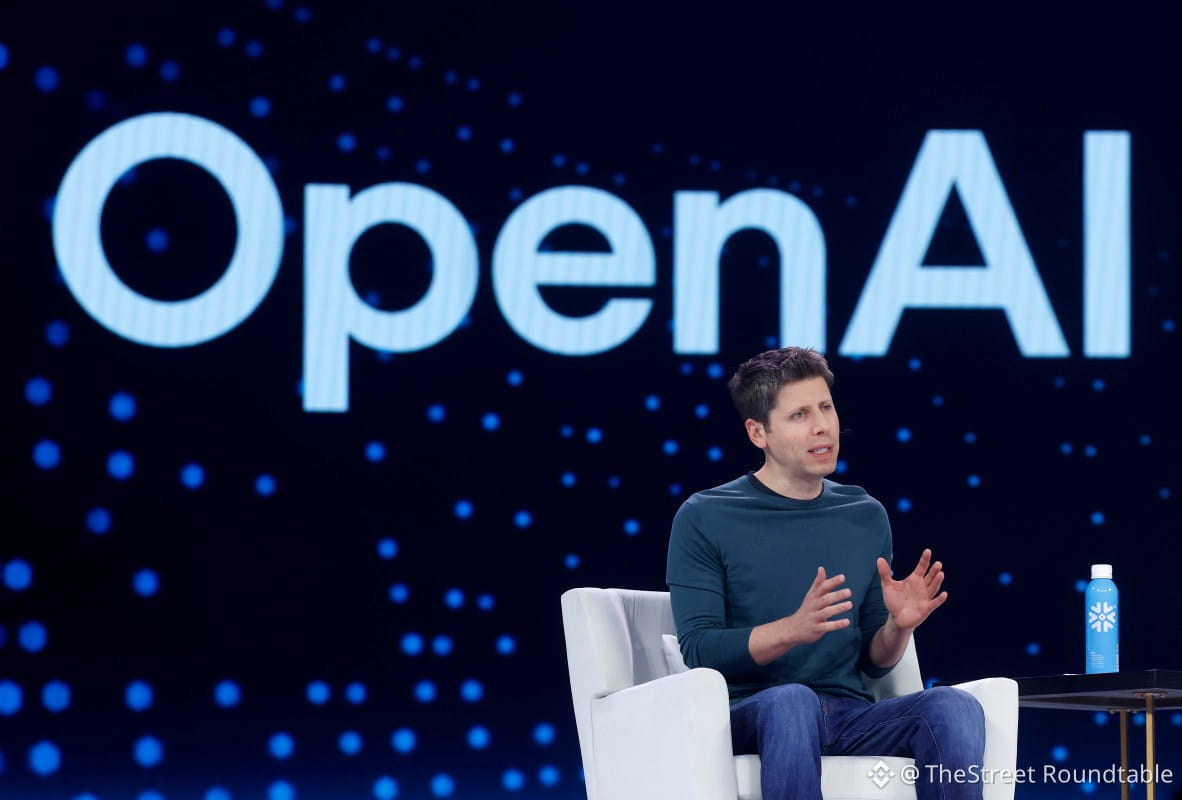 Open AI CEO Sam Altman speaks during Snowflake Summit 2025 at Moscone Center on June 02, 2025 in San Francisco, California. (Photo by Justin Sullivan/Getty Images)
The bitter rivalry stems from a fractured partnership. Back in 2015, Musk co-founded OpenAI alongside current Chief Executive Sam Altman and President Greg Brockman.
Court filings reveal Musk donated roughly $38 million to fund the venture's initial nonprofit mission "to benefit humanity."
However, a power struggle over control quickly derailed the relationship. Musk exited the board in 2018 and halted all funding by 2020.
Trending on TheStreet Roundtable:
Trump imposes major global tariffs after SC's decision
Michael Saylor compares Bitcoin with Apple, Amazon
Billionaire Dalio warns of major threat to investor wealth
A tale of two balance sheets
Since the split, OpenAI’s financial trajectory has skyrocketed. The tech giant is currently piecing together a fundraising round of up to $100 billion, potentially pushing its total valuation to an astronomical $830 billion.
Musk’s early financial contributions form the bedrock of his $134 billion demands.
Meanwhile, xAI is fighting an uphill battle in a highly capital-intensive arena. Founded just last year, the company faces fierce competition from tech behemoths spending heavily on data centers and computer chips.
Unlike rivals Meta, Amazon, Microsoft, and Google, xAI lacks a cash-generating legacy business to cushion its spending. The financial strain is severe. Last year alone, xAI burned through $13bn, according to a report in The Guardian.
Compounding the monetary pressure, Musk's Grok chatbot has faced public backlash for spreading misinformation and has failed to secure the widespread popularity or elite corporate partnerships enjoyed by ChatGPT.
Related: AI's growing power demands could trigger a global energy crisis