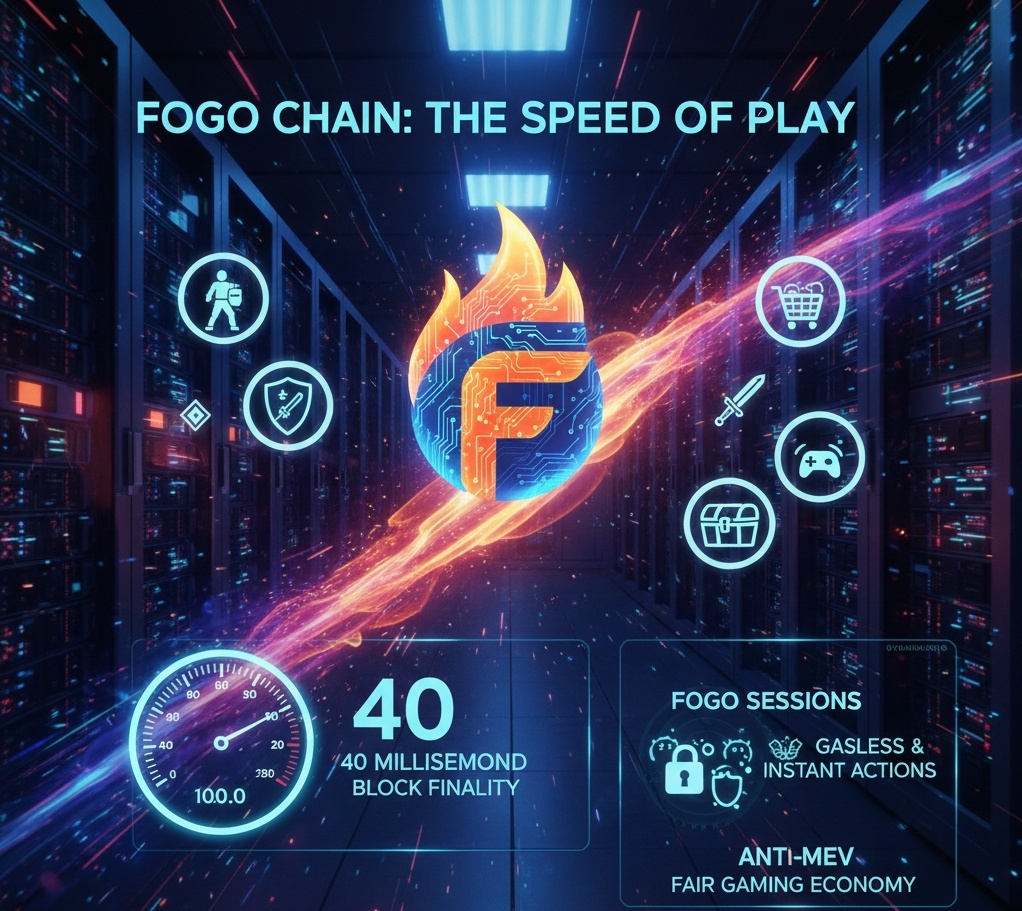
The growth trajectory of Fogo ($FOGO) reflects more than momentary market excitement — it underscores a project rooted in clear technological purpose, community engagement, and long-term value creation. Far from being a speculative token driven by hype, FOGO is integral to an evolving blockchain ecosystem designed around high performance, decentralized participation, and real-world utility.
At its core, Fogo is a high-performance Layer-1 blockchain built on the Solana Virtual Machine (SVM) with an architecture optimized for ultra-low latency, high throughput, and fast finality. The network’s design targets execution speeds measured in milliseconds, enabling real-time decentralized finance (DeFi) and on-chain trading environments that support advanced use cases such as decentralized exchanges (DEXs), order books, and financial primitives that demand precision and speed.
This performance focus is foundational to Fogo’s purpose: to provide infrastructure capable of supporting institutional-grade liquidity, high-frequency trading, and gas-efficient transactions without the friction commonly associated with broader blockchain networks. By leveraging a streamlined client stack and a zoned consensus mechanism, Fogo aims to ensure throughput remains robust even during periods of heightened activity, positioning itself as a serious contender in the competitive ecosystem of Layer-1 solutions.
Strategic Tokenomics & Long-Term Alignment
What distinguishes $FOGO beyond technology is its tokenomic structure that aligns incentives between developers, community members, validators, and ecosystem contributors. With a total supply distributed across community participants, core contributors, institutional investors, advisors, foundation programs, and launch liquidity, the network ensures that key stakeholders are committed to the protocol’s long-term success. Many allocations are subject to multi-year vesting with initial cliffs to prevent early sell-offs and encourage ongoing engagement.
The FOGO token serves multiple purposes within the ecosystem, including:
Network gas and fee settlement, where dApps can sponsor transaction costs to reduce user friction.
Staking and network security, enabling holders to contribute to consensus and receive yield.
Ecosystem incentives and revenue sharing, with foundation-led grants and programs designed to nurture builders and partners.
This layered utility model is structured not only to support day-to-day usage but also to capture value as the network scales and adoption broadens, reinforcing long-term alignment between users and the platform’s development.
Vibrant Community and Ecosystem Engagement
Strong community dynamics are central to Fogo’s identity. From early funding rounds through community-first initiatives like crowdfunding via Echo — which raised significant capital in short order — to airdrops and engagement programs, Fogo has cultivated active participation across a diverse base of supporters and builders. �
The Block
Additionally, a growing roster of ecosystem applications — including DEXs, lending markets, liquid staking tools, analytics platforms, and wallet integrations — reflects a committed effort to build out tangible use cases on the network. These integrations not only expand functionality but help embed $FOGO into practical DeFi workflows that attract users beyond speculative trading.
Looking Ahead
As the blockchain industry continues to mature, the projects that endure will be those that offer real utility, transparent governance, and sustainable community value. Fogo’s approach — combining cutting-edge performance technology, thoughtful tokenomics, and robust ecosystem support — demonstrates a commitment to these principles. If execution remains consistent with strategy, Fogo is positioned to emerge as a notable infrastructure layer within Web3’s next wave of innovation.
Overall, $FOGO’s progress merits careful attention from both developers and investors as it navigates broader adoption and scales its ecosystem in the years ahead.