


The latency appeared to be the apparent emphasis when I first ventured into Fogo. Sub-100ms consensus, SVM conformity, and Firedancer roots are all exciting to traders. However once I had fallen into the documentation, it was not the speed that made me change my perception of Fogo, but a product building block: Sessions.
Should you wish on-chain trading to have the feel of a traditional trading floor, half of it is speed. The other side is: how could one allow the user to do anything fast without teaching them to lose the full wallet control?
Fogo makes an effort to provide the answer to this question.
The thesis: scoped delegation, and no more signatures, is the next wave of on-chain UX.
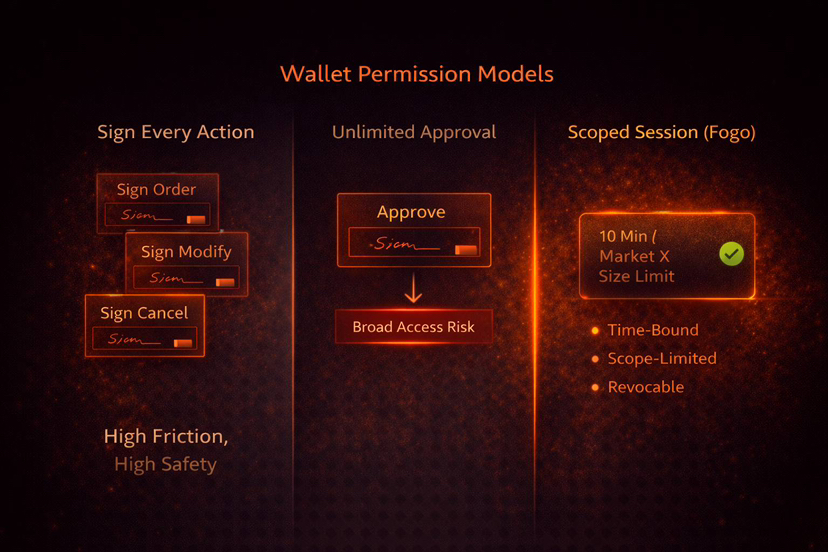
The vast majority of DeFi UX presents a tradeoff: you either sign transaction-by-transaction, which is slow, irritating, prone to errors, or you give blanket permissions which are difficult to control, particularly in the case of new users. Fogo Sessions provides a moderate solution: a user grants a session once and an application can perform actions within a constrained time and scope that are pre-approved with no signature being requested at each stage.
That would be easy to say, yet it is a huge change of thinking. It transforms a wallet into a machine that grants approval every time it is used to one that acts as a modern application: you give it limited access, and that access is temporary.
In need of a phrase, it is speed limited.
What, in the plain words, Sessions really are.
To make a non-technical individual understand Fogo Sessions, I would tell him it is as though giving a temporary permission card to an application.
You identify once, you approve to the session and the app will be able to execute whatever you gave it permission to execute as long as you set it. You can limit the session in case you simply wish that the app engages in trade within a limited time period or within particular circumstances.
Documentation of Fogo defines Sessions as an account-abstraction model which consists of an intent message that demonstrates that you are in charge of the wallet. It’s made in a way that can allow users to make a signature on that purpose and end it using regular Solana wallets, though this wallet might not be Fogo-native.
Such a subtext is more than they think. It simply implies: meet users where they already exist, and not the wallet stack to everyone.
The reason this is a trading-native functionality, and not merely a convenient facility.
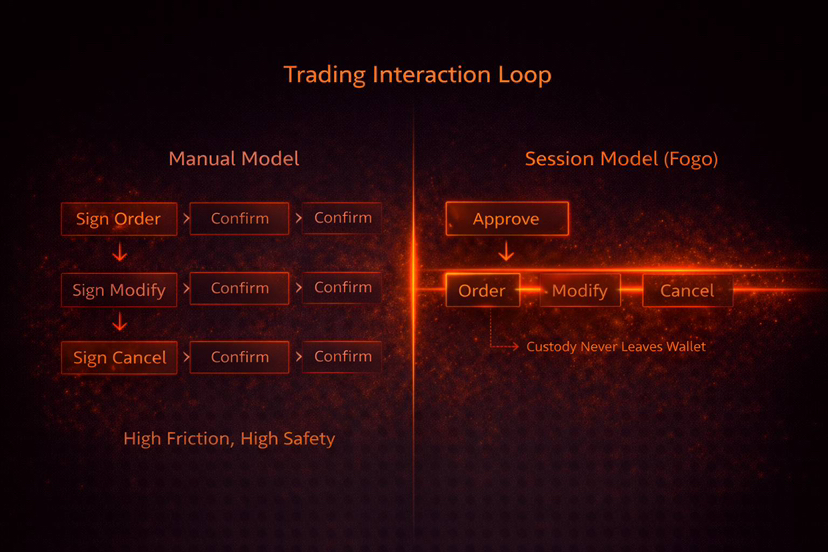
Trading is replete with numerous little actions that hurt when one asks to give them a signature.
Place an order. Modify an order. Cancel an order. Re‑quote. Switch markets. Manage margin. Rebalance. Add collateral. Withdraw dust.
You also know the experience of being an active onchain trader: instead of trading, you are clicking approvals. Centralized exchanges are pleasant to interact with, not because the custody is centralized, but because the loop of interaction is fast.
Fogo Sessions aims to maintain that instant interaction with retention in the possession of the user. Fogo positions Sessions as a Web3 single-sign-on and a means of bypassing both signatures and gas to support flows.
This is why the name I give to it is trading-native: it is designed with the idea that trading is a process, rather than a point-to-point transfer.
Limit and verification the safety element which gives Sessions credibility.
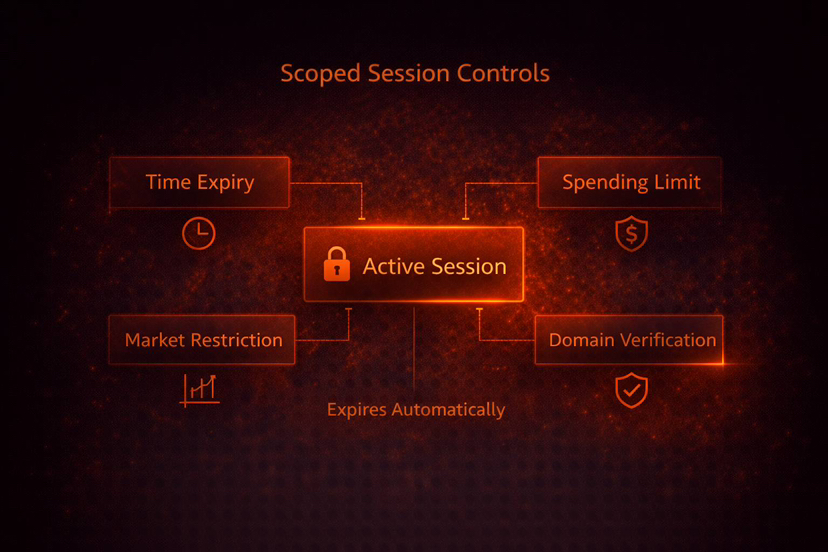
When one of the chains says no constant approvals what would follow is the question; What would prevent an app to drain me?
Here the Sessions story of Fogo is more serious. Protections that are specifically mentioned in the building on Fogo guidance include spending limits and domain verification, where users are allowed to view apps without putting the rest of their wallet at risk.
That’s an important signal. It demonstrates that Sessions are not only about speed, but also about the safety in a manner that can be understood by the ordinary users.
Due to the fact that the actual obstacles to adoption are not merely hacks; it is fear. Individuals are not eager to become specialists in security only to be able to carry out a trade.
Fewer clicks is therefore not the true victory. It is a permission model that can be put in a single sentence: “This app can do only this, only this long.
The developer angle: Sessions as a norm, not a one-off gimmick.
A lot of the crypto good UX exists in the ad hoc patterns. There is a single team that constructs a custom relayer. One of them develops a custom signer. The other one forms a hacky session system. The outcome is fragmentation, thus the user is not able to develop intuition as each app works differently.
Fogo Sessions is a provided open-source standard of app sessions, including SDKs and sample repositories to assist constructors in adhering to a standardized format.
That is a totally different approach: instead of hoping every app to come up with good UX, give an ecosystem primitive that promotes consistency.
Monotony is underestimated; it is the way the users create trust. Once each app has its strange approval story, individuals fall to the conclusion of thinking the worst.
What is the relevance of Sessions even when you are not concerned with trading?
Best stable applications: In the case of outside trading, the user does not get the impression of working with explosives.
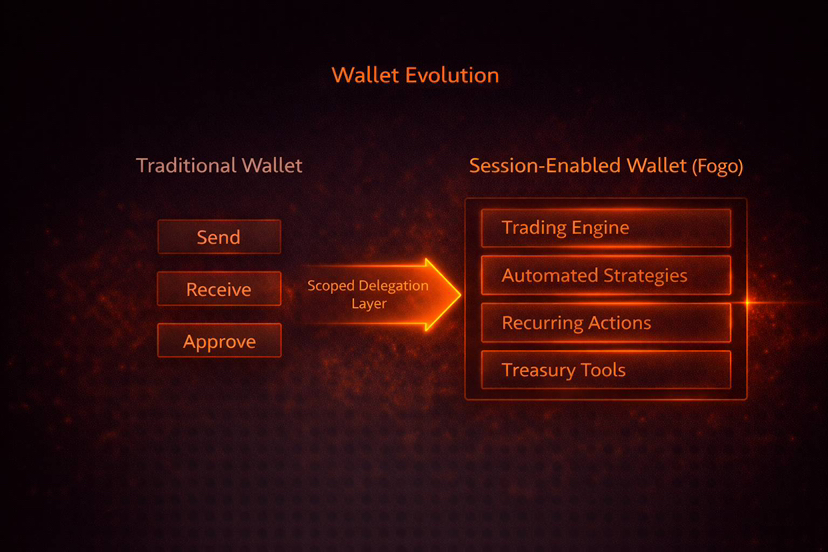
Think of repeat activities, such as subscriptions, payroll-like payments, regular treasury operations, automated plans, alerts and triggers that cause minor activities. And in all these streams, the same thing is always to struggle with, that friction, and general approvals are terrifying.
The third door is session-based UX, which provides recurring, scoped behavior without making users into robots who click popups.
