

Vanar Chain’s Secret Weapon: It Just Works Everywhere
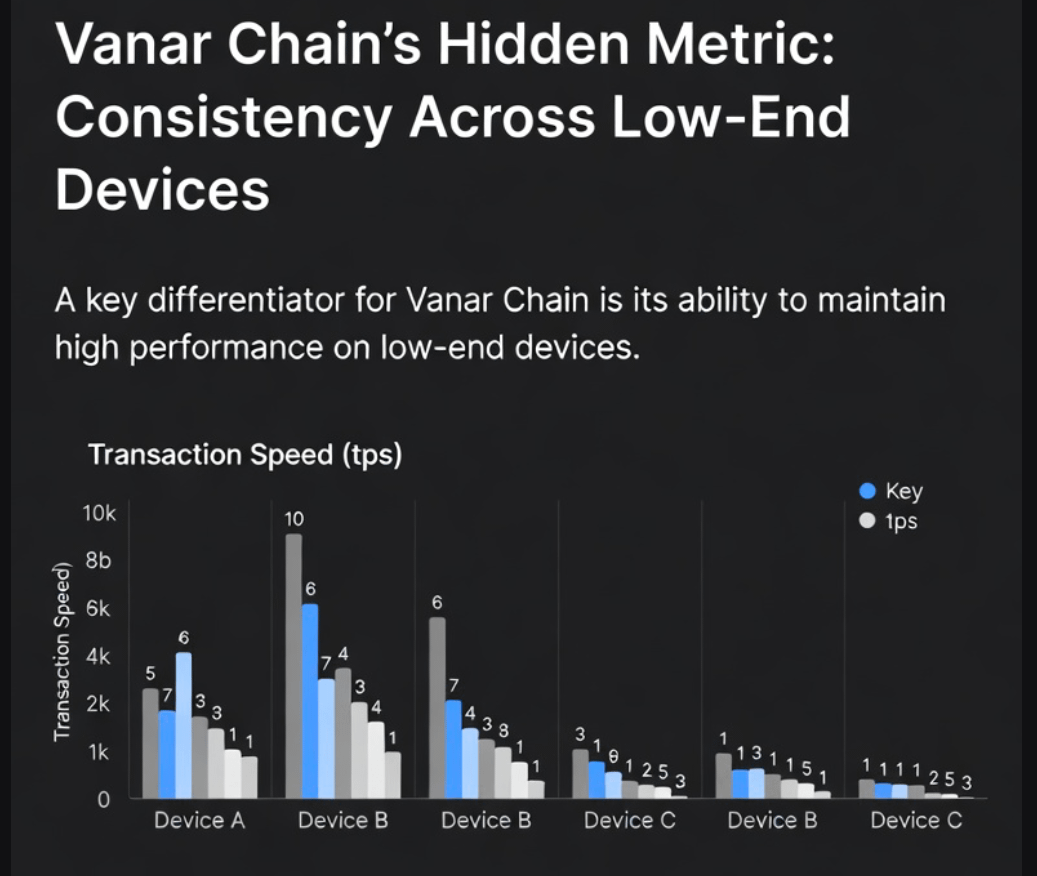
There’s no shortage of layer-1 blockchains out there, all fighting for attention with promises of speed, low costs, or fancy scaling tricks. But, honestly, most people miss a huge piece of the puzzle—how well does this stuff actually work on cheap phones, old tablets, or budget laptops? If a blockchain can run smoothly on hardware that isn’t top-of-the-line, suddenly the doors swing open for a ton of new users. It’s about real access, not just technical bragging rights. For Vanar Chain, this quiet advantage—just being reliable on any device—could be what sets it apart as the space grows.
So, what is Vanar Chain, really? At its heart, it’s a layer-1 platform trying to hit that sweet spot where performance meets affordability, and anyone can jump in. They’re aiming to cover everything: DeFi, NFTs, games, entertainment, even AI-driven apps. It’s EVM-compatible, it’s quick, and the fees are tiny. On paper, sure, those are the standard checkboxes. But there’s something more going on here.
Here’s the thing: Most projects love to talk about blazing-fast transactions or how many operations they can handle at once. That stuff matters if you’re an enterprise running huge workloads. But for the average person, especially in places where high-end computers are rare, the question isn’t how fast it can go at its best. It’s “Will this even run on my phone?” A lot of people in the Web3 world, especially in developing countries, don’t have fancy hardware. They use what they can afford—cheap phones, maybe a shared computer at an internet café, spotty Wi-Fi. If your blockchain can’t handle that, you’re just leaving people behind.
Why does this consistency matter so much? Think about it. The usual blockchain metrics—transactions per second, finality time, all that—look great in a lab. But in the real world, if your dApp crashes, lags out, or just refuses to sync because your phone isn’t a flagship model, none of those numbers mean anything. You need a network that lets regular people connect, validate, and join in without constant headaches.
When a blockchain’s performance swings wildly—maybe it’s smooth on a server but chokes on a phone—users lose trust. Research backs this up: traditional blockchain setups, built for beefy servers, often stall out on low-power devices. They stumble over memory limits, lag from too much data to process, and generally make life miserable for anyone outside the “premium hardware” club.
Vanar Chain is trying to flip that script. Its architecture leans into speed and affordability, but with a clear eye on the actual user experience. Even if you won’t find a “consistency for low-end devices” metric in the docs, everything about the way Vanar is built—low fees, fast block times, EVM compatibility—suggests they’re making life easier for everyone, not just power users.
When you set fees at fractions of a cent and keep the core protocol optimized, you cut down the strain on any device. Lightweight block processing and fast confirmation times aren’t just buzzwords; they mean your phone doesn’t overheat or drain its battery just to keep up with the chain.
Plus, Vanar isn’t stopping there. New features, like AI-powered compression, will shrink the amount of data clients need to download and process. That’s a win for anyone on slow connections or with limited storage. Less data, quicker syncs, and fewer headaches—suddenly, running a wallet or dApp on basic hardware feels doable.
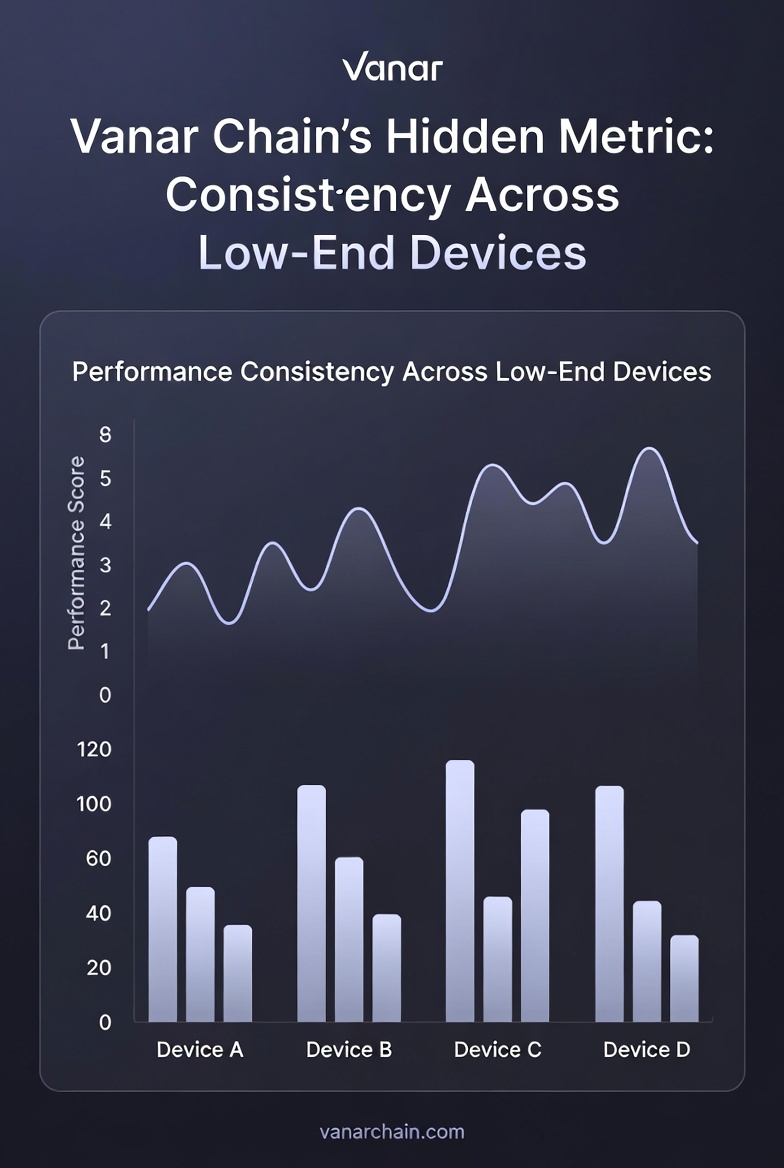
The upshot? In places where people don’t have access to the latest gadgets, a blockchain that stays steady on simple devices can finally deliver on the promise of real decentralization. Users can stake, swap, and play with dApps straight from their phones. Developers can build for everyone, not just early adopters with top-tier machines. And as more of the world comes online, that quiet reliability—Vanar Chain’s hidden metric—may end up making all the difference.@Vanarchain #Vanar $VANRY
