
#kriptocutrader
kriptocutrader
10.1M views
5,858 Discussing
ရေပန်းစားသော
နောက်ဆုံး

Article
News
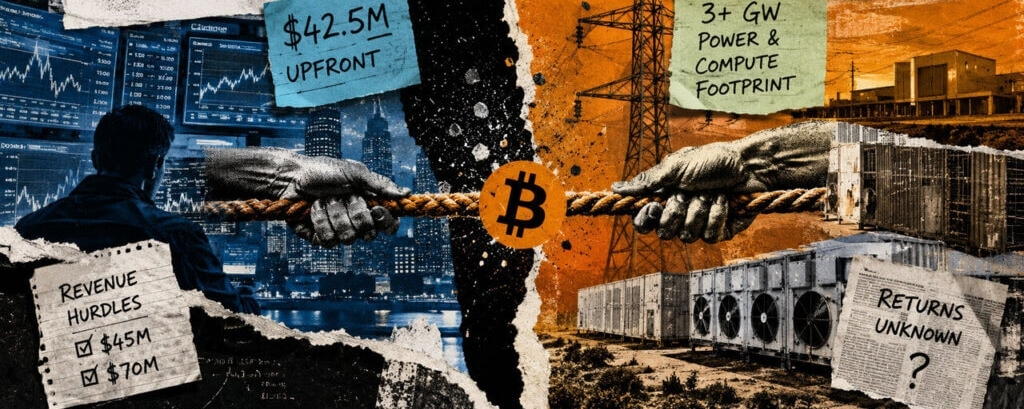
BitGo and NYDIG pull opposite ends of a rope around Bitcoin, contrasting revenue hurdles with aThe BitGo NYDIG deal puts roughly $42.5 million upfront against NYDIG’s claimed 3+ GW power-and-compute footprint, with profitability unproven on both sides.
itGo's NYDIG deal transfers its institutional trading business to the digital-asset custody and trading infrastructure provider, while NYDIG says it is concentrating resources on power, Bitcoin mining and high-performance-computing data centers.
The closing terms disclosed by BitGo put roughly $42.5 million of consideration upfront. BitGo is adding an institutional team, client relationships and financial products around its custody and settlement platform. NYDIG is directing attention toward a company-described power-and-compute footprint exceeding 3 GW.
The deal makes each company’s resource allocation clear while leaving the margin comparison unresolved. BitGo’s filings show that very large digital-asset sales can carry a thin gross spread. NYDIG describes a large infrastructure footprint without disclosing the returns attached to it. The useful comparison is between the proof points each side must deliver.
The merger agreement defines the acquired business as spot and derivatives trading, virtual-currency asset management, borrowing and lending, and loan servicing. It explicitly excludes NYDIG’s Bitcoin mining and custody businesses, keeping the power-and-compute footprint outside BitGo’s purchase.
Approximately 30 NYDIG employees and institutional client trading relationships joined BitGo, according to the deal announcement. The team adds derivatives, structured products, financing and capital-markets capabilities to a platform that already offers institutional custody, trading and settlement.
The upfront consideration consists of $7 million in cash, subject to holdback and adjustments, plus 5,933,577 BitGo shares. The agreement uses a $5.9829 reference price, which values those closing shares at about $35.5 million and brings the disclosed upfront amount to roughly $42.5 million before cash adjustments.
The seller can receive more. A first earn-out pays $10 million in cash. A second provides $5 million in cash plus 835,715 BitGo shares, worth roughly another $5 million at the agreement reference price. Separate awards targeting $10 million are intended for transferred employees rather than the seller, so they sit outside the seller’s purchase price.
The current transaction covers only institutional trading and related assets. Mining and custody are excluded from the agreement, supporting a shift in priority rather than a clean exit from every Bitcoin financial-infrastructure activity.
That leaves NYDIG with a different and more capital-intensive scorecard. It must turn claimed footprint into financed, contracted and operating capacity, then show what tenants pay, how fully facilities are used and what returns remain after construction and financing. A gigawatt figure indicates potential scale while leaving the cash flow from that scale unknown.
BitGo’s scorecard is closer to the income statement. The acquired unit must retain institutional relationships, reach the $45 million and $70 million revenue hurdles and turn a broader service stack into profit. Later filings can show whether those products deliver better economics than the company’s existing Digital Asset Sales activity.
The BitGo NYDIG deal identifies two bets and two pending scorecards. BitGo has disclosed the price and revenue tests for adding more financial services. NYDIG has disclosed the size of its infrastructure ambition and a delivery window. Target margins and NYDIG project returns will decide the durable-margin comparison as those figures become visible.
#Write2Earn
#CryptoTrends2024
#ETHETFS
#xmucan
#Kriptocutrader
News BitGo and NYDIG pull opposite ends of a rope around Bitcoin, contrasting revenue hurdles with a
The BitGo NYDIG deal puts roughly $42.5 million upfront against NYDIG’s claimed 3+ GW power-and-compute footprint, with profitability unproven on both sides.
itGo's NYDIG deal transfers its institutional trading business to the digital-asset custody and trading infrastructure provider, while NYDIG says it is concentrating resources on power, Bitcoin mining and high-performance-computing data centers.
The closing terms disclosed by BitGo put roughly $42.5 million of consideration upfront. BitGo is adding an institutional team, client relationships and financial products around its custody and settlement platform. NYDIG is directing attention toward a company-described power-and-compute footprint exceeding 3 GW.
The deal makes each company’s resource allocation clear while leaving the margin comparison unresolved. BitGo’s filings show that very large digital-asset sales can carry a thin gross spread. NYDIG describes a large infrastructure footprint without disclosing the returns attached to it. The useful comparison is between the proof points each side must deliver.
The merger agreement defines the acquired business as spot and derivatives trading, virtual-currency asset management, borrowing and lending, and loan servicing. It explicitly excludes NYDIG’s Bitcoin mining and custody businesses, keeping the power-and-compute footprint outside BitGo’s purchase.
Approximately 30 NYDIG employees and institutional client trading relationships joined BitGo, according to the deal announcement. The team adds derivatives, structured products, financing and capital-markets capabilities to a platform that already offers institutional custody, trading and settlement.
The upfront consideration consists of $7 million in cash, subject to holdback and adjustments, plus 5,933,577 BitGo shares. The agreement uses a $5.9829 reference price, which values those closing shares at about $35.5 million and brings the disclosed upfront amount to roughly $42.5 million before cash adjustments.
The seller can receive more. A first earn-out pays $10 million in cash. A second provides $5 million in cash plus 835,715 BitGo shares, worth roughly another $5 million at the agreement reference price. Separate awards targeting $10 million are intended for transferred employees rather than the seller, so they sit outside the seller’s purchase price.
The current transaction covers only institutional trading and related assets. Mining and custody are excluded from the agreement, supporting a shift in priority rather than a clean exit from every Bitcoin financial-infrastructure activity.
That leaves NYDIG with a different and more capital-intensive scorecard. It must turn claimed footprint into financed, contracted and operating capacity, then show what tenants pay, how fully facilities are used and what returns remain after construction and financing. A gigawatt figure indicates potential scale while leaving the cash flow from that scale unknown.
BitGo’s scorecard is closer to the income statement. The acquired unit must retain institutional relationships, reach the $45 million and $70 million revenue hurdles and turn a broader service stack into profit. Later filings can show whether those products deliver better economics than the company’s existing Digital Asset Sales activity.
The BitGo NYDIG deal identifies two bets and two pending scorecards. BitGo has disclosed the price and revenue tests for adding more financial services. NYDIG has disclosed the size of its infrastructure ambition and a delivery window. Target margins and NYDIG project returns will decide the durable-margin comparison as those figures become visible.
#Write2Earn
#CryptoTrends2024
#ETHETFS
#xmucan
#Kriptocutrader
itGo's NYDIG deal transfers its institutional trading business to the digital-asset custody and trading infrastructure provider, while NYDIG says it is concentrating resources on power, Bitcoin mining and high-performance-computing data centers.
The closing terms disclosed by BitGo put roughly $42.5 million of consideration upfront. BitGo is adding an institutional team, client relationships and financial products around its custody and settlement platform. NYDIG is directing attention toward a company-described power-and-compute footprint exceeding 3 GW.
The deal makes each company’s resource allocation clear while leaving the margin comparison unresolved. BitGo’s filings show that very large digital-asset sales can carry a thin gross spread. NYDIG describes a large infrastructure footprint without disclosing the returns attached to it. The useful comparison is between the proof points each side must deliver.
The merger agreement defines the acquired business as spot and derivatives trading, virtual-currency asset management, borrowing and lending, and loan servicing. It explicitly excludes NYDIG’s Bitcoin mining and custody businesses, keeping the power-and-compute footprint outside BitGo’s purchase.
Approximately 30 NYDIG employees and institutional client trading relationships joined BitGo, according to the deal announcement. The team adds derivatives, structured products, financing and capital-markets capabilities to a platform that already offers institutional custody, trading and settlement.
The upfront consideration consists of $7 million in cash, subject to holdback and adjustments, plus 5,933,577 BitGo shares. The agreement uses a $5.9829 reference price, which values those closing shares at about $35.5 million and brings the disclosed upfront amount to roughly $42.5 million before cash adjustments.
The seller can receive more. A first earn-out pays $10 million in cash. A second provides $5 million in cash plus 835,715 BitGo shares, worth roughly another $5 million at the agreement reference price. Separate awards targeting $10 million are intended for transferred employees rather than the seller, so they sit outside the seller’s purchase price.
The current transaction covers only institutional trading and related assets. Mining and custody are excluded from the agreement, supporting a shift in priority rather than a clean exit from every Bitcoin financial-infrastructure activity.
That leaves NYDIG with a different and more capital-intensive scorecard. It must turn claimed footprint into financed, contracted and operating capacity, then show what tenants pay, how fully facilities are used and what returns remain after construction and financing. A gigawatt figure indicates potential scale while leaving the cash flow from that scale unknown.
BitGo’s scorecard is closer to the income statement. The acquired unit must retain institutional relationships, reach the $45 million and $70 million revenue hurdles and turn a broader service stack into profit. Later filings can show whether those products deliver better economics than the company’s existing Digital Asset Sales activity.
The BitGo NYDIG deal identifies two bets and two pending scorecards. BitGo has disclosed the price and revenue tests for adding more financial services. NYDIG has disclosed the size of its infrastructure ambition and a delivery window. Target margins and NYDIG project returns will decide the durable-margin comparison as those figures become visible.
#Write2Earn
#CryptoTrends2024
#ETHETFS
#xmucan
#Kriptocutrader
10
·
--
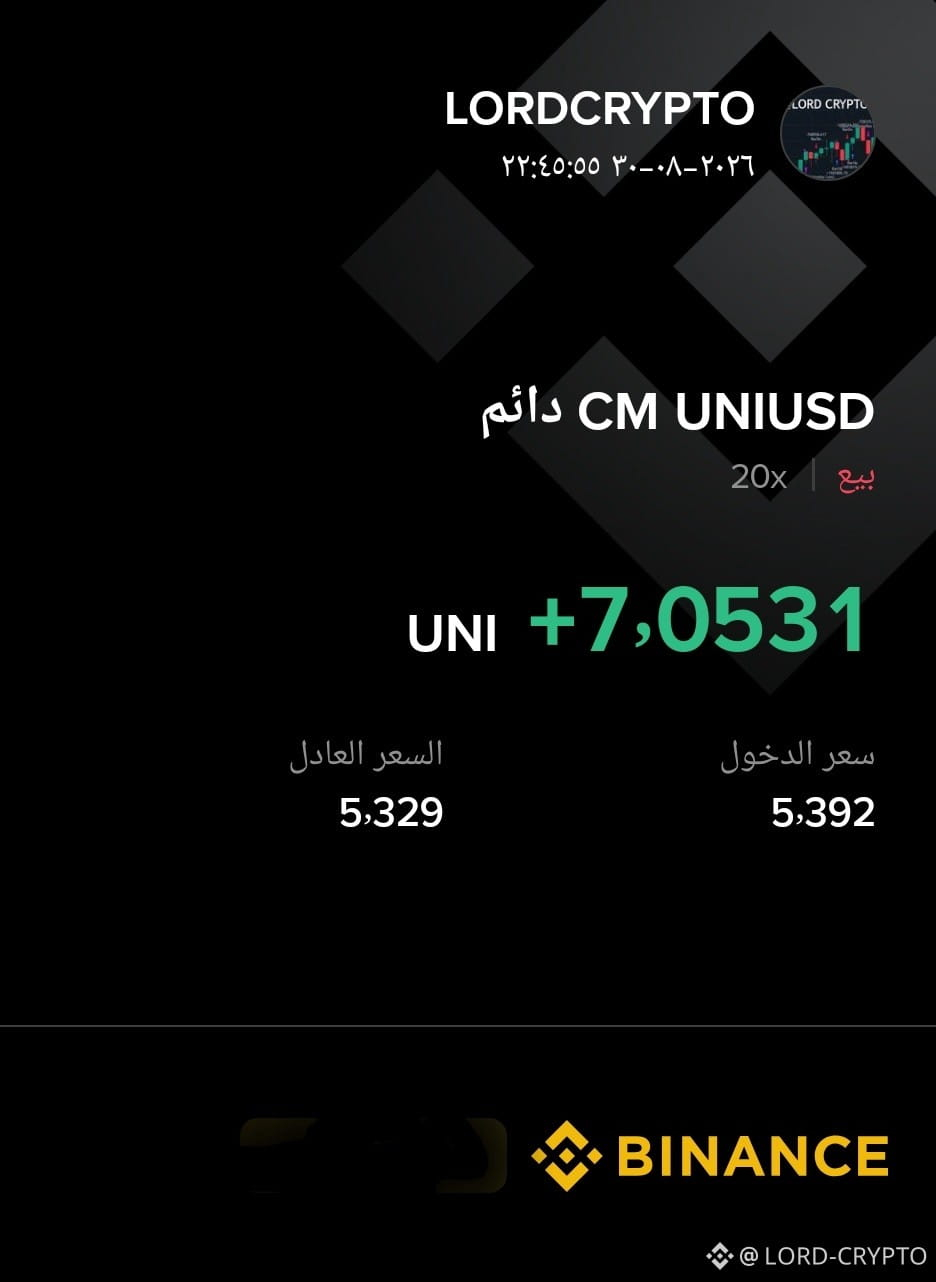
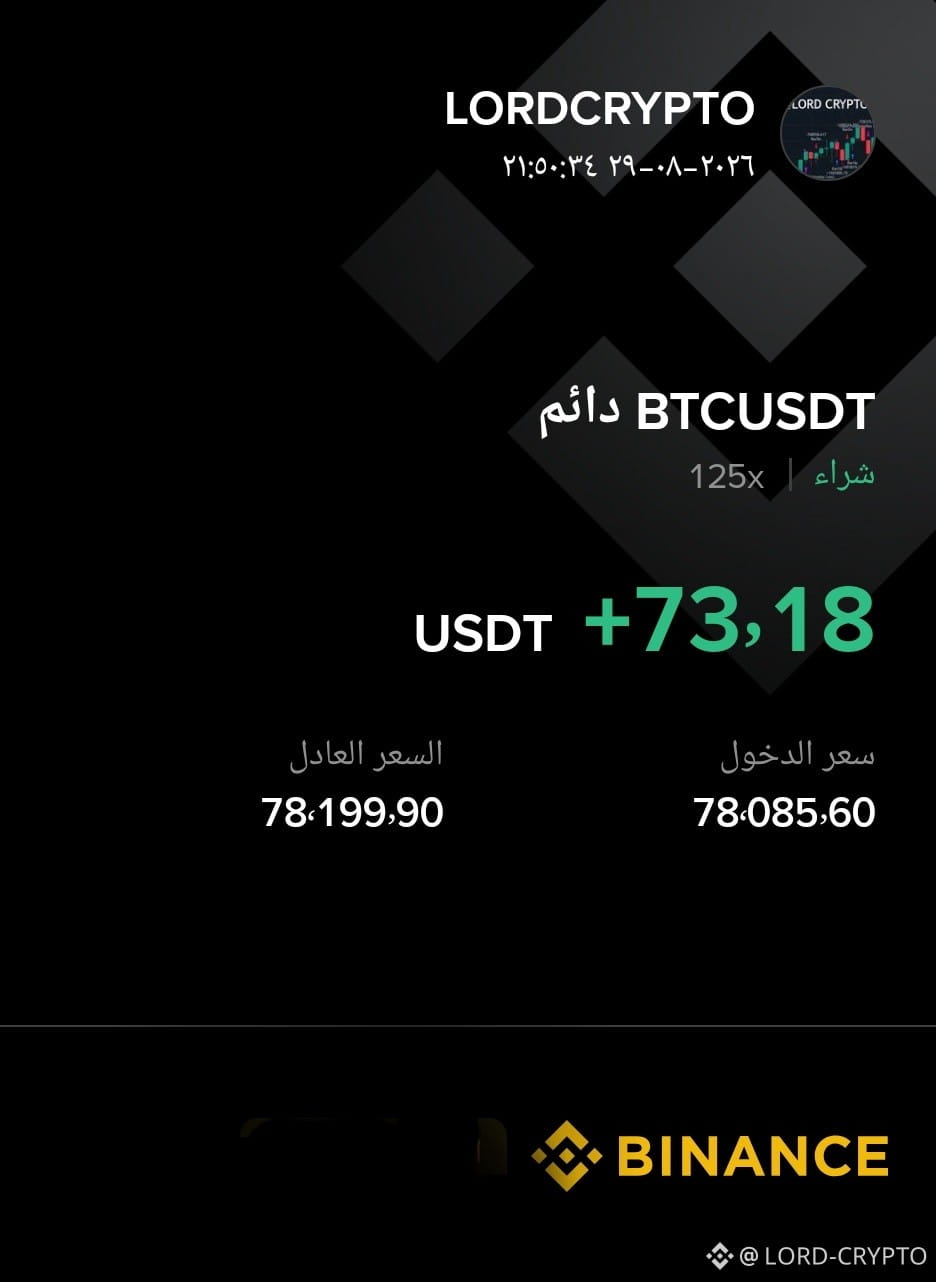
⇐ صفقات امس واليوم مرفقه بالتاريخ
سلسله تقفيل ملفات المحللين ➘
LORD-CRYPTO — ملك تحليل الشارت 👑📊
$BTC $DOGE $SOL
#BTC #Binance #HotTrends
#TrendingTopic #Kriptocutrader
⇐ صفقات امس واليوم مرفقه بالتاريخ
سلسله تقفيل ملفات المحللين ➘
LORD-CRYPTO — ملك تحليل الشارت 👑📊
$BTC $DOGE $SOL
#BTC #Binance #HotTrends
#TrendingTopic #Kriptocutrader
سلسله تقفيل ملفات المحللين ➘
LORD-CRYPTO — ملك تحليل الشارت 👑📊
$BTC $DOGE $SOL
#BTC #Binance #HotTrends
#TrendingTopic #Kriptocutrader
79
Article
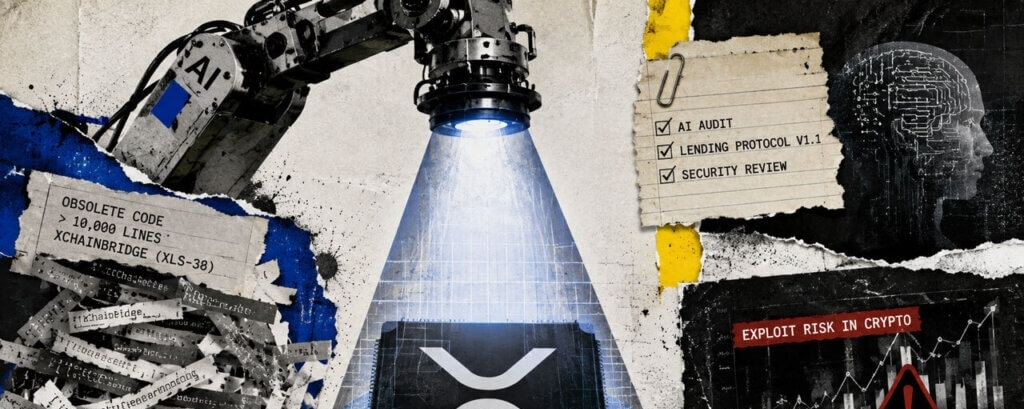
Ripple moves to shrink XRP Ledger attack surface as AI audit tests lending pushMore than 10,000 lines of dormant bridge code could disappear as an AI-only audit probes Lending Protocol V1.1.
The company has recommended removing more than 10,000 lines of unused XChainBridge code while Lending Protocol V1.1 undergoes an AI-only security review through Sherlock’s Audit Engine.
The parallel efforts come as crypto platforms face renewed pressure to strengthen their defenses. More than $1.31 billion was lost across 344 security incidents in the first half of 2026, with code vulnerabilities remaining the industry’s most common attack category.
The original case for keeping XChainBridge (XLS-38) weakened after Ripple turned to Axelar for the XRPL EVM Sidechain and broader demand for the native bridge failed to materialize.
The company said the XLS-38 witness model carried trade-offs that became harder to manage as the value protected by a bridge increased. Expanding the witness set could improve decentralization but add coordination and governance complexity, while a smaller group would concentrate more trust among operators.
Ripple announced its decision to use Axelar in June 2024 but kept XLS-38 available for a validator vote and gave developers roughly 12 to 15 months to demonstrate demand for private sidechains that specifically required the amendment.
Ripple identified maintenance burden, contributor complexity, and attack surface as costs of retaining dormant functionality, arguing that XRPL should remain lean as the network evolves.
If the community supports the change, Ripple plans to first mark XChainBridge as obsolete. Validators adopting a software version containing that designation would stop voting for the amendment, allowing the code to be removed in a later release once the network converges.
Ripple has consequently been using several layers of testing rather than relying exclusively on AI. Its lending development process has included independent audits, public security competitions, fuzzing, formal methods, community testing and AI-assisted vulnerability discovery.
Ripple’s own security researchers have also cautioned against treating AI as a replacement for expert review. The company said its AI pipelines produce false positives and that human validation remains particularly important for subtle bugs where a model can misinterpret how an invariant is supposed to behave.
That creates an additional test for Sherlock’s AI-only engagement. The review could show how far specialized models can extend protocol-security coverage, but its usefulness will ultimately depend on the vulnerabilities it identifies and whether those findings translate into fixes before V1.1 advances.
For now, Sherlock has released no results. Ripple is therefore trying to reduce known sources of unnecessary complexity in one part of XRPL while subjecting the next generation of financial functionality to increasingly aggressive scrutiny before more value depends on it.
#Write2Earn
#Kriptocutrader
#Megadrop
#XAI
#Ripple
Ripple moves to shrink XRP Ledger attack surface as AI audit tests lending push
More than 10,000 lines of dormant bridge code could disappear as an AI-only audit probes Lending Protocol V1.1.
The company has recommended removing more than 10,000 lines of unused XChainBridge code while Lending Protocol V1.1 undergoes an AI-only security review through Sherlock’s Audit Engine.
The parallel efforts come as crypto platforms face renewed pressure to strengthen their defenses. More than $1.31 billion was lost across 344 security incidents in the first half of 2026, with code vulnerabilities remaining the industry’s most common attack category.
The original case for keeping XChainBridge (XLS-38) weakened after Ripple turned to Axelar for the XRPL EVM Sidechain and broader demand for the native bridge failed to materialize.
The company said the XLS-38 witness model carried trade-offs that became harder to manage as the value protected by a bridge increased. Expanding the witness set could improve decentralization but add coordination and governance complexity, while a smaller group would concentrate more trust among operators.
Ripple announced its decision to use Axelar in June 2024 but kept XLS-38 available for a validator vote and gave developers roughly 12 to 15 months to demonstrate demand for private sidechains that specifically required the amendment.
Ripple identified maintenance burden, contributor complexity, and attack surface as costs of retaining dormant functionality, arguing that XRPL should remain lean as the network evolves.
If the community supports the change, Ripple plans to first mark XChainBridge as obsolete. Validators adopting a software version containing that designation would stop voting for the amendment, allowing the code to be removed in a later release once the network converges.
Ripple has consequently been using several layers of testing rather than relying exclusively on AI. Its lending development process has included independent audits, public security competitions, fuzzing, formal methods, community testing and AI-assisted vulnerability discovery.
Ripple’s own security researchers have also cautioned against treating AI as a replacement for expert review. The company said its AI pipelines produce false positives and that human validation remains particularly important for subtle bugs where a model can misinterpret how an invariant is supposed to behave.
That creates an additional test for Sherlock’s AI-only engagement. The review could show how far specialized models can extend protocol-security coverage, but its usefulness will ultimately depend on the vulnerabilities it identifies and whether those findings translate into fixes before V1.1 advances.
For now, Sherlock has released no results. Ripple is therefore trying to reduce known sources of unnecessary complexity in one part of XRPL while subjecting the next generation of financial functionality to increasingly aggressive scrutiny before more value depends on it.
#Write2Earn
#Kriptocutrader
#Megadrop
#XAI
#Ripple
The company has recommended removing more than 10,000 lines of unused XChainBridge code while Lending Protocol V1.1 undergoes an AI-only security review through Sherlock’s Audit Engine.
The parallel efforts come as crypto platforms face renewed pressure to strengthen their defenses. More than $1.31 billion was lost across 344 security incidents in the first half of 2026, with code vulnerabilities remaining the industry’s most common attack category.
The original case for keeping XChainBridge (XLS-38) weakened after Ripple turned to Axelar for the XRPL EVM Sidechain and broader demand for the native bridge failed to materialize.
The company said the XLS-38 witness model carried trade-offs that became harder to manage as the value protected by a bridge increased. Expanding the witness set could improve decentralization but add coordination and governance complexity, while a smaller group would concentrate more trust among operators.
Ripple announced its decision to use Axelar in June 2024 but kept XLS-38 available for a validator vote and gave developers roughly 12 to 15 months to demonstrate demand for private sidechains that specifically required the amendment.
Ripple identified maintenance burden, contributor complexity, and attack surface as costs of retaining dormant functionality, arguing that XRPL should remain lean as the network evolves.
If the community supports the change, Ripple plans to first mark XChainBridge as obsolete. Validators adopting a software version containing that designation would stop voting for the amendment, allowing the code to be removed in a later release once the network converges.
Ripple has consequently been using several layers of testing rather than relying exclusively on AI. Its lending development process has included independent audits, public security competitions, fuzzing, formal methods, community testing and AI-assisted vulnerability discovery.
Ripple’s own security researchers have also cautioned against treating AI as a replacement for expert review. The company said its AI pipelines produce false positives and that human validation remains particularly important for subtle bugs where a model can misinterpret how an invariant is supposed to behave.
That creates an additional test for Sherlock’s AI-only engagement. The review could show how far specialized models can extend protocol-security coverage, but its usefulness will ultimately depend on the vulnerabilities it identifies and whether those findings translate into fixes before V1.1 advances.
For now, Sherlock has released no results. Ripple is therefore trying to reduce known sources of unnecessary complexity in one part of XRPL while subjecting the next generation of financial functionality to increasingly aggressive scrutiny before more value depends on it.
#Write2Earn
#Kriptocutrader
#Megadrop
#XAI
#Ripple
41

·
--
တက်ရိပ်ရှိသည်
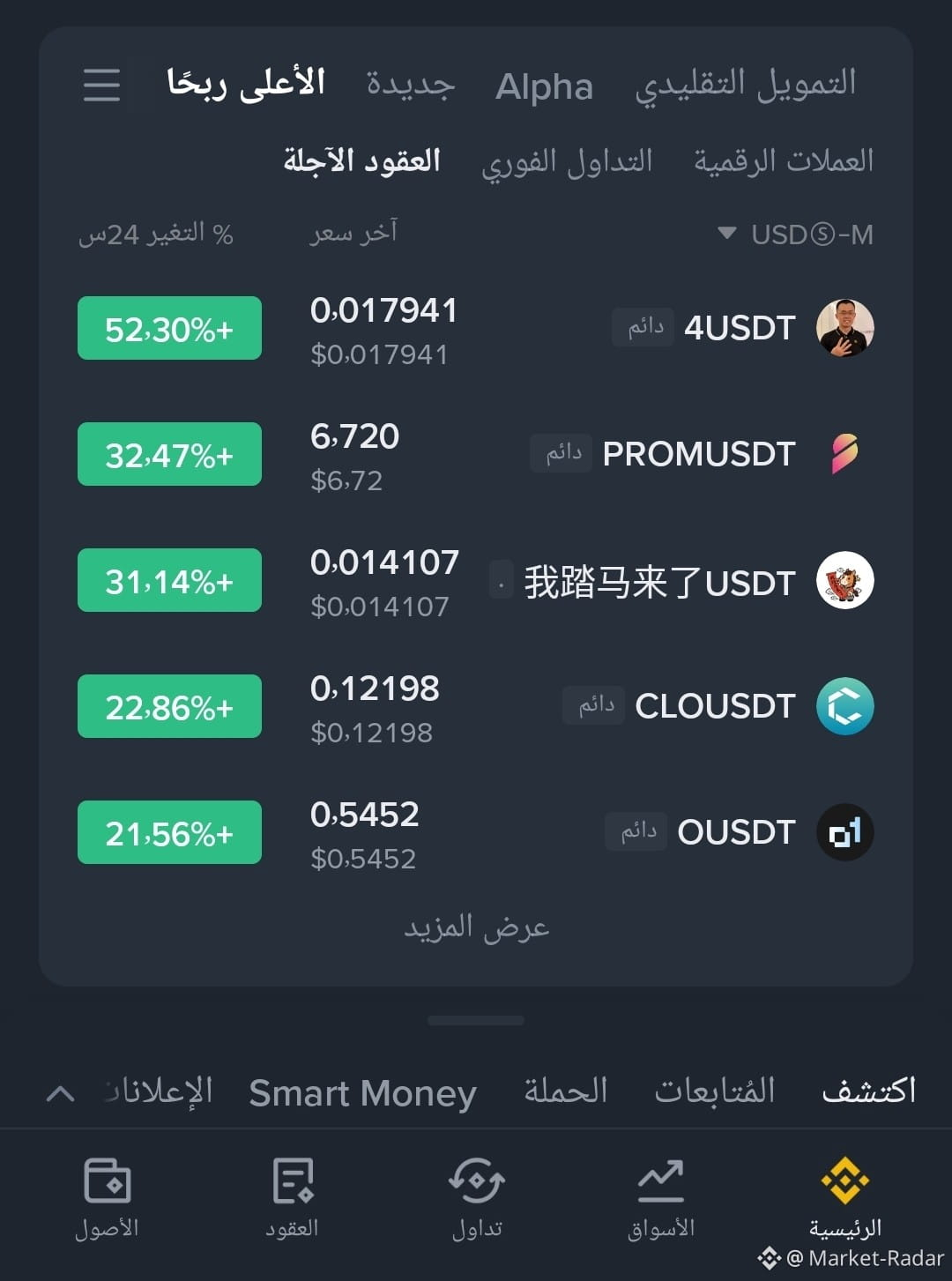
🚀 وحش السيولة يستيقظ.. عملة $4 /USDT تنفجر بنسبة +51% وتكتسح السوق! 🔥
إذا كنت تبحث عن الزخم والفرص الحقيقية، فالأرقام اليوم تتحدث عن نفسها! عملة 4/USDT تبسط سيطرتها الكاملة على القائمة الرابحة بصعود صاروخي تجاوز 51% في يوم واحد، محققة قمة عند $0.02088! $CLO $我踏马来了
📊 لماذا تلفت هذه العملة الأنظار الآن؟
1️⃣ سيولة ضخمة وضغط شرائي: أحجام تداول المباشرة ومؤشر الـ OBV يعكسان دخول سيولة مؤسسية وقوية، مع تفوق واضح لصفقات الشراء (Long) بنسبة تتجاوز 57%.
2️⃣ إعادة اختبار صحية: بعد الارتفاع الخاطف، يتداول السعر حالياً عند $0.01786 لإعادة اختبار الدعم، بينما يرسل مؤشر StochRSI إشارات إعادة شحن للقوة الصعودية من مناطق المتشبع بيعياً.
3️⃣ زخم مستمر: العملة حققت مكاسب تجاوزت 112% خلال آخر 30 يوماً، مما يؤكد أنها ليست مجرد مضاربة عابرة بل اتجاه صاعد متين.
💡 نصائح وتكتيكات للتداول:
إدارة المخاطر أولاً: مع الارتفاعات السريعة يزداد التذبذب، لا تدخل بكل رأس مالك دفعة واحدة واستخدم أسلوب الدخول المقسم (DCA).
مناطق المراقبة: كسر وتثبيت السعر فوق مستوى $0.0192 يفتح الطريق فوراً لاختبار القمة السابقة واختراقها نحو مستويات قياسية جديدة.
وقف الخسارة: تحديد وقف الخسارة أسفل مناطق الدعم القريبة ($0.0150) لحماية رأس المال من أي هبوط مفاجئ. #BTC走势分析 #Binance #Kriptocutrader
🚀 وحش السيولة يستيقظ.. عملة $4 /USDT تنفجر بنسبة +51% وتكتسح السوق! 🔥
إذا كنت تبحث عن الزخم والفرص الحقيقية، فالأرقام اليوم تتحدث عن نفسها! عملة 4/USDT تبسط سيطرتها الكاملة على القائمة الرابحة بصعود صاروخي تجاوز 51% في يوم واحد، محققة قمة عند $0.02088! $CLO $我踏马来了
📊 لماذا تلفت هذه العملة الأنظار الآن؟
1️⃣ سيولة ضخمة وضغط شرائي: أحجام تداول المباشرة ومؤشر الـ OBV يعكسان دخول سيولة مؤسسية وقوية، مع تفوق واضح لصفقات الشراء (Long) بنسبة تتجاوز 57%.
2️⃣ إعادة اختبار صحية: بعد الارتفاع الخاطف، يتداول السعر حالياً عند $0.01786 لإعادة اختبار الدعم، بينما يرسل مؤشر StochRSI إشارات إعادة شحن للقوة الصعودية من مناطق المتشبع بيعياً.
3️⃣ زخم مستمر: العملة حققت مكاسب تجاوزت 112% خلال آخر 30 يوماً، مما يؤكد أنها ليست مجرد مضاربة عابرة بل اتجاه صاعد متين.
💡 نصائح وتكتيكات للتداول:
إدارة المخاطر أولاً: مع الارتفاعات السريعة يزداد التذبذب، لا تدخل بكل رأس مالك دفعة واحدة واستخدم أسلوب الدخول المقسم (DCA).
مناطق المراقبة: كسر وتثبيت السعر فوق مستوى $0.0192 يفتح الطريق فوراً لاختبار القمة السابقة واختراقها نحو مستويات قياسية جديدة.
وقف الخسارة: تحديد وقف الخسارة أسفل مناطق الدعم القريبة ($0.0150) لحماية رأس المال من أي هبوط مفاجئ. #BTC走势分析 #Binance #Kriptocutrader
إذا كنت تبحث عن الزخم والفرص الحقيقية، فالأرقام اليوم تتحدث عن نفسها! عملة 4/USDT تبسط سيطرتها الكاملة على القائمة الرابحة بصعود صاروخي تجاوز 51% في يوم واحد، محققة قمة عند $0.02088! $CLO $我踏马来了
📊 لماذا تلفت هذه العملة الأنظار الآن؟
1️⃣ سيولة ضخمة وضغط شرائي: أحجام تداول المباشرة ومؤشر الـ OBV يعكسان دخول سيولة مؤسسية وقوية، مع تفوق واضح لصفقات الشراء (Long) بنسبة تتجاوز 57%.
2️⃣ إعادة اختبار صحية: بعد الارتفاع الخاطف، يتداول السعر حالياً عند $0.01786 لإعادة اختبار الدعم، بينما يرسل مؤشر StochRSI إشارات إعادة شحن للقوة الصعودية من مناطق المتشبع بيعياً.
3️⃣ زخم مستمر: العملة حققت مكاسب تجاوزت 112% خلال آخر 30 يوماً، مما يؤكد أنها ليست مجرد مضاربة عابرة بل اتجاه صاعد متين.
💡 نصائح وتكتيكات للتداول:
إدارة المخاطر أولاً: مع الارتفاعات السريعة يزداد التذبذب، لا تدخل بكل رأس مالك دفعة واحدة واستخدم أسلوب الدخول المقسم (DCA).
مناطق المراقبة: كسر وتثبيت السعر فوق مستوى $0.0192 يفتح الطريق فوراً لاختبار القمة السابقة واختراقها نحو مستويات قياسية جديدة.
وقف الخسارة: تحديد وقف الخسارة أسفل مناطق الدعم القريبة ($0.0150) لحماية رأس المال من أي هبوط مفاجئ. #BTC走势分析 #Binance #Kriptocutrader
5
1
801
Article
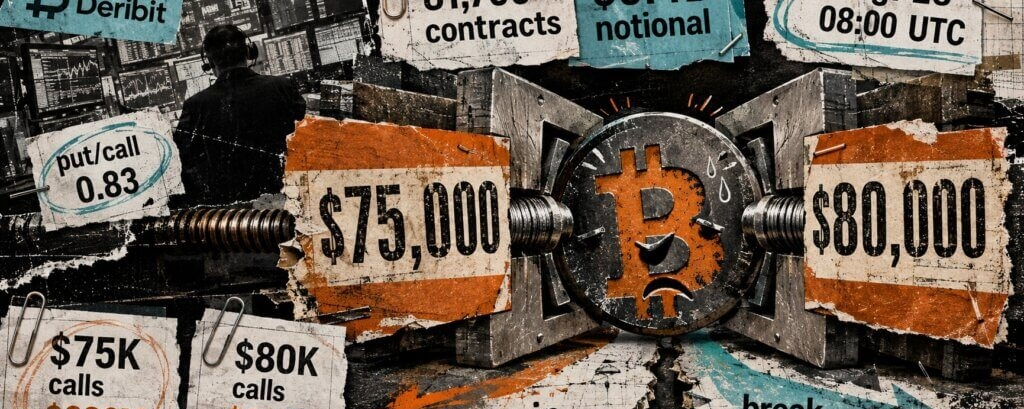
Bitcoin is trapped between $75,000 and $80,000 ahead of a massive Friday derivatives settlementDeribit’s expiry concentrates reported call exposure at $75,000 and $80,000, where dealer hedging can pin or amplify a move.
itcoin is trading between $80,000 and $78,000, and faces two option strikes that could shape dealer hedging into Friday.
Reported call exposure at $75,000 and $80,000 creates a test of whether those positions dampen Bitcoin’s next move or add force to a break.
Roughly 81,700 Bitcoin options representing about $6.4 billion in notional are scheduled to settle on Deribit at 08:00 UTC on Aug. 28.
The $75,000 call strike carried about $236 million in reported notional, while the $80,000 call strike held about $157 million. Those are call-side open-interest concentrations, worth a combined $393 million or 6.1% of the reported $6.44 billion expiry.
Options dealers adjust hedges as Bitcoin moves and an option’s sensitivity to the underlying price changes. Near expiry, those adjustments can become more responsive around heavily populated strikes.
Dealer-side positioning needed to calculate net gamma remains less visible, leaving pinning and acceleration as conditional scenarios. The 0.83 put-to-call ratio similarly shows that calls outnumber puts in this expiry.
A decisive move through one could demand faster hedge changes. Friday’s settlement ends the shared deadline and removes or rolls the expiring positions, making the price response around those two levels the cleaner signal.
#Write2Earn
#TrendingTopic
#Dogecoin
#Kriptocutrader
#shiba⚡
Bitcoin is trapped between $75,000 and $80,000 ahead of a massive Friday derivatives settlement
Deribit’s expiry concentrates reported call exposure at $75,000 and $80,000, where dealer hedging can pin or amplify a move.
itcoin is trading between $80,000 and $78,000, and faces two option strikes that could shape dealer hedging into Friday.
Reported call exposure at $75,000 and $80,000 creates a test of whether those positions dampen Bitcoin’s next move or add force to a break.
Roughly 81,700 Bitcoin options representing about $6.4 billion in notional are scheduled to settle on Deribit at 08:00 UTC on Aug. 28.
The $75,000 call strike carried about $236 million in reported notional, while the $80,000 call strike held about $157 million. Those are call-side open-interest concentrations, worth a combined $393 million or 6.1% of the reported $6.44 billion expiry.
Options dealers adjust hedges as Bitcoin moves and an option’s sensitivity to the underlying price changes. Near expiry, those adjustments can become more responsive around heavily populated strikes.
Dealer-side positioning needed to calculate net gamma remains less visible, leaving pinning and acceleration as conditional scenarios. The 0.83 put-to-call ratio similarly shows that calls outnumber puts in this expiry.
A decisive move through one could demand faster hedge changes. Friday’s settlement ends the shared deadline and removes or rolls the expiring positions, making the price response around those two levels the cleaner signal.
#Write2Earn
#TrendingTopic
#Dogecoin
#Kriptocutrader
#shiba⚡
itcoin is trading between $80,000 and $78,000, and faces two option strikes that could shape dealer hedging into Friday.
Reported call exposure at $75,000 and $80,000 creates a test of whether those positions dampen Bitcoin’s next move or add force to a break.
Roughly 81,700 Bitcoin options representing about $6.4 billion in notional are scheduled to settle on Deribit at 08:00 UTC on Aug. 28.
The $75,000 call strike carried about $236 million in reported notional, while the $80,000 call strike held about $157 million. Those are call-side open-interest concentrations, worth a combined $393 million or 6.1% of the reported $6.44 billion expiry.
Options dealers adjust hedges as Bitcoin moves and an option’s sensitivity to the underlying price changes. Near expiry, those adjustments can become more responsive around heavily populated strikes.
Dealer-side positioning needed to calculate net gamma remains less visible, leaving pinning and acceleration as conditional scenarios. The 0.83 put-to-call ratio similarly shows that calls outnumber puts in this expiry.
A decisive move through one could demand faster hedge changes. Friday’s settlement ends the shared deadline and removes or rolls the expiring positions, making the price response around those two levels the cleaner signal.
#Write2Earn
#TrendingTopic
#Dogecoin
#Kriptocutrader
#shiba⚡
1
16
Article
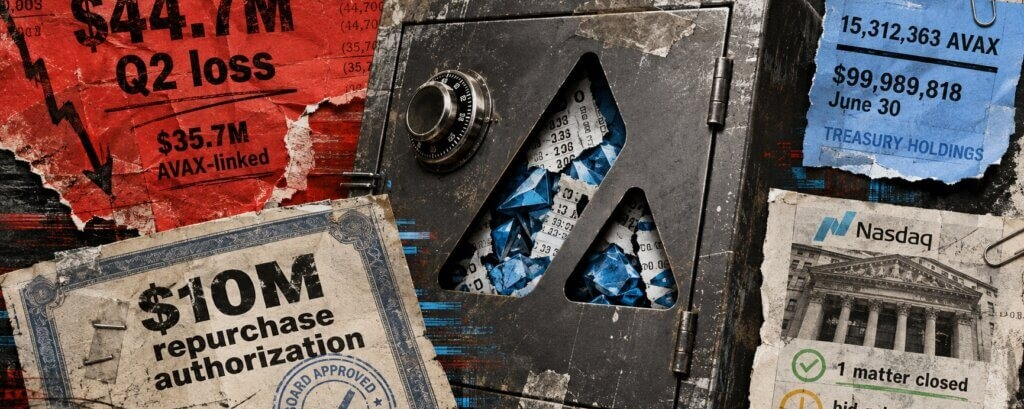
How a $35M AVAX hit sent one company’s earnings into a tailspinThe Avalanche treasury authorization targets a stated market disconnect while the June 30 token treasury shows why earnings remain exposed.valanche Treasury Corp approved a $10 million Class A share-repurchase program after reporting a $44.7 million second-quarter loss, with about $35.7 million attributed to losses linked to AVAX.The company's Aug. 26 results release discloses the board's approval and contains no disclosure of completed purchases, and its immediate effect is a statement of management intent.
The company said the $35.7 million reflected fair-value changes, realized digital-asset losses, and impairments. That mix includes accounting adjustments and realized losses, making it distinct from a measure of cash expenditure during the period.
At June 30, AVAT held 15,312,363 AVAX with a reported fair value of $99,989,818, according to its quarterly filing. Subsequent price moves and treasury activity can change both the value and the balance, while the filing establishes the scale of the exposure behind AVAT's earnings volatility.
Staking generated $1.5 million of revenue, net of fees, in the quarter and $3.6 million in the first half of 2026. AVAT also recorded about $15.2 million of one-time costs tied to completing its business combination.
Nasdaq also closed one of the two compliance matters reported earlier this month. The exchange closed the $35 million market-value-of-listed-securities matter after AVAT reported $83.8 million of stockholders' equity.
The Aug. 7 notice gave AVAT an initial compliance period through Feb. 2, 2027. The newer filing addresses only the market-value matter and provides no closure update for the bid-price issue.
The week brought AVAT partial Nasdaq relief and a new capital-allocation signal. Quarterly results still show that management wants the stock to better reflect its strategy, while AVAT's earnings and balance sheet remain heavily exposed to AVAX.
#Write2Earn
#Kriptocutrader
#ONDO
#LUNC✅
#shiba⚡
How a $35M AVAX hit sent one company’s earnings into a tailspin
The Avalanche treasury authorization targets a stated market disconnect while the June 30 token treasury shows why earnings remain exposed.valanche Treasury Corp approved a $10 million Class A share-repurchase program after reporting a $44.7 million second-quarter loss, with about $35.7 million attributed to losses linked to AVAX.The company's Aug. 26 results release discloses the board's approval and contains no disclosure of completed purchases, and its immediate effect is a statement of management intent.
The company said the $35.7 million reflected fair-value changes, realized digital-asset losses, and impairments. That mix includes accounting adjustments and realized losses, making it distinct from a measure of cash expenditure during the period.
At June 30, AVAT held 15,312,363 AVAX with a reported fair value of $99,989,818, according to its quarterly filing. Subsequent price moves and treasury activity can change both the value and the balance, while the filing establishes the scale of the exposure behind AVAT's earnings volatility.
Staking generated $1.5 million of revenue, net of fees, in the quarter and $3.6 million in the first half of 2026. AVAT also recorded about $15.2 million of one-time costs tied to completing its business combination.
Nasdaq also closed one of the two compliance matters reported earlier this month. The exchange closed the $35 million market-value-of-listed-securities matter after AVAT reported $83.8 million of stockholders' equity.
The Aug. 7 notice gave AVAT an initial compliance period through Feb. 2, 2027. The newer filing addresses only the market-value matter and provides no closure update for the bid-price issue.
The week brought AVAT partial Nasdaq relief and a new capital-allocation signal. Quarterly results still show that management wants the stock to better reflect its strategy, while AVAT's earnings and balance sheet remain heavily exposed to AVAX.
#Write2Earn
#Kriptocutrader
#ONDO
#LUNC✅
#shiba⚡
The company said the $35.7 million reflected fair-value changes, realized digital-asset losses, and impairments. That mix includes accounting adjustments and realized losses, making it distinct from a measure of cash expenditure during the period.
At June 30, AVAT held 15,312,363 AVAX with a reported fair value of $99,989,818, according to its quarterly filing. Subsequent price moves and treasury activity can change both the value and the balance, while the filing establishes the scale of the exposure behind AVAT's earnings volatility.
Staking generated $1.5 million of revenue, net of fees, in the quarter and $3.6 million in the first half of 2026. AVAT also recorded about $15.2 million of one-time costs tied to completing its business combination.
Nasdaq also closed one of the two compliance matters reported earlier this month. The exchange closed the $35 million market-value-of-listed-securities matter after AVAT reported $83.8 million of stockholders' equity.
The Aug. 7 notice gave AVAT an initial compliance period through Feb. 2, 2027. The newer filing addresses only the market-value matter and provides no closure update for the bid-price issue.
The week brought AVAT partial Nasdaq relief and a new capital-allocation signal. Quarterly results still show that management wants the stock to better reflect its strategy, while AVAT's earnings and balance sheet remain heavily exposed to AVAX.
#Write2Earn
#Kriptocutrader
#ONDO
#LUNC✅
#shiba⚡
17
Article
Strategy’s MSTR quietly outperforms Bitcoin’s $80,000 rally as STRC closes in on $100Strategy’s common stock surged 37% while its flagship preferred security recovered 35%, even as management sold $2 billion of new MSTR shares.
itcoin's sharp two-week recovery, which briefly pushed its value above $80,000, has brought Michael Saylor's Strategy BTC treasury back into profit and lifted its common stock faster than the cryptocurrency.
BTC's price rebound accelerated after the US Treasury moved to expand buybacks of longer-dated government debt, easing pressure on yields and weakening the dollar.
Renewed optimism around US crypto policy, heavy short liquidations, and stronger demand for spot Bitcoin exchange-traded funds added further momentum to the upward move.
As a result, Bitcoin briefly topped $81,000 on Tuesday, its highest level in more than three months, after spending much of the first half of August near the low-$60,000 range. It has slightly retraced to $78,772 as of press time.
Still, the price recovery has reached a critical point for Strategy, which spent the summer rebuilding liquidity and supporting its preferred securities after falling Bitcoin prices raised questions about its financing model.
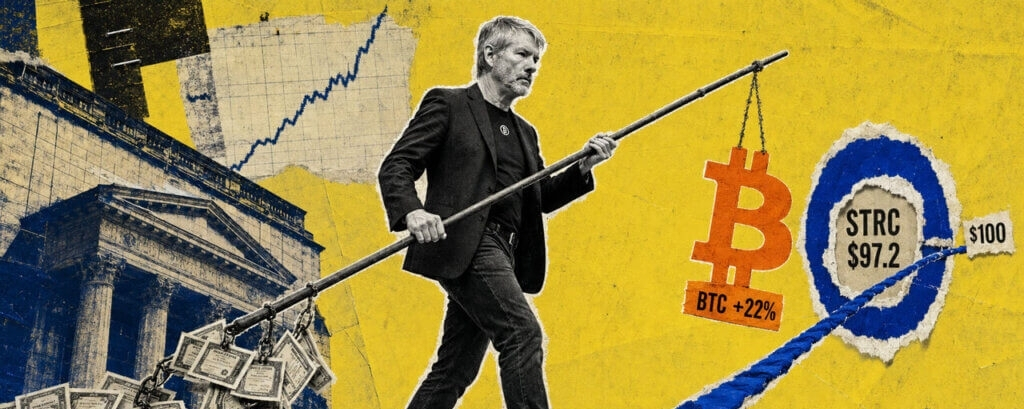
MSTR closed at $92.52 on Aug. 18 before climbing to $126.79 on Tuesday, a gain of about 37%. Bitcoin gained roughly 22% over the same period, rising from about $64,700 to around the $79,000 to $80,000 range.
Strategy holds 840,447 Bitcoin acquired for $63.36 billion at an average price of $75,385. At Bitcoin prices around $80,000, the position is worth roughly $67 billion, leaving the company with more than $3 billion in unrealized appreciation over its aggregate purchase cost.
However, these gains have come without fresh Bitcoin accumulation. Strategy has not purchased Bitcoin since June and has sold a total of 6,948 Bitcoin for roughly $432.5 million since beginning its new monetization program in May 2026
Between Aug. 17 and Aug. 23 alone, the company sold 18.26 million MSTR shares through its at-the-market program and raised $2.01 billion in net proceeds. Since adopting its Bitcoin strategy, Strategy has sold about 139.45 million common shares and raised approximately $42.12 billion.
The company said in July that it would buy STRC more aggressively when the shares traded at deeper discounts and taper those purchases as the price approached $100. Its longer-term goal is for STRC to trade consistently near par with greater liquidity and lower volatility.
The combination of Bitcoin’s rebound, stronger MSTR shares, direct STRC repurchases and a $6.69 billion liquidity buffer has therefore eased several of the pressures that weighed on Strategy earlier in the summer.
Rather than immediately using the improved market backdrop to resume Bitcoin purchases, the company has concentrated on reinforcing the financing structure that could support future accumulation.
That leaves the next stage tied partly to whether the recovery holds. A sustained Bitcoin rally that keeps MSTR strong and carries STRC back toward par could restore one of Strategy’s most important funding channels for future Bitcoin purchases.
However, a renewed downturn would instead test whether the cash reserves and preferred-share support built during the summer are sufficient to keep that structure intact.
#Write2Earn
#Kriptocutrader
#Launchpool
#Fatihcoşar
#BTC走势分析
Strategy’s MSTR quietly outperforms Bitcoin’s $80,000 rally as STRC closes in on $100
Strategy’s common stock surged 37% while its flagship preferred security recovered 35%, even as management sold $2 billion of new MSTR shares.
itcoin's sharp two-week recovery, which briefly pushed its value above $80,000, has brought Michael Saylor's Strategy BTC treasury back into profit and lifted its common stock faster than the cryptocurrency.
BTC's price rebound accelerated after the US Treasury moved to expand buybacks of longer-dated government debt, easing pressure on yields and weakening the dollar.
Renewed optimism around US crypto policy, heavy short liquidations, and stronger demand for spot Bitcoin exchange-traded funds added further momentum to the upward move.
As a result, Bitcoin briefly topped $81,000 on Tuesday, its highest level in more than three months, after spending much of the first half of August near the low-$60,000 range. It has slightly retraced to $78,772 as of press time.
Still, the price recovery has reached a critical point for Strategy, which spent the summer rebuilding liquidity and supporting its preferred securities after falling Bitcoin prices raised questions about its financing model.
MSTR closed at $92.52 on Aug. 18 before climbing to $126.79 on Tuesday, a gain of about 37%. Bitcoin gained roughly 22% over the same period, rising from about $64,700 to around the $79,000 to $80,000 range.
Strategy holds 840,447 Bitcoin acquired for $63.36 billion at an average price of $75,385. At Bitcoin prices around $80,000, the position is worth roughly $67 billion, leaving the company with more than $3 billion in unrealized appreciation over its aggregate purchase cost.
However, these gains have come without fresh Bitcoin accumulation. Strategy has not purchased Bitcoin since June and has sold a total of 6,948 Bitcoin for roughly $432.5 million since beginning its new monetization program in May 2026
Between Aug. 17 and Aug. 23 alone, the company sold 18.26 million MSTR shares through its at-the-market program and raised $2.01 billion in net proceeds. Since adopting its Bitcoin strategy, Strategy has sold about 139.45 million common shares and raised approximately $42.12 billion.
The company said in July that it would buy STRC more aggressively when the shares traded at deeper discounts and taper those purchases as the price approached $100. Its longer-term goal is for STRC to trade consistently near par with greater liquidity and lower volatility.
The combination of Bitcoin’s rebound, stronger MSTR shares, direct STRC repurchases and a $6.69 billion liquidity buffer has therefore eased several of the pressures that weighed on Strategy earlier in the summer.
Rather than immediately using the improved market backdrop to resume Bitcoin purchases, the company has concentrated on reinforcing the financing structure that could support future accumulation.
That leaves the next stage tied partly to whether the recovery holds. A sustained Bitcoin rally that keeps MSTR strong and carries STRC back toward par could restore one of Strategy’s most important funding channels for future Bitcoin purchases.
However, a renewed downturn would instead test whether the cash reserves and preferred-share support built during the summer are sufficient to keep that structure intact.
#Write2Earn
#Kriptocutrader
#Launchpool
#Fatihcoşar
#BTC走势分析
itcoin's sharp two-week recovery, which briefly pushed its value above $80,000, has brought Michael Saylor's Strategy BTC treasury back into profit and lifted its common stock faster than the cryptocurrency.
BTC's price rebound accelerated after the US Treasury moved to expand buybacks of longer-dated government debt, easing pressure on yields and weakening the dollar.
Renewed optimism around US crypto policy, heavy short liquidations, and stronger demand for spot Bitcoin exchange-traded funds added further momentum to the upward move.
As a result, Bitcoin briefly topped $81,000 on Tuesday, its highest level in more than three months, after spending much of the first half of August near the low-$60,000 range. It has slightly retraced to $78,772 as of press time.
Still, the price recovery has reached a critical point for Strategy, which spent the summer rebuilding liquidity and supporting its preferred securities after falling Bitcoin prices raised questions about its financing model.
MSTR closed at $92.52 on Aug. 18 before climbing to $126.79 on Tuesday, a gain of about 37%. Bitcoin gained roughly 22% over the same period, rising from about $64,700 to around the $79,000 to $80,000 range.
Strategy holds 840,447 Bitcoin acquired for $63.36 billion at an average price of $75,385. At Bitcoin prices around $80,000, the position is worth roughly $67 billion, leaving the company with more than $3 billion in unrealized appreciation over its aggregate purchase cost.
However, these gains have come without fresh Bitcoin accumulation. Strategy has not purchased Bitcoin since June and has sold a total of 6,948 Bitcoin for roughly $432.5 million since beginning its new monetization program in May 2026
Between Aug. 17 and Aug. 23 alone, the company sold 18.26 million MSTR shares through its at-the-market program and raised $2.01 billion in net proceeds. Since adopting its Bitcoin strategy, Strategy has sold about 139.45 million common shares and raised approximately $42.12 billion.
The company said in July that it would buy STRC more aggressively when the shares traded at deeper discounts and taper those purchases as the price approached $100. Its longer-term goal is for STRC to trade consistently near par with greater liquidity and lower volatility.
The combination of Bitcoin’s rebound, stronger MSTR shares, direct STRC repurchases and a $6.69 billion liquidity buffer has therefore eased several of the pressures that weighed on Strategy earlier in the summer.
Rather than immediately using the improved market backdrop to resume Bitcoin purchases, the company has concentrated on reinforcing the financing structure that could support future accumulation.
That leaves the next stage tied partly to whether the recovery holds. A sustained Bitcoin rally that keeps MSTR strong and carries STRC back toward par could restore one of Strategy’s most important funding channels for future Bitcoin purchases.
However, a renewed downturn would instead test whether the cash reserves and preferred-share support built during the summer are sufficient to keep that structure intact.
#Write2Earn
#Kriptocutrader
#Launchpool
#Fatihcoşar
#BTC走势分析
16

Article
Bitcoin’s security risk starts when one block gets far more fees than the nextAs Bitcoin’s block subsidy declines, researchers are looking beyond total miner revenue and toward a more granular security signal: how sharply transaction fees change from one block to the next.
itcoin’s security-budget debate usually starts with one total: how much miners collect in transaction fees as the block subsidy shrinks.
A July 2026 NBER working paper by Fabian Schär, Dario Thürkauf, and David Yermack points to a second variable. Using data from 2017 through 2025, the authors report that larger fee differences between adjacent Bitcoin blocks are associated with more competing blocks at the same height and a longer wait for the next block.
The evidence is observational and identifies a network-level relationship, while miner intent and the cause of any individual block race remain unresolved. The finding still gives wallets, miners, and users a measurable signal: Bitcoin security incentives respond to how fees arrive from block to block, as well as how much the network pays over time.
Bitcoin currently pays miners a fixed subsidy of 3.125 BTC for each block, plus the transaction fees included in that block. Successive subsidy reductions place more long-run weight on fees as a source of mining revenue.
Block-level data can show much sharper variation than those aggregate readings. An Aug. 26 Blockchain.com block snapshot showed 0.0077 BTC in fees in block 964,120 and 0.0536 BTC in block 964,121, an almost seven-fold change between adjacent blocks. The comparison illustrates how sharply fee rewards can vary from one block to the next, while the fee values alone leave miner behavior unresolved.
The attempt begins behind the accepted tip, and its economic appeal rises when fees in the prior block greatly exceed the expected fees in a new tip-extending block. Hash-rate share, propagation, and other miners’ reactions affect the odds, so the incentive is probabilistic. Variable fees can change the payoff calculation even during periods when the network’s aggregate fee revenue is low.
They also report a lower probability that the next block appears in the first seconds after a large fee gap, a timing pattern consistent with some hash rate contesting the prior height. Since the analysis is observational, the result establishes an association at the network level and leaves individual miner motives unresolved.
Implementation coverage therefore belongs inside the security-budget discussion because a mitigation can be technically available while its network effect depends on the share of pending transactions that use it. Broader and more consistent lock-field behavior would reduce the fees available to a miner trying to rebuild the previous height.
Miners also face a coordination problem because the return from contesting a block depends partly on whether other miners extend the accepted tip. A broad migration toward protective transaction construction changes the available reward directly and can occur under existing consensus rules, avoiding a miner-coordination requirement.
Bitcoin’s fee market can produce occasional outlier blocks even while fees remain a small share of miner revenue. Those outliers deserve closer attention because mining incentives emerge in each block interval, while monthly revenue charts blur the short-lived extremes.
#Write2Earn
#TrendingTopic
#YapayzekaAI
#Robertkiyosaki
#Kriptocutrader
Bitcoin’s security risk starts when one block gets far more fees than the next
As Bitcoin’s block subsidy declines, researchers are looking beyond total miner revenue and toward a more granular security signal: how sharply transaction fees change from one block to the next.
itcoin’s security-budget debate usually starts with one total: how much miners collect in transaction fees as the block subsidy shrinks.
A July 2026 NBER working paper by Fabian Schär, Dario Thürkauf, and David Yermack points to a second variable. Using data from 2017 through 2025, the authors report that larger fee differences between adjacent Bitcoin blocks are associated with more competing blocks at the same height and a longer wait for the next block.
The evidence is observational and identifies a network-level relationship, while miner intent and the cause of any individual block race remain unresolved. The finding still gives wallets, miners, and users a measurable signal: Bitcoin security incentives respond to how fees arrive from block to block, as well as how much the network pays over time.
Bitcoin currently pays miners a fixed subsidy of 3.125 BTC for each block, plus the transaction fees included in that block. Successive subsidy reductions place more long-run weight on fees as a source of mining revenue.
Block-level data can show much sharper variation than those aggregate readings. An Aug. 26 Blockchain.com block snapshot showed 0.0077 BTC in fees in block 964,120 and 0.0536 BTC in block 964,121, an almost seven-fold change between adjacent blocks. The comparison illustrates how sharply fee rewards can vary from one block to the next, while the fee values alone leave miner behavior unresolved.
The attempt begins behind the accepted tip, and its economic appeal rises when fees in the prior block greatly exceed the expected fees in a new tip-extending block. Hash-rate share, propagation, and other miners’ reactions affect the odds, so the incentive is probabilistic. Variable fees can change the payoff calculation even during periods when the network’s aggregate fee revenue is low.
They also report a lower probability that the next block appears in the first seconds after a large fee gap, a timing pattern consistent with some hash rate contesting the prior height. Since the analysis is observational, the result establishes an association at the network level and leaves individual miner motives unresolved.
Implementation coverage therefore belongs inside the security-budget discussion because a mitigation can be technically available while its network effect depends on the share of pending transactions that use it. Broader and more consistent lock-field behavior would reduce the fees available to a miner trying to rebuild the previous height.
Miners also face a coordination problem because the return from contesting a block depends partly on whether other miners extend the accepted tip. A broad migration toward protective transaction construction changes the available reward directly and can occur under existing consensus rules, avoiding a miner-coordination requirement.
Bitcoin’s fee market can produce occasional outlier blocks even while fees remain a small share of miner revenue. Those outliers deserve closer attention because mining incentives emerge in each block interval, while monthly revenue charts blur the short-lived extremes.
#Write2Earn
#TrendingTopic
#YapayzekaAI
#Robertkiyosaki
#Kriptocutrader
itcoin’s security-budget debate usually starts with one total: how much miners collect in transaction fees as the block subsidy shrinks.
A July 2026 NBER working paper by Fabian Schär, Dario Thürkauf, and David Yermack points to a second variable. Using data from 2017 through 2025, the authors report that larger fee differences between adjacent Bitcoin blocks are associated with more competing blocks at the same height and a longer wait for the next block.
The evidence is observational and identifies a network-level relationship, while miner intent and the cause of any individual block race remain unresolved. The finding still gives wallets, miners, and users a measurable signal: Bitcoin security incentives respond to how fees arrive from block to block, as well as how much the network pays over time.
Bitcoin currently pays miners a fixed subsidy of 3.125 BTC for each block, plus the transaction fees included in that block. Successive subsidy reductions place more long-run weight on fees as a source of mining revenue.
Block-level data can show much sharper variation than those aggregate readings. An Aug. 26 Blockchain.com block snapshot showed 0.0077 BTC in fees in block 964,120 and 0.0536 BTC in block 964,121, an almost seven-fold change between adjacent blocks. The comparison illustrates how sharply fee rewards can vary from one block to the next, while the fee values alone leave miner behavior unresolved.
The attempt begins behind the accepted tip, and its economic appeal rises when fees in the prior block greatly exceed the expected fees in a new tip-extending block. Hash-rate share, propagation, and other miners’ reactions affect the odds, so the incentive is probabilistic. Variable fees can change the payoff calculation even during periods when the network’s aggregate fee revenue is low.
They also report a lower probability that the next block appears in the first seconds after a large fee gap, a timing pattern consistent with some hash rate contesting the prior height. Since the analysis is observational, the result establishes an association at the network level and leaves individual miner motives unresolved.
Implementation coverage therefore belongs inside the security-budget discussion because a mitigation can be technically available while its network effect depends on the share of pending transactions that use it. Broader and more consistent lock-field behavior would reduce the fees available to a miner trying to rebuild the previous height.
Miners also face a coordination problem because the return from contesting a block depends partly on whether other miners extend the accepted tip. A broad migration toward protective transaction construction changes the available reward directly and can occur under existing consensus rules, avoiding a miner-coordination requirement.
Bitcoin’s fee market can produce occasional outlier blocks even while fees remain a small share of miner revenue. Those outliers deserve closer attention because mining incentives emerge in each block interval, while monthly revenue charts blur the short-lived extremes.
#Write2Earn
#TrendingTopic
#YapayzekaAI
#Robertkiyosaki
#Kriptocutrader
12
Article
XRP rebounds 32% from $1 as ETF money pours in and whales repositionXRP has rebounded from below $1 as ETF demand strengthens, while large holders move more than 1.4 billion tokens onto Binance.
XRP is on course for its strongest monthly gain in more than a year after recovering from below $1, even as a fresh pullback and heavy whale activity test the durability of the rally.
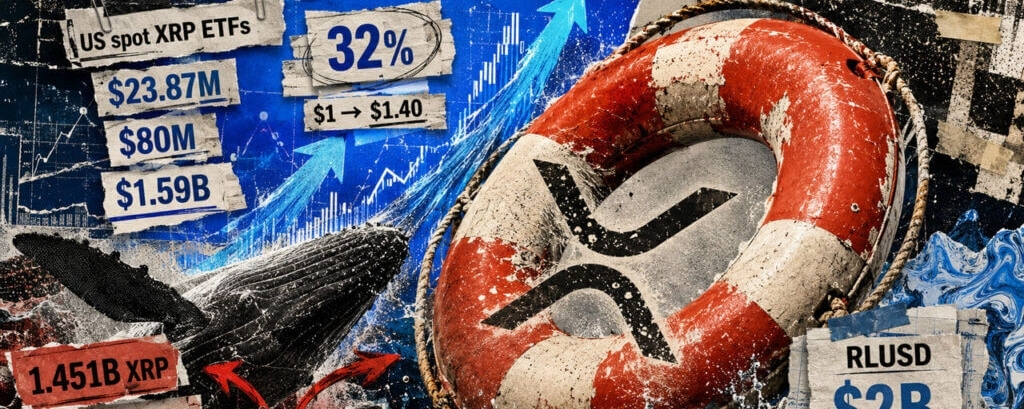
This price performance contrasts with the fact that XRP is on track for a roughly 32% gain in August, per CryptoRank's data. This would mark its best monthly performance since July 2025, when it advanced about 35%.
The recovery has been accompanied by stronger demand for US spot exchange-traded funds and rising stablecoin activity on the XRP Ledger.
Large holders, however, have also moved billions of XRP through Binance in recent weeks, creating competing signals over whether whales are accumulating or preparing to sell into the rebound.
The haul was the products' largest daily inflow since May 11, when they attracted $25.8 million, and extended their run of positive flows to nine consecutive trading sessions.
XRP funds had already accumulated more than $1.47 billion of net inflows by late June even as the token slid toward $1, showing that ETF purchases alone have not historically been sufficient to establish a price floor.
Dollar-denominated activity on the XRP Ledger (XRPL) has also accelerated during the recovery, with Ripple's RLUSD stablecoin crossing $2 billion in circulating supply last week.
Evernorth, the largest public company holding XRP, said its analysis of ledger data last week showed RLUSD outstanding on XRPL had increased 39% since May 20 to about $934 million. Over roughly the same period, total stablecoin supply across platforms had contracted about 6% from its May peak, representing a decline of approximately $20 billion.
Large exchange withdrawals can reduce immediately available sell-side supply and are often associated with accumulation or movement into longer-term custody. Without net-flow and wallet-level evidence, however, the simultaneous surge in deposits makes the direction of overall whale positioning less clear.
The scale of the activity shows how rapidly large-holder behavior has changed as XRP recovered from below $1.
ETF investors have continued adding exposure, RLUSD supply on XRPL is approaching $1 billion, and whales are withdrawing unusually large amounts from Binance.
At the same time, the 460 million XRP daily inflow spike and 1.451 billion XRP accumulated deposits show that substantial supply has also been moving toward the exchange.
That two-way positioning leaves XRP approaching the final days of its strongest month since July 2025, with fresh demand still entering the market, but with large holders increasingly active on both sides of the trade.
#Write2Earn
#Jasmyusdt⚠️⚠️
#Kriptocutrader
#MegadropLista
#Xrp🔥🔥
XRP rebounds 32% from $1 as ETF money pours in and whales reposition
XRP has rebounded from below $1 as ETF demand strengthens, while large holders move more than 1.4 billion tokens onto Binance.
XRP is on course for its strongest monthly gain in more than a year after recovering from below $1, even as a fresh pullback and heavy whale activity test the durability of the rally.
This price performance contrasts with the fact that XRP is on track for a roughly 32% gain in August, per CryptoRank's data. This would mark its best monthly performance since July 2025, when it advanced about 35%.
The recovery has been accompanied by stronger demand for US spot exchange-traded funds and rising stablecoin activity on the XRP Ledger.
Large holders, however, have also moved billions of XRP through Binance in recent weeks, creating competing signals over whether whales are accumulating or preparing to sell into the rebound.
The haul was the products' largest daily inflow since May 11, when they attracted $25.8 million, and extended their run of positive flows to nine consecutive trading sessions.
XRP funds had already accumulated more than $1.47 billion of net inflows by late June even as the token slid toward $1, showing that ETF purchases alone have not historically been sufficient to establish a price floor.
Dollar-denominated activity on the XRP Ledger (XRPL) has also accelerated during the recovery, with Ripple's RLUSD stablecoin crossing $2 billion in circulating supply last week.
Evernorth, the largest public company holding XRP, said its analysis of ledger data last week showed RLUSD outstanding on XRPL had increased 39% since May 20 to about $934 million. Over roughly the same period, total stablecoin supply across platforms had contracted about 6% from its May peak, representing a decline of approximately $20 billion.
Large exchange withdrawals can reduce immediately available sell-side supply and are often associated with accumulation or movement into longer-term custody. Without net-flow and wallet-level evidence, however, the simultaneous surge in deposits makes the direction of overall whale positioning less clear.
The scale of the activity shows how rapidly large-holder behavior has changed as XRP recovered from below $1.
ETF investors have continued adding exposure, RLUSD supply on XRPL is approaching $1 billion, and whales are withdrawing unusually large amounts from Binance.
At the same time, the 460 million XRP daily inflow spike and 1.451 billion XRP accumulated deposits show that substantial supply has also been moving toward the exchange.
That two-way positioning leaves XRP approaching the final days of its strongest month since July 2025, with fresh demand still entering the market, but with large holders increasingly active on both sides of the trade.
#Write2Earn
#Jasmyusdt⚠️⚠️
#Kriptocutrader
#MegadropLista
#Xrp🔥🔥
XRP is on course for its strongest monthly gain in more than a year after recovering from below $1, even as a fresh pullback and heavy whale activity test the durability of the rally.
This price performance contrasts with the fact that XRP is on track for a roughly 32% gain in August, per CryptoRank's data. This would mark its best monthly performance since July 2025, when it advanced about 35%.
The recovery has been accompanied by stronger demand for US spot exchange-traded funds and rising stablecoin activity on the XRP Ledger.
Large holders, however, have also moved billions of XRP through Binance in recent weeks, creating competing signals over whether whales are accumulating or preparing to sell into the rebound.
The haul was the products' largest daily inflow since May 11, when they attracted $25.8 million, and extended their run of positive flows to nine consecutive trading sessions.
XRP funds had already accumulated more than $1.47 billion of net inflows by late June even as the token slid toward $1, showing that ETF purchases alone have not historically been sufficient to establish a price floor.
Dollar-denominated activity on the XRP Ledger (XRPL) has also accelerated during the recovery, with Ripple's RLUSD stablecoin crossing $2 billion in circulating supply last week.
Evernorth, the largest public company holding XRP, said its analysis of ledger data last week showed RLUSD outstanding on XRPL had increased 39% since May 20 to about $934 million. Over roughly the same period, total stablecoin supply across platforms had contracted about 6% from its May peak, representing a decline of approximately $20 billion.
Large exchange withdrawals can reduce immediately available sell-side supply and are often associated with accumulation or movement into longer-term custody. Without net-flow and wallet-level evidence, however, the simultaneous surge in deposits makes the direction of overall whale positioning less clear.
The scale of the activity shows how rapidly large-holder behavior has changed as XRP recovered from below $1.
ETF investors have continued adding exposure, RLUSD supply on XRPL is approaching $1 billion, and whales are withdrawing unusually large amounts from Binance.
At the same time, the 460 million XRP daily inflow spike and 1.451 billion XRP accumulated deposits show that substantial supply has also been moving toward the exchange.
That two-way positioning leaves XRP approaching the final days of its strongest month since July 2025, with fresh demand still entering the market, but with large holders increasingly active on both sides of the trade.
#Write2Earn
#Jasmyusdt⚠️⚠️
#Kriptocutrader
#MegadropLista
#Xrp🔥🔥
6

Article
US bank lobby wants stablecoin holders to open an account before cashing outUS bank lobby wants stabThe ABA wants direct stablecoin redemptions to trigger account opening and identity checks before issuers return dollars.
he American Bankers Association is pressing US regulators to require anyone who buys or redeems a payment stablecoin directly with its issuer to open an account and complete customer identification.
The Blockchain Association accepts identity checks for direct primary-market account customers but says an optional one-off redemption or a redemption routed through another regulated intermediary should not automatically make the underlying holder an issuer customer.
The Federal Reserve's public index lists the ABA comment as posted that day and the Blockchain Association comment as posted Aug. 24, alongside other R-1885 responses.
The agencies' eventual choice will determine whether asking an issuer for dollars always opens an account or whether some holders can redeem without establishing that relationship.
Directly issuing or redeeming payment stablecoins are among the activities the proposal says can establish an account. Token ownership alone is not enough, and a third-party transaction that interacts only with an issuer's smart contract would not automatically make every user an issuer customer.
A self-custody holder can acquire stablecoins through an exchange, a payment, or a peer-to-peer transfer without dealing with the issuer. The next step can take two forms: the holder can seek dollars directly from the issuer, or an exchange or other intermediary can aggregate tokens and redeem on its customers' behalf.
The agencies expressly ask whether a direct redemption by a holder with no prior issuer relationship creates an account. They do not answer that question in the proposal, leaving commenters to argue over who should complete the issuer's CIP and when.
Those controls may apply to transactions or wallet activity without defining every token holder as an issuer account customer. In the other direction, completing CIP at redemption establishes the account customer's identity.
The June proposal does seek comment on whether CIP obligations should extend further into secondary-market activity, so future expansion has not been ruled out.
For now, regulators are focused on the redemption boundary. The ABA would place the identity burden at the issuer every time a holder deals with it directly, while the Blockchain Association would keep issuer CIP tied to primary-market accounts and allow one-off or intermediary-routed cash-outs without automatically onboarding every underlying holder.
#Write2Earn
#Jasmyusdt⚠️⚠️
#Kriptocutrader
#Lista
#Xrp🔥🔥
US bank lobby wants stablecoin holders to open an account before cashing outUS bank lobby wants stab
The ABA wants direct stablecoin redemptions to trigger account opening and identity checks before issuers return dollars.
he American Bankers Association is pressing US regulators to require anyone who buys or redeems a payment stablecoin directly with its issuer to open an account and complete customer identification.
The Blockchain Association accepts identity checks for direct primary-market account customers but says an optional one-off redemption or a redemption routed through another regulated intermediary should not automatically make the underlying holder an issuer customer.
The Federal Reserve's public index lists the ABA comment as posted that day and the Blockchain Association comment as posted Aug. 24, alongside other R-1885 responses.
The agencies' eventual choice will determine whether asking an issuer for dollars always opens an account or whether some holders can redeem without establishing that relationship.
Directly issuing or redeeming payment stablecoins are among the activities the proposal says can establish an account. Token ownership alone is not enough, and a third-party transaction that interacts only with an issuer's smart contract would not automatically make every user an issuer customer.
A self-custody holder can acquire stablecoins through an exchange, a payment, or a peer-to-peer transfer without dealing with the issuer. The next step can take two forms: the holder can seek dollars directly from the issuer, or an exchange or other intermediary can aggregate tokens and redeem on its customers' behalf.
The agencies expressly ask whether a direct redemption by a holder with no prior issuer relationship creates an account. They do not answer that question in the proposal, leaving commenters to argue over who should complete the issuer's CIP and when.
Those controls may apply to transactions or wallet activity without defining every token holder as an issuer account customer. In the other direction, completing CIP at redemption establishes the account customer's identity.
The June proposal does seek comment on whether CIP obligations should extend further into secondary-market activity, so future expansion has not been ruled out.
For now, regulators are focused on the redemption boundary. The ABA would place the identity burden at the issuer every time a holder deals with it directly, while the Blockchain Association would keep issuer CIP tied to primary-market accounts and allow one-off or intermediary-routed cash-outs without automatically onboarding every underlying holder.
#Write2Earn
#Jasmyusdt⚠️⚠️
#Kriptocutrader
#Lista
#Xrp🔥🔥
he American Bankers Association is pressing US regulators to require anyone who buys or redeems a payment stablecoin directly with its issuer to open an account and complete customer identification.
The Blockchain Association accepts identity checks for direct primary-market account customers but says an optional one-off redemption or a redemption routed through another regulated intermediary should not automatically make the underlying holder an issuer customer.
The Federal Reserve's public index lists the ABA comment as posted that day and the Blockchain Association comment as posted Aug. 24, alongside other R-1885 responses.
The agencies' eventual choice will determine whether asking an issuer for dollars always opens an account or whether some holders can redeem without establishing that relationship.
Directly issuing or redeeming payment stablecoins are among the activities the proposal says can establish an account. Token ownership alone is not enough, and a third-party transaction that interacts only with an issuer's smart contract would not automatically make every user an issuer customer.
A self-custody holder can acquire stablecoins through an exchange, a payment, or a peer-to-peer transfer without dealing with the issuer. The next step can take two forms: the holder can seek dollars directly from the issuer, or an exchange or other intermediary can aggregate tokens and redeem on its customers' behalf.
The agencies expressly ask whether a direct redemption by a holder with no prior issuer relationship creates an account. They do not answer that question in the proposal, leaving commenters to argue over who should complete the issuer's CIP and when.
Those controls may apply to transactions or wallet activity without defining every token holder as an issuer account customer. In the other direction, completing CIP at redemption establishes the account customer's identity.
The June proposal does seek comment on whether CIP obligations should extend further into secondary-market activity, so future expansion has not been ruled out.
For now, regulators are focused on the redemption boundary. The ABA would place the identity burden at the issuer every time a holder deals with it directly, while the Blockchain Association would keep issuer CIP tied to primary-market accounts and allow one-off or intermediary-routed cash-outs without automatically onboarding every underlying holder.
#Write2Earn
#Jasmyusdt⚠️⚠️
#Kriptocutrader
#Lista
#Xrp🔥🔥
5
Article
How Ethereum’s new 2,048 ETH staking rule could lock up user rewards longer than expectedEIP-8148 would allow thresholds from 32 ETH to 2,048 ETH, while standard withdrawal and exit mechanics remain intact.
thereum is considering a change that would let compounding validators set how much ETH should remain on a validator before excess rewards enter the network's automatic withdrawal sweep.
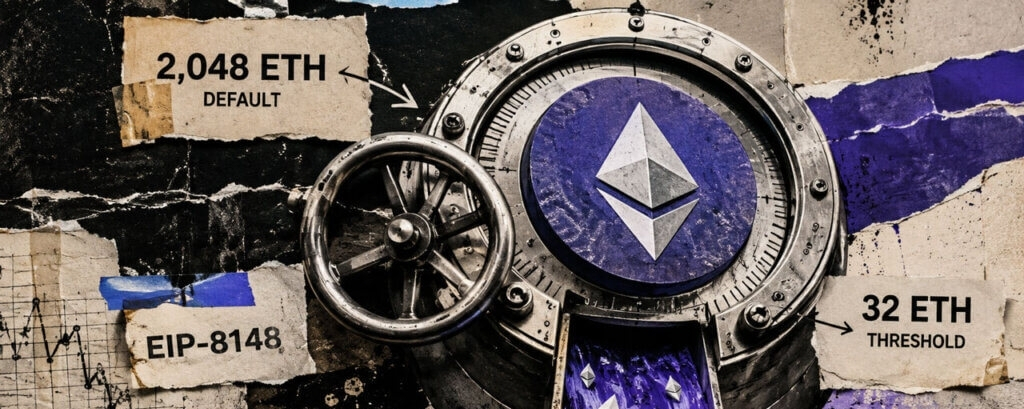
An Aug. 20 edit to draft EIP-8148 lowered the proposal's minimum custom threshold from 33 ETH to 32 ETH and added a way to set the initial threshold when a new validator is created. If activated, the proposal would let 0x02 validators select a level between 32 ETH and the current 2,048 ETH default. The change would affect reward-sweep timing while Ethereum's existing exit rules continue to govern principal withdrawals.
Validators using legacy 0x01 credentials have a 32 ETH effective-balance cap. Any balance above 32 ETH is periodically swept to the withdrawal address, so those rewards stop compounding on the validator.
Compounding 0x02 validators can increase their effective balance in 1 ETH increments up to 2,048 ETH. Under Ethereum's current withdrawal-credential rules, their balance is automatically swept only after it exceeds 2,048 ETH. Accessing ETH below that level requires a manually requested partial withdrawal.
EIP-8148 would let a new 0x02 validator encode an initial threshold in the deposit that creates it. An absent or invalid custom value would default to 2,048 ETH until a valid post-creation change is processed. Existing compounding validators would also begin at the default and could later submit a valid request.
The draft prevents that setting from becoming an immediate withdrawal tool. A post-creation request must set the threshold at or above the validator's current balance. If a creating deposit encodes a threshold below the amount deposited, the protocol would ignore it and use the default. A validator seeking a lower level would first have to use the standard partial-withdrawal process.
Once a valid custom threshold is in place, future rewards above it would become eligible for Ethereum's normal automatic sweep. Principal withdrawals would still use Ethereum's existing partial-withdrawal or full-exit paths, followed by ordered withdrawal processing.
The proposal therefore transfers timing discretion at the validator layer, while broader customer liquidity remains a product-policy outcome. Ethereum would supply the optional validator setting; operators and staking products would determine how, or whether, the resulting reward flow changes what customers experience.
EIP-8148 remained marked Draft on Aug. 25. Forkcast listed it as proposed for Hegotá, while the related consensus-spec change was merged on Aug. 24.
Fork placement, activation timing and final implementation all remain pending. The Aug. 20 edit made the draft more concrete by adding a 32 ETH floor and deposit-time selection. Ethereum mainnet continues to use the existing rules.
Until developers select and finalize the proposal, the current split remains in force: automatic sweeps above 32 ETH for 0x01, compounding up to the 2,048 ETH default for 0x02, and manual partial withdrawals for compounding validators that want rewards sooner.
#Write2Earn
#icrypto
#Dogecoin
#Kriptocutrader
#Launchpool
How Ethereum’s new 2,048 ETH staking rule could lock up user rewards longer than expected
EIP-8148 would allow thresholds from 32 ETH to 2,048 ETH, while standard withdrawal and exit mechanics remain intact.
thereum is considering a change that would let compounding validators set how much ETH should remain on a validator before excess rewards enter the network's automatic withdrawal sweep.
An Aug. 20 edit to draft EIP-8148 lowered the proposal's minimum custom threshold from 33 ETH to 32 ETH and added a way to set the initial threshold when a new validator is created. If activated, the proposal would let 0x02 validators select a level between 32 ETH and the current 2,048 ETH default. The change would affect reward-sweep timing while Ethereum's existing exit rules continue to govern principal withdrawals.
Validators using legacy 0x01 credentials have a 32 ETH effective-balance cap. Any balance above 32 ETH is periodically swept to the withdrawal address, so those rewards stop compounding on the validator.
Compounding 0x02 validators can increase their effective balance in 1 ETH increments up to 2,048 ETH. Under Ethereum's current withdrawal-credential rules, their balance is automatically swept only after it exceeds 2,048 ETH. Accessing ETH below that level requires a manually requested partial withdrawal.
EIP-8148 would let a new 0x02 validator encode an initial threshold in the deposit that creates it. An absent or invalid custom value would default to 2,048 ETH until a valid post-creation change is processed. Existing compounding validators would also begin at the default and could later submit a valid request.
The draft prevents that setting from becoming an immediate withdrawal tool. A post-creation request must set the threshold at or above the validator's current balance. If a creating deposit encodes a threshold below the amount deposited, the protocol would ignore it and use the default. A validator seeking a lower level would first have to use the standard partial-withdrawal process.
Once a valid custom threshold is in place, future rewards above it would become eligible for Ethereum's normal automatic sweep. Principal withdrawals would still use Ethereum's existing partial-withdrawal or full-exit paths, followed by ordered withdrawal processing.
The proposal therefore transfers timing discretion at the validator layer, while broader customer liquidity remains a product-policy outcome. Ethereum would supply the optional validator setting; operators and staking products would determine how, or whether, the resulting reward flow changes what customers experience.
EIP-8148 remained marked Draft on Aug. 25. Forkcast listed it as proposed for Hegotá, while the related consensus-spec change was merged on Aug. 24.
Fork placement, activation timing and final implementation all remain pending. The Aug. 20 edit made the draft more concrete by adding a 32 ETH floor and deposit-time selection. Ethereum mainnet continues to use the existing rules.
Until developers select and finalize the proposal, the current split remains in force: automatic sweeps above 32 ETH for 0x01, compounding up to the 2,048 ETH default for 0x02, and manual partial withdrawals for compounding validators that want rewards sooner.
#Write2Earn
#icrypto
#Dogecoin
#Kriptocutrader
#Launchpool
thereum is considering a change that would let compounding validators set how much ETH should remain on a validator before excess rewards enter the network's automatic withdrawal sweep.
An Aug. 20 edit to draft EIP-8148 lowered the proposal's minimum custom threshold from 33 ETH to 32 ETH and added a way to set the initial threshold when a new validator is created. If activated, the proposal would let 0x02 validators select a level between 32 ETH and the current 2,048 ETH default. The change would affect reward-sweep timing while Ethereum's existing exit rules continue to govern principal withdrawals.
Validators using legacy 0x01 credentials have a 32 ETH effective-balance cap. Any balance above 32 ETH is periodically swept to the withdrawal address, so those rewards stop compounding on the validator.
Compounding 0x02 validators can increase their effective balance in 1 ETH increments up to 2,048 ETH. Under Ethereum's current withdrawal-credential rules, their balance is automatically swept only after it exceeds 2,048 ETH. Accessing ETH below that level requires a manually requested partial withdrawal.
EIP-8148 would let a new 0x02 validator encode an initial threshold in the deposit that creates it. An absent or invalid custom value would default to 2,048 ETH until a valid post-creation change is processed. Existing compounding validators would also begin at the default and could later submit a valid request.
The draft prevents that setting from becoming an immediate withdrawal tool. A post-creation request must set the threshold at or above the validator's current balance. If a creating deposit encodes a threshold below the amount deposited, the protocol would ignore it and use the default. A validator seeking a lower level would first have to use the standard partial-withdrawal process.
Once a valid custom threshold is in place, future rewards above it would become eligible for Ethereum's normal automatic sweep. Principal withdrawals would still use Ethereum's existing partial-withdrawal or full-exit paths, followed by ordered withdrawal processing.
The proposal therefore transfers timing discretion at the validator layer, while broader customer liquidity remains a product-policy outcome. Ethereum would supply the optional validator setting; operators and staking products would determine how, or whether, the resulting reward flow changes what customers experience.
EIP-8148 remained marked Draft on Aug. 25. Forkcast listed it as proposed for Hegotá, while the related consensus-spec change was merged on Aug. 24.
Fork placement, activation timing and final implementation all remain pending. The Aug. 20 edit made the draft more concrete by adding a 32 ETH floor and deposit-time selection. Ethereum mainnet continues to use the existing rules.
Until developers select and finalize the proposal, the current split remains in force: automatic sweeps above 32 ETH for 0x01, compounding up to the 2,048 ETH default for 0x02, and manual partial withdrawals for compounding validators that want rewards sooner.
#Write2Earn
#icrypto
#Dogecoin
#Kriptocutrader
#Launchpool
1
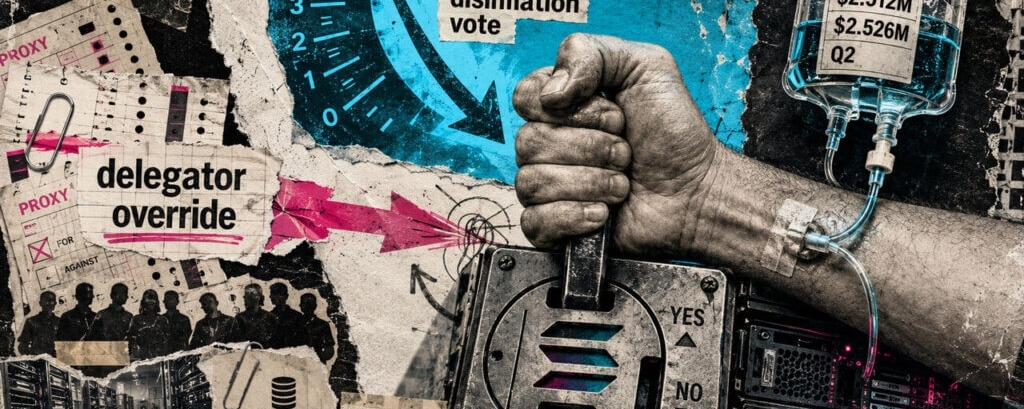
Article
Solana stakers face yield cuts as a treasury firm fights to protect 99.4% of its revenueSolana Company announced opposition to faster disinflation, while native stakers retain the power to override a validator’s default.
olana’s live monetary-policy vote is forcing the network to confront a basic governance question: what happens when the validator setting a default vote for delegated stake has a disclosed interest in preserving staking yield?
Solana Company provides the clearest test case. The Nasdaq-listed SOL treasury company and validator operator announced on Aug. 21 that it would oppose SGP-0002, a proposal to accelerate disinflation. Its earlier financial results showed that staking on company-held SOL produced $2.512 million of its $2.526 million in second-quarter revenue, or 99.4%.
Under Solana’s new governance design, delegated stake follows a validator’s position by default. A native staker can override that position for an individual stake account before the validator votes, after it votes or when it abstains from voting.
On Aug. 23, SGP-0002 remained in voting with about 5.27 million SOL For, 547,019 SOL Against and zero Abstain across 24 votes. For represented about 90.6% of decisive stake at that moment. This was a timestamped snapshot, and the totals were already changing.
The public voter table and decoded Against ballots showed no vote attributable to Solana Company, HSDT or its validator operation at that observation. Unknown address labels limit entity-level attribution, so the record establishes the company’s announced intention rather than a verified company ballot.
Solana’s public materials also conflict on the rule used to judge the live result. The governance proposal repository policy says there is no quorum and approval requires For stake to equal at least two-thirds of For plus Against. The governance FAQ and dashboard display a one-third participation requirement alongside a two-thirds approval threshold. Current finalization code locks and records the totals after the end epoch without resolving that policy conflict.
Voting runs through epoch 1023 and closes at the epoch-1024 boundary. Solana Developers estimated that boundary for Thursday at approximately 15:30 UTC, with live slot timing determining the actual wall-clock close.
A successful vote would move the proposal into an Accepted state. Solana’s governance policy separates that state from Implemented and Activated, with technical work normally proceeding through one or more Solana Improvement Documents.
The immediate test is therefore institutional. Solana has made validator preferences visible and given native stakers a working override. Credibility now depends on whether that mechanism keeps the governance choice with delegators when a validator’s economic interest is plain.
#Write2Earn
#Kriptocutrader
#ZeusInCrypto
#meme板块关注热点
#Ripple
Solana stakers face yield cuts as a treasury firm fights to protect 99.4% of its revenue
Solana Company announced opposition to faster disinflation, while native stakers retain the power to override a validator’s default.
olana’s live monetary-policy vote is forcing the network to confront a basic governance question: what happens when the validator setting a default vote for delegated stake has a disclosed interest in preserving staking yield?
Solana Company provides the clearest test case. The Nasdaq-listed SOL treasury company and validator operator announced on Aug. 21 that it would oppose SGP-0002, a proposal to accelerate disinflation. Its earlier financial results showed that staking on company-held SOL produced $2.512 million of its $2.526 million in second-quarter revenue, or 99.4%.
Under Solana’s new governance design, delegated stake follows a validator’s position by default. A native staker can override that position for an individual stake account before the validator votes, after it votes or when it abstains from voting.
On Aug. 23, SGP-0002 remained in voting with about 5.27 million SOL For, 547,019 SOL Against and zero Abstain across 24 votes. For represented about 90.6% of decisive stake at that moment. This was a timestamped snapshot, and the totals were already changing.
The public voter table and decoded Against ballots showed no vote attributable to Solana Company, HSDT or its validator operation at that observation. Unknown address labels limit entity-level attribution, so the record establishes the company’s announced intention rather than a verified company ballot.
Solana’s public materials also conflict on the rule used to judge the live result. The governance proposal repository policy says there is no quorum and approval requires For stake to equal at least two-thirds of For plus Against. The governance FAQ and dashboard display a one-third participation requirement alongside a two-thirds approval threshold. Current finalization code locks and records the totals after the end epoch without resolving that policy conflict.
Voting runs through epoch 1023 and closes at the epoch-1024 boundary. Solana Developers estimated that boundary for Thursday at approximately 15:30 UTC, with live slot timing determining the actual wall-clock close.
A successful vote would move the proposal into an Accepted state. Solana’s governance policy separates that state from Implemented and Activated, with technical work normally proceeding through one or more Solana Improvement Documents.
The immediate test is therefore institutional. Solana has made validator preferences visible and given native stakers a working override. Credibility now depends on whether that mechanism keeps the governance choice with delegators when a validator’s economic interest is plain.
#Write2Earn
#Kriptocutrader
#ZeusInCrypto
#meme板块关注热点
#Ripple
olana’s live monetary-policy vote is forcing the network to confront a basic governance question: what happens when the validator setting a default vote for delegated stake has a disclosed interest in preserving staking yield?
Solana Company provides the clearest test case. The Nasdaq-listed SOL treasury company and validator operator announced on Aug. 21 that it would oppose SGP-0002, a proposal to accelerate disinflation. Its earlier financial results showed that staking on company-held SOL produced $2.512 million of its $2.526 million in second-quarter revenue, or 99.4%.
Under Solana’s new governance design, delegated stake follows a validator’s position by default. A native staker can override that position for an individual stake account before the validator votes, after it votes or when it abstains from voting.
On Aug. 23, SGP-0002 remained in voting with about 5.27 million SOL For, 547,019 SOL Against and zero Abstain across 24 votes. For represented about 90.6% of decisive stake at that moment. This was a timestamped snapshot, and the totals were already changing.
The public voter table and decoded Against ballots showed no vote attributable to Solana Company, HSDT or its validator operation at that observation. Unknown address labels limit entity-level attribution, so the record establishes the company’s announced intention rather than a verified company ballot.
Solana’s public materials also conflict on the rule used to judge the live result. The governance proposal repository policy says there is no quorum and approval requires For stake to equal at least two-thirds of For plus Against. The governance FAQ and dashboard display a one-third participation requirement alongside a two-thirds approval threshold. Current finalization code locks and records the totals after the end epoch without resolving that policy conflict.
Voting runs through epoch 1023 and closes at the epoch-1024 boundary. Solana Developers estimated that boundary for Thursday at approximately 15:30 UTC, with live slot timing determining the actual wall-clock close.
A successful vote would move the proposal into an Accepted state. Solana’s governance policy separates that state from Implemented and Activated, with technical work normally proceeding through one or more Solana Improvement Documents.
The immediate test is therefore institutional. Solana has made validator preferences visible and given native stakers a working override. Credibility now depends on whether that mechanism keeps the governance choice with delegators when a validator’s economic interest is plain.
#Write2Earn
#Kriptocutrader
#ZeusInCrypto
#meme板块关注热点
#Ripple
34
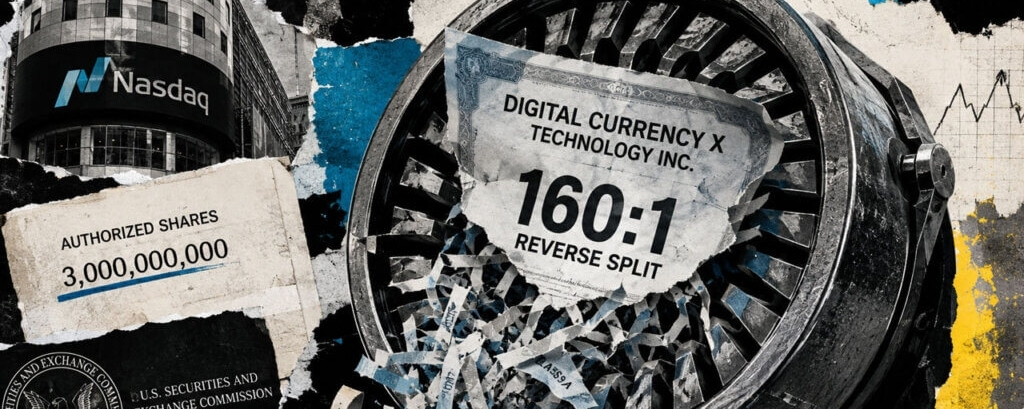
Article
$400M AI crypto treasury firm seeks second reverse split while restoring capacity for 3 billion sharA September 3 vote would cut holder balances 160-for-1, then return authorized capacity to 3 billion shares.
Nasdaq-listed Digital Currency X Technology Inc. is asking shareholders to approve a 160-for-1 reverse stock split, also known as a share consolidation, on September 3. It would be the company’s second consolidation of 2026 after a 12-for-1 action took effect on January 22.
Digital Currency X recently shifted from electric-vehicle manufacturing into the digital asset sector. In its latest annual report, the company said its treasury held 157.45 million EDGEAI tokens. It valued them at about $402 million as of December 31, 2025. It later locked all of those tokens in a 12-month staking agreement. The agreement carried a floating annualized yield of 3.5% to 8%.
For a holder whose balance is divisible by 160, every 160 Class A or Class B shares would become one share. A holder of 16,000 shares, for example, would receive 100. The filing says the company would round fractional results up to the nearest whole share, so smaller or nondivisible positions would not follow that arithmetic exactly. The consolidation would cover both issued and unissued shares. It would take effect on a date confirmed by Nasdaq or one on which the exchange raises no objection.
The first resolution would reduce authorized shares from 3 billion, each with a par value of $0.0001, to 18.75 million, each with a $0.016 par value. A second resolution would immediately increase the authorization back to 3 billion shares at the higher par value. A third would reorganize the authorized share capital back to $0.0001 per share. Shareholders had approved the 3 billion-share authorization on May 13, according to a May filing.
Authorized shares are capacity, rather than stock already issued. The resolutions would not themselves issue shares or prove immediate dilution, but they would leave the company able to issue far more shares after the consolidation than the 18.75 million-share ceiling created by the first step alone.
The disclosed issued-share figures come from two earlier dates and establish only a floor. Digital Currency X’s annual report listed 19,823,627 Class A shares and 1,334 Class B shares outstanding as of April 20. A July 7 filing then said the company issued 331,753,557 units, each including one Class A share and warrants, at a July 3 private-placement closing. Together, those disclosures establish at least 351,577,184 Class A shares plus 1,334 Class B shares before any later warrant exercise or other issuance.
Class A shares carry one vote each on general-meeting matters, while Class B shares carry 20. On the April counts, the Class B class represented 26,680 votes against more than 19.8 million Class A votes. The July issuance added Class A shares, but the materials do not establish current holder-by-holder control for the September vote.
The company said it intended January’s consolidation to help regain Nasdaq minimum bid-price compliance. By contrast, the August meeting notice does not identify a compliance, financing, or offering rationale for the proposed 160-for-1 reverse stock split and capital reorganization. Intervening issuance also changed the share base, so the two ratios do not describe one continuous holder-level reduction.
The Zoom-only meeting is scheduled for 10:00 a.m. Hong Kong time on September 3. Internet and phone voting closes at 11:59 p.m. Eastern time on September 2, while proxy forms have a separate deadline no later than 48 hours before the meeting.
#Write2Earn
#icrypto
#xmucan
#Kriptocutrader
#meme板块关注热点
$400M AI crypto treasury firm seeks second reverse split while restoring capacity for 3 billion shar
A September 3 vote would cut holder balances 160-for-1, then return authorized capacity to 3 billion shares.
Nasdaq-listed Digital Currency X Technology Inc. is asking shareholders to approve a 160-for-1 reverse stock split, also known as a share consolidation, on September 3. It would be the company’s second consolidation of 2026 after a 12-for-1 action took effect on January 22.
Digital Currency X recently shifted from electric-vehicle manufacturing into the digital asset sector. In its latest annual report, the company said its treasury held 157.45 million EDGEAI tokens. It valued them at about $402 million as of December 31, 2025. It later locked all of those tokens in a 12-month staking agreement. The agreement carried a floating annualized yield of 3.5% to 8%.
For a holder whose balance is divisible by 160, every 160 Class A or Class B shares would become one share. A holder of 16,000 shares, for example, would receive 100. The filing says the company would round fractional results up to the nearest whole share, so smaller or nondivisible positions would not follow that arithmetic exactly. The consolidation would cover both issued and unissued shares. It would take effect on a date confirmed by Nasdaq or one on which the exchange raises no objection.
The first resolution would reduce authorized shares from 3 billion, each with a par value of $0.0001, to 18.75 million, each with a $0.016 par value. A second resolution would immediately increase the authorization back to 3 billion shares at the higher par value. A third would reorganize the authorized share capital back to $0.0001 per share. Shareholders had approved the 3 billion-share authorization on May 13, according to a May filing.
Authorized shares are capacity, rather than stock already issued. The resolutions would not themselves issue shares or prove immediate dilution, but they would leave the company able to issue far more shares after the consolidation than the 18.75 million-share ceiling created by the first step alone.
The disclosed issued-share figures come from two earlier dates and establish only a floor. Digital Currency X’s annual report listed 19,823,627 Class A shares and 1,334 Class B shares outstanding as of April 20. A July 7 filing then said the company issued 331,753,557 units, each including one Class A share and warrants, at a July 3 private-placement closing. Together, those disclosures establish at least 351,577,184 Class A shares plus 1,334 Class B shares before any later warrant exercise or other issuance.
Class A shares carry one vote each on general-meeting matters, while Class B shares carry 20. On the April counts, the Class B class represented 26,680 votes against more than 19.8 million Class A votes. The July issuance added Class A shares, but the materials do not establish current holder-by-holder control for the September vote.
The company said it intended January’s consolidation to help regain Nasdaq minimum bid-price compliance. By contrast, the August meeting notice does not identify a compliance, financing, or offering rationale for the proposed 160-for-1 reverse stock split and capital reorganization. Intervening issuance also changed the share base, so the two ratios do not describe one continuous holder-level reduction.
The Zoom-only meeting is scheduled for 10:00 a.m. Hong Kong time on September 3. Internet and phone voting closes at 11:59 p.m. Eastern time on September 2, while proxy forms have a separate deadline no later than 48 hours before the meeting.
#Write2Earn
#icrypto
#xmucan
#Kriptocutrader
#meme板块关注热点
Nasdaq-listed Digital Currency X Technology Inc. is asking shareholders to approve a 160-for-1 reverse stock split, also known as a share consolidation, on September 3. It would be the company’s second consolidation of 2026 after a 12-for-1 action took effect on January 22.
Digital Currency X recently shifted from electric-vehicle manufacturing into the digital asset sector. In its latest annual report, the company said its treasury held 157.45 million EDGEAI tokens. It valued them at about $402 million as of December 31, 2025. It later locked all of those tokens in a 12-month staking agreement. The agreement carried a floating annualized yield of 3.5% to 8%.
For a holder whose balance is divisible by 160, every 160 Class A or Class B shares would become one share. A holder of 16,000 shares, for example, would receive 100. The filing says the company would round fractional results up to the nearest whole share, so smaller or nondivisible positions would not follow that arithmetic exactly. The consolidation would cover both issued and unissued shares. It would take effect on a date confirmed by Nasdaq or one on which the exchange raises no objection.
The first resolution would reduce authorized shares from 3 billion, each with a par value of $0.0001, to 18.75 million, each with a $0.016 par value. A second resolution would immediately increase the authorization back to 3 billion shares at the higher par value. A third would reorganize the authorized share capital back to $0.0001 per share. Shareholders had approved the 3 billion-share authorization on May 13, according to a May filing.
Authorized shares are capacity, rather than stock already issued. The resolutions would not themselves issue shares or prove immediate dilution, but they would leave the company able to issue far more shares after the consolidation than the 18.75 million-share ceiling created by the first step alone.
The disclosed issued-share figures come from two earlier dates and establish only a floor. Digital Currency X’s annual report listed 19,823,627 Class A shares and 1,334 Class B shares outstanding as of April 20. A July 7 filing then said the company issued 331,753,557 units, each including one Class A share and warrants, at a July 3 private-placement closing. Together, those disclosures establish at least 351,577,184 Class A shares plus 1,334 Class B shares before any later warrant exercise or other issuance.
Class A shares carry one vote each on general-meeting matters, while Class B shares carry 20. On the April counts, the Class B class represented 26,680 votes against more than 19.8 million Class A votes. The July issuance added Class A shares, but the materials do not establish current holder-by-holder control for the September vote.
The company said it intended January’s consolidation to help regain Nasdaq minimum bid-price compliance. By contrast, the August meeting notice does not identify a compliance, financing, or offering rationale for the proposed 160-for-1 reverse stock split and capital reorganization. Intervening issuance also changed the share base, so the two ratios do not describe one continuous holder-level reduction.
The Zoom-only meeting is scheduled for 10:00 a.m. Hong Kong time on September 3. Internet and phone voting closes at 11:59 p.m. Eastern time on September 2, while proxy forms have a separate deadline no later than 48 hours before the meeting.
#Write2Earn
#icrypto
#xmucan
#Kriptocutrader
#meme板块关注热点
41
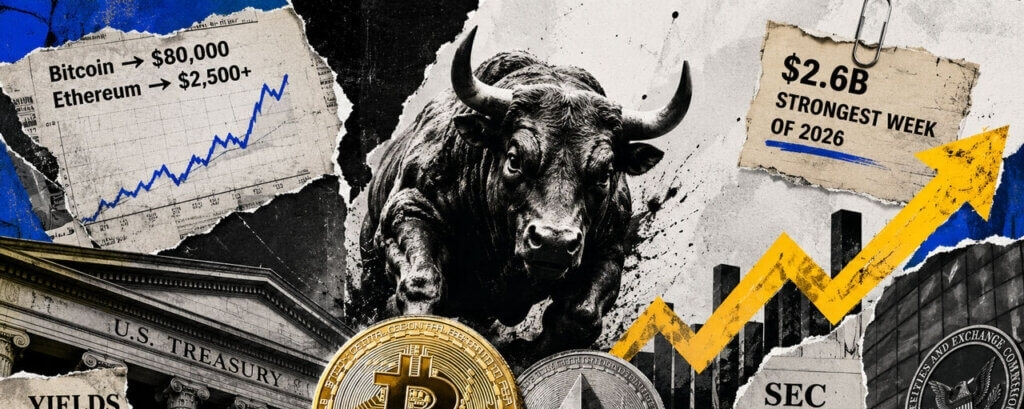
Article
Bitcoin and Ethereum ETFs just had their biggest week of 2026 as crypto exploded higherThe US funds pulled in $2.6 billion as Bitcoin surged toward $80,000 and Washington delivered a string of market-moving catalysts.
S spot Bitcoin and Ethereum ETFs recorded their strongest inflow week of 2026 as a sharp crypto rally pulled investors back into funds that had struggled to attract sustained demand for much of the year.
Bitcoin ETFs drew $1.918 billion in the five trading sessions through Aug. 21, while funds holding Ethereum attracted $697.2 million, according to SoSoValue data. The combined $2.6 billion intake was the strongest for the two groups in about 10 months
Bitcoin funds recorded inflows every day during the week, pushing cumulative net subscriptions since their January 2024 debut to $53.7 billion. Notably, the weekly total was also their largest since the market selloff in October 2025.
Meanwhile, Ethereum funds also had their best showing since October, when they attracted nearly $1.3 billion during the week ended Oct. 3.
Notably, the renewed demand coincided with one of crypto's strongest rallies in years. Bitcoin climbed from roughly $62,300 to briefly trade near $80,000 Friday, while Ethereum surged to a seven-month high above $2,500.
That combination is important because a rally driven primarily by short covering can lose momentum once bearish positions have been cleared. Persistent ETF subscriptions represent new capital entering the market and can provide a more durable source of demand.
Ecoinometrics' ETF-flow model now places Bitcoin in a supported range of roughly $67,000 to $78,000, with an estimated fair value near $72,000. The firm said continued ETF buying could lift that range further if rising prices bring trend-following investors back into the market.
The shift is particularly notable given Bitcoin's performance earlier this year. ETF demand weakened during the downturn from the cryptocurrency's October 2025 record, leaving the market without one of the large structural buyers that had helped drive previous advances.
This week's $1.9 billion intake suggests that channel has reopened, though one strong week does not establish a lasting reversal. The next test will be whether subscriptions remain positive after Bitcoin's roughly 25% weekly advance and once the forced liquidation of bearish positions subsides.
#Write2Earn
#gonnarich
#shiba⚡
#Kriptocutrader
#XAI
Bitcoin and Ethereum ETFs just had their biggest week of 2026 as crypto exploded higher
The US funds pulled in $2.6 billion as Bitcoin surged toward $80,000 and Washington delivered a string of market-moving catalysts.
S spot Bitcoin and Ethereum ETFs recorded their strongest inflow week of 2026 as a sharp crypto rally pulled investors back into funds that had struggled to attract sustained demand for much of the year.
Bitcoin ETFs drew $1.918 billion in the five trading sessions through Aug. 21, while funds holding Ethereum attracted $697.2 million, according to SoSoValue data. The combined $2.6 billion intake was the strongest for the two groups in about 10 months
Bitcoin funds recorded inflows every day during the week, pushing cumulative net subscriptions since their January 2024 debut to $53.7 billion. Notably, the weekly total was also their largest since the market selloff in October 2025.
Meanwhile, Ethereum funds also had their best showing since October, when they attracted nearly $1.3 billion during the week ended Oct. 3.
Notably, the renewed demand coincided with one of crypto's strongest rallies in years. Bitcoin climbed from roughly $62,300 to briefly trade near $80,000 Friday, while Ethereum surged to a seven-month high above $2,500.
That combination is important because a rally driven primarily by short covering can lose momentum once bearish positions have been cleared. Persistent ETF subscriptions represent new capital entering the market and can provide a more durable source of demand.
Ecoinometrics' ETF-flow model now places Bitcoin in a supported range of roughly $67,000 to $78,000, with an estimated fair value near $72,000. The firm said continued ETF buying could lift that range further if rising prices bring trend-following investors back into the market.
The shift is particularly notable given Bitcoin's performance earlier this year. ETF demand weakened during the downturn from the cryptocurrency's October 2025 record, leaving the market without one of the large structural buyers that had helped drive previous advances.
This week's $1.9 billion intake suggests that channel has reopened, though one strong week does not establish a lasting reversal. The next test will be whether subscriptions remain positive after Bitcoin's roughly 25% weekly advance and once the forced liquidation of bearish positions subsides.
#Write2Earn
#gonnarich
#shiba⚡
#Kriptocutrader
#XAI
S spot Bitcoin and Ethereum ETFs recorded their strongest inflow week of 2026 as a sharp crypto rally pulled investors back into funds that had struggled to attract sustained demand for much of the year.
Bitcoin ETFs drew $1.918 billion in the five trading sessions through Aug. 21, while funds holding Ethereum attracted $697.2 million, according to SoSoValue data. The combined $2.6 billion intake was the strongest for the two groups in about 10 months
Bitcoin funds recorded inflows every day during the week, pushing cumulative net subscriptions since their January 2024 debut to $53.7 billion. Notably, the weekly total was also their largest since the market selloff in October 2025.
Meanwhile, Ethereum funds also had their best showing since October, when they attracted nearly $1.3 billion during the week ended Oct. 3.
Notably, the renewed demand coincided with one of crypto's strongest rallies in years. Bitcoin climbed from roughly $62,300 to briefly trade near $80,000 Friday, while Ethereum surged to a seven-month high above $2,500.
That combination is important because a rally driven primarily by short covering can lose momentum once bearish positions have been cleared. Persistent ETF subscriptions represent new capital entering the market and can provide a more durable source of demand.
Ecoinometrics' ETF-flow model now places Bitcoin in a supported range of roughly $67,000 to $78,000, with an estimated fair value near $72,000. The firm said continued ETF buying could lift that range further if rising prices bring trend-following investors back into the market.
The shift is particularly notable given Bitcoin's performance earlier this year. ETF demand weakened during the downturn from the cryptocurrency's October 2025 record, leaving the market without one of the large structural buyers that had helped drive previous advances.
This week's $1.9 billion intake suggests that channel has reopened, though one strong week does not establish a lasting reversal. The next test will be whether subscriptions remain positive after Bitcoin's roughly 25% weekly advance and once the forced liquidation of bearish positions subsides.
#Write2Earn
#gonnarich
#shiba⚡
#Kriptocutrader
#XAI
7
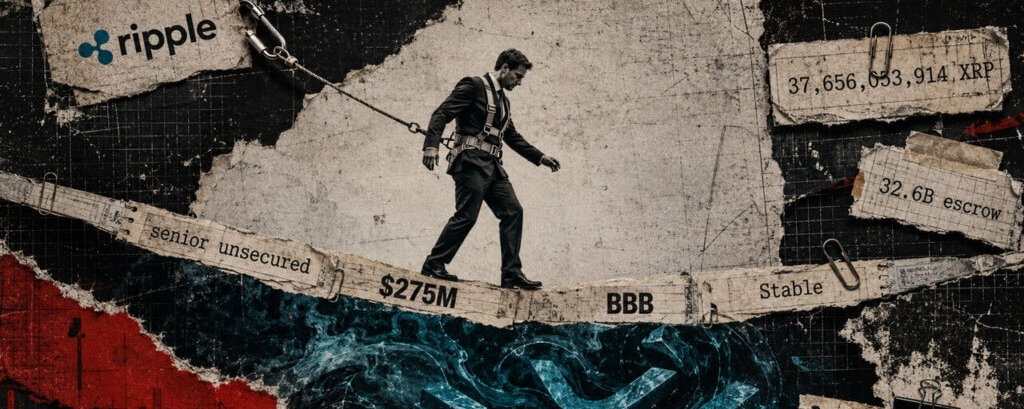
Article
Ripple relies on locked XRP reserves to back a $275 million institutional credit lineKBRA’s BBB rating gives Ripple Prime investment-grade access, but expected parent support and mostly escrowed XRP remain central to the credit case.
ipple Prime closed an upsized $275 million private placement of senior unsecured notes, giving the non-bank prime broker a new pool of capital for its U.S. expansion. KBRA’s investment-grade assessment makes the parent-support mechanism the central credit issue.
KBRA’s BBB assessment depends partly on the agency’s expectation that ultimate parent Ripple would support the brokerage if money could not move freely from the regulated operating company. That makes the notes a test of how far Ripple’s institutional-finance buildout has separated from the XRP-sensitive balance sheet that helped fund it.
Ripple said the offering closed on Aug. 18 and that proceeds would support working capital and general corporate purposes within a regulated entity. Piper Sandler acted as lead placement agent. Ripple’s public announcement gives the amount, ranking and use of proceeds, but no terms for a parent guarantee or XRP pledge.
KBRA describes expected parental support, while Ripple describes senior unsecured notes. The official public sources reviewed do not identify XRP as collateral and do not disclose whether Ripple Labs signed an enforceable guarantee or what any guarantee would cover.
The balance-sheet model also creates counterparty and liquidity exposure. KBRA said those risks are partly mitigated by a matched-principal structure, high-quality repo collateral, centrally cleared derivatives, conservative exposure limits, real-time monitoring and short-duration financing. The operating subsidiary’s public financial statements reinforce the importance of matched repo and reverse-repo activity to that balance sheet.
The up-to-$200 million facility Ripple Prime announced in May is separate from the new notes. That agreement gave the brokerage capacity to draw funds for client financing and margin needs; the disclosed terms do not establish that the full $200 million was drawn. The two transactions therefore do not establish $475 million of funded or outstanding debt.
KBRA said weaker earnings, liquidity or capital, reduced parental support, or greater risk-taking could pressure the rating. Positive momentum, by contrast, would require sustained execution at projected scale, durable earnings and greater revenue diversification.
The $275 million close confirms that Ripple Prime can tap traditional credit markets at an investment-grade rating. The BBB credit case nevertheless remains connected to Ripple’s willingness to fund the brokerage and to a parent balance sheet that is materially exposed to XRP. Greater revenue diversification and a longer operating record would make that borrowing capacity easier to separate from expected support.
#Write2Earn
#YapayzekaAI
#ETHETFsApproved
#Kriptocutrader
#ZeusInCrypto
Ripple relies on locked XRP reserves to back a $275 million institutional credit line
KBRA’s BBB rating gives Ripple Prime investment-grade access, but expected parent support and mostly escrowed XRP remain central to the credit case.
ipple Prime closed an upsized $275 million private placement of senior unsecured notes, giving the non-bank prime broker a new pool of capital for its U.S. expansion. KBRA’s investment-grade assessment makes the parent-support mechanism the central credit issue.
KBRA’s BBB assessment depends partly on the agency’s expectation that ultimate parent Ripple would support the brokerage if money could not move freely from the regulated operating company. That makes the notes a test of how far Ripple’s institutional-finance buildout has separated from the XRP-sensitive balance sheet that helped fund it.
Ripple said the offering closed on Aug. 18 and that proceeds would support working capital and general corporate purposes within a regulated entity. Piper Sandler acted as lead placement agent. Ripple’s public announcement gives the amount, ranking and use of proceeds, but no terms for a parent guarantee or XRP pledge.
KBRA describes expected parental support, while Ripple describes senior unsecured notes. The official public sources reviewed do not identify XRP as collateral and do not disclose whether Ripple Labs signed an enforceable guarantee or what any guarantee would cover.
The balance-sheet model also creates counterparty and liquidity exposure. KBRA said those risks are partly mitigated by a matched-principal structure, high-quality repo collateral, centrally cleared derivatives, conservative exposure limits, real-time monitoring and short-duration financing. The operating subsidiary’s public financial statements reinforce the importance of matched repo and reverse-repo activity to that balance sheet.
The up-to-$200 million facility Ripple Prime announced in May is separate from the new notes. That agreement gave the brokerage capacity to draw funds for client financing and margin needs; the disclosed terms do not establish that the full $200 million was drawn. The two transactions therefore do not establish $475 million of funded or outstanding debt.
KBRA said weaker earnings, liquidity or capital, reduced parental support, or greater risk-taking could pressure the rating. Positive momentum, by contrast, would require sustained execution at projected scale, durable earnings and greater revenue diversification.
The $275 million close confirms that Ripple Prime can tap traditional credit markets at an investment-grade rating. The BBB credit case nevertheless remains connected to Ripple’s willingness to fund the brokerage and to a parent balance sheet that is materially exposed to XRP. Greater revenue diversification and a longer operating record would make that borrowing capacity easier to separate from expected support.
#Write2Earn
#YapayzekaAI
#ETHETFsApproved
#Kriptocutrader
#ZeusInCrypto
ipple Prime closed an upsized $275 million private placement of senior unsecured notes, giving the non-bank prime broker a new pool of capital for its U.S. expansion. KBRA’s investment-grade assessment makes the parent-support mechanism the central credit issue.
KBRA’s BBB assessment depends partly on the agency’s expectation that ultimate parent Ripple would support the brokerage if money could not move freely from the regulated operating company. That makes the notes a test of how far Ripple’s institutional-finance buildout has separated from the XRP-sensitive balance sheet that helped fund it.
Ripple said the offering closed on Aug. 18 and that proceeds would support working capital and general corporate purposes within a regulated entity. Piper Sandler acted as lead placement agent. Ripple’s public announcement gives the amount, ranking and use of proceeds, but no terms for a parent guarantee or XRP pledge.
KBRA describes expected parental support, while Ripple describes senior unsecured notes. The official public sources reviewed do not identify XRP as collateral and do not disclose whether Ripple Labs signed an enforceable guarantee or what any guarantee would cover.
The balance-sheet model also creates counterparty and liquidity exposure. KBRA said those risks are partly mitigated by a matched-principal structure, high-quality repo collateral, centrally cleared derivatives, conservative exposure limits, real-time monitoring and short-duration financing. The operating subsidiary’s public financial statements reinforce the importance of matched repo and reverse-repo activity to that balance sheet.
The up-to-$200 million facility Ripple Prime announced in May is separate from the new notes. That agreement gave the brokerage capacity to draw funds for client financing and margin needs; the disclosed terms do not establish that the full $200 million was drawn. The two transactions therefore do not establish $475 million of funded or outstanding debt.
KBRA said weaker earnings, liquidity or capital, reduced parental support, or greater risk-taking could pressure the rating. Positive momentum, by contrast, would require sustained execution at projected scale, durable earnings and greater revenue diversification.
The $275 million close confirms that Ripple Prime can tap traditional credit markets at an investment-grade rating. The BBB credit case nevertheless remains connected to Ripple’s willingness to fund the brokerage and to a parent balance sheet that is materially exposed to XRP. Greater revenue diversification and a longer operating record would make that borrowing capacity easier to separate from expected support.
#Write2Earn
#YapayzekaAI
#ETHETFsApproved
#Kriptocutrader
#ZeusInCrypto
1
38
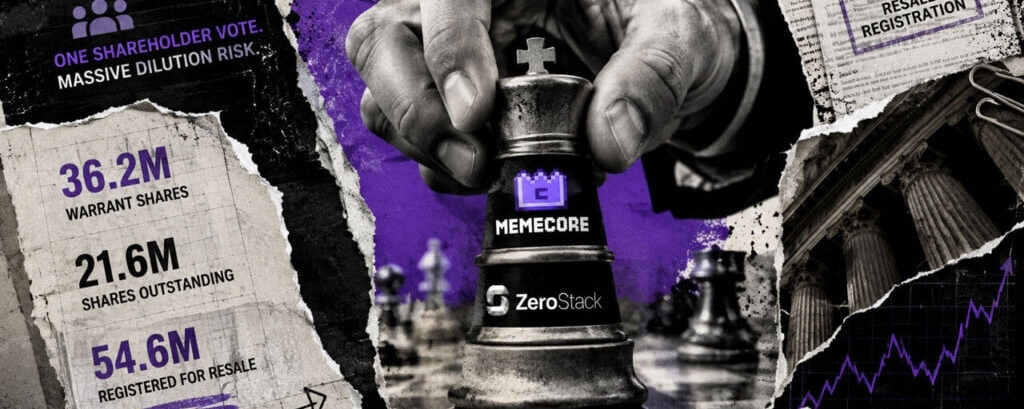
Article
A $1 billion meme coin purchase puts a huge 167% share dilution down to a single vote for ZeroStackThe approval-gated warrants equal 167.4% of the Aug. 19 share base, while a wider resale shelf covers seven holder groups.
eroStack’s Aug. 21 resale registration puts a shareholder vote between the company and 36.2 million new shares tied to its MemeCore acquisition, a warrant block larger than its current outstanding stock.
The company completed the transaction on Aug. 19, acquiring 925,925,926 MemeCore M tokens in exchange for 3.5 million common shares and pre-funded warrants covering approximately 36.2 million additional shares, according to its Form 8-K. The parties valued the tokens at $1.08 each and the aggregate consideration at about $1 billion. The deal delivered tokens, rather than $1 billion in cash.
Those warrant shares cannot be issued until shareholders approve issuance above a 19.99% share cap under Nasdaq Listing Rule 5635. The filings do not set a date for that vote.
ZeroStack reported 21,624,341 common shares outstanding as of Aug. 19. The S-3’s 36,198,294 warrant shares equal about 167.4% of that base. If shareholders authorize the issuance and every warrant share is issued, outstanding shares would rise to 57,822,635 before accounting for other options, warrants, repurchases or issuances. The Aug. 19 base would then represent about 37.4% of the pro forma total.
That is not a forecast that every share will be issued. Only the warrant shares, not the initial 3.5 million shares, are subject to a lockup of up to 10 years, and ZeroStack says that restriction can be waived, released or renegotiated by mutual written consent. The filings also differ by one share: the 8-K says 36,198,293, while the later S-3 uses 36,198,294.
The 54,609,992-share filing is broader than the MemeCore transaction. It covers 10,028,935 private-placement shares issued across March 31, July 20 and Aug. 19; 5,954,743 shares issued to CEO Daniel Reis-Faria after earlier pre-funded warrants were exercised; 2,428,020 shares underlying executive stock options; and the 36,198,294 MemeCore warrant shares.
The seven named holder groups span Puple AI and Blockcat; company insiders Reis-Faria, Executive Chairman Michael Heinrich and CFO Dany Vaiman; plus Hack VC Management-related funds and Zero Gravity Labs. Puple AI and Blockcat are each registered for up to 19,849,147 shares, comprising 1.75 million issued shares and 18,099,147 approval-gated warrant shares.
A second filing mismatch sits inside the seller table. It lists a 4,608,684-share maximum for Zero Gravity Labs, while the same filing says the holder owns 4,608,575 shares and no other convertible securities. The lower figure is the one that makes the security buckets reconcile to 54,609,992.
Registration does not mean those shares have been sold. The holders may sell all, some or none of them, and ZeroStack will receive no proceeds from their resales. The company could receive cash only if the covered executive stock options are exercised for cash.
#Write2Earn
#icrypto
#Kriptocutrader
#Megadrop
#shiba⚡
A $1 billion meme coin purchase puts a huge 167% share dilution down to a single vote for ZeroStack
The approval-gated warrants equal 167.4% of the Aug. 19 share base, while a wider resale shelf covers seven holder groups.
eroStack’s Aug. 21 resale registration puts a shareholder vote between the company and 36.2 million new shares tied to its MemeCore acquisition, a warrant block larger than its current outstanding stock.
The company completed the transaction on Aug. 19, acquiring 925,925,926 MemeCore M tokens in exchange for 3.5 million common shares and pre-funded warrants covering approximately 36.2 million additional shares, according to its Form 8-K. The parties valued the tokens at $1.08 each and the aggregate consideration at about $1 billion. The deal delivered tokens, rather than $1 billion in cash.
Those warrant shares cannot be issued until shareholders approve issuance above a 19.99% share cap under Nasdaq Listing Rule 5635. The filings do not set a date for that vote.
ZeroStack reported 21,624,341 common shares outstanding as of Aug. 19. The S-3’s 36,198,294 warrant shares equal about 167.4% of that base. If shareholders authorize the issuance and every warrant share is issued, outstanding shares would rise to 57,822,635 before accounting for other options, warrants, repurchases or issuances. The Aug. 19 base would then represent about 37.4% of the pro forma total.
That is not a forecast that every share will be issued. Only the warrant shares, not the initial 3.5 million shares, are subject to a lockup of up to 10 years, and ZeroStack says that restriction can be waived, released or renegotiated by mutual written consent. The filings also differ by one share: the 8-K says 36,198,293, while the later S-3 uses 36,198,294.
The 54,609,992-share filing is broader than the MemeCore transaction. It covers 10,028,935 private-placement shares issued across March 31, July 20 and Aug. 19; 5,954,743 shares issued to CEO Daniel Reis-Faria after earlier pre-funded warrants were exercised; 2,428,020 shares underlying executive stock options; and the 36,198,294 MemeCore warrant shares.
The seven named holder groups span Puple AI and Blockcat; company insiders Reis-Faria, Executive Chairman Michael Heinrich and CFO Dany Vaiman; plus Hack VC Management-related funds and Zero Gravity Labs. Puple AI and Blockcat are each registered for up to 19,849,147 shares, comprising 1.75 million issued shares and 18,099,147 approval-gated warrant shares.
A second filing mismatch sits inside the seller table. It lists a 4,608,684-share maximum for Zero Gravity Labs, while the same filing says the holder owns 4,608,575 shares and no other convertible securities. The lower figure is the one that makes the security buckets reconcile to 54,609,992.
Registration does not mean those shares have been sold. The holders may sell all, some or none of them, and ZeroStack will receive no proceeds from their resales. The company could receive cash only if the covered executive stock options are exercised for cash.
#Write2Earn
#icrypto
#Kriptocutrader
#Megadrop
#shiba⚡
eroStack’s Aug. 21 resale registration puts a shareholder vote between the company and 36.2 million new shares tied to its MemeCore acquisition, a warrant block larger than its current outstanding stock.
The company completed the transaction on Aug. 19, acquiring 925,925,926 MemeCore M tokens in exchange for 3.5 million common shares and pre-funded warrants covering approximately 36.2 million additional shares, according to its Form 8-K. The parties valued the tokens at $1.08 each and the aggregate consideration at about $1 billion. The deal delivered tokens, rather than $1 billion in cash.
Those warrant shares cannot be issued until shareholders approve issuance above a 19.99% share cap under Nasdaq Listing Rule 5635. The filings do not set a date for that vote.
ZeroStack reported 21,624,341 common shares outstanding as of Aug. 19. The S-3’s 36,198,294 warrant shares equal about 167.4% of that base. If shareholders authorize the issuance and every warrant share is issued, outstanding shares would rise to 57,822,635 before accounting for other options, warrants, repurchases or issuances. The Aug. 19 base would then represent about 37.4% of the pro forma total.
That is not a forecast that every share will be issued. Only the warrant shares, not the initial 3.5 million shares, are subject to a lockup of up to 10 years, and ZeroStack says that restriction can be waived, released or renegotiated by mutual written consent. The filings also differ by one share: the 8-K says 36,198,293, while the later S-3 uses 36,198,294.
The 54,609,992-share filing is broader than the MemeCore transaction. It covers 10,028,935 private-placement shares issued across March 31, July 20 and Aug. 19; 5,954,743 shares issued to CEO Daniel Reis-Faria after earlier pre-funded warrants were exercised; 2,428,020 shares underlying executive stock options; and the 36,198,294 MemeCore warrant shares.
The seven named holder groups span Puple AI and Blockcat; company insiders Reis-Faria, Executive Chairman Michael Heinrich and CFO Dany Vaiman; plus Hack VC Management-related funds and Zero Gravity Labs. Puple AI and Blockcat are each registered for up to 19,849,147 shares, comprising 1.75 million issued shares and 18,099,147 approval-gated warrant shares.
A second filing mismatch sits inside the seller table. It lists a 4,608,684-share maximum for Zero Gravity Labs, while the same filing says the holder owns 4,608,575 shares and no other convertible securities. The lower figure is the one that makes the security buckets reconcile to 54,609,992.
Registration does not mean those shares have been sold. The holders may sell all, some or none of them, and ZeroStack will receive no proceeds from their resales. The company could receive cash only if the covered executive stock options are exercised for cash.
#Write2Earn
#icrypto
#Kriptocutrader
#Megadrop
#shiba⚡
33

Article
Inside transfer wipes out $1M executive debt as crypto firm offloads payments business without indepThe Aug. 21 filing lists $1 million of liability relief and a 160,000-share warrant as consideration, while pro forma financials remain outstanding.
ocketFuel Blockchain transferred substantially all assets used in its payments business to RPay, whose sole director and CEO, Peter M. Jensen, also serves as a RocketFuel director and executive officer.long
The related-person deal closed Aug. 13 and was disclosed in an Aug. 21 regulatory filing. RocketFuel said the assets used primarily in payments included intellectual property, contracts, merchant relationships and other assets, together with cash and accounts receivable attributable to that business.
The disclosed consideration centered on debt relief. RPay assumed $800,000 in deferred compensation that RocketFuel owed Jensen and $200,000 owed to Bennett J. Yankowitz, a former RocketFuel director and executive who remained on its advisory board. RocketFuel was released from both obligations at closing.
RocketFuel said Jensen's interests differed from those of stockholders generally, citing the assumption of his compensation claim and the warrant terms. Yankowitz's assumed obligation is payable at $0.25 for each $1 paid to Jensen, at the discretion of RPay's board.
The final disclosure differs from a March non-binding term sheet covering proposed sales to RPay and RPoints, the proposed buyer of RocketFuel's loyalty and rewards business. That preliminary two-buyer package contemplated about $1.5 million in deferred-compensation assumptions, a payments-revenue earn-out and warrants for 20% fully diluted stakes in both companies. A separate RPoints filing was not visible in RocketFuel's Aug. 22 SEC submissions, so those combined preliminary terms cannot be compared with the RPay-only package as if they covered the same scope.
The full financial effect remains unresolved. RocketFuel called the RPay sale a significant disposition under SEC asset and income tests, but its Aug. 21 filing did not include the required unaudited pro forma financials. The company said it would provide them in a later Form 8-K/A; its SEC submissions history showed no such amendment as of Aug. 22.
#Write2Earn
#gaming
#HotTrends
#Kriptocutrader
#Dogecoin
Inside transfer wipes out $1M executive debt as crypto firm offloads payments business without indep
The Aug. 21 filing lists $1 million of liability relief and a 160,000-share warrant as consideration, while pro forma financials remain outstanding.
ocketFuel Blockchain transferred substantially all assets used in its payments business to RPay, whose sole director and CEO, Peter M. Jensen, also serves as a RocketFuel director and executive officer.long
The related-person deal closed Aug. 13 and was disclosed in an Aug. 21 regulatory filing. RocketFuel said the assets used primarily in payments included intellectual property, contracts, merchant relationships and other assets, together with cash and accounts receivable attributable to that business.
The disclosed consideration centered on debt relief. RPay assumed $800,000 in deferred compensation that RocketFuel owed Jensen and $200,000 owed to Bennett J. Yankowitz, a former RocketFuel director and executive who remained on its advisory board. RocketFuel was released from both obligations at closing.
RocketFuel said Jensen's interests differed from those of stockholders generally, citing the assumption of his compensation claim and the warrant terms. Yankowitz's assumed obligation is payable at $0.25 for each $1 paid to Jensen, at the discretion of RPay's board.
The final disclosure differs from a March non-binding term sheet covering proposed sales to RPay and RPoints, the proposed buyer of RocketFuel's loyalty and rewards business. That preliminary two-buyer package contemplated about $1.5 million in deferred-compensation assumptions, a payments-revenue earn-out and warrants for 20% fully diluted stakes in both companies. A separate RPoints filing was not visible in RocketFuel's Aug. 22 SEC submissions, so those combined preliminary terms cannot be compared with the RPay-only package as if they covered the same scope.
The full financial effect remains unresolved. RocketFuel called the RPay sale a significant disposition under SEC asset and income tests, but its Aug. 21 filing did not include the required unaudited pro forma financials. The company said it would provide them in a later Form 8-K/A; its SEC submissions history showed no such amendment as of Aug. 22.
#Write2Earn
#gaming
#HotTrends
#Kriptocutrader
#Dogecoin
ocketFuel Blockchain transferred substantially all assets used in its payments business to RPay, whose sole director and CEO, Peter M. Jensen, also serves as a RocketFuel director and executive officer.long
The related-person deal closed Aug. 13 and was disclosed in an Aug. 21 regulatory filing. RocketFuel said the assets used primarily in payments included intellectual property, contracts, merchant relationships and other assets, together with cash and accounts receivable attributable to that business.
The disclosed consideration centered on debt relief. RPay assumed $800,000 in deferred compensation that RocketFuel owed Jensen and $200,000 owed to Bennett J. Yankowitz, a former RocketFuel director and executive who remained on its advisory board. RocketFuel was released from both obligations at closing.
RocketFuel said Jensen's interests differed from those of stockholders generally, citing the assumption of his compensation claim and the warrant terms. Yankowitz's assumed obligation is payable at $0.25 for each $1 paid to Jensen, at the discretion of RPay's board.
The final disclosure differs from a March non-binding term sheet covering proposed sales to RPay and RPoints, the proposed buyer of RocketFuel's loyalty and rewards business. That preliminary two-buyer package contemplated about $1.5 million in deferred-compensation assumptions, a payments-revenue earn-out and warrants for 20% fully diluted stakes in both companies. A separate RPoints filing was not visible in RocketFuel's Aug. 22 SEC submissions, so those combined preliminary terms cannot be compared with the RPay-only package as if they covered the same scope.
The full financial effect remains unresolved. RocketFuel called the RPay sale a significant disposition under SEC asset and income tests, but its Aug. 21 filing did not include the required unaudited pro forma financials. The company said it would provide them in a later Form 8-K/A; its SEC submissions history showed no such amendment as of Aug. 22.
#Write2Earn
#gaming
#HotTrends
#Kriptocutrader
#Dogecoin
33
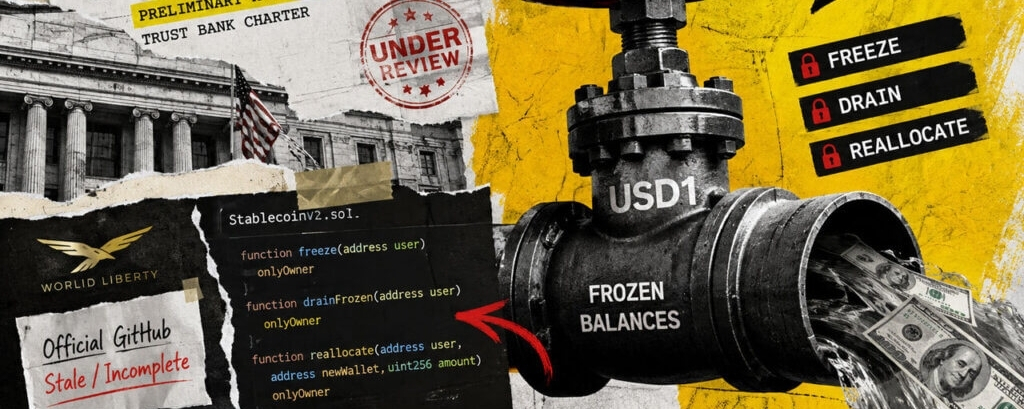
Article
Trump-backed $4 billion USD1 stablecoin has wallet powers its own GitHub does not showJustin Sun says USD1 can move funds from frozen wallets without holder consent as World Liberty seeks final bank approval.
Justin Sun escalated his public fight with Donald Trump-backed World Liberty Financial on Friday, accusing its USD1 stablecoin of carrying administrative powers that allow privileged operators to move funds from frozen wallets without holder consent.
On Aug. 21, the Tron founder alleged that World Liberty’s published source code does not match the contract currently running on-chain, arguing that the discrepancy amounts to evidence of deceptive deployment and comparing it with techniques used in rug pulls.
Sun said the live USD1 implementation can drain or reallocate balances after an address has been frozen, meaning cold storage or multisignature custody would not prevent intervention at the token-contract level. He also claimed similar privileged functions were added to the WLFI token after the fact.
Sun’s attack came seven days after the Office of the Comptroller of the Currency (OCC) granted preliminary conditional approval to World Liberty Trust Company, a proposed national trust bank that plans to assume USD1 issuance, redemption, and reserve management from BitGo.
USD1 is also approaching that transition with a smaller supply base. Circulating supply has fallen by more than $1.3 billion from a February peak above $5.3 billion to $4 billion, according to DeFiLlama data.
The decline began before Sun’s latest allegations and does not show that holders are redeeming because of the contract dispute. It does, however, leave World Liberty pursuing final bank approval while its flagship stablecoin is below its recent peak.
World Liberty has also challenged Sun’s description of the court fight. Chief Executive Officer Zach Witkoff said Sun’s account of the recent arbitration hearing was “riddled with falsehoods,” arguing that the court had made no ruling and that some claims brought by Sun’s companies belong in arbitration. World Liberty is separately seeking dismissal of Sun’s personal claims.long
The dispute therefore leaves a narrower technical issue than Sun’s rhetoric suggests. He has not established that USD1 is a rug pull or that it added its administrative controls for fraudulent purposes.
What remains harder to dismiss is the disclosure gap: USD1’s live contract contains powers that World Liberty’s own public repository does not fully reflect, just as the company seeks final approval for a regulated trust bank that would eventually oversee the stablecoin.
#Write2Earn
#Kriptocutrader
#ZeusInCrypto
#cryptouniverseofficial
#ONDO
Trump-backed $4 billion USD1 stablecoin has wallet powers its own GitHub does not show
Justin Sun says USD1 can move funds from frozen wallets without holder consent as World Liberty seeks final bank approval.
Justin Sun escalated his public fight with Donald Trump-backed World Liberty Financial on Friday, accusing its USD1 stablecoin of carrying administrative powers that allow privileged operators to move funds from frozen wallets without holder consent.
On Aug. 21, the Tron founder alleged that World Liberty’s published source code does not match the contract currently running on-chain, arguing that the discrepancy amounts to evidence of deceptive deployment and comparing it with techniques used in rug pulls.
Sun said the live USD1 implementation can drain or reallocate balances after an address has been frozen, meaning cold storage or multisignature custody would not prevent intervention at the token-contract level. He also claimed similar privileged functions were added to the WLFI token after the fact.
Sun’s attack came seven days after the Office of the Comptroller of the Currency (OCC) granted preliminary conditional approval to World Liberty Trust Company, a proposed national trust bank that plans to assume USD1 issuance, redemption, and reserve management from BitGo.
USD1 is also approaching that transition with a smaller supply base. Circulating supply has fallen by more than $1.3 billion from a February peak above $5.3 billion to $4 billion, according to DeFiLlama data.
The decline began before Sun’s latest allegations and does not show that holders are redeeming because of the contract dispute. It does, however, leave World Liberty pursuing final bank approval while its flagship stablecoin is below its recent peak.
World Liberty has also challenged Sun’s description of the court fight. Chief Executive Officer Zach Witkoff said Sun’s account of the recent arbitration hearing was “riddled with falsehoods,” arguing that the court had made no ruling and that some claims brought by Sun’s companies belong in arbitration. World Liberty is separately seeking dismissal of Sun’s personal claims.long
The dispute therefore leaves a narrower technical issue than Sun’s rhetoric suggests. He has not established that USD1 is a rug pull or that it added its administrative controls for fraudulent purposes.
What remains harder to dismiss is the disclosure gap: USD1’s live contract contains powers that World Liberty’s own public repository does not fully reflect, just as the company seeks final approval for a regulated trust bank that would eventually oversee the stablecoin.
#Write2Earn
#Kriptocutrader
#ZeusInCrypto
#cryptouniverseofficial
#ONDO
Justin Sun escalated his public fight with Donald Trump-backed World Liberty Financial on Friday, accusing its USD1 stablecoin of carrying administrative powers that allow privileged operators to move funds from frozen wallets without holder consent.
On Aug. 21, the Tron founder alleged that World Liberty’s published source code does not match the contract currently running on-chain, arguing that the discrepancy amounts to evidence of deceptive deployment and comparing it with techniques used in rug pulls.
Sun said the live USD1 implementation can drain or reallocate balances after an address has been frozen, meaning cold storage or multisignature custody would not prevent intervention at the token-contract level. He also claimed similar privileged functions were added to the WLFI token after the fact.
Sun’s attack came seven days after the Office of the Comptroller of the Currency (OCC) granted preliminary conditional approval to World Liberty Trust Company, a proposed national trust bank that plans to assume USD1 issuance, redemption, and reserve management from BitGo.
USD1 is also approaching that transition with a smaller supply base. Circulating supply has fallen by more than $1.3 billion from a February peak above $5.3 billion to $4 billion, according to DeFiLlama data.
The decline began before Sun’s latest allegations and does not show that holders are redeeming because of the contract dispute. It does, however, leave World Liberty pursuing final bank approval while its flagship stablecoin is below its recent peak.
World Liberty has also challenged Sun’s description of the court fight. Chief Executive Officer Zach Witkoff said Sun’s account of the recent arbitration hearing was “riddled with falsehoods,” arguing that the court had made no ruling and that some claims brought by Sun’s companies belong in arbitration. World Liberty is separately seeking dismissal of Sun’s personal claims.long
The dispute therefore leaves a narrower technical issue than Sun’s rhetoric suggests. He has not established that USD1 is a rug pull or that it added its administrative controls for fraudulent purposes.
What remains harder to dismiss is the disclosure gap: USD1’s live contract contains powers that World Liberty’s own public repository does not fully reflect, just as the company seeks final approval for a regulated trust bank that would eventually oversee the stablecoin.
#Write2Earn
#Kriptocutrader
#ZeusInCrypto
#cryptouniverseofficial
#ONDO
198
·
--
$PORTAL — LONG
الدخول: 0.01687311 - 0.01690689
TP1: 0.01699641
TP2: 0.01708761
TP3: 0.01719402
{future}(PORTALUSDT)
SL: 0.01670421
#Portal #PORTALToken #Kriptocutrader #meme板块关注热点
$PORTAL — LONG
الدخول: 0.01687311 - 0.01690689
TP1: 0.01699641
TP2: 0.01708761
TP3: 0.01719402
SL: 0.01670421
#Portal #PORTALToken #Kriptocutrader #meme板块关注热点
الدخول: 0.01687311 - 0.01690689
TP1: 0.01699641
TP2: 0.01708761
TP3: 0.01719402
SL: 0.01670421
#Portal #PORTALToken #Kriptocutrader #meme板块关注热点
127
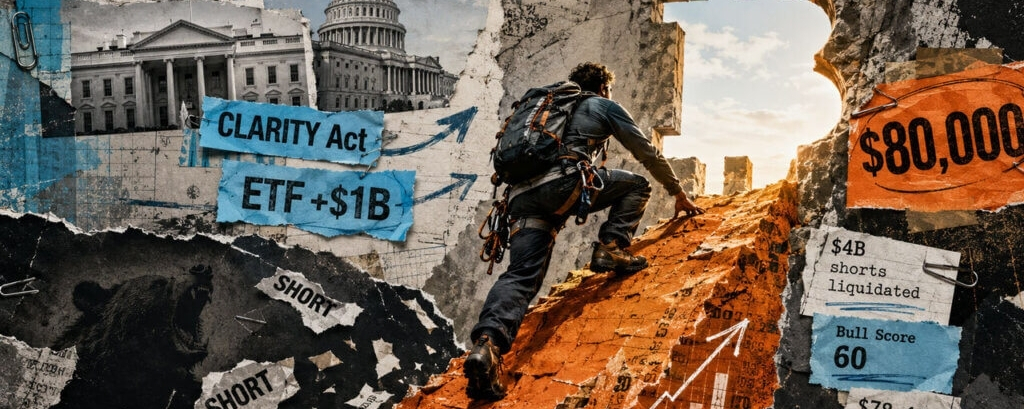
Article
Bitcoin is closing in on $80,000 and already destroyed a record $4 billion in short betsBitcoin’s three-day surge has pushed a major market gauge bullish for the first time since October.
Bitcoin surged toward $80,000 on Friday, extending a three-day rally that has liquidated more than $4 billion in bearish bets and pushed the cryptocurrency to a three-month high.
The rally began Wednesday after the US Treasury said it would at least double liquidity-support buybacks for 10- to 30-year government debt, sending long-term yields lower and improving risk appetite.
Momentum accelerated as President Donald Trump hosted crypto executives at the White House and urged Congress to advance the CLARITY Act, while the SEC and CFTC moved ahead with additional industry-friendly proposals.
Institutional demand also strengthened. SoSoValue data shows spot Bitcoin exchange-traded funds have attracted more than $1 billion since Wednesday, adding fresh buying as Bitcoin broke through resistance levels that had capped earlier recovery attempts.
Derivatives positioning then magnified the move. CoinGlass data shows more than $4 billion in Bitcoin shorts have been liquidated since Wednesday as the asset jumped from around $65,000 through $70,000 and then above $75,000.
According to him, ETF inflows and broader spot demand also supported the advance, helping Bitcoin reclaim its 20-week and 200-day moving averages and move above the estimated short-term holder cost basis near $68,700.
More than $4 billion in Bitcoin shorts have been liquidated since Wednesday, forcing bearish traders to buy back positions as prices rose. That added momentum to demand already coming from ETFs and other spot buyers.
The resulting shift in positioning is now creating a different risk. Søndergaard said momentum is stretched, funding has turned positive, and leveraged traders are increasingly crowded long.
While those conditions do not signal that the breakout is ending, they make continued spot demand more important as forced short covering becomes a smaller part of the move.
Lacie Zhang, research analyst at Bitget Wallet, told CryptoSlate that Bitcoin is beginning to trade with a US political premium as the Trump administration pushes to advance crypto legislation ahead of November's midterm elections.
Zhang said the timing could matter as much as the substance. The administration has an incentive to show progress on borrowing costs, financial markets and emerging industries before the midterms, while the crypto sector has reason to secure the CLARITY Act legislation before a change in the congressional balance makes further action harder.
That political premium could also become a vulnerability. Failure to advance the CLARITY Act, renewed disputes over the administration's crypto policies or a slowdown in regulatory momentum after the elections could quickly weaken part of the support now being priced into Bitcoin.
That leaves spot and ETF demand as the clearest test of what comes next. As the pool of vulnerable short positions shrinks, further gains will increasingly depend on investors continuing to buy Bitcoin at higher prices rather than on forced covering alone.
#Write2Earn
#TrendingTopic
#YapayzekaAI
#Uniswap’s
#Kriptocutrader
Bitcoin is closing in on $80,000 and already destroyed a record $4 billion in short bets
Bitcoin’s three-day surge has pushed a major market gauge bullish for the first time since October.
Bitcoin surged toward $80,000 on Friday, extending a three-day rally that has liquidated more than $4 billion in bearish bets and pushed the cryptocurrency to a three-month high.
The rally began Wednesday after the US Treasury said it would at least double liquidity-support buybacks for 10- to 30-year government debt, sending long-term yields lower and improving risk appetite.
Momentum accelerated as President Donald Trump hosted crypto executives at the White House and urged Congress to advance the CLARITY Act, while the SEC and CFTC moved ahead with additional industry-friendly proposals.
Institutional demand also strengthened. SoSoValue data shows spot Bitcoin exchange-traded funds have attracted more than $1 billion since Wednesday, adding fresh buying as Bitcoin broke through resistance levels that had capped earlier recovery attempts.
Derivatives positioning then magnified the move. CoinGlass data shows more than $4 billion in Bitcoin shorts have been liquidated since Wednesday as the asset jumped from around $65,000 through $70,000 and then above $75,000.
According to him, ETF inflows and broader spot demand also supported the advance, helping Bitcoin reclaim its 20-week and 200-day moving averages and move above the estimated short-term holder cost basis near $68,700.
More than $4 billion in Bitcoin shorts have been liquidated since Wednesday, forcing bearish traders to buy back positions as prices rose. That added momentum to demand already coming from ETFs and other spot buyers.
The resulting shift in positioning is now creating a different risk. Søndergaard said momentum is stretched, funding has turned positive, and leveraged traders are increasingly crowded long.
While those conditions do not signal that the breakout is ending, they make continued spot demand more important as forced short covering becomes a smaller part of the move.
Lacie Zhang, research analyst at Bitget Wallet, told CryptoSlate that Bitcoin is beginning to trade with a US political premium as the Trump administration pushes to advance crypto legislation ahead of November's midterm elections.
Zhang said the timing could matter as much as the substance. The administration has an incentive to show progress on borrowing costs, financial markets and emerging industries before the midterms, while the crypto sector has reason to secure the CLARITY Act legislation before a change in the congressional balance makes further action harder.
That political premium could also become a vulnerability. Failure to advance the CLARITY Act, renewed disputes over the administration's crypto policies or a slowdown in regulatory momentum after the elections could quickly weaken part of the support now being priced into Bitcoin.
That leaves spot and ETF demand as the clearest test of what comes next. As the pool of vulnerable short positions shrinks, further gains will increasingly depend on investors continuing to buy Bitcoin at higher prices rather than on forced covering alone.
#Write2Earn
#TrendingTopic
#YapayzekaAI
#Uniswap’s
#Kriptocutrader
Bitcoin surged toward $80,000 on Friday, extending a three-day rally that has liquidated more than $4 billion in bearish bets and pushed the cryptocurrency to a three-month high.
The rally began Wednesday after the US Treasury said it would at least double liquidity-support buybacks for 10- to 30-year government debt, sending long-term yields lower and improving risk appetite.
Momentum accelerated as President Donald Trump hosted crypto executives at the White House and urged Congress to advance the CLARITY Act, while the SEC and CFTC moved ahead with additional industry-friendly proposals.
Institutional demand also strengthened. SoSoValue data shows spot Bitcoin exchange-traded funds have attracted more than $1 billion since Wednesday, adding fresh buying as Bitcoin broke through resistance levels that had capped earlier recovery attempts.
Derivatives positioning then magnified the move. CoinGlass data shows more than $4 billion in Bitcoin shorts have been liquidated since Wednesday as the asset jumped from around $65,000 through $70,000 and then above $75,000.
According to him, ETF inflows and broader spot demand also supported the advance, helping Bitcoin reclaim its 20-week and 200-day moving averages and move above the estimated short-term holder cost basis near $68,700.
More than $4 billion in Bitcoin shorts have been liquidated since Wednesday, forcing bearish traders to buy back positions as prices rose. That added momentum to demand already coming from ETFs and other spot buyers.
The resulting shift in positioning is now creating a different risk. Søndergaard said momentum is stretched, funding has turned positive, and leveraged traders are increasingly crowded long.
While those conditions do not signal that the breakout is ending, they make continued spot demand more important as forced short covering becomes a smaller part of the move.
Lacie Zhang, research analyst at Bitget Wallet, told CryptoSlate that Bitcoin is beginning to trade with a US political premium as the Trump administration pushes to advance crypto legislation ahead of November's midterm elections.
Zhang said the timing could matter as much as the substance. The administration has an incentive to show progress on borrowing costs, financial markets and emerging industries before the midterms, while the crypto sector has reason to secure the CLARITY Act legislation before a change in the congressional balance makes further action harder.
That political premium could also become a vulnerability. Failure to advance the CLARITY Act, renewed disputes over the administration's crypto policies or a slowdown in regulatory momentum after the elections could quickly weaken part of the support now being priced into Bitcoin.
That leaves spot and ETF demand as the clearest test of what comes next. As the pool of vulnerable short positions shrinks, further gains will increasingly depend on investors continuing to buy Bitcoin at higher prices rather than on forced covering alone.
#Write2Earn
#TrendingTopic
#YapayzekaAI
#Uniswap’s
#Kriptocutrader
23
Log in to explore more content
Join global crypto users on Binance Square
⚡️ Get latest and useful information about crypto.
💬 Trusted by the world’s largest crypto exchange.
👍 Discover real insights from verified creators.
အီးမေးလ် / ဖုန်းနံပါတ်
ရေပန်းစားနေသော ခေါင်းစဉ်များ
1
#RussiaStartsLargeScaleDigitalRubleRolloutSep1
2,771 views
94 Discussing
2
#BitcoinUp23%InAugustOutperformingGoldAndStocks
15,288 views
543 Discussing
3
#BitcoinHolds$78K
11,405 views
110 Discussing
4
#SaylorHintsStrategyBitcoinBuy
2M views
10,353 Discussing
5
#IranStrikesUSBasesInJordan
10,421 views
170 Discussing
6
#LNGTankersStayOutOfHormuz
7,074 views
179 Discussing
7
#SaudiArabiaSeeksAbout$8BLoan
510 views
17 Discussing
8
#TankerHitsMinesInStraitOfHormuz
24,297 views
420 Discussing
9
#USCanadaTradeWarDeepens
16,262 views
313 Discussing
10
#ChinaPropertyStocksJumpOnNewMortgageRules
5,495 views
189 Discussing