
MoonbeamNetwork
28 Posts

MoonbeamNetwork
0 Following
3 Followers
0 Liked
Posts
Please keep in mind that tomorrow is the deadline to submit your final comments to the @FDA concerning Repurposed Meds for Rare Diseases. This is a wonderful opportunity to share your perspective and ensure your thoughts on Long COVID are considered. You can find additional information by visiting the link below:
https://www.reddit.com/r/LongCovidTrials/s/2gTz2Pmo8l
https://www.reddit.com/r/LongCovidTrials/s/2gTz2Pmo8l
Could senescent cells be the hidden trigger behind the loss of smell in Long COVID?
As many are aware, losing the sense of smell is a prevalent symptom for individuals experiencing Long COVID. Scientists have put forward several possible explanations for this phenomenon, which include a hyperactive sympathetic nervous system as well as the lingering presence of the virus in the body.
A recent publication by Tsuji et al. investigates an entirely different potential source for this sensory deficit, specifically looking at senescent cells residing in the olfactory mucosa.
To make sense of this, it helps to define what a senescent cell actually is. Senescence refers to a specific biological phase that cells can occasionally enter. People often compare this to a zombie-like status because the cells are neither dead nor completely functional. Instead of dividing to generate new healthy cells, they stop replicating altogether. Consequently, they can start to release inflammatory chemicals that disrupt the natural messaging systems of the body and impair the performance of neighboring healthy cells.
Even though this process sounds quite harmful, senescence might actually serve as a defensive strategy used by the body to prevent major future health issues like cancer. Whenever a particular cell suffers damage, it is highly undesirable for that cell to keep replicating. As a result, entering a senescent state acts as a biological roadblock, minimizing the dangerous consequences of keeping an old or defective cell in circulation.
Through their experiments, Tsuji et al. observed that the SARS-CoV-2 virus successfully triggered senescence within the fibroblasts of the olfactory mucosa in mice. The most fascinating part of this discovery was that these particular fibroblasts had never been directly infected by the virus themselves.
1/
As many are aware, losing the sense of smell is a prevalent symptom for individuals experiencing Long COVID. Scientists have put forward several possible explanations for this phenomenon, which include a hyperactive sympathetic nervous system as well as the lingering presence of the virus in the body.
A recent publication by Tsuji et al. investigates an entirely different potential source for this sensory deficit, specifically looking at senescent cells residing in the olfactory mucosa.
To make sense of this, it helps to define what a senescent cell actually is. Senescence refers to a specific biological phase that cells can occasionally enter. People often compare this to a zombie-like status because the cells are neither dead nor completely functional. Instead of dividing to generate new healthy cells, they stop replicating altogether. Consequently, they can start to release inflammatory chemicals that disrupt the natural messaging systems of the body and impair the performance of neighboring healthy cells.
Even though this process sounds quite harmful, senescence might actually serve as a defensive strategy used by the body to prevent major future health issues like cancer. Whenever a particular cell suffers damage, it is highly undesirable for that cell to keep replicating. As a result, entering a senescent state acts as a biological roadblock, minimizing the dangerous consequences of keeping an old or defective cell in circulation.
Through their experiments, Tsuji et al. observed that the SARS-CoV-2 virus successfully triggered senescence within the fibroblasts of the olfactory mucosa in mice. The most fascinating part of this discovery was that these particular fibroblasts had never been directly infected by the virus themselves.
1/
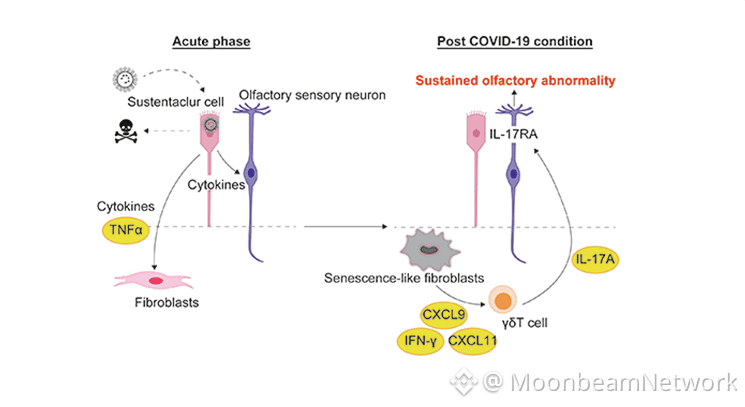
Could the lingering loss of smell associated with Long COVID be triggered by senescent cells? An impaired sense of smell is a well-documented symptom of Long COVID, and researchers have previously explored several possible causes, including an overactive sympathetic nervous system and viral persistence. Now, a fresh study authored by Tsuji et al. investigates a novel underlying factor, focusing on senescent cells present in the olfactory mucosa.
To grasp this concept, it helps to understand what senescence means. Cells can sometimes shift into this specific condition, which is frequently compared to being in a zombie-like state. In this phase, they are not completely dead, yet they no longer function properly. Instead of multiplying as healthy cells do, they cease division altogether. Additionally, these cells can release inflammatory materials that hinder the normal function of neighboring cells and disrupt the chemical messaging pathways of the body.
While this behavior seems highly problematic, cellular senescence is likely a natural defense mechanism designed to prevent future illnesses, such as cancer. When a specific cell suffers damage, halting its ability to divide and create new cells is actually beneficial. Consequently, entering a senescent state serves as a biological safeguard to restrict the negative consequences of diseased or aging cells.
During their investigation, Tsuji et al. observed this phenomenon in mice. They determined that exposure to SARS-CoV-2 prompted senescence among fibroblasts located within the olfactory mucosa of the animals. Remarkably, the virus caused this reaction despite the fact that those specific fibroblasts were not actually infected.
1/
To grasp this concept, it helps to understand what senescence means. Cells can sometimes shift into this specific condition, which is frequently compared to being in a zombie-like state. In this phase, they are not completely dead, yet they no longer function properly. Instead of multiplying as healthy cells do, they cease division altogether. Additionally, these cells can release inflammatory materials that hinder the normal function of neighboring cells and disrupt the chemical messaging pathways of the body.
While this behavior seems highly problematic, cellular senescence is likely a natural defense mechanism designed to prevent future illnesses, such as cancer. When a specific cell suffers damage, halting its ability to divide and create new cells is actually beneficial. Consequently, entering a senescent state serves as a biological safeguard to restrict the negative consequences of diseased or aging cells.
During their investigation, Tsuji et al. observed this phenomenon in mice. They determined that exposure to SARS-CoV-2 prompted senescence among fibroblasts located within the olfactory mucosa of the animals. Remarkably, the virus caused this reaction despite the fact that those specific fibroblasts were not actually infected.
1/
RECOVER Ivabradine Clinical Trial Fails to Show Benefit in #LongCOVID POTS
Why is this?
👉 Could it be because study designed failed to account for different POTS subtypes?
👉Are patients' POTS symptoms caused by Microclots?
More info here: 👇
Why is this?
👉 Could it be because study designed failed to account for different POTS subtypes?
👉Are patients' POTS symptoms caused by Microclots?
More info here: 👇
RECOVER Ivabradine Clinical Trial Fails to Show Benefit in #LongCOVID POTS
Why is this?
👉 Could it be because study designed failed to account for different POTS subtypes?
👉Are patients' POTS symptoms caused by Microclots?
More info here: 👇
Why is this?
👉 Could it be because study designed failed to account for different POTS subtypes?
👉Are patients' POTS symptoms caused by Microclots?
More info here: 👇
Short-term metformin course proves ineffective for Long COVID symptoms in new study
A team of scientists from South Korea, led by Lim et al., recently conducted a randomized, double-blind study utilizing a placebo control. Their objective was to evaluate whether ursodeoxycholic acid (UDCA) or metformin could effectively manage symptoms associated with Long COVID.
Participants were assigned to one of three groups based on a 1:1:1 ratio for a duration of 14 days. During this period, subjects received either a double placebo, a daily intake of 900 mg of UDCA, or oral metformin that was uptitrated to a level of 1500 mg/d.
Upon conclusion of the trial, the findings indicated that neither therapeutic option offered any improvement when compared against the placebo.
The investigation into metformin was especially compelling due to prior evidence. Two earlier clinical trials had established that administering the drug during the acute phase of infection successfully lowered the odds of developing Long COVID. This discrepancy leads to the question: why is metformin effective as a preventative measure but unsuccessful as a treatment for established LC?
1/
A team of scientists from South Korea, led by Lim et al., recently conducted a randomized, double-blind study utilizing a placebo control. Their objective was to evaluate whether ursodeoxycholic acid (UDCA) or metformin could effectively manage symptoms associated with Long COVID.
Participants were assigned to one of three groups based on a 1:1:1 ratio for a duration of 14 days. During this period, subjects received either a double placebo, a daily intake of 900 mg of UDCA, or oral metformin that was uptitrated to a level of 1500 mg/d.
Upon conclusion of the trial, the findings indicated that neither therapeutic option offered any improvement when compared against the placebo.
The investigation into metformin was especially compelling due to prior evidence. Two earlier clinical trials had established that administering the drug during the acute phase of infection successfully lowered the odds of developing Long COVID. This discrepancy leads to the question: why is metformin effective as a preventative measure but unsuccessful as a treatment for established LC?
1/
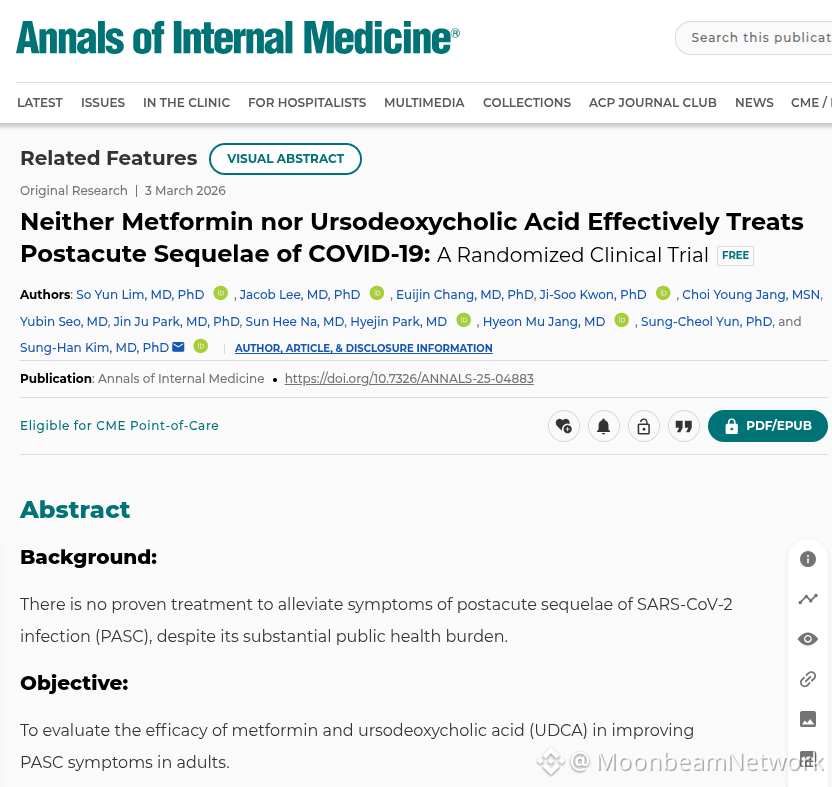
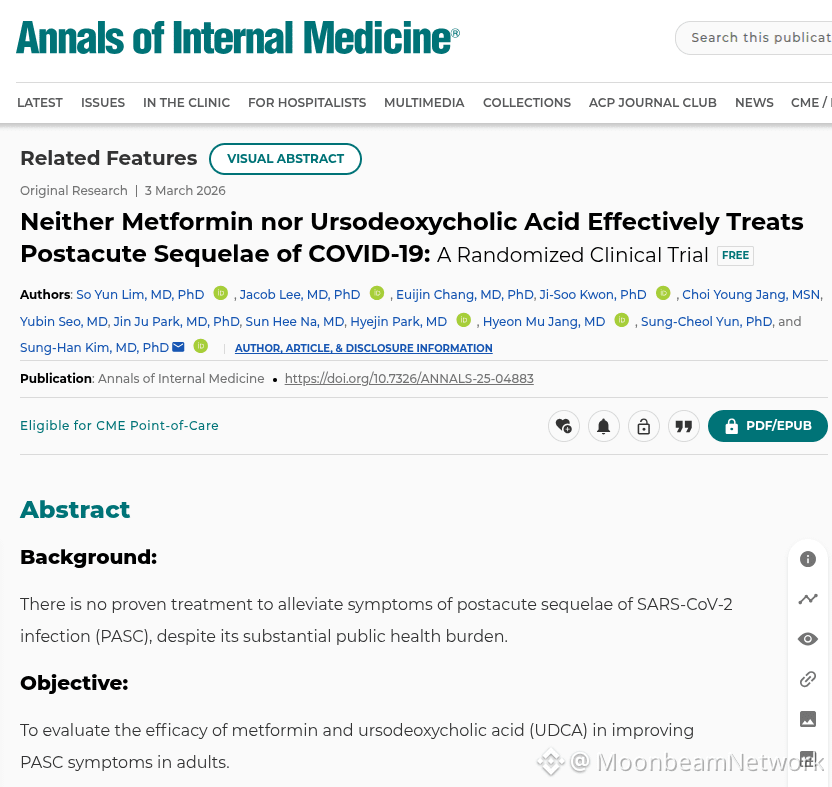
Recent findings indicate that a two-week regimen of metformin does not alleviate symptoms associated with Long COVID.
A research team based in South Korea undertook a randomized, double-blind, and placebo-controlled clinical trial to assess whether ursodeoxycholic acid (UDCA) or metformin could serve as effective treatments for Long COVID.
The study divided participants into three distinct groups using a 1:1:1 ratio. Over a duration of 14 days, individuals were administered either a double placebo, UDCA at a dose of 900 mg once daily, or oral metformin uptitrated to 1500 mg/d.
The final analysis determined that neither pharmaceutical option offered any benefit when compared to the placebo.
Investigating metformin was considered a priority because two previous clinical trials had established that taking the drug during an acute infection reduced the risk of developing Long COVID.
This leads us to ask why metformin appears successful in preventing the condition but fails to treat established cases of LC.
1/
A research team based in South Korea undertook a randomized, double-blind, and placebo-controlled clinical trial to assess whether ursodeoxycholic acid (UDCA) or metformin could serve as effective treatments for Long COVID.
The study divided participants into three distinct groups using a 1:1:1 ratio. Over a duration of 14 days, individuals were administered either a double placebo, UDCA at a dose of 900 mg once daily, or oral metformin uptitrated to 1500 mg/d.
The final analysis determined that neither pharmaceutical option offered any benefit when compared to the placebo.
Investigating metformin was considered a priority because two previous clinical trials had established that taking the drug during an acute infection reduced the risk of developing Long COVID.
This leads us to ask why metformin appears successful in preventing the condition but fails to treat established cases of LC.
1/
Update regarding the Long COVID Labs Patient Grant Fund
We wish to inform the community that limited financial resources remain available through our Patient Grant Fund. These funds are designed to assist patients who require support to access necessary care. If financial constraints are preventing you from pursuing a specific treatment for Long COVID, our program aims to bridge that gap.
To apply, please request that your physician submit an application using the following URL:
https://t.co/RC1IFmOiSl
Our funding efforts are primarily concentrated on therapies that address root causes related to SARS-CoV-2 persistence, including immunomodulators, monoclonals, and antivirals.
One specific option we regard as potentially beneficial is the thymosin alpha 1 peptide. While this treatment has not yet been formally studied, our research indicates it may possess antiviral properties that could assist individuals in clearing SARS-CoV-2.
We encourage you to make contact today if you are interested in exploring thymosin alpha 1 or other anti-SARS-CoV-2 therapies. You may reach us by sending a direct message on this platform or by emailing support@longcovidlabs.org
We wish to inform the community that limited financial resources remain available through our Patient Grant Fund. These funds are designed to assist patients who require support to access necessary care. If financial constraints are preventing you from pursuing a specific treatment for Long COVID, our program aims to bridge that gap.
To apply, please request that your physician submit an application using the following URL:
https://t.co/RC1IFmOiSl
Our funding efforts are primarily concentrated on therapies that address root causes related to SARS-CoV-2 persistence, including immunomodulators, monoclonals, and antivirals.
One specific option we regard as potentially beneficial is the thymosin alpha 1 peptide. While this treatment has not yet been formally studied, our research indicates it may possess antiviral properties that could assist individuals in clearing SARS-CoV-2.
We encourage you to make contact today if you are interested in exploring thymosin alpha 1 or other anti-SARS-CoV-2 therapies. You may reach us by sending a direct message on this platform or by emailing support@longcovidlabs.org

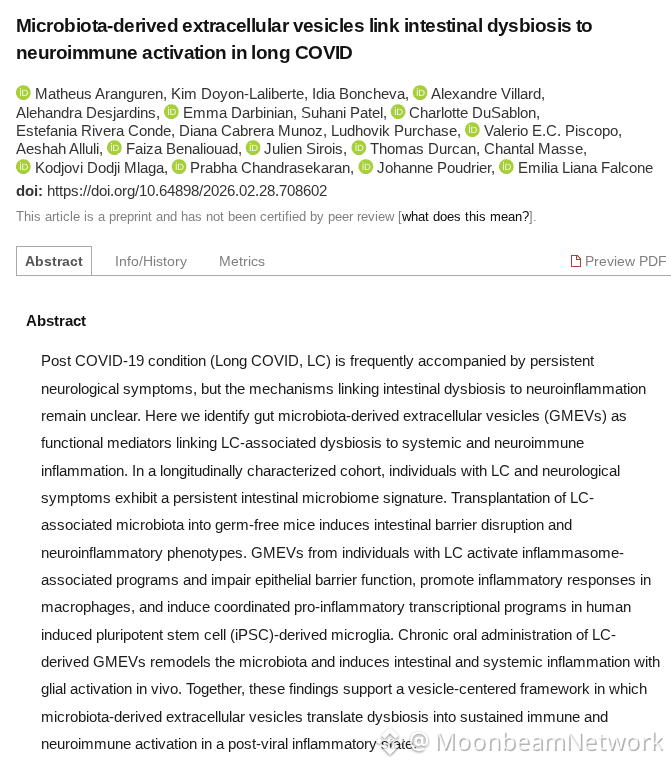
Recent findings have illuminated a compelling link between gut imbalance, known as intestinal dysbiosis, and neurological manifestations in LC cases. The data is quite remarkable. 🦠🧠
For some time, observers have noted that certain patients with Long COVID experience significant recovery leaps when using therapies focused on the microbiome. This latest research offers a plausible scientific rationale for those observations.
A team of Canadian researchers has established that this condition is linked to a distinct microbiome pattern that encourages neuroinflammation. To reach this conclusion, the investigators first mapped the gut characteristics of patients suffering from neurological issues. Subsequently, they obtained stool samples from these individuals and introduced them into mice that were bred to be germ-free.
Following this transplantation, the animals began to suffer from compromised intestinal barriers and displayed symptoms of neuroinflammation.
To determine the cause, the scientists investigated the specific function of gut bacterial extracellular vesicles, known as GBEV. These elements serve as signaling molecules that bacteria in the digestive tract release to interact with peers and modulate their host environment.
Upon analyzing the blood of the mice after the transplant, the team discovered that these circulating GBEVs were the primary agents driving the observed biological alterations.
1/
For some time, observers have noted that certain patients with Long COVID experience significant recovery leaps when using therapies focused on the microbiome. This latest research offers a plausible scientific rationale for those observations.
A team of Canadian researchers has established that this condition is linked to a distinct microbiome pattern that encourages neuroinflammation. To reach this conclusion, the investigators first mapped the gut characteristics of patients suffering from neurological issues. Subsequently, they obtained stool samples from these individuals and introduced them into mice that were bred to be germ-free.
Following this transplantation, the animals began to suffer from compromised intestinal barriers and displayed symptoms of neuroinflammation.
To determine the cause, the scientists investigated the specific function of gut bacterial extracellular vesicles, known as GBEV. These elements serve as signaling molecules that bacteria in the digestive tract release to interact with peers and modulate their host environment.
Upon analyzing the blood of the mice after the transplant, the team discovered that these circulating GBEVs were the primary agents driving the observed biological alterations.
1/
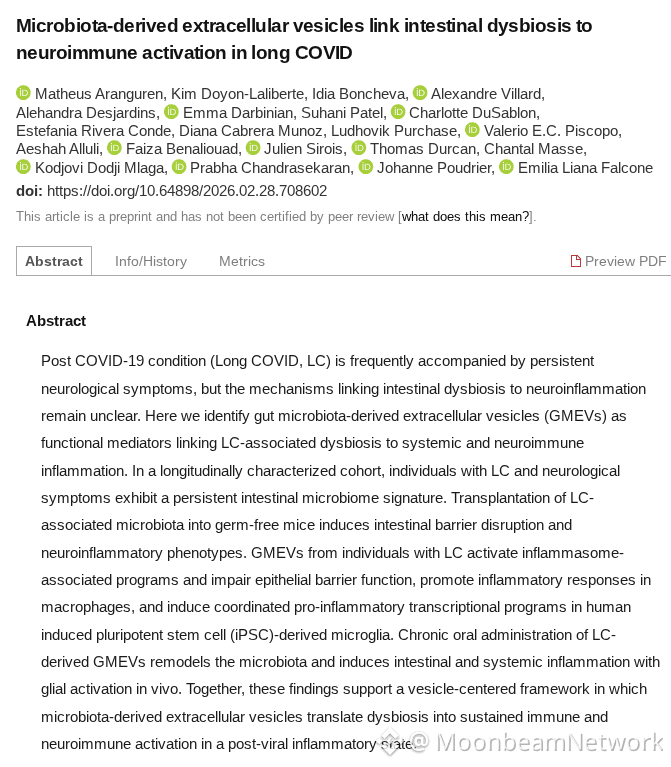
New study shows relationship between intestinal dysbiosis and neurological symptoms in LC 🦠🧠
This is pretty impressive!
Over the years, we have seen some Long COVID patients report dramatic improvements with microbiome-based interventions. This study provides a possible explanation as to why.
Here, Canadian researchers demonstrated that Long COVID is associated with a microbiome signature that promotes neuroinflammation.
First, they identified the microbiome profile of LC patients with neurological symptoms.
They then recreated this microbiome profile and transplanted these specific gut microbiota into germ-free mice.
👉After receiving the transplants, the mice developed intestinal barrier disruption and neuroinflammatory symptoms.
Why did this happen?
Specifically, the researchers examined the role of gut bacterial extracellular vesicles (GBEV). These are signalling molecules released by gut bacteria in order to communicate with other and influence their host environment.
Researchers measured these GBEV's in the bloodstream of the mice, post-transplant - and found that the circulating GBEV's are responsible for many of the biological changes observed.
1/
This is pretty impressive!
Over the years, we have seen some Long COVID patients report dramatic improvements with microbiome-based interventions. This study provides a possible explanation as to why.
Here, Canadian researchers demonstrated that Long COVID is associated with a microbiome signature that promotes neuroinflammation.
First, they identified the microbiome profile of LC patients with neurological symptoms.
They then recreated this microbiome profile and transplanted these specific gut microbiota into germ-free mice.
👉After receiving the transplants, the mice developed intestinal barrier disruption and neuroinflammatory symptoms.
Why did this happen?
Specifically, the researchers examined the role of gut bacterial extracellular vesicles (GBEV). These are signalling molecules released by gut bacteria in order to communicate with other and influence their host environment.
Researchers measured these GBEV's in the bloodstream of the mice, post-transplant - and found that the circulating GBEV's are responsible for many of the biological changes observed.
1/
A recent report by Jason Gale for Bloomberg offers a significant, albeit distressing, perspective on the neurological aftermath of the virus. It is uncommon to find mainstream news outlets covering the pandemic with such gravity in 2026. The piece highlights a condition known as Ondine's curse, a phenomenon where Long COVID patients report that their brains fail to handle respiration automatically, forcing them to breathe consciously. Dr. Avi Nath at the NIH acknowledges this issue as stemming from neurological damage.
Gale details various complications, specifically injury to the brain areas that regulate breathing, drawing on interviews with Dr. Nath and Dr. Tim Henrich, a leading researcher at UCSF. Despite the heavy nature of the reading, there is a silver lining. The article notes that a trial regarding IVIG led by Dr. Nath is expected to wrap up later this year. This treatment offers a potential path forward, as it may help alleviate symptoms by soothing an overactive immune system. While the insights are sobering, it is excellent to see the subject treated with the appropriate level of seriousness.
Gale details various complications, specifically injury to the brain areas that regulate breathing, drawing on interviews with Dr. Nath and Dr. Tim Henrich, a leading researcher at UCSF. Despite the heavy nature of the reading, there is a silver lining. The article notes that a trial regarding IVIG led by Dr. Nath is expected to wrap up later this year. This treatment offers a potential path forward, as it may help alleviate symptoms by soothing an overactive immune system. While the insights are sobering, it is excellent to see the subject treated with the appropriate level of seriousness.
Featured recently in @bmj_latest Neurology, a team of Australian researchers has developed a unique, non-invasive protocol designed to identify small-fiber neuropathy (SFN) in patients suffering from Long COVID. The authors observed that earlier studies using skin biopsies for diagnosis established a high prevalence of SFN, with one particular study citing a rate of 50%.
Since the biopsy process is invasive, this group aimed to assess more accessible testing options. They formulated a protocol utilizing non-invasive small fibre electrodiagnostic testing, a process where electrodes are applied to the skin to gauge nerve function.
The assessment focused on four key areas: sympathetic skin responses, the cutaneous silent period, quantitative thermal thresholds, and electrochemical skin conductance. These results were then compared against the detection rates of more conventional methods.
Out of the 9 patients included in the study, 3 were found to have SFN. While it is challenging to apply findings from a small cohort of 9 people to the general population, this ratio aligns somewhat with previous data suggesting a 50% diagnosis rate.
The team is encouraged by the outcome, noting that their method successfully detected demonstrable abnormalities in the subgroup of 3 patients. As they move forward, the researchers hope to refine this non-invasive protocol as a research tool, which could significantly improve accessibility for patients seeking diagnosis and treatment for SFN. 🙏
Since the biopsy process is invasive, this group aimed to assess more accessible testing options. They formulated a protocol utilizing non-invasive small fibre electrodiagnostic testing, a process where electrodes are applied to the skin to gauge nerve function.
The assessment focused on four key areas: sympathetic skin responses, the cutaneous silent period, quantitative thermal thresholds, and electrochemical skin conductance. These results were then compared against the detection rates of more conventional methods.
Out of the 9 patients included in the study, 3 were found to have SFN. While it is challenging to apply findings from a small cohort of 9 people to the general population, this ratio aligns somewhat with previous data suggesting a 50% diagnosis rate.
The team is encouraged by the outcome, noting that their method successfully detected demonstrable abnormalities in the subgroup of 3 patients. As they move forward, the researchers hope to refine this non-invasive protocol as a research tool, which could significantly improve accessibility for patients seeking diagnosis and treatment for SFN. 🙏
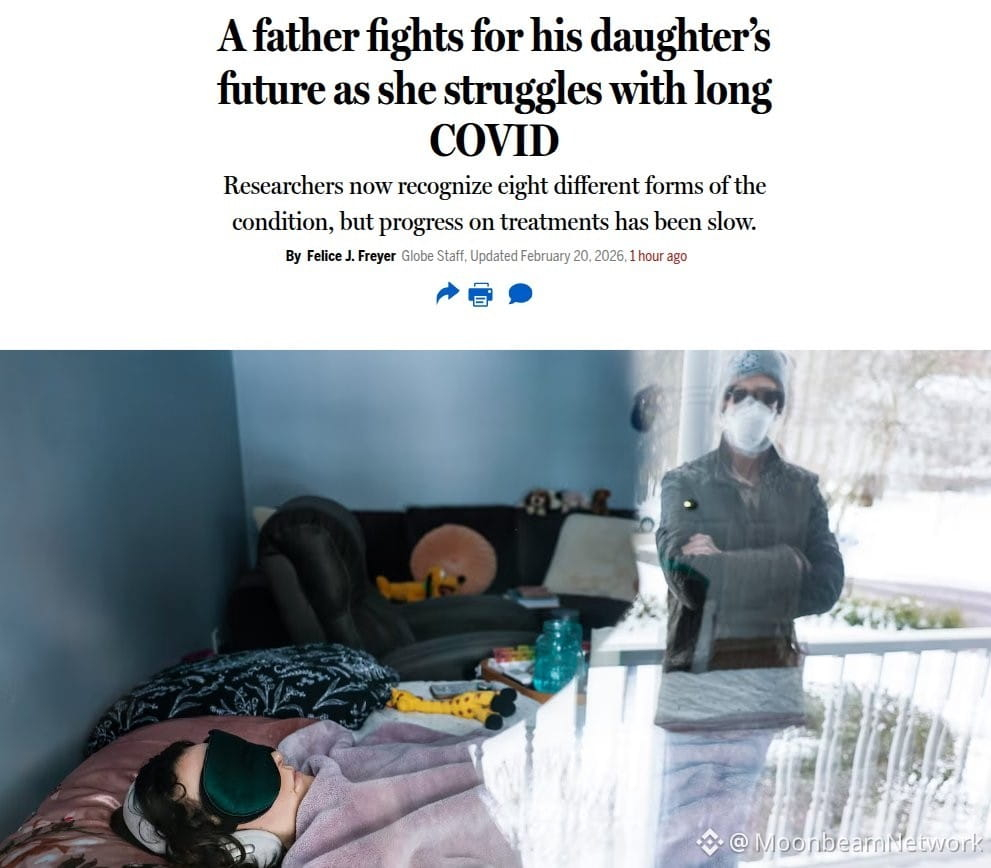
It is highly encouraging to see Long COVID featured across multiple major news platforms throughout this week. The Boston Globe recently highlighted the journey of Samantha Crausman, a severe LC patient currently in her late 20s.
Her narrative is one that many of us recognize all too well. She remains bedbound and must significantly restrict her usage of both physical and cognitive energy. Her relatives take extraordinary measures to safeguard her against reinfection, to the extent that the photographer for the story was only permitted to take pictures from outside her home.
The piece concludes with insights from her father, Rob Crausman, who is a doctor. He draws a comparison to his time as an intern during the bleak early phases of the AIDS epidemic. He shares that a friend diagnosed with HIV back then was expected to pass away, yet that friend lived a happy life and is still doing wonderful things to this day.
Her narrative is one that many of us recognize all too well. She remains bedbound and must significantly restrict her usage of both physical and cognitive energy. Her relatives take extraordinary measures to safeguard her against reinfection, to the extent that the photographer for the story was only permitted to take pictures from outside her home.
The piece concludes with insights from her father, Rob Crausman, who is a doctor. He draws a comparison to his time as an intern during the bleak early phases of the AIDS epidemic. He shares that a friend diagnosed with HIV back then was expected to pass away, yet that friend lived a happy life and is still doing wonderful things to this day.
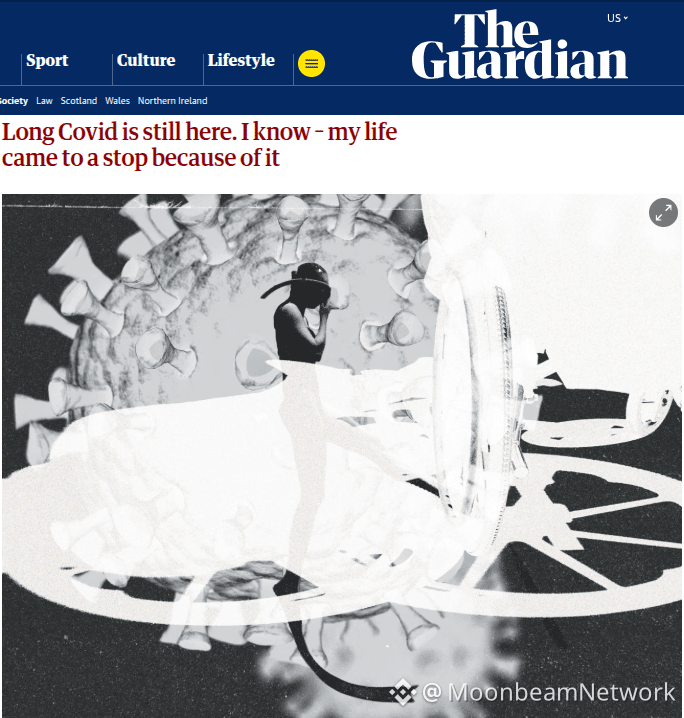
In a moving piece for @guardian, Savannah Brooks writes, "Long Covid is still here. I know - my life came to a stop because of it." Her story offers a significant look at the personal toll of Long COVID. 💔
It leads one to wonder about the volume of individuals globally facing similar struggles, regardless of whether they identify the virus as the cause.
In the article, Brooks cites @mtosterholm, an expert in infectious diseases, who inquires:
“How much of [long Covid] has actually disappeared due to recovery? How much of it has disappeared because people just stopped talking about it, tried to move on with their lives?
And then how many don’t even recognize what they have? How many people are living a compromised life, but they don’t recognize why?”
1/
It leads one to wonder about the volume of individuals globally facing similar struggles, regardless of whether they identify the virus as the cause.
In the article, Brooks cites @mtosterholm, an expert in infectious diseases, who inquires:
“How much of [long Covid] has actually disappeared due to recovery? How much of it has disappeared because people just stopped talking about it, tried to move on with their lives?
And then how many don’t even recognize what they have? How many people are living a compromised life, but they don’t recognize why?”
1/
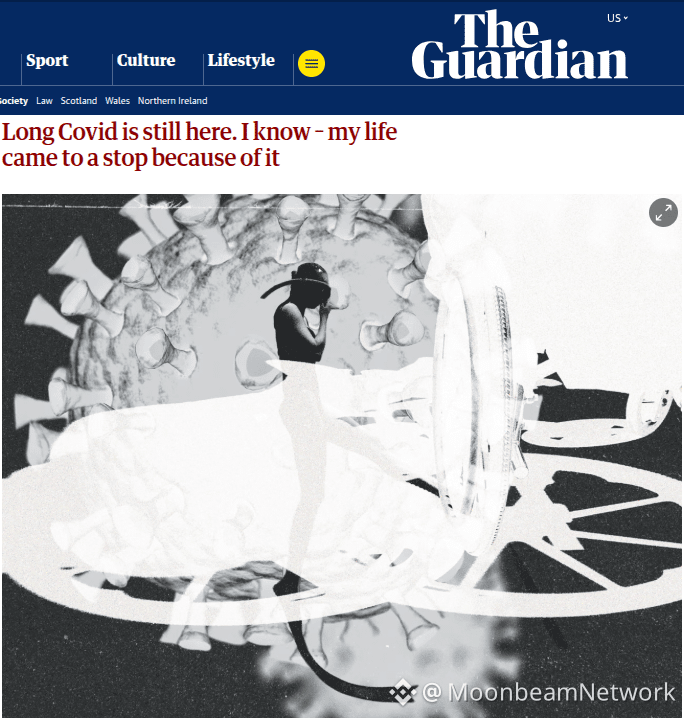
In a recent discussion featured in @guardian, @mtosterholm explores important questions regarding the visibility of long Covid. He considers whether the condition is truly fading due to patient recovery, or if it simply seems that way because society has stopped discussing it in an effort to move forward. Furthermore, he points out that many people may not even identify their symptoms correctly, leading to a situation where individuals are navigating a compromised existence without understanding the true reason behind their struggles.
1/
1/
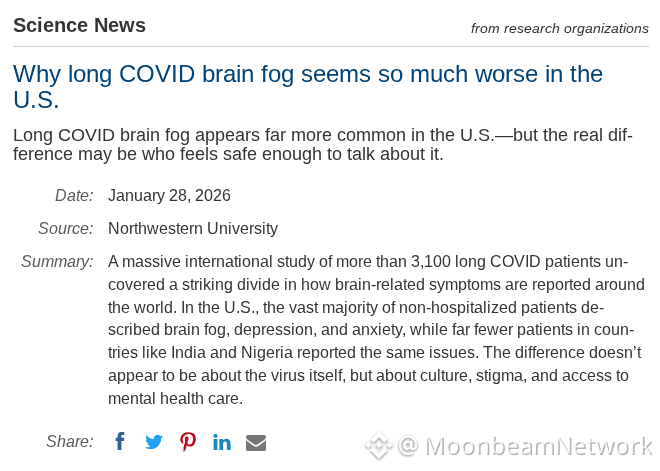
Why does Long COVID brain fog seem to affect more patients in the US? (Hint: it’s not what it seems!) 🧠
A recent Northwestern University study surveyed 3,100 long COVID patients from around the world. 🌍
They interviewed patients from:
-Chicago US
-Medellín, Colombia
-Lagos, Nigeria
-Jaipur, India
Surprisingly, they found that patients in the US reported symptoms such as brain fog and mental health effects at much higher rates than patients in the other cities.
86% of non-hospitalized patients in the U.S. reported brain fog. By contrast, brain fog was reported by:
-63% of patients in Nigeria
-62% in Colombia
-and just 15% in India.
When it comes to anxiety or depression, the difference was even more clear:
Nearly 75% of non-hospitalized patients in the U.S. reported depression or anxiety.
By contrast, these symptoms were reported by:
-40% of Colombian patients
-Fewer than 20% of Nigerian and Indian patients
Researchers suspect these differences are not biological. Rather, they believe cultural differences affect who is likely to feel comfortable reporting mental health symptoms to researchers.
In the US, while things are far from perfect, there is more acceptance around mental health. By contrast, patients in other parts of the world are more likely to experience stigma, meaning they’re less likely to feel comfortable disclosing mental health symptoms to researchers.
These cultural nuances are very important for doctors, researchers, and organizations to keep in mind.
We know there are millions of Long COVID patients all over the world in need of proper diagnostics and treatment - and there are likely significant numbers of patients who are not comfortable speaking up about all of the symptoms they’re experiencing.
We can help by continuing to raise awareness about Long COVID, so that doctors internationally are aware of these symptoms and can be on the lookout for patients who need help.
Papers like this one are very important to raise awareness of the scope of the problem. Thank you to Jimenez et al. for this important work!
A recent Northwestern University study surveyed 3,100 long COVID patients from around the world. 🌍
They interviewed patients from:
-Chicago US
-Medellín, Colombia
-Lagos, Nigeria
-Jaipur, India
Surprisingly, they found that patients in the US reported symptoms such as brain fog and mental health effects at much higher rates than patients in the other cities.
86% of non-hospitalized patients in the U.S. reported brain fog. By contrast, brain fog was reported by:
-63% of patients in Nigeria
-62% in Colombia
-and just 15% in India.
When it comes to anxiety or depression, the difference was even more clear:
Nearly 75% of non-hospitalized patients in the U.S. reported depression or anxiety.
By contrast, these symptoms were reported by:
-40% of Colombian patients
-Fewer than 20% of Nigerian and Indian patients
Researchers suspect these differences are not biological. Rather, they believe cultural differences affect who is likely to feel comfortable reporting mental health symptoms to researchers.
In the US, while things are far from perfect, there is more acceptance around mental health. By contrast, patients in other parts of the world are more likely to experience stigma, meaning they’re less likely to feel comfortable disclosing mental health symptoms to researchers.
These cultural nuances are very important for doctors, researchers, and organizations to keep in mind.
We know there are millions of Long COVID patients all over the world in need of proper diagnostics and treatment - and there are likely significant numbers of patients who are not comfortable speaking up about all of the symptoms they’re experiencing.
We can help by continuing to raise awareness about Long COVID, so that doctors internationally are aware of these symptoms and can be on the lookout for patients who need help.
Papers like this one are very important to raise awareness of the scope of the problem. Thank you to Jimenez et al. for this important work!
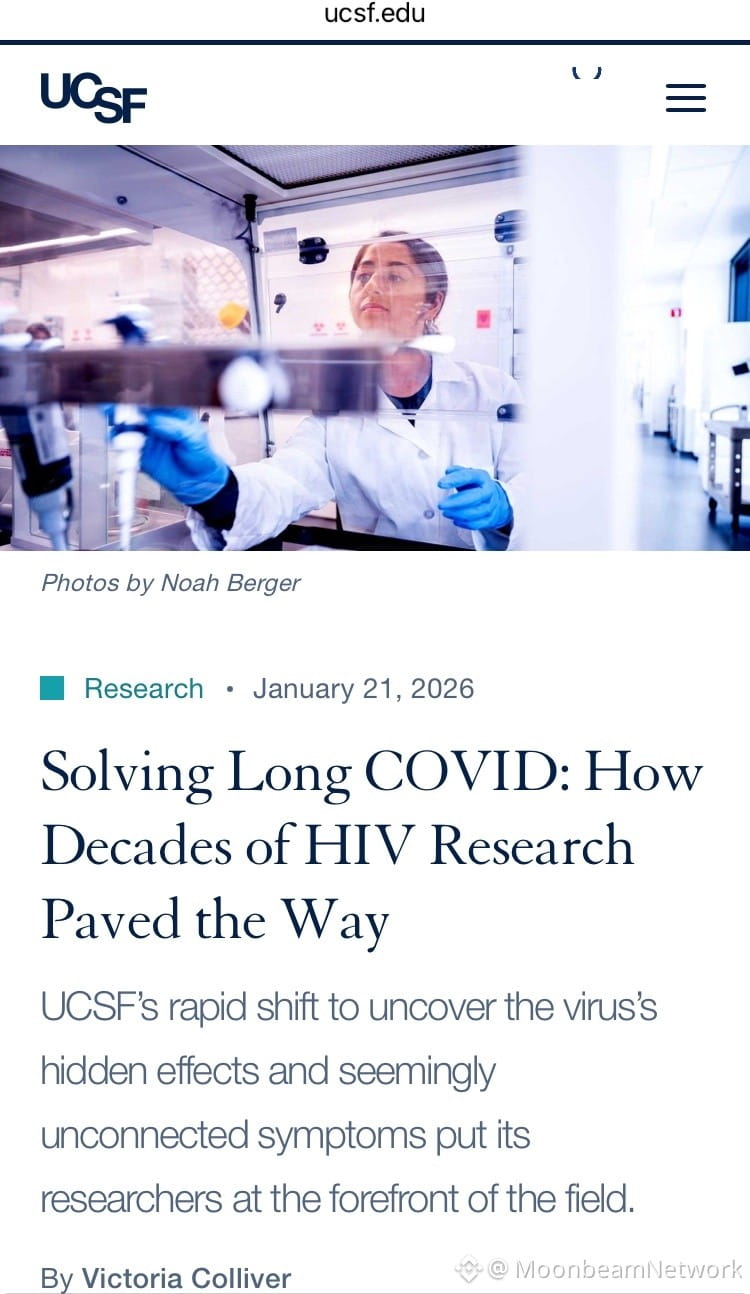
Here is a fantastic article highlighting the University of California San Francisco. It explores how the research team is applying decades of knowledge gained from HIV studies to the battle against Long COVID. UCSF: Solving Long COVID: How Decades of HIV Research Paved the Way 🙏 👇
Recent findings indicate that identifying enduring lung injury following a COVID-19 infection could be achieved through a straightforward blood screening. 🩸
Investigations conducted in the UK revealed that individuals suffering from lasting lung irregularities months after being hospitalized showed increased concentrations of two specific biological markers. 🧬
The first marker, MMP-7, plays a role in tissue decomposition as the body strives to repair and restructure itself. The second, KL-6, signals inflammation or harm within the lungs, with higher counts typically observed in those diagnosed with different forms of interstitial lung disease.
When these indicators remain high, it suggests continuous damage to the epithelium, the fragile outer lining of our respiratory organs. 🫁
Discovery of these patterns offers vital insight into the biological processes driving the respiratory symptoms some individuals continue to face following acute Covid-19, and may offer explanations regarding Long COVID cases as well. 🔎
Gaining a clearer grasp of these mechanisms brings us closer to developing effective therapies! 🙌
1/
Investigations conducted in the UK revealed that individuals suffering from lasting lung irregularities months after being hospitalized showed increased concentrations of two specific biological markers. 🧬
The first marker, MMP-7, plays a role in tissue decomposition as the body strives to repair and restructure itself. The second, KL-6, signals inflammation or harm within the lungs, with higher counts typically observed in those diagnosed with different forms of interstitial lung disease.
When these indicators remain high, it suggests continuous damage to the epithelium, the fragile outer lining of our respiratory organs. 🫁
Discovery of these patterns offers vital insight into the biological processes driving the respiratory symptoms some individuals continue to face following acute Covid-19, and may offer explanations regarding Long COVID cases as well. 🔎
Gaining a clearer grasp of these mechanisms brings us closer to developing effective therapies! 🙌
1/
The @BBC is currently showcasing the Rosetta Stone study regarding MECFS and Long COVID, which has been financed with £1.1 million from the @MEAssociation. 🙏👇
1/
1/
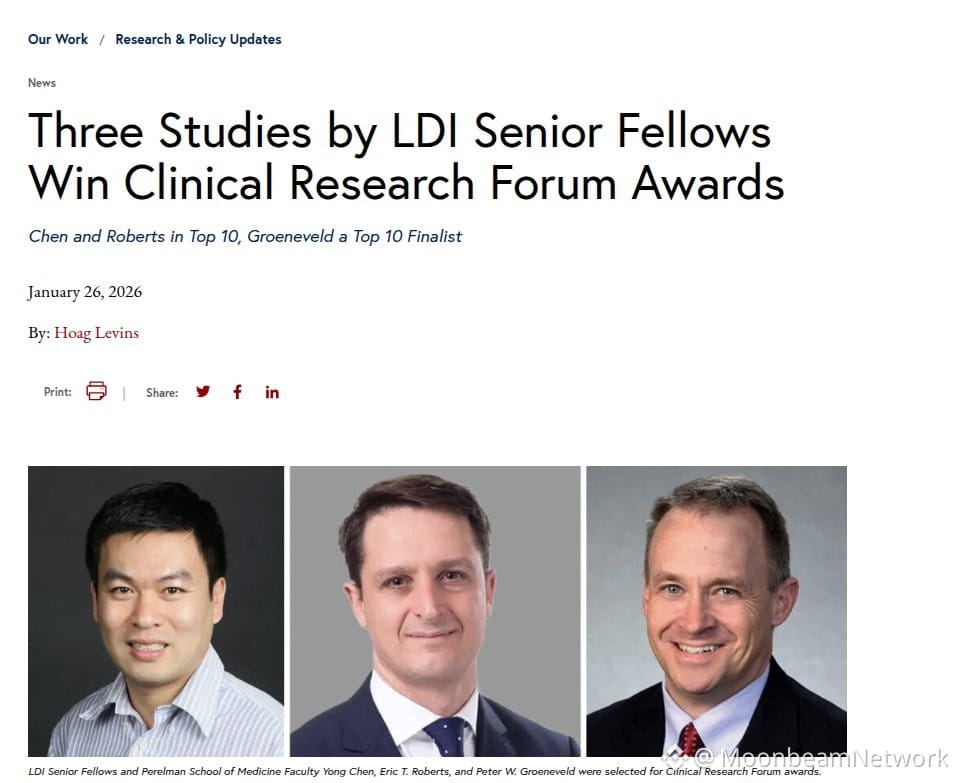
Making headlines in the field of Long COVID, UPenn researcher Yong Chen, PhD, was recently honored with the Clinical Research Forum Awards. This recognition was given for his paper titled Long COVID Associated with SARS-CoV-2 Reinfection Among Children and Adolescents in the Omicron Era (RECOVER-EHR).
Regarding the selection of this year's recipients, the Clinical Research Forum noted that these 10 award-winning studies exemplify major advances resulting from the nation’s investment in research to benefit the health and welfare of its citizens. It is truly exciting to witness a paper on Long COVID recognized for having such a profound impact.
Specifically, the findings of this study challenge the frequent misconception that reinfections are likely to be benign or more mild. On the contrary, the research indicates that children and adolescents face a significantly higher risk of various PASC outcomes after reinfection with SARS-CoV-2.
1/
Regarding the selection of this year's recipients, the Clinical Research Forum noted that these 10 award-winning studies exemplify major advances resulting from the nation’s investment in research to benefit the health and welfare of its citizens. It is truly exciting to witness a paper on Long COVID recognized for having such a profound impact.
Specifically, the findings of this study challenge the frequent misconception that reinfections are likely to be benign or more mild. On the contrary, the research indicates that children and adolescents face a significantly higher risk of various PASC outcomes after reinfection with SARS-CoV-2.
1/
Log in to explore more content