Binance Square
S E L E N E
11.1k Posts

S E L E N E

Square Verified+
Turning Volatility Into Opportunity 📈🚀
629 Following
32.2K+ Followers
27.7K+ Liked
Posts
Portfolio
·
--
Verified
Article
Newton Protocol The Real Test Isn't AI—It's Whether Anyone Still Stakes When the Rewards FadeThe crypto industry has a habit of falling in love with narratives long before it proves they work. One cycle it was DeFi. Then NFTs. Then the metaverse. Restaking followed. Today, AI has become the latest label attached to almost everything. Every week another protocol claims it is building autonomous agents, intelligent trading systems, or AI-powered finance. After reading enough announcements, they begin to sound interchangeable. The marketing changes faster than the underlying problems. That was exactly my mindset when I started looking into Newton Protocol. At first glance, it looked like another project trying to combine AI, automation, marketplaces, infrastructure, rollups, and token incentives into one ambitious vision. Crypto has seen countless projects attempt something similar. But after spending more time reading through the architecture and token design, I realized the interesting part isn't actually the AI. It's the trust model behind it. Automation Is Easy to Promise Crypto has become too complicated for the average participant. Managing multiple wallets, monitoring yields across chains, rebalancing portfolios, approving transactions, and tracking market opportunities is almost a full-time job. Most users don't want more dashboards. They want better outcomes. That's why AI agents feel inevitable. Imagine software that automatically buys assets on schedule, moves liquidity when yields change, protects positions during volatility, or executes predefined trading strategies without requiring constant attention. It sounds convenient. And convenience has always been one of crypto's biggest missing pieces. Newton is attempting to build infrastructure that allows those autonomous systems to exist without requiring blind trust. Instead of asking users to simply hand over control, the protocol focuses on authorization, permissions, cryptographic verification, and policy enforcement. The idea is straightforward. Users define what an AI agent is allowed to do. Operators evaluate whether those actions follow predefined policies. Cryptographic proofs and verification mechanisms provide evidence that execution remained within those approved limits. That shift may seem subtle. It isn't. Most AI discussions focus on making systems smarter. #Newt is trying to make them more accountable. Intelligence Isn't the Scarce Resource For years, crypto projects competed on speed. Faster blockchains. Cheaper transactions. Lower latency. Higher throughput. But as AI becomes more involved in finance, raw intelligence stops being the hardest problem. Trust becomes the bottleneck. If an autonomous system controls assets worth thousands—or millions—of dollars, users don't simply want it to be intelligent. They want proof that it behaved exactly as promised. That's where Newton's infrastructure begins making sense. Instead of marketing AI as the product, the protocol positions authorization as the product. The AI can change. The models will improve. Strategies will evolve. But the rules governing what those systems are allowed to do become the foundation. That is a much more durable infrastructure layer. The Marketplace Challenge Nobody Talks About Technology alone has never guaranteed success in crypto. History proves that repeatedly. Brilliant protocols disappear every cycle. Meanwhile, simpler products often achieve massive adoption because they solve a problem people immediately understand. Newton plans to build an ecosystem where developers create AI agents, operators execute them, and users delegate financial actions under predefined permissions. On paper, that's an attractive network effect. Developers build. Users consume. Operators earn. The protocol grows. Reality is rarely that simple. Marketplaces require both supply and demand at the same time. Too many developers without users creates abandoned projects. Too many users without quality agents creates disappointment. Growing both sides simultaneously is one of the hardest problems any protocol can face. Even if Newton's technology works exactly as designed, adoption remains the real challenge. Infrastructure only becomes valuable when people actually use it. Staking Is Where Incentives Meet Reality This is the part that kept pulling my attention back. Not the AI. Not the marketplace. The staking model. Many crypto networks attract security through generous rewards. Early participants lock tokens because emissions are attractive. There's nothing unusual about that. The real question comes later. Will participants continue securing the network after incentives become ordinary? Newton's staking architecture is more interesting than simple yield farming because stake carries responsibility. Operators don't merely lock tokens. They participate in evaluating whether requested actions comply with predefined policies. Delegators back those operators with additional stake. If operators consistently perform honestly, they earn rewards. If they behave dishonestly or carelessly, challenge mechanisms and slashing introduce economic consequences. That changes the role of the token. Instead of existing only as a speculative asset, $NEWT becomes part of the protocol's security model. Stake represents accountability. And accountability is much harder to fake than yield. Yield Can Attract Capital But Can It Keep It? Today, staking rewards naturally attract attention. Higher returns almost always do. That's how early blockchain networks bootstrap participation. There's nothing wrong with that approach. However, temporary incentives shouldn't be confused with long-term demand. At roughly five cents per token and approximately 288 million circulating supply, Newton remains relatively early in its lifecycle. Emissions help encourage participation. But emissions are temporary. Eventually those rewards decline. When that happens, something else must replace them. That's where the protocol faces its biggest long-term question. Will operators continue participating because policy verification generates meaningful fees? Will delegators keep staking because governance carries genuine influence? Will demand for verifiable automation create sustainable economic activity? Or will participation slowly decline once rewards become less attractive? Every proof-of-stake network eventually reaches that crossroads. Newton won't be different. Governance Still Has Something to Prove Newton's roadmap outlines a future where staked NEWT holders influence ecosystem priorities. That includes governance over protocol upgrades, model registrations, ecosystem funding, and broader network direction. It's an ambitious vision. Today, however, much of that governance remains aspirational rather than fully decentralized. That's not necessarily a weakness. Many successful protocols begin with tighter coordination before gradually transferring authority to the community. Still, investors should distinguish between current functionality and future promises. Roadmaps create expectations. Execution builds confidence. There's an important difference. Infrastructure Usually Wins Quietly One thing I appreciate about Newton is that it doesn't rely entirely on AI hype. The protocol repeatedly emphasizes authorization, verification, permissions, and execution safeguards. Those aren't exciting words. They rarely trend on social media. Nobody celebrates permission management. Nobody posts viral threads about compliance primitives. Yet those invisible layers often determine whether systems survive real-world usage. The internet wasn't built on flashy interfaces. It was built on reliable infrastructure. Crypto may follow the same path. If autonomous finance becomes mainstream, users won't simply need smarter agents. They'll need trustworthy ones. That's a much harder problem. And potentially a much larger opportunity. The Real Metric Isn't TVL Crypto often obsesses over total value locked. TVL creates headlines. Price creates attention. Neither necessarily measures whether a protocol has solved its intended problem. For Newton, the more meaningful indicators may eventually become: How many real policies are evaluated every day?How many autonomous actions are verified?How much economic activity depends on its authorization layer?How many developers continue building agents after incentives normalize? Those metrics reveal genuine usage. Not temporary excitement. Newton Protocol isn't asking users to believe AI will magically solve finance. It's making a more practical argument. Automation is coming whether we like it or not. The challenge is making that automation accountable. That's a worthwhile problem to solve. Whether Newton ultimately succeeds won't depend solely on its cryptography, its architecture, or even its AI capabilities. It will depend on whether developers keep building, whether users trust autonomous execution, and whether staking evolves from a reward opportunity into a genuine security layer. For me, that's the most interesting question surrounding NEWT. Not whether staking rewards are attractive today. But whether operators and delegators will still be committed years from now when emissions become ordinary, governance becomes meaningful, and real policy verification—not incentives—drives network value. Because in crypto, anyone can attract attention with rewards. Very few protocols earn long-term commitment. And that difference usually decides who survives the next cycle. @NewtonProtocol $BLUR {spot}(BLURUSDT) $EVAA {future}(EVAAUSDT)

Newton Protocol The Real Test Isn't AI—It's Whether Anyone Still Stakes When the Rewards Fade

The crypto industry has a habit of falling in love with narratives long before it proves they work.
One cycle it was DeFi. Then NFTs. Then the metaverse. Restaking followed. Today, AI has become the latest label attached to almost everything.
Every week another protocol claims it is building autonomous agents, intelligent trading systems, or AI-powered finance. After reading enough announcements, they begin to sound interchangeable. The marketing changes faster than the underlying problems.
That was exactly my mindset when I started looking into Newton Protocol.
At first glance, it looked like another project trying to combine AI, automation, marketplaces, infrastructure, rollups, and token incentives into one ambitious vision. Crypto has seen countless projects attempt something similar.
But after spending more time reading through the architecture and token design, I realized the interesting part isn't actually the AI.
It's the trust model behind it.
Automation Is Easy to Promise
Crypto has become too complicated for the average participant.
Managing multiple wallets, monitoring yields across chains, rebalancing portfolios, approving transactions, and tracking market opportunities is almost a full-time job.
Most users don't want more dashboards.
They want better outcomes.
That's why AI agents feel inevitable.
Imagine software that automatically buys assets on schedule, moves liquidity when yields change, protects positions during volatility, or executes predefined trading strategies without requiring constant attention.
It sounds convenient.
And convenience has always been one of crypto's biggest missing pieces.
Newton is attempting to build infrastructure that allows those autonomous systems to exist without requiring blind trust.
Instead of asking users to simply hand over control, the protocol focuses on authorization, permissions, cryptographic verification, and policy enforcement.
The idea is straightforward.
Users define what an AI agent is allowed to do.
Operators evaluate whether those actions follow predefined policies.
Cryptographic proofs and verification mechanisms provide evidence that execution remained within those approved limits.
That shift may seem subtle.
It isn't.
Most AI discussions focus on making systems smarter.
#Newt is trying to make them more accountable.
Intelligence Isn't the Scarce Resource
For years, crypto projects competed on speed.
Faster blockchains.
Cheaper transactions.
Lower latency.
Higher throughput.
But as AI becomes more involved in finance, raw intelligence stops being the hardest problem.
Trust becomes the bottleneck.
If an autonomous system controls assets worth thousands—or millions—of dollars, users don't simply want it to be intelligent.
They want proof that it behaved exactly as promised.
That's where Newton's infrastructure begins making sense.
Instead of marketing AI as the product, the protocol positions authorization as the product.
The AI can change.
The models will improve.
Strategies will evolve.
But the rules governing what those systems are allowed to do become the foundation.
That is a much more durable infrastructure layer.
The Marketplace Challenge Nobody Talks About
Technology alone has never guaranteed success in crypto.
History proves that repeatedly.
Brilliant protocols disappear every cycle.
Meanwhile, simpler products often achieve massive adoption because they solve a problem people immediately understand.
Newton plans to build an ecosystem where developers create AI agents, operators execute them, and users delegate financial actions under predefined permissions.
On paper, that's an attractive network effect.
Developers build.
Users consume.
Operators earn.
The protocol grows.
Reality is rarely that simple.
Marketplaces require both supply and demand at the same time.
Too many developers without users creates abandoned projects.
Too many users without quality agents creates disappointment.
Growing both sides simultaneously is one of the hardest problems any protocol can face.
Even if Newton's technology works exactly as designed, adoption remains the real challenge.
Infrastructure only becomes valuable when people actually use it.
Staking Is Where Incentives Meet Reality
This is the part that kept pulling my attention back.
Not the AI.
Not the marketplace.
The staking model.
Many crypto networks attract security through generous rewards.
Early participants lock tokens because emissions are attractive.
There's nothing unusual about that.
The real question comes later.
Will participants continue securing the network after incentives become ordinary?
Newton's staking architecture is more interesting than simple yield farming because stake carries responsibility.
Operators don't merely lock tokens.
They participate in evaluating whether requested actions comply with predefined policies.
Delegators back those operators with additional stake.
If operators consistently perform honestly, they earn rewards.
If they behave dishonestly or carelessly, challenge mechanisms and slashing introduce economic consequences.
That changes the role of the token.
Instead of existing only as a speculative asset, $NEWT becomes part of the protocol's security model.
Stake represents accountability.
And accountability is much harder to fake than yield.
Yield Can Attract Capital
But Can It Keep It?
Today, staking rewards naturally attract attention.
Higher returns almost always do.
That's how early blockchain networks bootstrap participation.
There's nothing wrong with that approach.
However, temporary incentives shouldn't be confused with long-term demand.
At roughly five cents per token and approximately 288 million circulating supply, Newton remains relatively early in its lifecycle.
Emissions help encourage participation.
But emissions are temporary.
Eventually those rewards decline.
When that happens, something else must replace them.
That's where the protocol faces its biggest long-term question.
Will operators continue participating because policy verification generates meaningful fees?
Will delegators keep staking because governance carries genuine influence?
Will demand for verifiable automation create sustainable economic activity?
Or will participation slowly decline once rewards become less attractive?
Every proof-of-stake network eventually reaches that crossroads.
Newton won't be different.
Governance Still Has Something to Prove
Newton's roadmap outlines a future where staked NEWT holders influence ecosystem priorities.
That includes governance over protocol upgrades, model registrations, ecosystem funding, and broader network direction.
It's an ambitious vision.
Today, however, much of that governance remains aspirational rather than fully decentralized.
That's not necessarily a weakness.
Many successful protocols begin with tighter coordination before gradually transferring authority to the community.
Still, investors should distinguish between current functionality and future promises.
Roadmaps create expectations.
Execution builds confidence.
There's an important difference.
Infrastructure Usually Wins Quietly
One thing I appreciate about Newton is that it doesn't rely entirely on AI hype.
The protocol repeatedly emphasizes authorization, verification, permissions, and execution safeguards.
Those aren't exciting words.
They rarely trend on social media.
Nobody celebrates permission management.
Nobody posts viral threads about compliance primitives.
Yet those invisible layers often determine whether systems survive real-world usage.
The internet wasn't built on flashy interfaces.
It was built on reliable infrastructure.
Crypto may follow the same path.
If autonomous finance becomes mainstream, users won't simply need smarter agents.
They'll need trustworthy ones.
That's a much harder problem.
And potentially a much larger opportunity.
The Real Metric Isn't TVL
Crypto often obsesses over total value locked.
TVL creates headlines.
Price creates attention.
Neither necessarily measures whether a protocol has solved its intended problem.
For Newton, the more meaningful indicators may eventually become:
How many real policies are evaluated every day?How many autonomous actions are verified?How much economic activity depends on its authorization layer?How many developers continue building agents after incentives normalize?
Those metrics reveal genuine usage.
Not temporary excitement.
Newton Protocol isn't asking users to believe AI will magically solve finance.
It's making a more practical argument.
Automation is coming whether we like it or not.
The challenge is making that automation accountable.
That's a worthwhile problem to solve.
Whether Newton ultimately succeeds won't depend solely on its cryptography, its architecture, or even its AI capabilities.
It will depend on whether developers keep building, whether users trust autonomous execution, and whether staking evolves from a reward opportunity into a genuine security layer.
For me, that's the most interesting question surrounding NEWT.
Not whether staking rewards are attractive today.
But whether operators and delegators will still be committed years from now when emissions become ordinary, governance becomes meaningful, and real policy verification—not incentives—drives network value.
Because in crypto, anyone can attract attention with rewards.
Very few protocols earn long-term commitment.
And that difference usually decides who survives the next cycle.
@NewtonProtocol
$BLUR
$EVAA
Everyone is focused on building smarter AI agents but I think the bigger challenge is defining what those agents are allowed to do. Intelligence without boundaries can still create costly mistakes. That's why #Newt Protocol stands out to me. By enforcing policy-based permissions secure executionand verifiable attestations before transactions happen it shifts the conversation from blind trust to provable authorization. As AI becomes more active across Web3 transparent permissions and accountable automation may prove far more valuable than raw speed. The strongest infrastructure won't just automate decisions it will ensure every action stays within rules defined by the user. @NewtonProtocol $NEWT {spot}(NEWTUSDT) $BLUR {spot}(BLURUSDT) $EVAA {future}(EVAAUSDT)
Everyone is focused on building smarter AI agents but I think the bigger challenge is defining what those agents are allowed to do.

Intelligence without boundaries can still create costly mistakes.
That's why #Newt Protocol stands out to me.
By enforcing policy-based permissions secure executionand verifiable attestations before transactions happen it shifts the conversation from blind trust to provable authorization.
As AI becomes more active across Web3 transparent permissions and accountable automation may prove far more valuable than raw speed.

The strongest infrastructure won't just automate decisions it will ensure every action stays within rules defined by the user.
@NewtonProtocol
$NEWT

$BLUR

$EVAA
Strong Security
Fast authorization
15 hr(s) left
Article
Everyone Is Talking About AI, RWAs & Faster Blockchains Newton Protocol Is Solving a Much BiggerEvery crypto cycle has a favorite buzzword. First it was scalability. Then it became DeFi. After that came NFTs, the metaverse, AI agents, and now Real World Assets (RWAs). Most projects compete to make blockchains faster, cheaper, or more automated. Newton Protocol caught my attention because it is asking a completely different question. What if the biggest problem isn't executing transactions—but deciding whether they should happen in the first place? The more I researched Newton, the more I realized this isn't just another infrastructure project. It's trying to build something blockchains have always lacked: a verifiable authorization layer that checks permissions before execution instead of explaining mistakes afterward. That might sound like a small architectural change. I don't think it is. I think it could become one of the most important pieces of blockchain infrastructure over the next decade. The Missing Layer Every Blockchain Has Ignored Blockchains are incredibly good at following instructions. If a transaction has the correct signature, enough balance, and satisfies the smart contract's conditions, it executes exactly as programmed. That's the beauty of decentralized systems. But real-world finance doesn't operate on technical validity alone. Banks, investment funds, corporations, DAOs, and regulated asset issuers all operate under rules that exist outside the blockchain. A treasury might require multiple approvals before moving funds. A vault manager may promise never to allocate more than 40% of assets into one protocol. An RWA platform may only allow verified users to interact with tokenized assets. A DAO may restrict certain governance actions during emergencies. Today, many of these rules live inside backend servers, dashboards, multisig procedures, or company policies. The blockchain itself often has no idea those rules exist. That creates an invisible trust gap. As long as everyone behaves honestly everything works. But crypto has repeatedly shown that trust without enforcement eventually breaks. Newton Wants Rules to Become Part of the Transaction Newton changes the workflow. Instead of immediately executing an action after a wallet signs it, the protocol first evaluates whether that action satisfies a predefined policy. If every requirement is met, Newton issues an authorization that destination contracts can verify on-chain. If the policy fails, execution can be rejected before funds ever move. This shifts blockchain security from reactive to proactive. Instead of auditing damage after something goes wrong, Newton focuses on preventing unauthorized actions from happening in the first place. That philosophy feels very different from most blockchain infrastructure being built today. Why This Matters More in an AI World AI agents are becoming increasingly capable. They're beginning to manage portfolios, automate trades, rebalance vaults, execute cross-chain strategies, and interact with multiple protocols without human intervention. Everyone talks about making AI smarter. Far fewer people talk about limiting what AI is allowed to do. That may become the more valuable problem. An intelligent agent that executes bad permissions simply makes mistakes faster. Newton introduces programmable guardrails. Developers can define exactly what an agent can do, what it cannot do, and under which conditions execution should be blocked. The result isn't less automation. It's automation with accountability. Managed DeFi Could Change Completely One use case immediately stood out to me. Managed DeFi vaults. Today, users deposit capital because they trust experienced managers. Those managers publish strategies, risk limits, and allocation targets. But users often have no technical guarantee those promises will always be followed. #Newt could change that. Imagine policies that automatically prevent: More than 40% of assets entering one protocol Interactions with sanctioned wallets Deposits into markets with unreliable oracle prices Treasury transfers without multiple approvals High-risk positions outside predefined limits Instead of trusting managers to remember the rules, the rules become enforceable. That's a very different trust model. The Pricing Question Nobody Is Talking About The technology impressed me. The economics left me thinking. Newton introduces the idea of authorization proxies. That raises one difficult question. What is an authorization actually worth? Flat fees are simple. But simplicity often ignores complexity. A basic permission check shouldn't necessarily cost the same as an enterprise-grade compliance evaluation. AUM-based pricing rewards growth but doesn't always reward quality. Performance fees align incentives during bull markets but disappear when markets struggle. Subscriptions create predictable revenue, yet they may disconnect pricing from actual value delivered. I don't think Newton has fully answered this question yet. That's not criticism. It's exactly why I'm watching the project. Infrastructure succeeds when both technology and incentives align. Pricing may become one of Newton's biggest long-term competitive advantages—or one of its biggest challenges. A Supply Model That Most Projects Don't Publish Another detail surprised me. Newton separates Circulating Supply from Distributed Supply. Most projects simply publish an unlocked supply figure. Newton argues that's not enough. Circulating Supply includes tokens that are unlocked and designated for market release. Distributed Supply measures tokens that have actually been claimed, deployed, become claimable, entered liquidity programs, or otherwise become accessible without material restrictions. At first, I assumed this was just accounting. After thinking about it longer, I changed my mind. An unlocked ecosystem allocation sitting inside a Foundation wallet isn't the same as tokens actively reaching users. Validator rewards becoming claimable isn't identical to those rewards already circulating through the economy. Liquidity deployments aren't necessarily independent ownership. Those distinctions matter. Neither supply metric tells the complete story. But separating them prevents theoretical availability from automatically being interpreted as real market distribution. That's a level of transparency I wish more token projects adopted. The Bigger Trend Crypto is growing beyond retail speculation. Institutions are arriving. RWAs are expanding. AI agents are becoming more autonomous. Treasuries are managing larger amounts of capital. As complexity increases, so does the need for enforceable rules. Execution alone is no longer enough. Verification becomes infrastructure. Authorization becomes infrastructure. Policy becomes infrastructure. That's exactly where Newton is positioning itself. I don't know whether Newton Protocol becomes the dominant authorization layer for Web3. No one does. The project still needs developers, ecosystem adoption, integrations, and sustained demand. Competition will only become stronger. But I do think Newton is asking one of the smartest questions I've seen this cycle. For years, crypto has obsessed over making transactions faster. @NewtonProtocol is asking whether transactions should happen at all before they execute. That shift changes the conversation from speed to trust. And if blockchain is going to support AI agents, institutional finance, and trillions of dollars in tokenized assets, trust may end up being the most valuable layer of all. The next generation of blockchain infrastructure may not be defined by who executes transactions the fastest but by who verifies them before they ever happen. $NEWT {spot}(NEWTUSDT) $RIF {spot}(RIFUSDT) $BEL {spot}(BELUSDT)

Everyone Is Talking About AI, RWAs & Faster Blockchains Newton Protocol Is Solving a Much Bigger

Every crypto cycle has a favorite buzzword.
First it was scalability.
Then it became DeFi.
After that came NFTs, the metaverse, AI agents, and now Real World Assets (RWAs).
Most projects compete to make blockchains faster, cheaper, or more automated.
Newton Protocol caught my attention because it is asking a completely different question.
What if the biggest problem isn't executing transactions—but deciding whether they should happen in the first place?
The more I researched Newton, the more I realized this isn't just another infrastructure project. It's trying to build something blockchains have always lacked: a verifiable authorization layer that checks permissions before execution instead of explaining mistakes afterward.
That might sound like a small architectural change.
I don't think it is.
I think it could become one of the most important pieces of blockchain infrastructure over the next decade.
The Missing Layer Every Blockchain Has Ignored
Blockchains are incredibly good at following instructions.
If a transaction has the correct signature, enough balance, and satisfies the smart contract's conditions, it executes exactly as programmed.
That's the beauty of decentralized systems.
But real-world finance doesn't operate on technical validity alone.
Banks, investment funds, corporations, DAOs, and regulated asset issuers all operate under rules that exist outside the blockchain.
A treasury might require multiple approvals before moving funds.
A vault manager may promise never to allocate more than 40% of assets into one protocol.
An RWA platform may only allow verified users to interact with tokenized assets.
A DAO may restrict certain governance actions during emergencies.
Today, many of these rules live inside backend servers, dashboards, multisig procedures, or company policies.
The blockchain itself often has no idea those rules exist.
That creates an invisible trust gap.
As long as everyone behaves honestly everything works.
But crypto has repeatedly shown that trust without enforcement eventually breaks.
Newton Wants Rules to Become Part of the Transaction
Newton changes the workflow.
Instead of immediately executing an action after a wallet signs it, the protocol first evaluates whether that action satisfies a predefined policy.
If every requirement is met, Newton issues an authorization that destination contracts can verify on-chain.
If the policy fails, execution can be rejected before funds ever move.
This shifts blockchain security from reactive to proactive.
Instead of auditing damage after something goes wrong, Newton focuses on preventing unauthorized actions from happening in the first place.
That philosophy feels very different from most blockchain infrastructure being built today.
Why This Matters More in an AI World
AI agents are becoming increasingly capable.
They're beginning to manage portfolios, automate trades, rebalance vaults, execute cross-chain strategies, and interact with multiple protocols without human intervention.
Everyone talks about making AI smarter.
Far fewer people talk about limiting what AI is allowed to do.
That may become the more valuable problem.
An intelligent agent that executes bad permissions simply makes mistakes faster.
Newton introduces programmable guardrails.
Developers can define exactly what an agent can do, what it cannot do, and under which conditions execution should be blocked.
The result isn't less automation.
It's automation with accountability.
Managed DeFi Could Change Completely
One use case immediately stood out to me.
Managed DeFi vaults.
Today, users deposit capital because they trust experienced managers.
Those managers publish strategies, risk limits, and allocation targets.
But users often have no technical guarantee those promises will always be followed.
#Newt could change that.
Imagine policies that automatically prevent:
More than 40% of assets entering one protocol
Interactions with sanctioned wallets
Deposits into markets with unreliable oracle prices
Treasury transfers without multiple approvals
High-risk positions outside predefined limits
Instead of trusting managers to remember the rules, the rules become enforceable.
That's a very different trust model.
The Pricing Question Nobody Is Talking About
The technology impressed me.
The economics left me thinking.
Newton introduces the idea of authorization proxies.
That raises one difficult question.
What is an authorization actually worth?
Flat fees are simple.
But simplicity often ignores complexity.
A basic permission check shouldn't necessarily cost the same as an enterprise-grade compliance evaluation.
AUM-based pricing rewards growth but doesn't always reward quality.
Performance fees align incentives during bull markets but disappear when markets struggle.
Subscriptions create predictable revenue, yet they may disconnect pricing from actual value delivered.
I don't think Newton has fully answered this question yet.
That's not criticism.
It's exactly why I'm watching the project.
Infrastructure succeeds when both technology and incentives align.
Pricing may become one of Newton's biggest long-term competitive advantages—or one of its biggest challenges.
A Supply Model That Most Projects Don't Publish
Another detail surprised me.
Newton separates Circulating Supply from Distributed Supply.
Most projects simply publish an unlocked supply figure.
Newton argues that's not enough.
Circulating Supply includes tokens that are unlocked and designated for market release.
Distributed Supply measures tokens that have actually been claimed, deployed, become claimable, entered liquidity programs, or otherwise become accessible without material restrictions.
At first, I assumed this was just accounting.
After thinking about it longer, I changed my mind.
An unlocked ecosystem allocation sitting inside a Foundation wallet isn't the same as tokens actively reaching users.
Validator rewards becoming claimable isn't identical to those rewards already circulating through the economy.
Liquidity deployments aren't necessarily independent ownership.
Those distinctions matter.
Neither supply metric tells the complete story.
But separating them prevents theoretical availability from automatically being interpreted as real market distribution.
That's a level of transparency I wish more token projects adopted.
The Bigger Trend
Crypto is growing beyond retail speculation.
Institutions are arriving.
RWAs are expanding.
AI agents are becoming more autonomous.
Treasuries are managing larger amounts of capital.
As complexity increases, so does the need for enforceable rules.
Execution alone is no longer enough.
Verification becomes infrastructure.
Authorization becomes infrastructure.
Policy becomes infrastructure.
That's exactly where Newton is positioning itself.
I don't know whether Newton Protocol becomes the dominant authorization layer for Web3.
No one does.
The project still needs developers, ecosystem adoption, integrations, and sustained demand.
Competition will only become stronger.
But I do think Newton is asking one of the smartest questions I've seen this cycle.
For years, crypto has obsessed over making transactions faster.
@NewtonProtocol is asking whether transactions should happen at all before they execute.
That shift changes the conversation from speed to trust.
And if blockchain is going to support AI agents, institutional finance, and trillions of dollars in tokenized assets, trust may end up being the most valuable layer of all.
The next generation of blockchain infrastructure may not be defined by who executes transactions the fastest but by who verifies them before they ever happen.
$NEWT
$RIF
$BEL
Partly True
🚨 Most RWA projects are racing to tokenize assets. @NewtonProtocol is solving a much bigger problem legal validity before on-chain execution. Instead of assuming trust, #Newt Compliance VM verifies an asset's legal status before any smart contract runs. That shifts blockchain from a settlement layer to a compliance-first execution layer. Yes, this approach may slow onboarding, but it could dramatically reduce legal disputes and improve institutional confidence. If adoption grows, $NEWT won't just support RWA tokenization it could become the compliance infrastructure powering the next generation of regulated on-chain assets. {spot}(NEWTUSDT) Compliance may become crypto's next competitive edge. $BEL {spot}(BELUSDT) $YFI {spot}(YFIUSDT)
🚨 Most RWA projects are racing to tokenize assets.

@NewtonProtocol is solving a much bigger problem legal validity before on-chain execution.

Instead of assuming trust, #Newt Compliance VM verifies an asset's legal status before any smart contract runs. That shifts blockchain from a settlement layer to a compliance-first execution layer.

Yes, this approach may slow onboarding, but it could dramatically reduce legal disputes and improve institutional confidence.

If adoption grows, $NEWT won't just support RWA tokenization it could become the compliance infrastructure powering the next generation of regulated on-chain assets.

Compliance may become crypto's next competitive edge.
$BEL
$YFI
🔘 Powering Infrastructure
100%
🔘 Validity On Chain
0%
🔘 Easy of Use
0%
3 votes • Voting closed
After a sharp rejection from 2.7290, $LIT found strong support at the MA(99) and bounced from 2.4391. This recovery suggests buyers are stepping back in making a short-term relief rally a valid setup. Entry: 2.5100–2.5400 TP1: 2.6100 TP2: 2.6600 TP3: 2.7200 SL: 2.4100 {future}(LITUSDT) #Lıt
After a sharp rejection from 2.7290, $LIT found strong support at the MA(99) and bounced from 2.4391. This recovery suggests buyers are stepping back in making a short-term relief rally a valid setup.

Entry: 2.5100–2.5400
TP1: 2.6100
TP2: 2.6600
TP3: 2.7200
SL: 2.4100

#Lıt
$WLD Bearish momentum remains in control after rejection at 0.4307. Price is now trading below the 7, 25 & 99 MAs confirming short-term weakness. A breakdown below support could trigger another leg lower. {spot}(WLDUSDT) Entry: 0.4100–0.4120 TP1: 0.4020 TP2: 0.3985 TP3: 0.3900 SL: 0.4185 #WLD
$WLD Bearish momentum remains in control after rejection at 0.4307. Price is now trading below the 7, 25 & 99 MAs confirming short-term weakness. A breakdown below support could trigger another leg lower.
Entry: 0.4100–0.4120
TP1: 0.4020
TP2: 0.3985
TP3: 0.3900
SL: 0.4185
#WLD
$BEL breakout is holding up remarkably well. If the $0.1300 support floor remains unbroken the path toward a new daily high is open. Entry: 0.1311 TP1: 0.1400 TP2: 0.1440 TP3: 0.1600 SL: 0.1220 {spot}(BELUSDT) $METAB {spot}(METABUSDT) #bel
$BEL breakout is holding up remarkably well. If the $0.1300 support floor remains unbroken the path toward a new daily high is open.
Entry: 0.1311
TP1: 0.1400
TP2: 0.1440
TP3: 0.1600
SL: 0.1220

$METAB
#bel
$HYPE Support remains intact and price is attempting to reclaim short-term moving averages. Entry: 71.340 TP1: 71.740 TP2: 72.200 TP3: 72.700 SL: 69.800 {future}(HYPEUSDT) Patience and proper risk management remain key while waiting for confirmation. #hype
$HYPE Support remains intact and price is attempting to reclaim short-term moving averages.

Entry: 71.340
TP1: 71.740
TP2: 72.200
TP3: 72.700
SL: 69.800

Patience and proper risk management remain key while waiting for confirmation.

#hype
MA99 continues acting as key support for $VANRY As long as price holds above this level, a move toward higher resistance remains possible. Entry: 0.005343 TP1: 0.005530 TP2: 0.005710 TP3: 0.005860 SL: 0.005150 {spot}(VANRYUSDT) $TLM {spot}(TLMUSDT) #VANRY
MA99 continues acting as key support for $VANRY As long as price holds above this level, a move toward higher resistance remains possible.

Entry: 0.005343
TP1: 0.005530
TP2: 0.005710
TP3: 0.005860
SL: 0.005150
$TLM

#VANRY
$XRP is ranging near support while holding above its key trend base. Bulls need a clean move through nearby resistance to continue higher. Entry: 1.1400–1.1460 TP1: 1.1520 TP2: 1.1630 TP3: 1.1690 SL: 1.1330 {spot}(XRPUSDT) #xrp
$XRP is ranging near support while holding above its key trend base. Bulls need a clean move through nearby resistance to continue higher.

Entry: 1.1400–1.1460
TP1: 1.1520
TP2: 1.1630
TP3: 1.1690
SL: 1.1330


#xrp
$SNDK Bulls continue defending the short-term moving average, keeping upside potential alive. Watch for momentum above resistance. Entry: 1831–1836 TP1: 1850 TP2: 1869 TP3: 1900 Stop Loss: 1815 {future}(SNDKUSDT) #SND
$SNDK Bulls continue defending the short-term moving average, keeping upside potential alive. Watch for momentum above resistance.

Entry: 1831–1836
TP1: 1850
TP2: 1869
TP3: 1900
Stop Loss: 1815

#SND
$TLM Price is holding above MA(7) showing short-term strength while testing MA(25) resistance. A breakout could open the way toward higher targets. Entry: 0.003180–0.003225 TP1: 0.003308 TP2: 0.003450 TP3: 0.003640 SL: 0.003030 {spot}(TLMUSDT) #TLM
$TLM Price is holding above MA(7) showing short-term strength while testing MA(25) resistance. A breakout could open the way toward higher targets.

Entry: 0.003180–0.003225
TP1: 0.003308
TP2: 0.003450
TP3: 0.003640
SL: 0.003030

#TLM
🚨🐋 $16 MILLION XRP LONG 🐋🚨 Someone just opened a $16 million LONG position on $XRP This isn’t the kind of move you make on impulse. {spot}(XRPUSDT) The biggest moves usually begin before anyone sees them. #xrp #crypto
🚨🐋 $16 MILLION XRP LONG 🐋🚨

Someone just opened a $16 million LONG position on $XRP

This isn’t the kind of move you make on impulse.


The biggest moves usually begin before anyone sees them.
#xrp #crypto
Article
How Newton Protocol's "Authorization Before Execution" Changes the Security ModelArtificial intelligence is rapidly becoming a participant in financial systems rather than just a tool that assists humans. AI agents can analyze markets, manage portfolios, execute trades, move assets across protocols, and interact with smart contracts around the clock. As these capabilities expand, the conversation is shifting from what AI can do to what AI should be allowed to do. This is where Newton Protocol introduces a different perspective through its principle of Authorization Before Execution. Traditional blockchain security has largely focused on protecting private keys and preventing unauthorized access. If a wallet owner signs a transaction, the network assumes the action is legitimate. That model works well when humans remain directly involved in every decision. However, autonomous AI changes that assumption. An AI agent may have valid credentials and still perform actions that exceed the owner's intended permissions. Newton Protocol addresses this challenge by moving authorization ahead of execution. Instead of evaluating an action after funds have moved, the protocol verifies whether the proposed transaction complies with predefined policies before execution begins. This represents a meaningful evolution in blockchain security. From Ownership to Permission A private key proves ownership, but ownership alone doesn't define acceptable behavior. An AI agent with wallet access could potentially interact with protocols, transfer assets, or execute complex strategies far beyond what its operator originally intended. Newton Protocol separates these concepts. Rather than assuming wallet access grants unlimited authority, it introduces programmable policies that define exactly what an AI agent is permitted to do. These permissions can specify: Which wallets an agent may control.Which protocols it can access.Transaction value limits.Approved counterparties.Conditions requiring human approval.Operational restrictions based on predefined rules. The result is a security model based on explicit authorization instead of implicit trust. Why "Before Execution" Matters Many security systems detect problems only after transactions occur. Alerts, monitoring tools, and forensic analysis are valuable, but they cannot reverse an irreversible blockchain transaction. Newton Protocol shifts enforcement to the decision stage. When an AI agent submits a transaction intent, that request is evaluated against active policies before any capital moves. Only if the request satisfies every applicable rule can execution continue. This proactive approach reduces the likelihood of unauthorized actions reaching the blockchain in the first place. Instead of asking, "What happened?" after execution, the protocol first asks, "Should this happen at all?" Programmable Policies Replace Manual Oversight Human supervision cannot scale to thousands of autonomous agents operating simultaneously. #Newt replaces continuous manual intervention with programmable governance. Policy rules become machine-readable instructions that AI agents must satisfy before receiving authorization. This allows organizations to establish consistent operating boundaries without requiring humans to approve every routine transaction. Importantly, automation is not removed—it is guided. AI remains capable of acting quickly, but only within clearly defined limits established in advance. Verifiable Decision-Making Authorization is only valuable if its decisions can later be verified. Newton Protocol incorporates policy evaluation into an auditable workflow. Components such as PolicyFactory, PolicyClientRegistry, and versioned Rego policies help ensure that every authorization decision is tied to a specific policy configuration at the moment it was evaluated. This creates a transparent record showing not only that a transaction was approved or rejected, but also why that decision occurred. Such evidence becomes increasingly important for institutions managing digital assets, where compliance, accountability, and governance all require reliable audit trails. Why Version Boundaries Matter Policies evolve over time. Risk thresholds change. Compliance requirements change. Organizations refine operational procedures. When these updates occur, preserving clear version boundaries becomes essential. If today's transaction is evaluated under one policy and tomorrow's transaction under another, those decisions should remain linked to their respective policy versions. Without clear versioning, there is a temptation to reinterpret past decisions using current rules. This creates confusion during audits and weakens confidence in governance records. By maintaining identifiable policy versions and recording which rules authorized each action, Newton Protocol helps preserve historical accuracy. Every decision reflects the policy that actually existed at that point in time—not the policy introduced later. Security Through Accountability Traditional blockchain security often emphasizes prevention through cryptography. @NewtonProtocol expands that philosophy by emphasizing accountability. Every authorization decision can be traced back to the active policy set that produced it. This strengthens governance because stakeholders can review not only the outcome but also the logic behind the outcome. For financial institutions, DAOs, and AI-driven applications, this level of transparency helps build confidence that autonomous systems operate according to predefined standards rather than unpredictable behavior. Supporting the Future of AI Finance The future of decentralized finance is unlikely to rely on a single intelligent agent. Instead, thousands of specialized AI systems may interact across exchanges, lending markets, liquidity pools, and treasury operations simultaneously. In such an environment, intelligence alone cannot guarantee safety. The defining factor becomes whether every autonomous action operates within clearly enforced boundaries. Authorization Before Execution provides those boundaries. Instead of limiting innovation, it creates the trust necessary for broader adoption. Developers gain flexibility to build increasingly capable AI systems while organizations retain confidence that these systems cannot exceed their approved authority. Newton Protocol's Authorization Before Execution represents more than a new security feature—it reflects a shift in how autonomous finance can be governed. Rather than relying solely on wallet ownership or reacting after transactions occur, the protocol introduces policy-driven authorization that evaluates every action before execution. By combining programmable permissions, verifiable policy enforcement, and version-aware governance, Newton Protocol creates a framework where AI operates within transparent and auditable boundaries. As autonomous agents become more deeply integrated into financial infrastructure, the strongest security may no longer come from making AI more intelligent. It may come from ensuring that intelligence always acts within clearly defined, verifiable permissions. In the era of AI-native finance, trust will increasingly depend not only on what autonomous systems are capable of doing, but also on the rules that determine what they are allowed to do before execution ever begins. $NEWT {spot}(NEWTUSDT) $VANRY {spot}(VANRYUSDT) $LAB {future}(LABUSDT)

How Newton Protocol's "Authorization Before Execution" Changes the Security Model

Artificial intelligence is rapidly becoming a participant in financial systems rather than just a tool that assists humans. AI agents can analyze markets, manage portfolios, execute trades, move assets across protocols, and interact with smart contracts around the clock. As these capabilities expand, the conversation is shifting from what AI can do to what AI should be allowed to do.
This is where Newton Protocol introduces a different perspective through its principle of Authorization Before Execution.
Traditional blockchain security has largely focused on protecting private keys and preventing unauthorized access. If a wallet owner signs a transaction, the network assumes the action is legitimate. That model works well when humans remain directly involved in every decision. However, autonomous AI changes that assumption. An AI agent may have valid credentials and still perform actions that exceed the owner's intended permissions.
Newton Protocol addresses this challenge by moving authorization ahead of execution. Instead of evaluating an action after funds have moved, the protocol verifies whether the proposed transaction complies with predefined policies before execution begins.
This represents a meaningful evolution in blockchain security.
From Ownership to Permission
A private key proves ownership, but ownership alone doesn't define acceptable behavior. An AI agent with wallet access could potentially interact with protocols, transfer assets, or execute complex strategies far beyond what its operator originally intended.
Newton Protocol separates these concepts. Rather than assuming wallet access grants unlimited authority, it introduces programmable policies that define exactly what an AI agent is permitted to do.
These permissions can specify:
Which wallets an agent may control.Which protocols it can access.Transaction value limits.Approved counterparties.Conditions requiring human approval.Operational restrictions based on predefined rules.
The result is a security model based on explicit authorization instead of implicit trust.
Why "Before Execution" Matters
Many security systems detect problems only after transactions occur. Alerts, monitoring tools, and forensic analysis are valuable, but they cannot reverse an irreversible blockchain transaction.
Newton Protocol shifts enforcement to the decision stage.
When an AI agent submits a transaction intent, that request is evaluated against active policies before any capital moves. Only if the request satisfies every applicable rule can execution continue.
This proactive approach reduces the likelihood of unauthorized actions reaching the blockchain in the first place.
Instead of asking, "What happened?" after execution, the protocol first asks, "Should this happen at all?"
Programmable Policies Replace Manual Oversight
Human supervision cannot scale to thousands of autonomous agents operating simultaneously.
#Newt replaces continuous manual intervention with programmable governance.
Policy rules become machine-readable instructions that AI agents must satisfy before receiving authorization. This allows organizations to establish consistent operating boundaries without requiring humans to approve every routine transaction.
Importantly, automation is not removed—it is guided.
AI remains capable of acting quickly, but only within clearly defined limits established in advance.
Verifiable Decision-Making
Authorization is only valuable if its decisions can later be verified.
Newton Protocol incorporates policy evaluation into an auditable workflow. Components such as PolicyFactory, PolicyClientRegistry, and versioned Rego policies help ensure that every authorization decision is tied to a specific policy configuration at the moment it was evaluated.
This creates a transparent record showing not only that a transaction was approved or rejected, but also why that decision occurred.
Such evidence becomes increasingly important for institutions managing digital assets, where compliance, accountability, and governance all require reliable audit trails.
Why Version Boundaries Matter
Policies evolve over time.
Risk thresholds change.
Compliance requirements change.
Organizations refine operational procedures.
When these updates occur, preserving clear version boundaries becomes essential.
If today's transaction is evaluated under one policy and tomorrow's transaction under another, those decisions should remain linked to their respective policy versions.
Without clear versioning, there is a temptation to reinterpret past decisions using current rules. This creates confusion during audits and weakens confidence in governance records.
By maintaining identifiable policy versions and recording which rules authorized each action, Newton Protocol helps preserve historical accuracy.
Every decision reflects the policy that actually existed at that point in time—not the policy introduced later.
Security Through Accountability
Traditional blockchain security often emphasizes prevention through cryptography.
@NewtonProtocol expands that philosophy by emphasizing accountability.
Every authorization decision can be traced back to the active policy set that produced it. This strengthens governance because stakeholders can review not only the outcome but also the logic behind the outcome.
For financial institutions, DAOs, and AI-driven applications, this level of transparency helps build confidence that autonomous systems operate according to predefined standards rather than unpredictable behavior.
Supporting the Future of AI Finance
The future of decentralized finance is unlikely to rely on a single intelligent agent. Instead, thousands of specialized AI systems may interact across exchanges, lending markets, liquidity pools, and treasury operations simultaneously.
In such an environment, intelligence alone cannot guarantee safety.
The defining factor becomes whether every autonomous action operates within clearly enforced boundaries.
Authorization Before Execution provides those boundaries.
Instead of limiting innovation, it creates the trust necessary for broader adoption. Developers gain flexibility to build increasingly capable AI systems while organizations retain confidence that these systems cannot exceed their approved authority.
Newton Protocol's Authorization Before Execution represents more than a new security feature—it reflects a shift in how autonomous finance can be governed.
Rather than relying solely on wallet ownership or reacting after transactions occur, the protocol introduces policy-driven authorization that evaluates every action before execution. By combining programmable permissions, verifiable policy enforcement, and version-aware governance, Newton Protocol creates a framework where AI operates within transparent and auditable boundaries.
As autonomous agents become more deeply integrated into financial infrastructure, the strongest security may no longer come from making AI more intelligent. It may come from ensuring that intelligence always acts within clearly defined, verifiable permissions.
In the era of AI-native finance, trust will increasingly depend not only on what autonomous systems are capable of doing, but also on the rules that determine what they are allowed to do before execution ever begins.
$NEWT
$VANRY
$LAB
Most discussions around NEWT focus on fees staking and governance as separate value drivers. After digging into the protocol I'm not convinced they're as independent as they appear. @NewtonProtocol earns value from policy verification not from the dollar size of transactions. An approved attestation only confirms that predefined rules were satisfied—it doesn't guarantee the final on-chain execution will succeed. I also like that the protocol doesn't pretend machines understand human intent. Ambiguity is removed during policy compilation prioritizing verifiable execution over assumptions. For me, the long-term signal isn't TVL or headlines it's whether policy verification demand keeps growing while preserving meaningful automation. #Newt $NEWT {spot}(NEWTUSDT) $VANRY {spot}(VANRYUSDT) $LAB {future}(LABUSDT)
Most discussions around NEWT focus on fees staking and governance as separate value drivers.

After digging into the protocol I'm not convinced they're as independent as they appear.
@NewtonProtocol earns value from policy verification
not from the dollar size of transactions.

An approved attestation only confirms that predefined rules were satisfied—it doesn't guarantee the final on-chain execution will succeed.
I also like that the protocol doesn't pretend machines understand human intent.

Ambiguity is removed during policy compilation prioritizing verifiable execution over assumptions.

For me, the long-term signal isn't TVL or headlines it's whether policy verification demand keeps growing while preserving meaningful automation.
#Newt
$NEWT
$VANRY
$LAB
Security
34%
Ai Authorization
33%
Verification
33%
3 votes • Voting closed
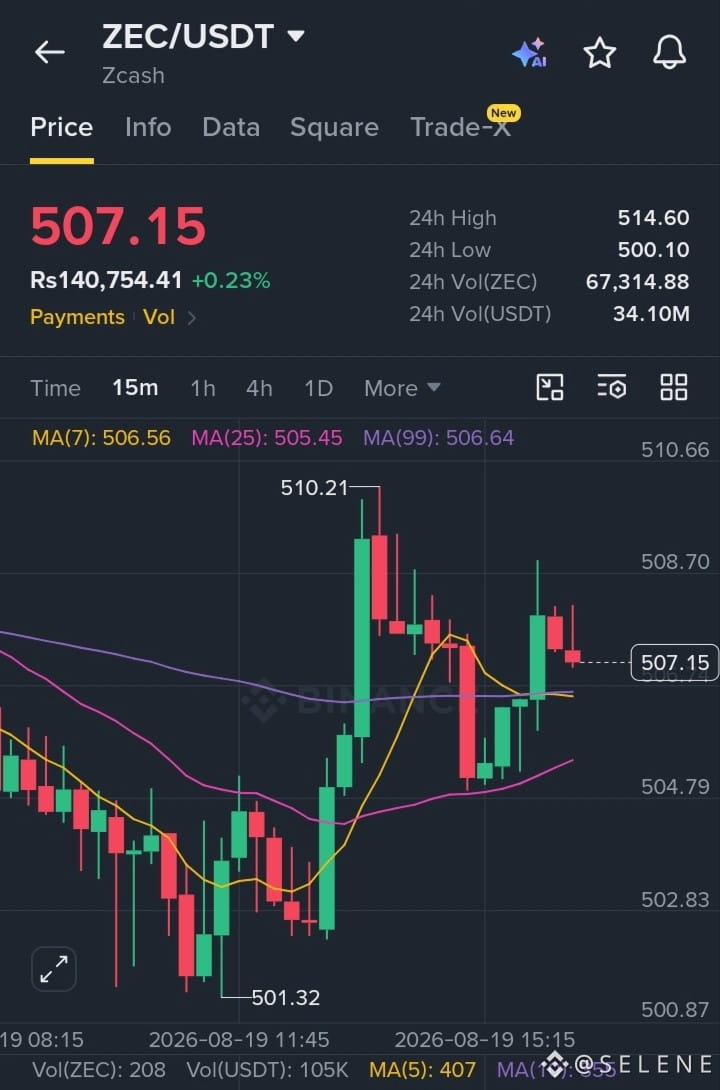
$ZEC Holding above dynamic support keeps this setup attractive for a potential continuation move. Entry: 462.60–464.00 TP1: 468.50 TP2: 472.00 TP3: 476.50 SL: 456.80 Always protect capital and secure profits along the way. {spot}(ZECUSDT) #zec
$ZEC Holding above dynamic support keeps this setup attractive for a potential continuation move.

Entry: 462.60–464.00
TP1: 468.50
TP2: 472.00
TP3: 476.50
SL: 456.80

Always protect capital and secure profits along the way.
#zec
$BCH The long-term trend remains intact as price continues to respect the MA(99). Short-term moving averages are acting as resistance, making this a classic compression setup. Entry: 236.50–237.15 TP1: 239.20 TP2: 241.00 TP3: 242.60 SL: 234.50 {spot}(BCHUSDT) $TSLAB {spot}(TSLABUSDT) #BCH
$BCH The long-term trend remains intact as price continues to respect the MA(99). Short-term moving averages are acting as resistance, making this a classic compression setup.

Entry: 236.50–237.15
TP1: 239.20
TP2: 241.00
TP3: 242.60
SL: 234.50
$TSLAB
#BCH
$RPL remains under pressure on the 15m timeframe, trading below the MA(7), MA(25), and MA(99). This alignment suggests sellers remain in control until key resistance is reclaimed. Entry: 1.974–1.985 TP1: 1.921 TP2:850 TP3:1.780 SL: 2.020 {spot}(RPLUSDT) Always wait for confirmation and manage risk. #RPLUSDT
$RPL remains under pressure on the 15m timeframe, trading below the MA(7), MA(25), and MA(99). This alignment suggests sellers remain in control until key resistance is reclaimed.

Entry: 1.974–1.985
TP1: 1.921
TP2:850
TP3:1.780
SL: 2.020
Always wait for confirmation and manage risk.
#RPLUSDT
🚨HUGE: FED TO INJECT $10 BILLION INTO THE ECONOMY THIS WEEK! The Federal Reserve will conduct two Treasury bill purchase operations, injecting $3.3B on Tuesday and another $6.6B on Thursday. $VANRY {spot}(VANRYUSDT) $SPCXB {spot}(SPCXBUSDT) #FedReserve
🚨HUGE: FED TO INJECT $10 BILLION INTO THE ECONOMY THIS WEEK!

The Federal Reserve will conduct two Treasury bill purchase operations, injecting $3.3B on Tuesday and another $6.6B on Thursday.
$VANRY
$SPCXB

#FedReserve
Log in to explore more content
Join global crypto users on Binance Square
⚡️ Get latest and useful information about crypto.
💬 Trusted by the world’s largest crypto exchange.
👍 Discover real insights from verified creators.
Email / Phone number
Sitemap
Cookie Preferences
Platform T&Cs