

Web3.0 is very similar to Taiwan’s braised pork rice. Everyone has the concept, but the recipe and method are different for each family. The well-known YouTuber Lao Gao recently released a video: "Web3.0 that will eventually completely change everything" to explain what Web3.0 is in his mind. Is it the same as the current consensus? Or is it partially controversial like some of his films?
Lao Gao's YouTube channel "Lao Gao and Xiao Mo" has 5.58 million subscribers. It is one of the largest channels in the Chinese market and has huge influence. Two days after its release, "Web 3.0 Will Completely Change Everything" has been viewed more than 2 million times.
Lao Gao believes that Web 3.0 is closely related to everyone. It is a revolution in the transition from the real world to the virtual world, and its impact on human society is far greater than the recent popularity of chatGPT. People who cannot accept or integrate into Web3.0 may fall into the "loser group" and be eliminated by the times.
What does Lao Gao think of Web3.0?
He listed several core services of Web3.0, including Metaverse, virtual currency, DAO, DeFi, chatCPT, etc., but he also stated that Web3.0 has other services and more services will be launched in the future.
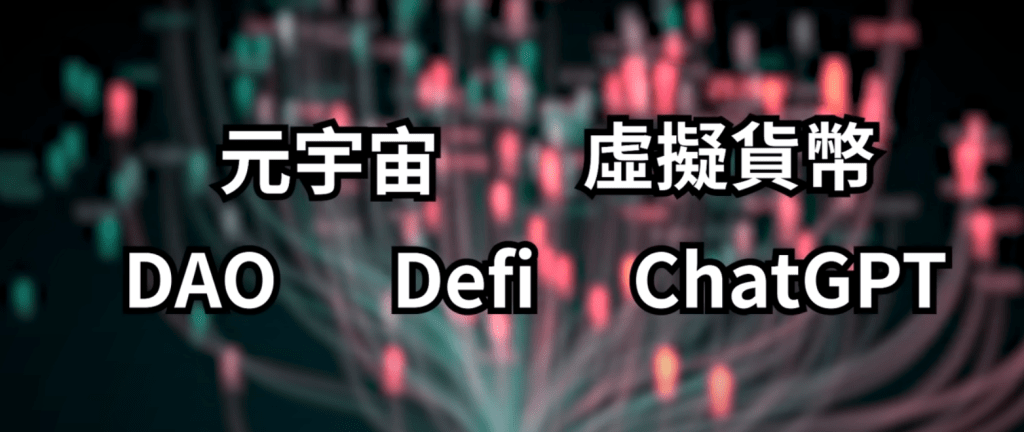 Source: Lao Gao and Xiao Mo
Lao Gao pointed out that Web3.0 is decentralized, which is completely different from the majority of Web2.0 platforms controlled by a few giants. But one thing is special, that is, Lao Gao classifies AI into Web3.0, which is slightly different from what most people in the currency circle think.
The core technology of Web3.0 is blockchain (decentralized ledger). Web3.0 built on the blockchain is not prone to centralized "single points of failure".
Lao Gao cited the collapse of Lehman Bank in 2008 and the recent SVB Bank as examples, pointing out that the current assets are kept by centralized institutions and are not self-custody, so once there is a problem with the bank, personal assets cannot be protected; on the contrary, In Web3.0, all assets are stored in digital form on the Internet, which will not disappear and cannot be tampered with.
"Because of blockchain technology, we are able to conduct one-to-one value exchange on the Internet for the first time. In the Web 2.0 era, we can only exchange messages on social media, but not value.
Laogao version of Web3.0: DAO + AI + smart contracts = more efficient company
Generally speaking, the currency circle defines DAO as a Decentralized Autonomous Organization (Decentralized Autonomous Organization), which is more like a blockchain version of a shareholder meeting. But Lao Gao believes that DAO will eventually become a "decentralized company."
Lao Gao seems to believe that today’s companies have to deal with quite a lot of issues in operation and management, including accounting, regulations, and meeting records, but DAO recognizes money rather than people, and uses token voting to replace the lengthy and complicated processes of the past. This seems to be in line with the currency circle’s definition of DAO.
After the vote is passed, the smart contract will directly allocate funds to the corresponding work. There is no indication of who the funds will be allocated to or who will work, but Lao Gao mentioned AI and smart contracts, guessing that it will be given to developers, and AI tools will be used to write smart contracts to turn them into new operating processes or profit models. If the new profit model is successful, funds will be distributed to shareholders in proportion.
In addition to being fast, the advantage of DAO is that the smart contract of the blockchain also allows DAO (company) to operate normally without legal protection.
Laogao version of Web3.0: Is Bitcoin considered a DAO?
Although the currency circle does not seem to say so, Lao Gao believes that Bitcoin is a model of DAO.
Lao Gao believes that Bitcoin is the successful model of Web3.0 DAO. Bitcoin automatically allocates handling fees to miners according to rules. Even if the founder Satoshi Nakamoto no longer exists, the Bitcoin system can still operate perfectly.
In addition, the advantage of Web3.0 is that there are no clear rules yet, so those who come first to explore can make the rules. Of course, this rule needs to be agreed upon by everyone, otherwise no one will participate and it will still fail.
Interestingly, Lao Gao believes that Bitcoin’s replacement of traditional legal tender is a normal direction, but it has only suffered from human interference. Lao Gao seems to like Bitcoin very much. There have been videos dedicated to Bitcoin before, but there were also some controversies. Regarding Lao Gao’s views on Bitcoin, we will make a video/article to explain it to you when we have time (Lao Gao’s jokes).
Laogao version of Web3.0: four types of companies in the future
Lao Gao divides future companies into four types: those with bosses and employees, those without bosses with employees, those with bosses but no employees, and those without bosses but no employees.
It’s a traditional company with a boss and employees, so it’s easy to understand.
It is an automated company with a boss but no employees. Most of the work in the company is done by robots or computers.
It is a DAO without a boss but with employees.
Without a boss or employees, it is a fully automated company, which is the most future form.
For Lao Gao, the fourth form is the most ideal form. The emergence of AI and Web3.0 has taken on most of the production responsibilities, and humans can invest more time in other things, including interpersonal relationships and life interests. This also achieved the success defined by another of his films, The 8th Habit.
What is the difference between the old high-resolution metaverse and Web3.0?
At present, what most people call the Metaverse is a virtual world, which is separate from real life. However, Lao Gao believes that the essence of the Metaverse is real life, not just a more immersive virtual game. He believes that the Metaverse should be real. A virtual version of the world, and it's better than reality, because in the Metaverse there is no limit to the laws of physics.
But in the final analysis, the Metaverse is virtual after all, and we still have feelings when using tools (VR, AR). But if one day, we regard the tools as part of the body (similar to glasses), the Metaverse will be completely integrated into it. In real life, we entered Web3.0 at that time. Lao Gao's original text here is: "Web3.0 will completely replace our current real life."
Lao Gao gets involved in AI and becomes a weapon for Web3.0 supervision?
Finally, Lao Gao mentioned the shortcomings of Web3.0: regulatory issues.
He believes that although Web3.0 assets are based on cryptography, humans are still in control of these assets, and humans are still subject to social engineering, which means they can still be defrauded. Once an asset is compromised, it cannot be recovered. In this regard, Lao Gao believes that in the future, AI may be used to determine whether certain behaviors are considered fraud, so that prevention can be taken in advance.
Lao Gao did not mention trial or judicial execution here. However, this is indeed discussed in the industry, such as writing laws into smart contracts to allow users to pay directly to creators, or using blockchain to store evidence, etc., but these discussions are still at a very early stage.
Lao Gao believes that in the Web 2.0 era, tools such as YouTube, Facebook, Google, and Netflix only assisted real life, but in the Web 3.0 era, the Internet has become the dominant factor in life, even replacing existing real life.
Is the Laogao version of Web3.0 what we think?
To sum up, Lao Gao’s definition of Web3.0 seems to be different from that of the industry. The current consensus is that the biggest difference between Web3.0 and 2.0 is that value can be exchanged on the Internet, which Lao Gao also mentioned. But Lao Gao goes further and integrates current services or tools to describe for us the future world of real and virtual integration.
Interestingly, there is no clear definition of Web3.0. Although everyone has their own opinions, they are sometimes contradictory. Tesla founder Musk said that Web3.0 is just a gimmick and seems more like a marketing term. He once mocked on Twitter: Has anyone seen Web3.0? I can not find. "
Although the currency circle may have different views on Web3.0 than Lao Gao, and they do not understand why Lao Gao put AI into the Web3.0 system, most people still hold a positive view. After all, this thing is inherently difficult to understand, and everyone has their own opinions. Just like the most delicious bowl of braised pork rice, everyone has different opinions. This is generosity.
In a situation where most people don’t understand the meaning of Web3.0, it is worthwhile to be happy when someone jumps out and agrees with the Web3.0 described in the currency circle, especially when the other person is a Youtuber with 5 million subscriptions, right? Let time accumulate things like consensus slowly!
The post What is Web3.0 in the mind of Youtuber Lao Gao? Is Lao Gao’s version of Web3.0 the same as the consensus in the currency circle? first appeared on Lian News ABMedia.
In this article, what is Web3.0 in the mind of Youtuber Lao Gao? Is Lao Gao’s version of Web3.0 the same as the consensus in the currency circle? First appeared in Chain News ABMedia.