


Ethereum is the most popular smart contract ecosystem. It is also the most active DeFi network. Ethereum itself has a market capitalization of $217bn, while its DeFi sector has a TVL of $29bn. Despite these achievements, the network faces challenges related to scalability and transaction throughput.
As trading, lending, and other activities take place on-chain at an increasing rate, investors put enormous strain on Ethereum. The ecosystem, unable to handle all transactions, faces network congestion and forces users to – at times – pay hundreds of dollars per transaction.
The Ethereum Foundation has plans to address these challenges and increase its transaction throughput. Ethereum’s most anticipated solution is sharding, a proposed transaction processing model that involves dividing the network into smaller parts called shards.
In today’s article, I explain what sharding is and how it works. I also show you the potential benefits and challenges of implementing this innovative scaling solution. Read on to discover how Ethereum sharding could revolutionize the blockchain industry.
What Is Ethereum Sharding?
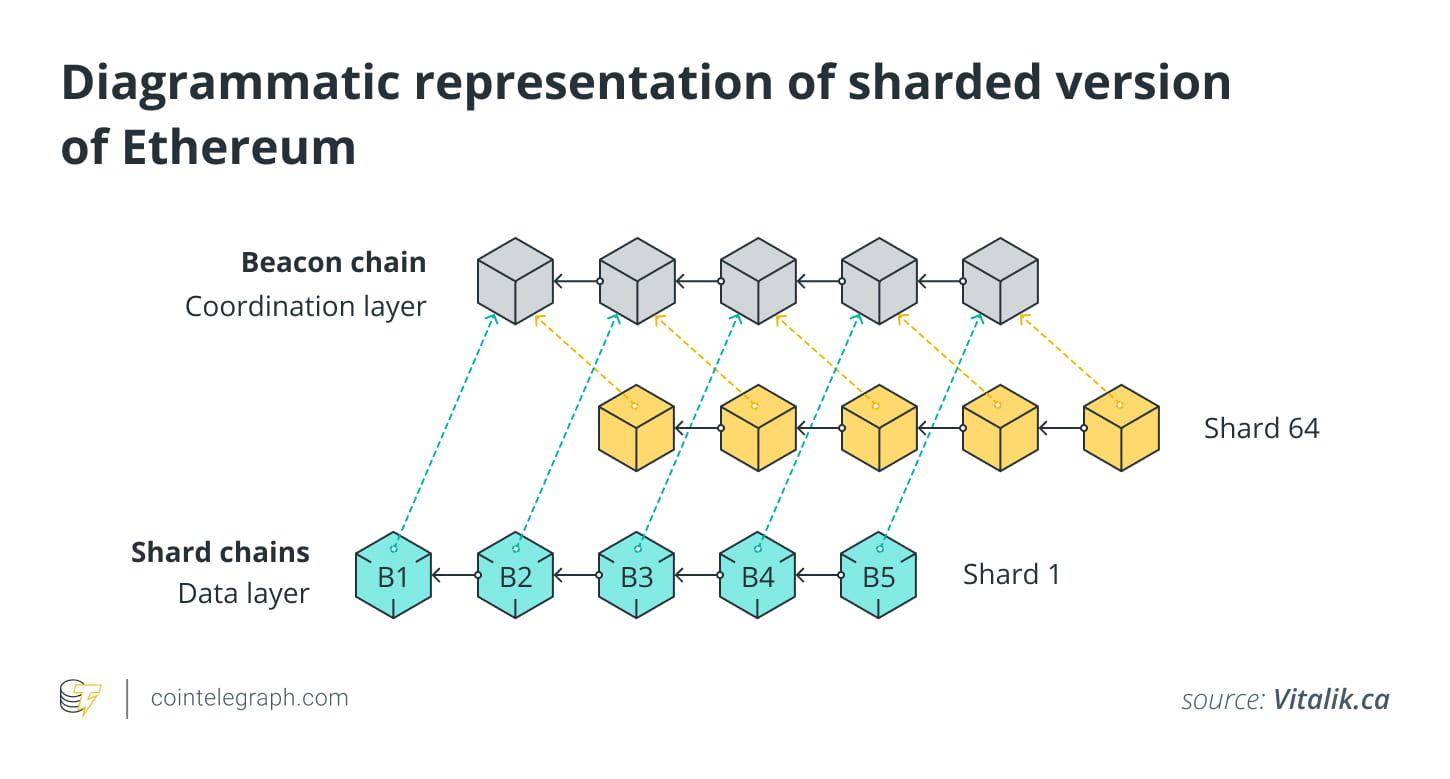
Ethereum sharding is a scalability solution that divides the network into smaller shards, each containing a subset of accounts, smart contracts, and transactions. Transactions are processed and stored on the shard in which they occur, rather than on the entire network.
Each shard has its own state and set of validators, making it possible to process transactions in parallel across multiple shards. Such a model reduces the strain placed on the overall network by processing portions of Ethereum transactions in smaller shards.
Validators on each shard are responsible for verifying transactions and maintaining the state of that shard. Validators are randomly assigned to shards, and they are required to have a stake in the network to participate. The more stake a validator has, the more likely they are to be selected to validate transactions.
Benefits of Ethereum Sharding
Ethereum sharding has several benefits, including:
Scalability: By dividing the network into smaller shards, Ethereum can process more transactions per second, improving the overall scalability of the network.
Efficiency: With sharding, each node only needs to process and store a subset of transactions, reducing the overall load on the network and improving efficiency.
Decentralization: Sharding is one of the rare scalability solutions that doesn’t sacrifice decentralization. With sharding, Ethereum can solve the blockchain trilemma and remain decentralized, secure, and fast.
The greatest benefit that sharding offers is the ability to delegate the processing of transactions to smaller processing units. In computer science, the introduction of parallel processing had tremendous effects. Multi-core processors were able to carry out many more calculations than their single-core predecessors.
In this sense, scalability can be made possibly through the decentralization of transaction processing. Rather than improving Ethereum as a whole, we can use sharding to introduce smaller processing units that decrease Ethereum’s overall transaction load.
Challenges of Ethereum Sharding
There are also some challenges associated with Ethereum sharding, including:
Cross-shard communication: Transactions that involve multiple shards require cross-shard communication, which can be challenging to implement efficiently.
Shard security: Each shard is responsible for maintaining its own security, which can be challenging to achieve without compromising the overall security of the network.
Smart contract compatibility: Some smart contracts may not be compatible with sharding, requiring developers to modify their code to work with the new system.
The reason why it’s taking developers years to implement sharding is that it’s incredibly complicated to do so. Although each shard is autonomous and independent, it cannot process transactions without having a communication line established with other shards. What if two or more shards process the same transaction without knowing?
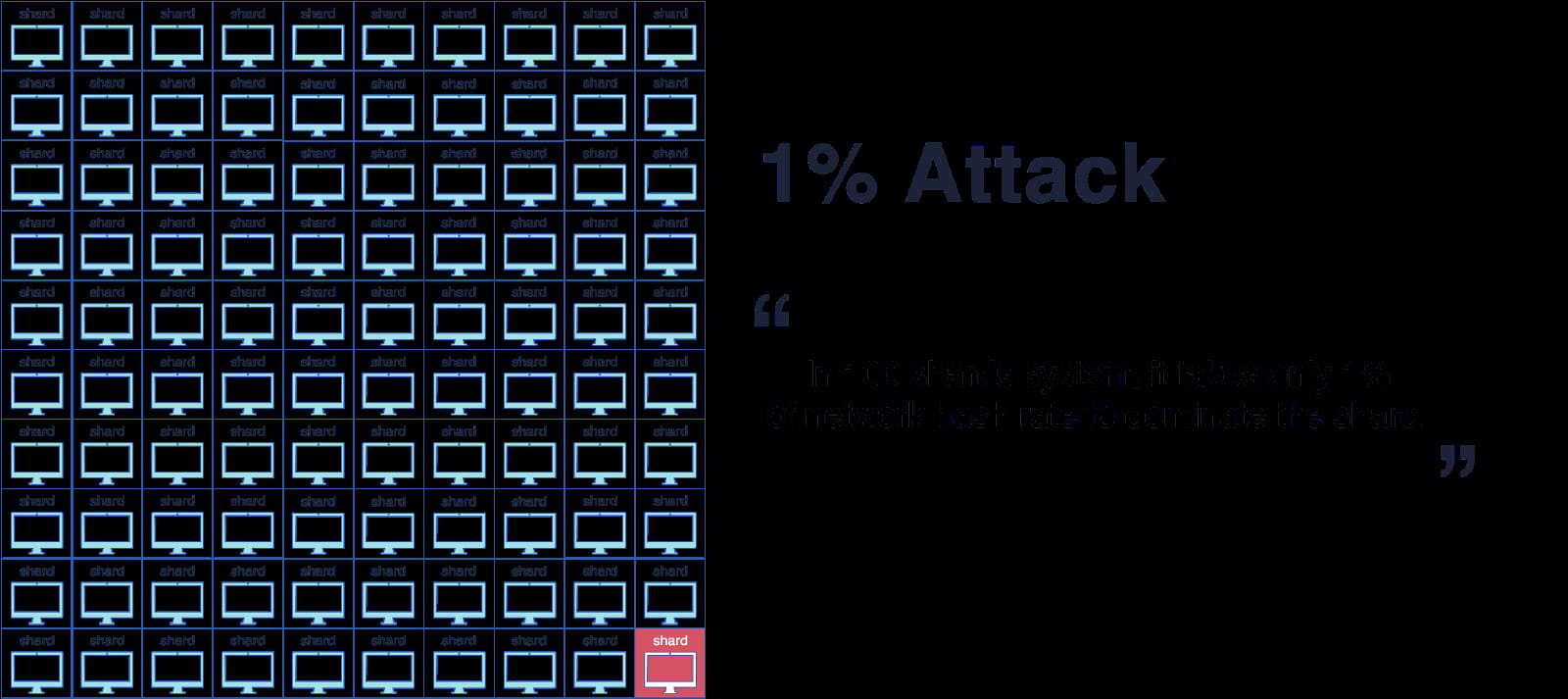
Sharding also introduces new attack vectors that have several implications for Ethereum’s security. Malicious actors could potentially perform a single-shard takeover attack. This attack involves taking over a majority of the block producers within a shard to create a malicious shard that sends invalid transactions.
Conclusion
Ethereum sharding is a promising solution for the scalability challenges faced by the network. By dividing the network into smaller shards, Ethereum can process more transactions per second and improve overall efficiency without compromising its decentralized nature.
However, the implementation of sharding presents some challenges, such as cross-shard communication and shard security. Nevertheless, the Ethereum community is working hard to address these issues and make sharding a reality. Ethereum sharding could be a game-changer for the blockchain industry and provide a solid foundation for the future of decentralized applications and smart contracts – if implemented successfully.
As the Ethereum ecosystem continues to grow and evolve, it will be exciting to see how sharding develops and how it contributes to the advancement of blockchain technology.
LIKE ❤️ FOLLOW 🙏 COMMENT⌨️ SHARE🔗