

Here’s the thing people don’t say out loud: a lot of onchain trading doesn’t lose you money in obvious fees. It loses you money in moments. The extra approval you hesitated on. The trade you didn’t take because you had no gas. The fill that arrived a beat late. The execution that felt… weird.
FOGO’s “zero compromise” thesis is basically a refusal to accept those moments as “normal.” It treats them like taxes—quiet, recurring, and predictable—and tries to remove them at the system level.
The first tax: friction (the trade you never even got to place)
Most chains make you do a small ritual before every meaningful action: sign this, approve that, confirm gas, switch tokens, repeat. None of that looks expensive on a block explorer, but it’s expensive in real life because it breaks flow.
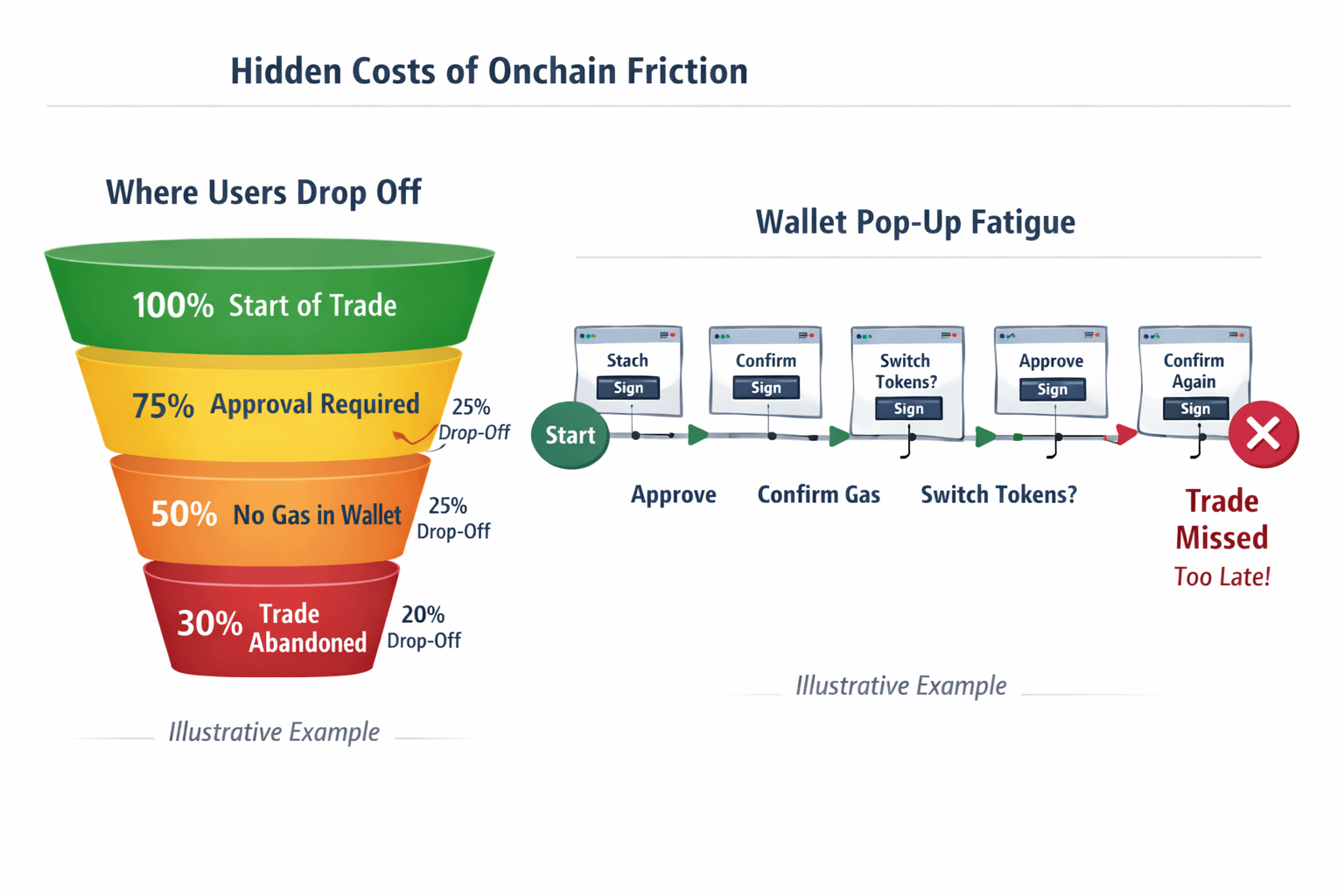
, FOGO’s Sessions are aimed directly at that. The idea is closer to how people actually use serious products: you authorize once, within limits, and then you’re allowed to operate for a while—without your wallet interrupting you every 20 seconds. It’s not “no safety.” It’s “safety that doesn’t destroy momentum”: time limits, scoped permissions, and guardrails so a session isn’t a blank cheque.
If that works, the user experience stops feeling like protocol cosplay and starts feeling like an app.
The second tax: bots (the invisible hand that always seems to win)
When people say “bots,” what they really mean is: why does it feel like I’m always the one paying for the cleverness of someone else?
The real issue isn’t that automated traders exist. It’s that slow or inconsistent transaction ordering creates a window where the same playbook works again and again—front-run, back-run, sandwich, clip the edge, repeat. If the system gives predators enough time and predictability, they’ll harvest it.
FOGO’s approach is blunt: shrink the window by pushing latency and variance down, and treat obviously abusive behavior as something the network can act against—not shrug at. That’s a strong stance, and it comes with responsibility. If you’re going to police toxic flow, your rules need to be clear and consistent enough that it doesn’t become vibes-based governance.
But the intent is clean: make the venue feel less like a hunting ground and more like a market.
The third tax: speed (when time itself becomes something you have to buy)
This is where FOGO gets unusually honest: geography is real, physics is real, and consensus is message rounds. You can’t “decentralize” your way out of fiber latency.
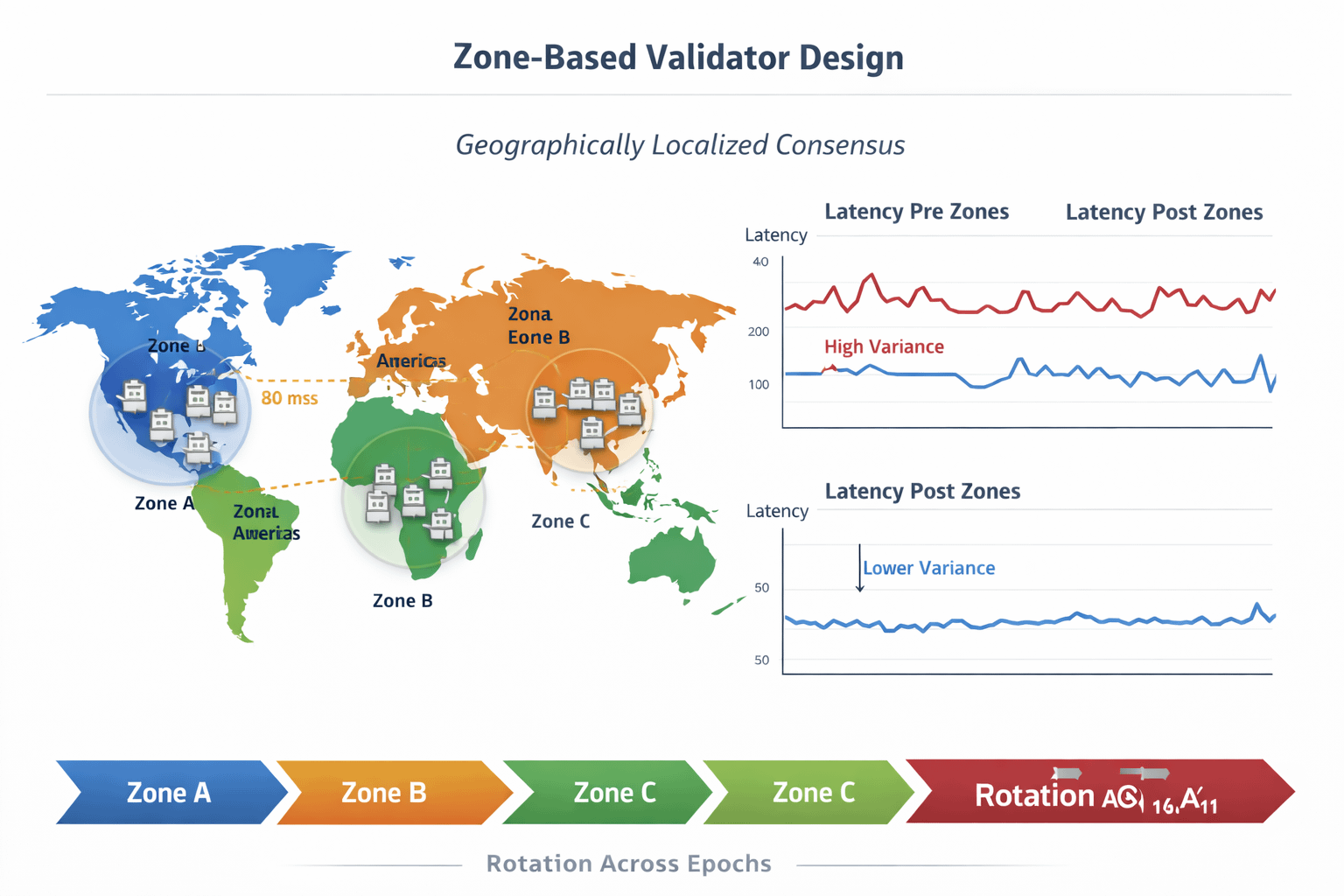
FOGO’s zone-based design is basically saying: if you want execution that feels tight, you localize the critical path. You run consensus in a physically co-located validator quorum so finality can happen at a cadence that doesn’t wobble all over the place. Then you rotate zones across epochs so it’s not permanently anchored to a single geography.
That’s a trade. It’s also a coherent one. Instead of pretending the internet is flat, FOGO builds around the fact that it isn’t.
Why the validator and client choices aren’t just “engineering preferences”
Two of FOGO’s choices tend to trigger strong reactions:
A curated validator set with performance standards
A canonical high-performance client trajectory (Firedancer-based)
But if you take the “zero compromise” thesis seriously, these aren’t random. They’re basically saying: one underpowered validator shouldn’t be able to drag the entire market’s execution quality down. And ten uneven clients shouldn’t define the chain by the worst tail-latency implementation.
For trading, the ugly moments are what matter: the 1% of times where the chain jitters, blocks stall, or ordering becomes chaotic under load. Those moments destroy trust faster than any marketing can rebuild it. FOGO’s design reads like it’s optimizing for “the chain feels the same when it’s busy,” not “we hit a peak number once.”
Where the token fits: fogo as the resource anchor, not just a ticker
A fast chain without a real economic loop is just a demo with better branding. The token has to be glued to the system’s real activity.
The cleanest way to understand fogois as the chain’s resource and security backbone:
it’s the gas asset at the base layer
it supports validator incentives through staking
and it’s what paymasters and infrastructure providers need if they’re sponsoring user activity
That last part matters more than people think. If Sessions and gas sponsorship become normal, users don’t need to constantly manage gas. Apps do. Gas becomes a retention and acquisition cost. And that creates a demand path that is tied to products competing for users—not users remembering to top up.
If that loop holds, $FOGO’s relevance isn’t “because token.” It’s because the ecosystem’s best products end up needing it to keep the experience smooth.
The uncomfortable truth: speed can either reduce taxes… or amplify them
There’s one risk that sits right in the middle of the thesis: going ultra-fast can just make unfairness happen faster if inclusion becomes pure pay-to-win.
Priority fees are useful, but they can easily turn into a private arms race: better routing, better placement, better advantage—aka Speed Tax with nicer branding. This is where FOGO’s stance on enforcement and market quality becomes existential. If it can keep execution honest enough that speed feels like a public utility, it wins. If not, it becomes another venue where the best-equipped actors capture the edge—just at higher frequency.
What I’d watch next (because this is where the thesis gets proven)
FOGO doesn’t need more slogans. It needs a scoreboard that traders respect:
how stable is latency under stress?
how often does ordering feel gameable?
how fair are liquidations during volatility?
do sessions and paymasters scale without creating gatekeepers?
can zone rotation expand resilience without reintroducing jitter?
If those answers trend the right way, you don’t just get “a faster chain.” You get something rarer: a venue where ordinary participants stop feeling like they’re paying hidden taxes to participate.
The real conclusion
FOGO is making a claim most chains avoid because it forces a choice: either execution quality is sacred, or extraction will always find a way to tax the average user. If FOGO can turn low-variance finality, scoped Sessions, and disciplined validator performance into a measurable improvement in who wins and how often, then $FOGO won’t matter because it’s attached to speed. It’ll matter because it underwrites a market where speed stops being a private weapon and starts behaving like shared infrastructure.
